
As an analyst deeply immersed in the study of aerospace and defense systems, I observe the trajectory of military UAV development with profound interest. The concept of an unmanned aerial vehicle, a platform capable of sustained flight without an onboard human pilot, has evolved from a speculative notion to a cornerstone of modern military strategy. The journey began over a century ago, but the accelerated proliferation and capability enhancement in recent decades signify a paradigm shift in warfare. The intrinsic advantages of the military UAV—persistence, risk reduction, and operational flexibility—have cemented its role from a mere support asset to a decisive, multi-role combatant. This analysis will delve into the defining characteristics of current systems, extrapolate future developmental vectors, and explore the expanding frontiers of military UAV combat applications.
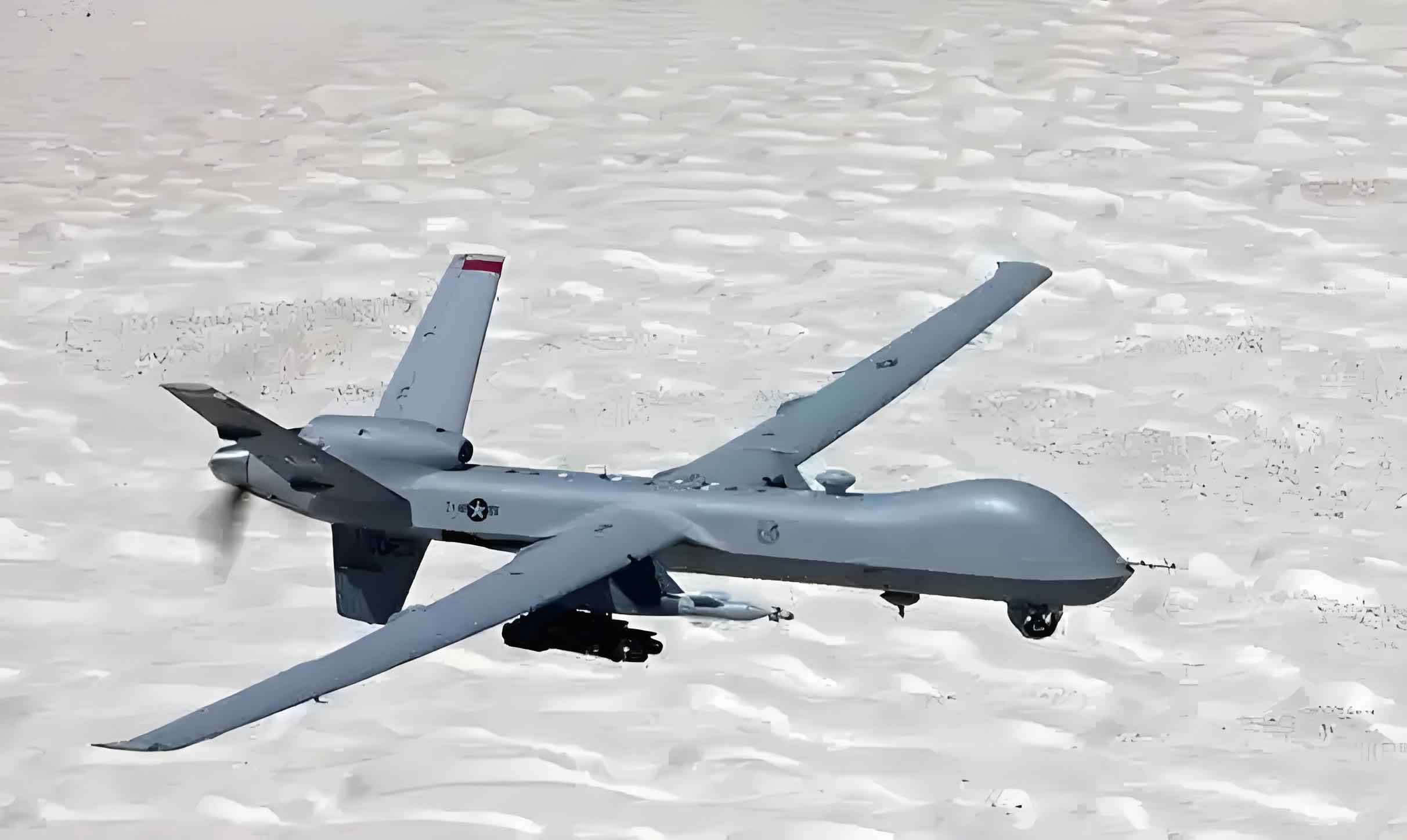
The historical arc of the military UAV is a testament to adaptive innovation. Initially conceived as aerial targets for training and weapons evaluation, their utility quickly expanded. By integrating sensors, they became invaluable reconnaissance platforms. Later, equipped with electronic payloads, they transformed into tools for electronic warfare and deception. A pivotal moment was the demonstration of armed strike capability, transitioning certain military UAV models from intelligence gatherers to hunter-killers. This evolution underscores a core principle: the military UAV is a versatile chassis, whose function is dictated by its payload, making it indispensable for high-risk, long-endurance, and tactically complex missions where manned aircraft are either too vulnerable or unsustainable.
1. Defining Characteristics of Contemporary Military UAVs
Today’s inventory of military UAV systems is diverse, ranging from hand-launched tactical models to large, high-altitude platforms. Despite this variety, several unifying technological and operational characteristics distinguish modern unmanned systems from their manned counterparts.
1.1 Optimized Airframe Design and Material Science
The design philosophy of a military UAV is unburdened by the need for a human life-support system. This freedom allows for radical optimization for specific roles. Airframes often feature high-aspect-ratio wings for endurance, blended body designs for low observability, or robust structures for high-speed dash. The choice of materials is critical for performance and survivability. Composite materials, primarily carbon-fiber-reinforced polymers, are ubiquitous due to their high strength-to-weight ratio and favorable radar cross-section (RCS) properties. Advanced manufacturing techniques, including monocoque construction and 3D printing of critical components, further reduce mass and complexity.
| Design Feature | Purpose & Example | Impact on Performance |
|---|---|---|
| High-Aspect-Ratio Wing | Maximize lift and fuel efficiency (e.g., Global Hawk). | Extended range and endurance (40+ hours). |
| Blended Wing-Body | Reduce radar signature and increase internal volume (e.g., X-47B). | Enhanced stealth and payload capacity. |
| Composite Material Usage | Carbon fiber, Kevlar, and glass-reinforced polymers. | Reduced weight (~30-50% vs. aluminum), lower RCS, corrosion resistance. |
| Twin-Boom Tail | Structural simplicity and sensor placement (e.g., Predator, Hermes). | Improved stability, easier maintenance, and clear aft sensor field of view. |
The RCS reduction is a primary driver. For a military UAV, the Radar Cross Section can be approximated for a simple shape. For a sphere, a benchmark shape, it is equal to its physical cross-sectional area: $\sigma_{sphere} = \pi r^2$. However, through shaping and materials, a UAV’s effective RCS can be reduced orders of magnitude below its physical size. The use of radar-absorbent materials (RAM) and structures (RAS) manipulates the incident radar wave, governed by the fundamental radar range equation:
$$R_{max} = \left[ \frac{P_t G_t G_r \lambda^2 \sigma}{(4\pi)^3 P_{rmin}} \right]^{1/4}$$
where $R_{max}$ is the detection range, $P_t$ is transmit power, $G$ is antenna gain, $\lambda$ is wavelength, $\sigma$ is target RCS, and $P_{rmin}$ is receiver sensitivity. By minimizing $\sigma$, the military UAV drastically reduces its enemy’s detection range $R_{max}$, enhancing survivability.
1.2 Extraordinary Flight Performance Envelope
Freed from human physiological limits, the military UAV operates in flight regimes that are prohibitive for manned aircraft. This includes extreme endurance, altitude, and maneuverability.
| Performance Metric | Typical Manned Aircraft Limit | Advanced Military UAV Capability | Operational Advantage |
|---|---|---|---|
| Endurance | 10-18 hours (with air refueling) | 24-48+ hours (Solar-powered: days/weeks) | Persistent ISR, constant area coverage. |
| Service Ceiling | ~65,000 ft (SR-71, extreme case) | 65,000+ ft (e.g., Global Hawk) | Wide-area surveillance, safe from most SAMs. |
| Sustained g-Load | +9/-3 g (human limit with training) | +15 to +20 g (airframe limited) | Superior evasive maneuverability against missiles. |
| Low-Speed Loiter | Stall speed constraints (~100 kts) | 35-60 kts (small/micro UAVs) | Urban operation, precision hovering. |
The endurance, a key metric for ISR platforms, is governed by the Breguet range equation, adapted for loiter:
$$E = \frac{1}{TSFC} \cdot \frac{L/D}{g} \cdot \ln \left( \frac{W_{initial}}{W_{final}} \right)$$
where $E$ is endurance, $TSFC$ is thrust-specific fuel consumption, $L/D$ is lift-to-drag ratio (aerodynamic efficiency), $g$ is gravity, and $W$ are weights. High-altitude, long-endurance (HALE) military UAV designs maximize $L/D$ and carry significant fuel mass, making $\ln(W_{initial}/W_{final})$ large.
1.3 Flexible Launch and Recovery, and Robust C2
The concept of operations for a military UAV demands flexibility. Launch methods include conventional runway takeoff, rocket-assisted or pneumatic catapult launch, and even vertical takeoff for rotorcraft variants. Recovery is equally varied: runway landing, parachute descent, net recovery, or mid-air retrieval. The command and control (C2) link is the lifeline. Modern systems employ layered C2: direct line-of-sight (LOS) datalinks for tactical control, and beyond-line-of-sight (BLOS) via satellite communications (SATCOM) for strategic platforms. Anti-jamming techniques, including frequency hopping and directed antennas, are critical. The data flow for sensor control and dissemination often uses separate, high-bandwidth links. The latency in the control loop, $\Delta t_{C2}$, is a critical parameter for dynamic targeting:
$$\Delta t_{C2} = t_{processing} + t_{transmission} + t_{human-in-the-loop}$$
Minimizing this sum, especially through automation, is key to the efficacy of a reactive military UAV.
1.4 Multi-Role Payload Integration
The true capability of a military UAV is defined by its payload. Modern modular architectures allow for rapid reconfiguration.
| Payload Type | Specific Systems | Function & Output |
|---|---|---|
| Electro-Optical/Infrared (EO/IR) | Gimbaled multi-spectral cameras, laser designators. | Real-time video, target tracking, laser guidance. |
| Synthetic Aperture Radar (SAR) | Moving target indicator (MTI), Ground moving target indicator (GMTI). | All-weather, day/night imagery, track moving vehicles. |
| Signals Intelligence (SIGINT) | COMINT and ELINT receivers, direction finders. | Electronic order of battle, emitter geolocation. |
| Electronic Attack (EA) | Noise/Deception jammers, payloads for communications or radar. | Deny or degrade enemy use of the EM spectrum. |
| Weaponry | Precision-guided munitions (e.g., Hellfire, guided bombs). | Direct kinetic strike, close air support. |
The sensor performance can be quantified. For an EO sensor, the ground sample distance (GSD) is crucial: $GSD = \frac{H \cdot p}{f}$, where $H$ is altitude, $p$ is pixel size, and $f$ is focal length. For a radar on a military UAV, the azimuth resolution $\delta_a$ for a SAR is $\delta_a = \frac{D}{2}$, independent of range, where $D$ is the antenna length along the flight path, enabling high-resolution mapping from long distances.
2. Future Developmental Vectors for Military UAVs
The trajectory of military UAV development is being shaped by emerging threats and technological breakthroughs. The future fleet will be characterized by greater autonomy, deeper integration into the force structure, and more specialized designs.
2.1 Towards Greater Autonomy and Manned-Unmanned Teaming (MUM-T)
The next leap for the military UAV is transitioning from remotely piloted to increasingly autonomous systems. This involves advanced algorithms for perception, navigation, and decision-making. Key enabling technologies include artificial intelligence (AI) and machine learning (ML) for target recognition, route planning in contested environments, and dynamic mission re-tasking. The concept of Manned-Unmanned Teaming (MUM-T), where a single manned aircraft (e.g., fighter jet, helicopter) controls multiple military UAV “loyal wingmen,” is a primary focus. These adjunct UAVs can perform sensing, electronic warfare, or strike functions, significantly multiplying the effectiveness and survivability of the manned platform. The collaborative control problem involves complex optimization:
$$\max_{x_i, u_i} \sum_{i=1}^{N} J_i(x_i, u_i, x_{-i})$$
$$\text{subject to: } \dot{x}_i = f_i(x_i, u_i), \quad g(x_1,…,x_N) \leq 0$$
where $J_i$ is the objective for the $i^{th}$ agent (manned or unmanned), $x_i$ its state, $u_i$ its control input, and $g$ represents shared constraints like collision avoidance and communication links.
2.2 Proliferation of Stealth and Counter-Stealth Systems
Stealth will become a standard, not an exceptional, feature for penetrating military UAV designs. This involves a holistic approach: continuous shaping refinement, advanced nanocomposite RAM, and thermal/acoustic signature management. Concurrently, there is a major push for UAVs dedicated to counter-stealth operations. These systems would carry low-frequency, networked radars or passive multi-static sensors to detect and track low-observable threats. A network of collaborating, low-cost military UAV sensors can create a detection web that is resilient and hard to defeat. The detection probability $P_d$ for a networked system improves significantly:
$$P_{d,network} = 1 – \prod_{k=1}^{N} (1 – P_{d,k})$$
where $P_{d,k}$ is the detection probability of the $k^{th}$ UAV sensor in the network.
2.3 Extreme Platforms: Miniaturization and Swarming
Development continues at both extremes of the size spectrum. Nano- and micro-UAVs (MAVs), with wingspans from centimeters to a few decimeters, are designed for dismounted soldier-level intelligence. These systems push the boundaries of micro-electromechanical systems (MEMS), low-power communication, and bio-inspired flight mechanics. At the operational level, the concept of swarming—large numbers of small, inexpensive, and autonomous UAVs cooperating to achieve a goal—is transformative. Swarm algorithms, often inspired by insect or bird behavior, provide resilience through redundancy and saturate enemy defenses. The cost-exchange ratio becomes highly favorable. The effectiveness of a swarm in saturating a point defense system with $n$ interceptors can be modeled. If a swarm has $S$ UAVs, each with a probability $p_s$ of surviving an interceptor, the expected number of UAVs reaching the target is:
$$E[Survivors] = S \cdot (p_s)^n \quad \text{(for simplistic engagement)}$$
A smarter, maneuvering swarm forces a much more complex combinatorial optimization on the defender.
2.4 Energy and Propulsion Innovation
Endurance remains a holy grail. Research is intense in high-efficiency hybrid-electric and turbo-electric propulsion, fuel cells, and beamed energy (laser or microwave) for recharging. Solar-powered, high-altitude pseudo-satellites (HAPS) aim for month-long stratospheric loiter, providing persistent communications or sensing coverage at a fraction of satellite cost. The power balance for a solar HAPS military UAV is critical for sustained flight through day-night cycles:
$$\int_{day} \eta_{solar} \cdot I \cdot A_{panel} \, dt \geq \int_{day+night} P_{avionics} + P_{propulsion} \, dt + E_{battery\_loss}$$
where $\eta_{solar}$ is panel efficiency, $I$ is solar irradiance, $A_{panel}$ is panel area, and $P$ are power draws.
2.5 The Ascendancy of Unmanned Combat Aerial Vehicles (UCAVs)
The dedicated strike military UAV, or UCAV, will evolve into a central component of air power. Future UCAVs will feature internal weapon bays for stealth, advanced air-to-air and air-to-ground combat AI, and the ability to operate in highly contested airspace. They are envisioned for the “first day of war” missions to suppress enemy air defenses (SEAD/DEAD), penetrating strikes, and even air superiority roles. Their design prioritizes low observability, high maneuverability, and sensor fusion. A key metric for a UCAV in a SEAD role is the “area sanitized per sortie,” which depends on its sensor sweep width $W$, speed $V$, and time on station $T$:
$$\text{Area Coverage Rate} = W \cdot V \cdot \eta_{search}$$
where $\eta_{search}$ is the search efficiency factor, enhanced by cooperative data linking between multiple UCAVs.
3. Expanding Frontiers: The Future Combat Roles of Military UAVs
Looking beyond immediate trends, the inherent flexibility of the military UAV platform suggests its application in novel and disruptive combat domains.
3.1 Dominance in the Electromagnetic Spectrum
Future military UAV systems will become more sophisticated in electromagnetic warfare. Beyond jamming, we will see the development of “cognitive EW” platforms that use AI to rapidly characterize and adapt to new, unknown signals in real-time. Furthermore, the concept of anti-radiation UAVs could be extended to “communication-seeking” UAVs. These loitering systems would autonomously detect, locate, and physically attack critical communication nodes (troposcatter, satellite uplinks, high-power tactical radios) using small warheads or directed energy, achieving kinetic suppression of enemy communications (KSEC). The probability of successfully neutralizing a mobile communication node depends on the UAV’s sensor update rate $\lambda_{update}$ and the node’s dwell time $T_{dwell}$ in a location:
$$P_{kill} \approx 1 – e^{-\lambda_{update} \cdot T_{dwell}}$$
This makes persistent military UAV patrols highly effective against such targets.
3.2 Integrated Air and Missile Defense Layer
A network of high-altitude, long-endurance military UAV equipped with powerful radars and infrared search and track (IRST) systems could form a persistent, forward-based sensing layer for ballistic and cruise missile defense. More aggressively, intercept UAVs could be deployed as a “shoot-back” layer. Carrying air-to-air missiles or directed energy weapons, they could engage incoming cruise missiles or even ballistic missiles in their boost phase. The engagement geometry favors a UAV loitering near likely launch areas. The time available for boost-phase intercept is short, placing a premium on sensor-to-shooter speed. If a military UAV is on patrol at a distance $d$ from a launch site, it must detect and engage before the missile reaches a certain altitude $h_{safe}$. The engagement window $\Delta t$ is approximately:
$$\Delta t = t_{boost} – \frac{\sqrt{d^2 + h_{safe}^2}}{V_{UAV}} – t_{decision}$$
where $t_{boost}$ is the target’s boost phase duration and $V_{UAV}$ is the UAV’s dash speed.
3.3 The Space Domain: Surveillance and Negation
As space becomes a contested domain, specialized military UAV could play a role. Ultra-high-altitude platforms operating in the near-space regime (~100,000 ft) could carry sensors to track satellites or detect launches. More provocatively, a co-orbital or direct-ascent anti-satellite capability could be miniaturized into a large launch-and-forget military UAV. While politically sensitive, the technical feasibility exists. A UAV launched from a high-flying aircraft could provide the first stage for a small kinetic kill vehicle. The required delta-V to reach Low Earth Orbit (LEO) from a high-altitude release is reduced. The Tsiolkovsky rocket equation shows the benefit:
$$\Delta v = I_{sp} \cdot g_0 \cdot \ln \left( \frac{m_0}{m_f} \right)$$
where a higher starting $m_0/m_f$ ratio (due to the UAV’s initial altitude and speed) reduces the $\Delta v$ demand on the kill vehicle’s own propulsion.
3.4 The Inevitability of UAV-vs-UAV Combat
The proliferation of military UAV ensures they will eventually confront each other. Dedicated “counter-UAV” UAVs will emerge, designed for air superiority against other unmanned systems. These platforms would employ a mix of soft-kill (jamming of navigation/C2 links, spoofing) and hard-kill (small air-to-air missiles, lasers, nets) mechanisms. The combat dynamics would differ from manned dogfights, emphasizing sensor fusion, electronic warfare superiority, and swarm tactics. The outcome of an engagement between two autonomous UAVs could be modeled as a Lanchester-type exchange, but with parameters for electronic suppression $E$:
$$\frac{dA}{dt} = -\beta \cdot (1-E_B) \cdot B$$
$$\frac{dB}{dt} = -\alpha \cdot (1-E_A) \cdot A$$
where $A$ and $B$ are the numbers/effectiveness of two opposing UAV forces, $\alpha, \beta$ are attrition coefficients, and $E$ represents the fractional reduction in lethality due to electronic attack.
3.5 Logistics and Support Revolution
The future military UAV will extend its role deeply into the support sphere. Autonomous cargo UAVs will resupply forward troops. Automated aerial refueling between UAVs will extend mission ranges dramatically. “Flying wingman” UAVs could carry extra munitions for manned fighters, acting as airborne arsenals. The efficiency gain in a distributed logistics network using UAVs can be analyzed through queueing theory and routing optimization, minimizing the cost function:
$$C = \sum_{i,j} (c_{fuel} \cdot d_{ij} + c_{risk} \cdot p_{loss,ij}) \cdot x_{ij}$$
where $x_{ij}$ is the flow on route from $i$ to $j$, $d$ is distance, and $p_{loss}$ is the probability of loss on that leg, weighted by respective costs.
In conclusion, the military UAV is not merely another weapon system; it is a catalyst for redefining the very fabric of military operations. From its origins as a simple remote-controlled aircraft, it has grown into a sophisticated, multi-role node in a networked battlespace. The trajectory points toward greater autonomy, deeper integration across all domains—air, land, sea, space, and cyberspace—and an ever-widening scope of missions. The challenge for defense strategists is no longer just to develop the next generation military UAV, but to conceive the novel tactics, operational concepts, and force structures that will fully harness its transformative potential. The era of the unmanned system as a central, rather than supporting, actor in warfare is unequivocally here.