
As a researcher deeply immersed in the field of aerospace technology, I have witnessed the remarkable transformation of military drones from simple target vehicles to sophisticated, multi-role assets dominating modern warfare. The term “military drone” has become synonymous with innovation, precision, and strategic advantage. In this comprehensive analysis, I will delve into the current state, developmental trajectories, and prospective combat roles of these unmanned aerial systems, drawing on technical insights and empirical data. The journey of military drones began nearly a century ago, with early prototypes emerging in the 1910s, but it is in the past few decades that they have truly ascended to prominence, particularly in conflicts such as the war in Afghanistan, where they demonstrated lethal capabilities by conducting precision strikes. This article aims to provide a detailed examination, enriched with tables and mathematical models, to underscore the critical importance of military drones in shaping future battlefields.
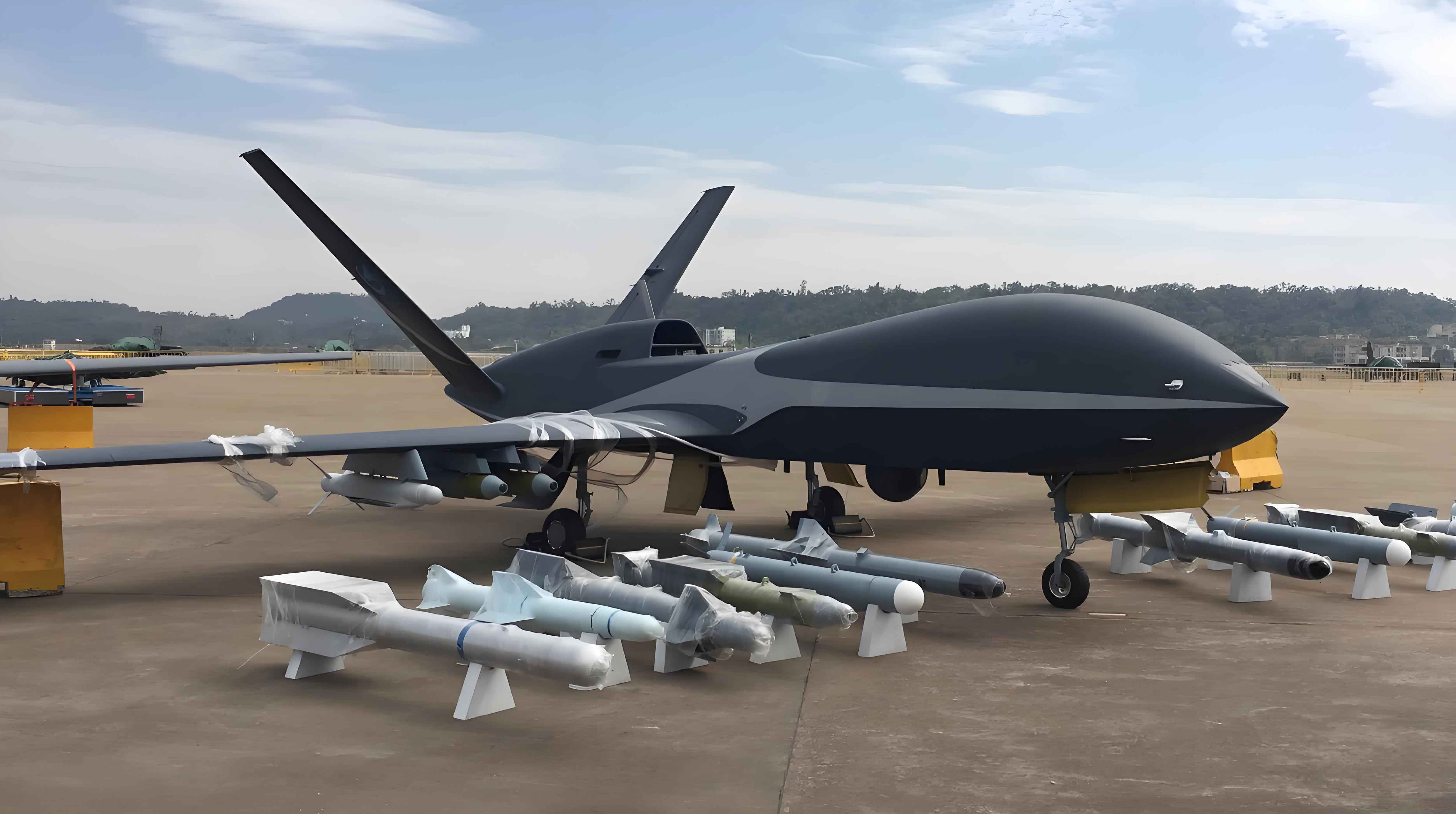
The proliferation of military drones across global defense forces is a testament to their versatility and effectiveness. Today, over 30 nations actively develop and deploy various models, with the United States and Israel leading in technological advancements. From reconnaissance to combat, military drones have evolved to perform tasks that were once deemed too hazardous for manned aircraft. In this analysis, I will first outline the defining characteristics of contemporary military drones, then project their future trends, and finally explore emerging combat applications. Throughout, I will emphasize the keyword “military drone” to highlight its centrality in modern military strategy. The integration of tables and formulas will aid in summarizing complex data, such as performance metrics and aerodynamic principles, offering a clearer understanding of why military drones are indispensable.
To begin, let’s consider the historical context. Military drones, originally conceived as target drones for training, have gradually incorporated advanced sensors, communication systems, and weaponry. The pivotal moment came in the early 21st century, when military drones like the Predator were armed with missiles, blurring the line between surveillance and attack platforms. This shift underscores the adaptive nature of military drones in response to evolving combat needs. As I explore their current features, it becomes evident that military drones are engineered for exceptional performance, often surpassing manned aircraft in key areas. The following sections will dissect these attributes in detail, supported by comparative tables and theoretical frameworks.
Current Characteristics of Military Drones
Military drones in service today exhibit a range of distinctive features that set them apart from traditional manned aircraft. Based on my analysis of models such as the Hunter, Pioneer, and Predator from the U.S., and the Scout from Israel, I have identified four core aspects: structural design, flight performance, control mechanisms, and mission versatility. Each aspect contributes to the superiority of military drones in high-risk environments.
Structural Simplification and Specialized Construction
Military drones often employ simplified airframes to reduce weight and enhance stealth. Common configurations include high-wing or low-wing designs with twin tail booms and vertical stabilizers, which improve stability and control. The use of composite materials, such as carbon-fiber reinforcements, is prevalent to minimize radar cross-section (RCS) and overall mass. For instance, many military drones incorporate honeycomb structures or wooden frames to achieve optimal strength-to-weight ratios. This focus on lightweight construction allows military drones to carry payloads efficiently while evading detection. The RCS reduction can be quantified using the formula for radar scattering: $$RCS = \frac{4\pi A^2}{\lambda^2}$$ where \(A\) is the effective area and \(\lambda\) is the radar wavelength. By minimizing \(A\) through sleek designs, military drones become less visible to enemy radar systems.
| Military Drone Model | Wing Configuration | Primary Material | Approximate Weight (kg) | Stealth Features |
|---|---|---|---|---|
| Predator (U.S.) | High-wing with twin tail | Carbon-composite | 512 | Low-observable coatings |
| Scout (Israel) | Low-wing with single tail | Fiberglass | 118 | Angled surfaces |
| Phoenix (U.K.) | Mid-wing with V-tail | Aluminum-composite | 175 | Radar-absorbent material |
| CL-289 (Canada) | High-wing with twin boom | Steel-composite | 185 | Minimal protrusions |
Exceptional Flight Performance
Military drones outperform manned aircraft in several flight parameters due to the absence of human physiological limits. They can operate at extreme altitudes, from sea level to over 20 kilometers, and sustain speeds ranging from 50 km/h for micro-drones to hypersonic velocities exceeding Mach 10. Endurance is another standout trait, with some military drones capable of staying aloft for more than 50 hours, thanks to efficient propulsion systems and, in some cases, solar power. The endurance time \(T\) can be expressed as: $$T = \frac{E_{total}}{P_{avg}}$$ where \(E_{total}\) is the total energy available (e.g., from fuel or batteries) and \(P_{avg}\) is the average power consumption. Additionally, military drones can withstand high g-forces up to 20g, enabling aggressive maneuvers that would incapacitate a human pilot. This performance edge allows military drones to execute prolonged surveillance, rapid response, and evasion tactics effectively.
| Military Drone Model | Max Altitude (m) | Max Speed (Mach) | Endurance (hours) | Max g-Load |
|---|---|---|---|---|
| Global Hawk (U.S.) | 19,810 | 0.6 | 42 | 5g |
| Heron (Israel) | 10,000 | 0.5 | 52 | 8g |
| Dark Star (U.S.) | 15,000 | 0.8 | 12 | 10g |
| Sparrow (Israel) | 3,000 | 0.2 | 1 | 15g |
Flexible Control and Diverse Launch/Recovery Methods
Control systems for military drones blend autonomous programming with remote human oversight. Waypoint navigation via GPS and inertial measurement units enables precise route following, while real-time telemetry allows operators to adjust flight paths dynamically. The control architecture can be modeled using state-space equations: $$\dot{x} = Ax + Bu$$ where \(x\) is the state vector (e.g., position, velocity), \(A\) is the system matrix, \(B\) is the input matrix, and \(u\) is the control input. Launch and recovery techniques vary to suit operational contexts; military drones can take off from runways, be catapulted, or air-dropped, and they can land via parachutes, nets, or automated runway approaches. This flexibility ensures that military drones can deploy rapidly in diverse theaters, from rugged terrain to maritime environments.
Mission Capabilities in High-Risk Scenarios
Military drones excel in perilous missions where human presence is untenable. They conduct intelligence, surveillance, and reconnaissance (ISR) with electro-optical and infrared sensors, often loitering for hours over hostile areas. As radar decoys, military drones mimic larger aircraft to confuse enemy air defenses. In electronic warfare, they jam communications or emit signals to disrupt adversary systems. The effectiveness of a military drone in such roles can be assessed through probability models, such as the likelihood of target detection: $$P_d = 1 – e^{-\lambda t}$$ where \(P_d\) is the detection probability, \(\lambda\) is the detection rate, and \(t\) is the time on station. Furthermore, anti-radiation military drones can engage in suicide attacks against enemy radars, sacrificing themselves to neutralize threats—a tactic that underscores the expendable yet valuable nature of military drones.
Developmental Trends in Military Drones
Looking ahead, the evolution of military drones is driven by demands for enhanced survivability, versatility, and cost-efficiency. Based on ongoing research and prototype testing, I project several key trends that will define the next generation of military drones. These include advancements in speed and altitude, stealth technology, offensive capabilities, miniaturization, and affordability. Each trend reflects a strategic response to emerging combat challenges, ensuring that military drones remain at the forefront of military innovation.
High Speed, High Altitude, Long Endurance, and Stealth
Future military drones will push the boundaries of aerodynamics to achieve hypersonic speeds (Mach 10+), operating altitudes above 30 kilometers, and endurance extending to several days. Stealth will be paramount, achieved through shaping techniques and advanced materials that absorb radar waves. The radar equation can be adapted to evaluate stealth performance: $$P_r = \frac{P_t G_t G_r \lambda^2 \sigma}{(4\pi)^3 R^4}$$ where \(P_r\) is the received power, \(P_t\) is the transmitted power, \(G_t\) and \(G_r\) are antenna gains, \(\lambda\) is the wavelength, \(\sigma\) is the RCS, and \(R\) is the range. By minimizing \(\sigma\), military drones become nearly invisible to detection. Projects like the Global Hawk exemplify this trend, offering persistent ISR capabilities from extreme altitudes, which I believe will become standard for strategic military drones.
Attack-Oriented and Combat Roles
The transition of military drones from supportive to offensive platforms is accelerating. Armed variants, such as the Predator with Hellfire missiles, have already proven effective in strikes. Dedicated unmanned combat aerial vehicles (UCAVs), like the X-45 and X-47, are under development, capable of carrying substantial weapon loads—up to 2,000 kg—for air-to-ground missions. The lethality of such military drones can be quantified using damage assessment models, such as the probability of kill \(P_k\) given a hit: $$P_k = \frac{A_{target}}{A_{lethal}}$$ where \(A_{target}\) is the target area and \(A_{lethal}\) is the lethal area of the warhead. These attack-oriented military drones will likely spearhead suppression of enemy air defenses, reducing risks to human pilots and reshaping aerial combat doctrines.
| Military Drone Model | Max Payload (kg) | Combat Role | Development Status | Key Features |
|---|---|---|---|---|
| X-45 (U.S.) | 1,350 | SEAD/Strike | Testing | Autonomous swarming |
| X-47 (U.S.) | 2,000 | Carrier-based ops | Advanced trials | Stealthy design |
| Italian UCAV | 300 | Multi-role attack | Prototype revealed | V-tail configuration |
| Neuron (Europe) | 1,000 | Reconnaissance-strike | Flight testing | Low observability |
Miniaturization and Micro-Drones
Advancements in nanotechnology and micro-electromechanical systems are enabling the creation of smaller military drones, some as tiny as insects. These micro-drones offer covert surveillance capabilities, accessing confined spaces undetected. The scaling laws for miniaturization can be described by the cube-square law: $$F \propto L^2, \quad M \propto L^3$$ where \(F\) is lift force, \(M\) is mass, and \(L\) is a linear dimension. As military drones shrink, their agility increases, but power constraints become more challenging. Current micro-drones, like the Sparrow, weigh around 40 kg and can capture high-resolution imagery from low altitudes. In the future, I anticipate palm-sized military drones becoming commonplace for tactical operations, enhancing situational awareness for ground troops.
Cost Reduction and Mass Production
As manufacturing techniques mature, the unit cost of military drones is decreasing, making them more accessible for widespread deployment. Economies of scale, coupled with modular designs, allow for rapid production without compromising quality. The total cost of ownership \(C_{total}\) for a military drone fleet can be modeled as: $$C_{total} = N \times (C_{acquisition} + C_{operation})$$ where \(N\) is the number of units, \(C_{acquisition}\) is the procurement cost, and \(C_{operation}\) is the operational cost per unit. By optimizing these factors, military drones can be fielded in larger numbers, enabling swarm tactics that overwhelm adversaries. This trend toward affordability ensures that military drones will proliferate across both advanced and developing militaries.
Prospective Combat Applications of Military Drones
Beyond current uses, military drones are poised to revolutionize warfare through novel applications. Drawing from technological projections, I envision four key areas where military drones will play pivotal roles: communication countermeasures, cruise missile defense, space domain awareness, and intra-drone combat. Each application leverages the unique attributes of military drones, expanding their utility in multi-domain operations.
Communication Countermeasures and Anti-Radiation Attacks
Military drones can be equipped with sophisticated signal intelligence packages to detect and locate enemy communication nodes. Once identified, these military drones could launch kinetic or electronic attacks to disrupt critical networks. The effectiveness of such countermeasures can be analyzed using communication theory models, such as the Shannon-Hartley theorem for channel capacity: $$C = B \log_2(1 + \frac{S}{N})$$ where \(C\) is capacity, \(B\) is bandwidth, \(S\) is signal power, and \(N\) is noise power. By jamming or destroying transmitters, military drones reduce \(S\), crippling adversary command and control. This application extends the concept of anti-radiation drones to the communications spectrum, offering a decisive edge in electronic warfare.
Interception of Cruise Missiles
Military drones stationed at high altitudes can serve as early warning platforms against incoming cruise missiles. Their mobility and persistence allow for continuous monitoring of threat corridors. Upon detection, military drones could engage missiles with onboard interceptors or direct other assets. The interception probability \(P_i\) can be derived from engagement dynamics: $$P_i = P_d \times P_{engage} \times P_{kill}$$ where \(P_d\) is detection probability, \(P_{engage}\) is the probability of successful engagement, and \(P_{kill}\) is the kill probability. Deploying military drones in networks enhances coverage, making them a cost-effective layer in missile defense architectures, especially during the boost phase when missiles are most vulnerable.
Space Domain Awareness and Counterspace Operations
As conflicts extend into the space domain, military drones could be utilized for proximity operations near satellites or other orbital assets. High-altitude military drones, perhaps hybrid air-space vehicles, might conduct surveillance or even offensive actions against enemy space systems. The orbital mechanics involved can be described using Kepler’s laws, such as the period \(T\) of an orbit: $$T = 2\pi \sqrt{\frac{a^3}{\mu}}$$ where \(a\) is the semi-major axis and \(\mu\) is the gravitational parameter. While ethical and legal constraints exist, the potential for military drones to perform counterspace missions is a topic of growing interest, reflecting their expanding role in securing national interests beyond Earth’s atmosphere.
Drone-on-Drone Combat
The proliferation of military drones will inevitably lead to scenarios where they engage each other in aerial duels. Future military drones may be designed specifically for air-to-air combat, equipped with sensors and weapons to neutralize opposing drones. The outcome of such encounters can be modeled using Lanchester’s laws for combat attrition: $$\frac{dA}{dt} = -\beta B, \quad \frac{dB}{dt} = -\alpha A$$ where \(A\) and \(B\) are the numbers of drones on each side, and \(\alpha\) and \(\beta\) are attrition coefficients. Advanced AI and swarm intelligence will be critical in these engagements, prompting research into autonomous dogfighting algorithms. This evolution could see military drones replacing manned fighters in certain roles, heralding a new era of unmanned aerial warfare.
Conclusion
In summary, military drones have evolved from rudimentary tools to cornerstone assets in modern defense strategies. Through this analysis, I have highlighted their current characteristics—such as lightweight structures, superior flight performance, flexible control, and high-risk mission capabilities—and projected future trends toward speed, stealth, attack roles, miniaturization, and cost reduction. Moreover, I have explored prospective applications in communication warfare, missile defense, space operations, and intra-drone combat, each underscoring the transformative potential of military drones. As technology advances, the capabilities of military drones will only expand, solidifying their position as indispensable elements in achieving battlefield dominance. It is imperative for defense planners and researchers to continue innovating, ensuring that military drones remain adaptive to emerging threats and opportunities. The future of warfare will undoubtedly be shaped by the relentless progress of military drones, making their study and development a paramount priority for global security.
To encapsulate key insights, the following table provides a consolidated view of the evolution and prospects of military drones, integrating the themes discussed throughout this analysis.
| Aspect | Current State (circa 2000s) | Future Trends (2030s and Beyond) | Key Drivers |
|---|---|---|---|
| Speed | Subsonic to supersonic (Mach 0.5-2) | Hypersonic (Mach 10+) | Advancements in propulsion and materials |
| Altitude | Up to 20 km | Above 30 km, near-space operations | High-altitude platform needs |
| Endurance | 40-50 hours | Days to weeks, solar-assisted | Energy storage and efficiency gains |
| Stealth | Low-observable coatings | Active camouflage, metamaterials | Counter-detection requirements |
| Armament | Light missiles (e.g., Hellfire) | Heavy payloads, directed-energy weapons | Shift to offensive operations |
| Size | Small to medium (50-1000 kg) | Micro to nano scales (grams to kg) | Covert surveillance demands |
| Cost | Moderate, limited production | Low-cost, mass-produced swarms | Economic scalability |
| Autonomy | Remote-controlled with some autonomy | Fully autonomous, AI-driven decisions | AI and machine learning breakthroughs |
The mathematical frameworks and tables presented here serve as tools for deeper understanding, but the real-world impact of military drones will depend on continuous adaptation. As I reflect on this journey, it is clear that military drones are not merely gadgets but strategic enablers, reshaping doctrines and tactics across the globe. Their integration into combined arms operations will require robust command and control systems, perhaps modeled using network theory: $$G = (V, E)$$ where \(G\) is a graph representing drone networks, \(V\) is the set of nodes (drones), and \(E\) is the set of edges (communication links). Optimizing such networks will enhance the协同 of military drones, maximizing their collective effectiveness.
In closing, the era of military drones is still unfolding, with boundless possibilities on the horizon. From intelligence gathering to direct combat, these systems exemplify the fusion of technology and strategy. As we navigate this dynamic landscape, one thing remains certain: military drones will continue to redefine the art of war, offering both challenges and opportunities for those who seek to harness their power. The ongoing research and development in this field promise to yield even more sophisticated military drones, ensuring their relevance for decades to come.