
The journey of powered flight, ignited by the Wright brothers in 1903, was swiftly co-opted for martial purposes. What began as rudimentary reconnaissance and light bombing in World War I evolved into a decisive instrument of warfare by World War II. The relentless pressure of conflict served as the primary crucible for aviation’s most transformative technologies. Indeed, foundational innovations like the jet engine and advanced avionics were born from military programs, and their subsequent refinement is the bedrock upon which modern civil and military aviation rests. Today, we stand at another profound inflection point, where the very paradigm of aerial combat is shifting from manned platforms to intelligent, networked systems, with the military UAV ascending as a central actor.
Military aircraft are defined as vehicles operated by air, land, and naval forces to execute specific combat and support missions. Their traditional categorization, while still relevant, is being blurred by multi-role capabilities and the rise of unmanned systems.
| Aircraft Type | Primary Role | Key Characteristics | Contemporary Trends |
|---|---|---|---|
| Fighter (Air Superiority, Multi-role, Interceptor) | Air-to-air combat, tactical ground attack, interception. | High speed, agility, advanced sensors and weapons. Modern fighters are predominantly multi-role. | Focus on sensor fusion, low-observability, and network connectivity. Growing complementarity with loyal wingman military UAVs. |
| Bomber (Strategic, Tactical) | Strike against ground/surface targets using bombs/missiles. | Long range, heavy payload. Strategic bombers possess intercontinental reach. | Integration of stealth, stand-off weapons, and potential evolution towards optionally-manned or fully unmanned platforms. |
| Military UAV / Unmanned Combat Aerial Vehicle (UCAV) | Reconnaissance, surveillance, strike, electronic warfare, and more. | No onboard pilot, prolonged endurance, reduced risk to human life, lower cost profile for certain missions. | Rapidly expanding roles; increasing autonomy; development of collaborative combat aircraft (CCA) operating alongside manned jets. |
| Transport & Aerial Refueling | Logistics, troop movement, in-flight refueling. | High payload capacity, long range, tactical or strategic airlift capability. | Development of autonomous cargo aircraft and advanced tankers with remote refueling capability for military UAVs. |
| ISR & Special Mission (AWACS, ELINT, etc.) | Intelligence, Surveillance, Reconnaissance (ISR), command & control, electronic warfare. | Airborne radar and sensor suites, extensive communications equipment. | Increasing use of high-altitude long-endurance (HALE) military UAVs for persistent surveillance, augmenting or replacing some manned platforms. |
Core Technological Pillars of Modern Military Aircraft
The performance leap from early jet fighters to today’s 5th-generation aircraft is underpinned by advances across several interdependent technological domains.
1. Aerodynamics and Stealth: The shaping of an aircraft is a constant compromise between aerodynamic efficiency and signature reduction. Computational Fluid Dynamics (CFD) is indispensable for optimizing this balance.
$$
C_D = C_{D,0} + \frac{C_L^2}{\pi e AR}
$$
Where $C_D$ is total drag coefficient, $C_{D,0}$ is zero-lift drag (directly impacted by stealth shaping), $C_L$ is lift coefficient, $e$ is Oswald efficiency factor, and $AR$ is wing aspect ratio. Stealth, or low observability, aims to minimize $C_{D,0}$ from a radar perspective by reducing the Radar Cross-Section (RCS). RCS ($\sigma$) is not a fixed property but a function of aspect angle and radar frequency. Key principles include:
- Faceting and Continuous Curvature: Designing surfaces to deflect radar waves away from the source.
- Edge Alignment: Aligning major edges (wing, tail) to concentrate reflected energy into a few narrow sectors.
- Weapon and System Internalization: Carrying ordnance in internal bays to avoid large radar reflections.
The use of Radar Absorbent Materials (RAM) and structures (RAS) further attenuates incident radar energy, governed by principles of impedance matching and dissipation.
2. Propulsion: The engine is the heart of performance. The key metric is thrust-to-weight ratio ($T/W$). Modern fighter engines achieve $T/W$ ratios exceeding 10:1.
$$
\text{Specific Thrust} = \frac{F}{\dot{m}_a} \quad \text{and} \quad \text{Thrust-to-Weight} = \frac{T}{W_{\text{engine}}}
$$
Where $F$ is net thrust, $\dot{m}_a$ is mass flow rate of air, and $W_{\text{engine}}$ is engine dry weight. Trends include adaptive cycle engines that can vary bypass ratio for optimal efficiency in subsonic cruise and high thrust in supersonic dash, and extensive use of heat-resistant composites. For military UAVs, propulsion choices range from efficient heavy-fuel engines for MALE/HALE platforms to turbojets/fan for high-speed targets and small electric motors for mini/micro UAVs.
3. Avionics and Sensor Fusion: The modern cockpit is a “glass cockpit” dominated by multi-function displays. The core advancement is sensor fusion. Data from Active Electronically Scanned Array (AESA) radar, Infrared Search and Track (IRST), Electronic Support Measures (ESM), and off-board sources (from other aircraft, satellites, or ground units) are fused into a single, coherent tactical picture. This network-centric warfare capability is force multiplier. An aircraft’s situational awareness ($SA$) can be modeled as a function of its sensor suite and data link capacity:
$$
SA = f\left( \sum_{i=1}^{n} (B_i \cdot R_i), C_{\text{link}} \right)
$$
where $B_i$ is the bandwidth/resolution of sensor $i$, $R_i$ is its reliability/accuracy, and $C_{\text{link}}$ is the data link capacity for net-centric information.
4. Weapons and Countermeasures: Advancements here have arguably changed combat more than airframe design. Modern Beyond-Visual-Range (BVR) air-to-air missiles like the AIM-120 AMRAAM or PL-15 have active radar seekers and engage ranges exceeding 100 km. The probability of kill ($P_k$) in BVR engagements depends on factors like seeker capability and target maneuverability.
Precision-Guided Munitions (PGMs) for air-to-ground use, such as JDAM kits, have reduced Circular Error Probable (CEP) to mere meters. This allows a single aircraft to achieve the destructive effect that required dozens of sorties in past conflicts. Defensive systems like Directed Infrared Countermeasures (DIRCM) and advanced radar warning receivers (RWR) are critical for survivability.
The Ascent of the Military UAV and Autonomous Systems
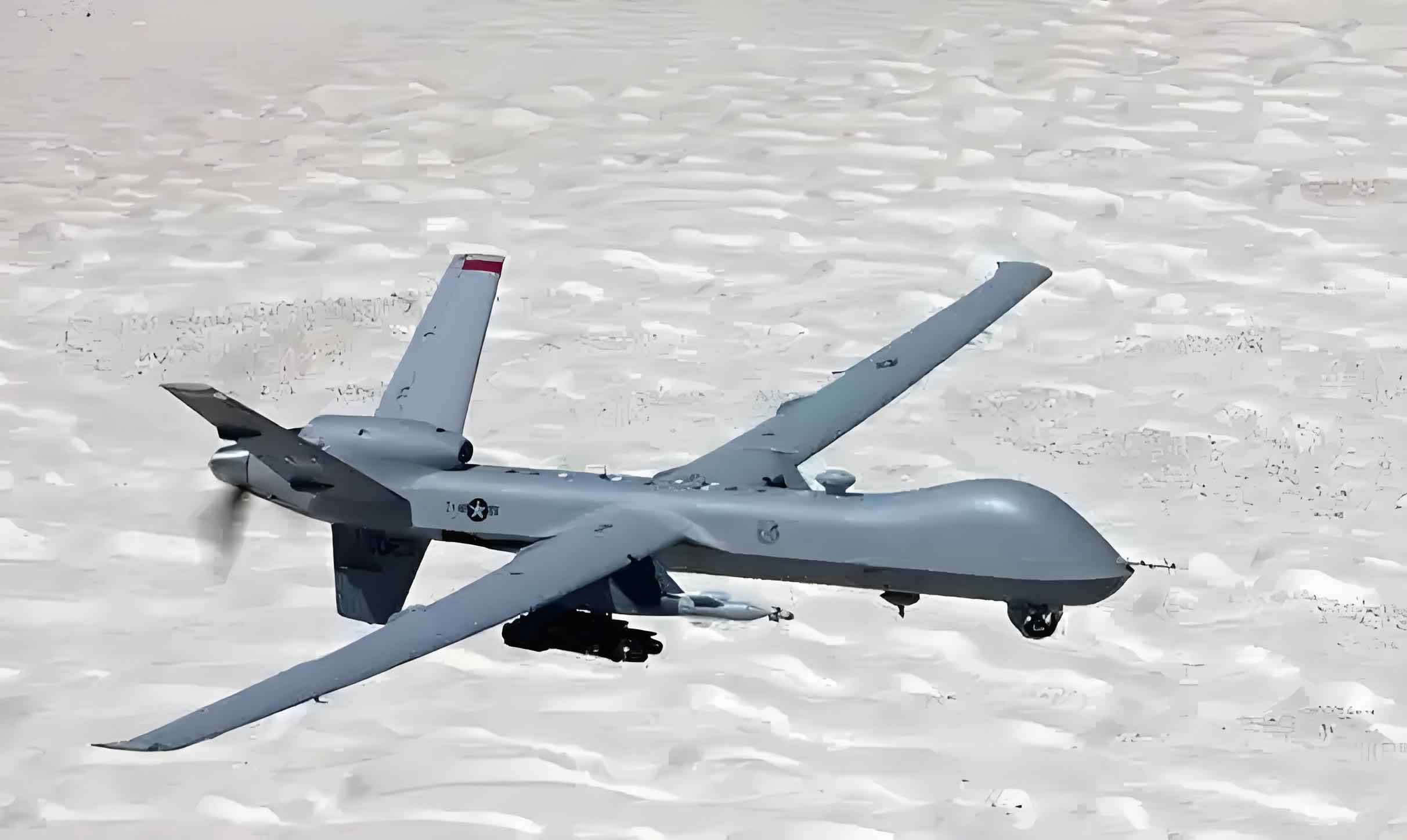
The most significant trend in military aviation is the proliferation and capability growth of Unmanned Aerial Vehicles. The military UAV is not a single technology but a spectrum of platforms and capabilities.
| UAV Category | Representative Examples | Endurance | Primary Roles | Key Enabling Technologies |
|---|---|---|---|---|
| Mini/Micro UAV | Black Hornet, PD-100 | 25-90 min | Platoon-level ISR | Micro-electromechanics, batteries, lightweight comms |
| Medium Altitude Long Endurance (MALE) | MQ-9 Reaper, Heron TP | 24-40+ hours | Strike, ISR, Counter-terrorism | Satellite comms, EO/IR/laser designator payloads, heavy-fuel engines |
| High Altitude Long Endurance (HALE) | RQ-4 Global Hawk, RQ-4N Triton | 30+ hours | Strategic ISR, Broad-area maritime surveillance | High-aspect-ratio wings, efficient turbofans, advanced SIGINT/radar payloads |
| Unmanned Combat Aerial Vehicle (UCAV) | X-47B (demonstrator), Bayraktar Kızılelma, Loyal Wingman concepts | Varies | Penetrating strike, Suppression of Enemy Air Defenses (SEAD), manned-unmanned teaming (MUM-T) | Low-observable design, internal weapons bays, AI for autonomous mission segments |
The operational advantages of military UAVs are compelling:
- Persistent Dwell Time: Eliminating the human pilot allows for mission durations limited only by fuel and mechanical reliability.
- Risk Transfer: Operators are removed from immediate physical danger, changing the political and human cost calculus of operations.
- Reduced Lifecycle Costs: While advanced UCAVs are expensive, they often forego complex and costly human life support systems. Smaller UAVs offer very low acquisition and operating costs.
- G-force Tolerance: Unconstrained by human biological limits of ~9 G, unmanned platforms can theoretically perform much more aggressive maneuvers, enhancing survivability and kinematic performance.
The progression of autonomy in military UAVs follows a graduated scale, often defined by the level of human involvement in the decision-making “kill chain.”
| Autonomy Level | Description | Example |
|---|---|---|
| Human Operated | Remote pilot controls all actions in real-time. | Early Predator operations. |
| Human Delegated | Operator assigns high-level task; UAV plans and executes path, navigation, etc. | Auto-takeoff/landing, waypoint navigation in MQ-9. |
| Human Supervised | UAV can perform a full mission profile (takeoff, mission, landing). Human supervises and can intervene. | X-47B carrier demonstrations. |
| Fullly Autonomous | UAV is given a strategic goal; it self-initiates all tasks, including target identification and engagement decisions. (Highly controversial, not yet fielded for lethal action). | Future conceptual swarms. |
The mathematical frameworks enabling this autonomy often involve Bayesian inference for sensor fusion, Kalman and particle filters for tracking, and reinforcement learning for adaptive path planning in dynamic environments. A simplified path planning cost function might be:
$$
J(\mathbf{x}(t)) = \int_{t_0}^{t_f} \left[ w_1 \cdot \text{Fuel}(\mathbf{x}) + w_2 \cdot \text{Threat}(\mathbf{x}) + w_3 \cdot \text{Detection Risk}(\mathbf{x}) \right] dt
$$
where $\mathbf{x}(t)$ is the trajectory, and $w_i$ are weights prioritizing fuel efficiency, threat avoidance, and stealth.
Future Trajectories and Dominant Trends
The future of military aviation will be shaped by the convergence of several powerful trends, with the military UAV at the epicenter of many.
1. Manned-Unmanned Teaming (MUM-T) and Collaborative Combat Aircraft (CCA): The future is not a simple replacement of manned by unmanned, but their integration. A 6th-generation manned fighter or bomber will likely act as a “quarterback,” controlling a team of 2-5 or more CCAs—essentially advanced, attritable military UAVs. These CCAs will perform roles such as:
– Sensor nodes, extending the quarterback’s radar and electronic warfare footprint.
– Missile trucks, carrying additional munitions to be targeted by the manned aircraft.
– Forward jammers or decoys to saturate enemy air defenses.
This multiplies combat power while keeping the high-value human pilot at a safer distance. The networking challenge—secure, resilient, high-bandwidth, low-latency data links—is paramount for this concept.
2. The Primacy of Survivability Over Kinematics: The historical trend of maximizing speed, ceiling, and turn rate is diminishing. With the proliferation of advanced integrated air defense systems (IADS) featuring long-range surface-to-air missiles (SAMs) like the S-400 and network-centric targeting, purely kinematic escape is nearly impossible. Survivability is now achieved through a layered approach:
– Low Observability (Stealth): Remaining undetected is the first and best layer of defense.
– Electronic Warfare (EW): Jamming, spoofing, and deception to break the enemy’s kill chain after detection.
– Network Resilience: Operating in a degraded communications environment.
– Countermeasures: Last-ditch systems like lasers to defeat incoming missiles.
For a military UAV intended for high-risk penetration missions, stealth and EW are essential design requirements from inception.
3. Swarm Technology: Inspired by biological systems, this involves large numbers (dozens to hundreds) of small, low-cost, autonomous military UAVs operating as a coordinated collective. Swarm algorithms, often based on boid-like rules (separation, alignment, cohesion), enable emergent, resilient behaviors. Swarms can overwhelm defenses through sheer saturation, perform distributed sensing, or execute complex attack patterns. The loss of individual units is acceptable due to low cost. The control paradigm shifts from direct piloting to influencing swarm behavior parameters.
4. Advanced Propulsion and Power Systems: Future developments will focus on:
– More Electric Aircraft (MEA): Replacing hydraulic and pneumatic systems with electrical ones for weight savings and reliability, crucial for military UAV design.
– Directed Energy Weapons (DEW): High-energy lasers and microwaves for point defense and offensive strike, requiring massive onboard power generation and thermal management.
– Alternative Fuels and Hybrid-Electric Systems: For reducing logistics burden and enabling new types of silent, long-endurance propulsion for special operations military UAVs.
5. Artificial Intelligence and Machine Learning: AI/ML will permeate all aspects, from predictive maintenance on engines to real-time electronic warfare waveform adaptation. The most critical application is in autonomous decision-making for CCAs and swarms. AI will be tasked with dynamic target prioritization, mission re-routing in response to threats, and managing complex swarm behaviors, all within rules of engagement set by human commanders.
Conclusion: An Ecosystem in Transformation
The landscape of military aviation is undergoing its most radical transformation since the advent of the jet engine. The driving forces are the exponential growth in processing power, connectivity, and artificial intelligence, coupled with evolving geopolitical threats that demand new operational concepts. The traditional manned fighter, bomber, and ISR platform are not becoming obsolete, but their roles are evolving within a broader, more heterogeneous ecosystem. In this new ecosystem, the military UAV in its myriad forms—from the loyal wingman CCA to the pervasive surveillance drone to the attritable swarm member—is becoming the ubiquitous workhorse and a key determinant of operational advantage.
The central thesis of modern air warfare is being rewritten: survivability, achieved through a combination of low observability, electronic warfare, and network-centric dispersion of capabilities, has decisively supplanted raw kinematic performance as the paramount design driver. The future belongs not to a single, supremely capable platform, but to a resilient, adaptive, and intelligent network of systems—both manned and unmanned—where the whole is vastly more capable than the sum of its parts. The era of collaborative, autonomous air power is not on the horizon; it is already unfolding in today’s research, development, and operational concepts, signaling a profound and enduring shift in the character of aerial warfare.