
When I first experienced the immersive world of FPV drones, putting on those goggles and seeing the world from a bird’s-eye perspective, the moment the drone lifted off the ground, it elicited an involuntary gasp of awe. This sensory shock was abrupt and overwhelming, reminiscent of the initial wonder people felt when they first witnessed aerial cityscapes captured by traditional drones. That early astonishment continuously pushed the boundaries of visual perception, but as visual experiences accumulated, even the most stunning aerial shots or blends of aerial and time-lapse photography failed to recapture that original thrill. Regrettably, there is no way to reset the novelty of visual experience, as it is inherently a process of accumulation and evolution. Much like learning to ride a bicycle, where the skill of balancing and pedaling becomes indelibly etched into one’s mind, making it impossible to forget how to take that first wobbly step, visual experiences with FPV drones become ingrained, altering how we perceive space and motion.
Fortunately, technological advancements have accelerated at a remarkable pace. What began as a niche branch in aerial photography—the FPV drone—has now blossomed into mainstream awareness. This evolution not only fills a gap in aerial visual experiences but also introduces a deeper layer of cinematic tension, primarily through the disruption and reconstruction of visual balance. In my explorations with FPV drones, I have delved into how these devices reshape spatial narratives by challenging our innate sense of equilibrium, a phenomenon that is central to understanding the appeal of first person view technology.
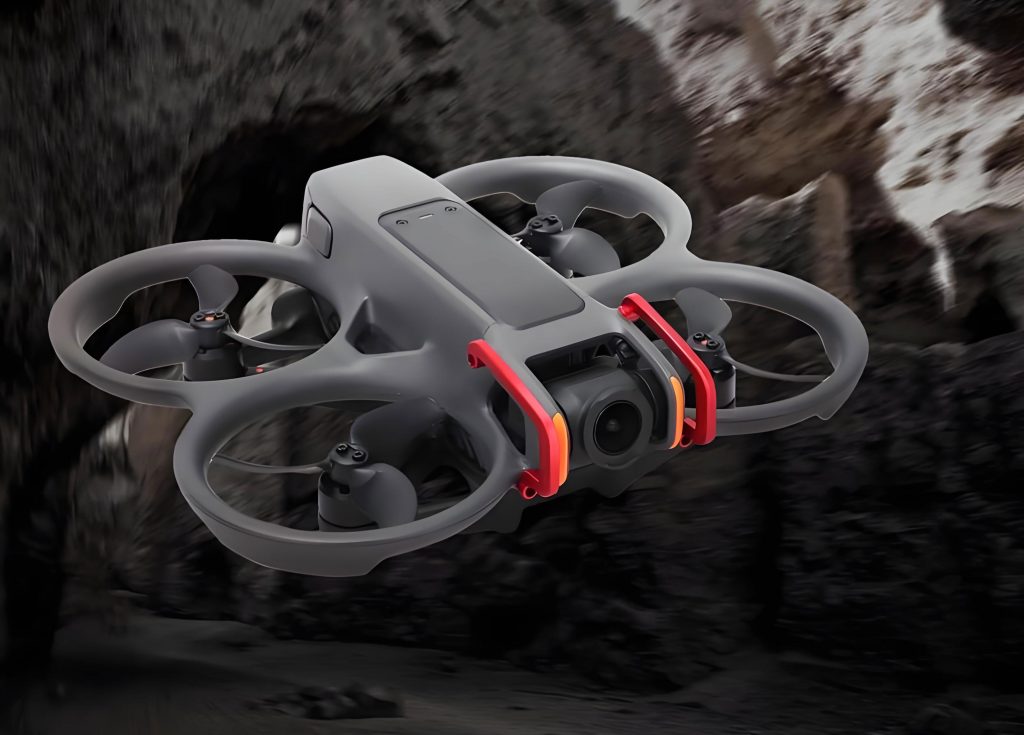
The concept of visual balance is fundamentally tied to directionality. When people first don FPV goggles, they often mistake the disorienting footage for post-production tricks, such as inverting the direction of a small drone’s path through confined spaces. This reliance on existing experience to interpret unfamiliar scenes can hinder the pursuit of truth. The extensive disruption of visual balance in FPV imagery, and the resulting tension, is something traditional aerial drones cannot achieve—unless they are in freefall. This poses a challenge to our visual cognition: how does this emerging form of visual expression influence our perceptions? To address this, we must first examine the balance of objects.
Directionality of Visual Balance
Balance primarily reflects the directionality of objects. For instance, when we say a cup is “standing” on a table, we imply that its base is downward and its opening upward, assigning it a directional quality based on visual experience. Every object carries such directional associations. The cup’s stability arises from the alignment of its structural axis with its center of gravity, representing an objective state of balance. However, if we depict the cup within a tilted frame, its balance is disrupted relative to that reference. Similarly, the Leaning Tower of Pisa exemplifies how objects can defy conventional directionality when compared to their environment.
In the realm of FPV drones, the perspective shifts to the skies, liberating viewers from directional constraints and challenging established balance norms. The FPV goggles encompass the primary field of view, effectively framing the world within the boundaries of the retina. This allows for bird-like perspectives and unrestrained flight attitudes, constantly juxtaposing the limited projected imagery against visual balance standards. FPV footage often features tilted structures and skewed horizons, breaking the familiar directional cues.
Consider infants interacting with picture books; they frequently view them from various angles, including upside-down, showing no inherent concept of direction. This suggests that, prior to developing visual experience, directionality is irrelevant. For such infants, FPV imagery might evoke novelty from the rapid succession of objects, but not the unease stemming from disrupted balance. Thus, the “correctness” of direction is a learned need, providing both a sense of gravitational balance and a cognitive anchor based on safety experiences.
The human brain plays a crucial role in interpreting object directionality. The vestibular system in the inner ear helps maintain bodily balance and coordinates with the brain to adjust for visual levelness. For example, when viewing a tilted frame, people often tilt their heads to align their retinal boundaries with the frame’s edges, a subconscious act facilitated by vestibular input. This adjustment allows for a perceived stability, even if it means reorienting the entire environment. In childhood, when writing on slanted paper, we tilt our heads to “correct” the text’s orientation, with the brain compensating through vestibular signals to perceive it as upright.
This neural compensation not only aids in daily tasks but also enables the perception of spatial tension in FPV footage. The constant recalibration by the brain contributes to the freshness and excitement that FPV drones deliver, as the disruption of balance triggers a sensory response that is both novel and stimulating.
| Factor | Description | Impact on FPV Experience |
|---|---|---|
| Object-Environment Relation | Alignment of object’s axis with gravity and surroundings | Disrupted in FPV, leading to perceived instability |
| Visual Frame Reference | Retinal boundaries and goggles as a fixed frame | Enhances tension by contrasting with unbalanced scenes |
| Brain Vestibular Input | Inner ear signals for balance compensation | Amplifies sensory conflict and novelty in FPV |
To quantify the balance disruption, we can model visual equilibrium using a simple formula. Let \( V_b \) represent visual balance, which is a function of the object’s orientation \( \theta \) relative to the horizon, and the viewer’s vestibular input \( V_v \). The perceived balance \( P_b \) can be expressed as:
$$ P_b = \alpha \cdot \cos(\theta) + \beta \cdot V_v $$
where \( \alpha \) and \( \beta \) are weighting coefficients that vary with individual experience. In FPV scenarios, \( \theta \) often deviates significantly from zero, causing \( P_b \) to drop, thereby increasing visual tension. This equation highlights how first person view technology exploits these deviations to create immersive experiences.
Disruption and Reconstruction of Visual Balance
In official promotional videos for products like the DJI FPV drone, scenes often showcase rapid maneuvers that exemplify the breaking and reforming of visual balance. For instance, a two-second clip might depict the drone traversing hundreds of meters at speeds far exceeding those of conventional drones. The footage begins with a completely inverted perspective, shattering overall balance, especially when key elements like bridges are tilted within this颠倒 framework. This induces a physiological response akin to Ménière’s disease, where the brain receives conflicting signals of spatial disorientation, making it difficult to ascertain one’s bodily position.
Such imagery resists easy alignment with existing visual experiences, leading to cognitive delays. Even when the drone corrects its attitude to a conventional view, the mind struggles to catch up, remaining momentarily “stunned” by the preceding imbalance. This repeated cycle of disruption and reconstruction enriches spatial representation in FPV footage, adding layers of dynamism that are unique to the FPV drone genre.
Beyond balance, other techniques contribute to spatial construction in FPV, such as the lens’s field of view, spatial distortion of objects, and hierarchical relationships within the frame. Motion is another critical element; for example, an inverted ascent combines balance disruption with an unfamiliar sensation of anti-gravity movement. While people may have experienced downward falls in activities like skydiving, upward inverted flight is rare, making it a potent tool for visual storytelling in first person view contexts.
| Aspect | Traditional Drones | FPV Drones |
|---|---|---|
| Speed and Maneuverability | Moderate, stable flights | High-speed, agile movements |
| Balance Disruption | Minimal, maintains horizon | Frequent, with tilted and inverted views |
| Sensory Impact | Familiar, soothing | Novel, tension-inducing |
| Cognitive Load | Low, easy interpretation | High, requires adjustment |
The tension arising from unbalanced subjects in FPV imagery stems from the interplay between object instability and human sensory systems. As the brain seeks stability in a constantly shifting space, it undergoes a process similar to riding a roller coaster—each jolt of imbalance stimulates the mind, and people derive pleasure from this controlled chaos. In the context of China FPV development, this has led to innovative applications in cinematography and recreational activities, where the FPV drone serves as a tool for pushing visual boundaries.
To further illustrate, consider the relationship between angular velocity \( \omega \) of an FPV drone and the resulting visual strain \( S_v \) on the viewer. This can be modeled as:
$$ S_v = k \int |\omega(t)| \, dt $$
where \( k \) is a constant related to individual susceptibility, and the integral accounts for cumulative disorientation over time. In practice, FPV pilots in the China FPV community often manipulate \( \omega \) to maximize this effect, creating footage that is both thrilling and artistically compelling.
Conclusion
In summary, the compelling force of FPV imagery lies in its ability to harness imbalance, engaging the viewer’s senses and experiences in a quest for equilibrium. This dynamic process of breaking and reconstructing visual balance is a key mechanism for eliciting psychological and physiological tension. Much like the exhilaration of a high-speed coaster ride, the continual stimulation provided by FPV drones keeps audiences captivated, eager for more. As first person view technology evolves, particularly in regions like China where FPV adoption is growing, it promises to further redefine our visual landscapes, offering new ways to experience and interpret the world from above.
The integration of FPV drones into mainstream media underscores a shift toward more immersive visual narratives. By challenging conventional balance, these devices not only fill gaps in aerial perception but also open doors to innovative storytelling. As I reflect on my journey with FPV technology, it is clear that the disruption of visual equilibrium is not merely a technical feat but an artistic one, enriching our collective visual culture and pushing the limits of what is possible in cinematography.