
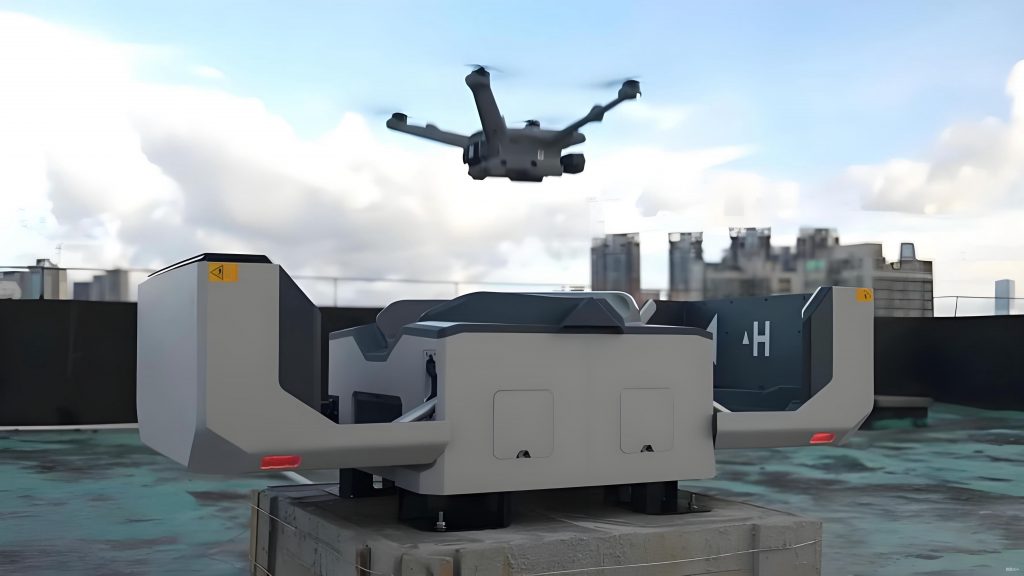
The proliferation of civilian drones, or Unmanned Aerial Vehicles (UAVs), represents one of the most significant technological democratizations of the 21st century. Initially confined to military and specialized industrial applications, these systems have rapidly evolved into accessible, high-performance tools for photography, surveying, agriculture, and logistics. The global market for civilian drones continues to expand exponentially, driven by advancements in battery technology, miniaturized sensors, and artificial intelligence. However, this very accessibility and capability create a profound dual-use dilemma. The same features that make civilian drones valuable for economic and social development—low cost, ease of operation, and payload flexibility—also render them potent, low-risk instruments for asymmetric threats, including terrorism and organized crime. This analysis delves into the technical evolution of civilian drones, examines their emerging characteristics as tools for malicious acts, and proposes a multi-layered framework for effective countermeasures.
Technical Evolution and Classification of Civilian Drones
The term “civilian drones” encompasses a wide array of aerial platforms distinct from their military counterparts primarily in their design purpose, scale, and regulatory environment. Their core functionality hinges on the integration of a flight controller, Global Navigation Satellite System (GNSS) receivers, inertial measurement units (IMUs), and a communication data link. The rapid innovation in this sector is guided by several key trends:
- Increased Autonomy and AI Integration: Modern civilian drones are transitioning from remotely piloted vehicles to intelligent agents. Through machine learning and computer vision, they can perform complex tasks like obstacle avoidance, target tracking, and swarm coordination with minimal human input. The level of autonomy can be modeled as a function of sensor fusion and processing power:
$$ A = f(S_{gnss}, S_{imu}, S_{vision}, P_{cpu}) $$
Where \(A\) represents the autonomy index, and \(S\) and \(P\) variables denote the reliability of sensor inputs and computational power, respectively.
- Modularity and Payload Flexibility: The shift towards modular designs allows users to easily interchange payloads (e.g., high-resolution cameras, thermal imagers, multispectral sensors, or delivery mechanisms) on a standard airframe. This “plug-and-play” capability drastically lowers the barrier to customizing civilian drones for specialized—and potentially malicious—tasks.
- Swarm Technology: Inspired by biological systems, drone swarms involve the coordinated operation of multiple UAVs. They offer redundancy, parallel task execution, and emergent intelligence. From a threat perspective, a swarm can overwhelm traditional defenses through sheer numbers and decentralized control.
The primary configurations of civilian drones can be summarized in the following table, highlighting their distinct operational profiles:
| Platform Type | Key Advantages | Key Limitations | Primary Civilian Applications | Relevant Threat Profile |
|---|---|---|---|---|
| Multi-Rotor (e.g., Quadcopter) | Vertical Take-Off and Landing (VTOL), precise hovering, ease of control, low-speed stability. | Short flight endurance (typically 20-40 mins), limited payload capacity, vulnerable to wind. | Aerial photography, infrastructure inspection, short-range surveillance. | Low-altitude reconnaissance, precision delivery of small payloads (e.g., explosives), harassment. |
| Fixed-Wing | Long endurance (hours), high cruise speed, large operational range, efficient aerodynamics. | Requires runway or launcher for take-off, cannot hover, complex recovery. | Large-area mapping, agricultural surveying, long-range pipeline inspection. | Long-range smuggling, wide-area surveillance, kinetic impact attacks on static targets. |
| Hybrid VTOL (Convertible) | Combines VTOL convenience with fixed-wing efficiency for endurance. | Mechanically complex, higher cost, currently less common. | Beyond Visual Line of Sight (BVLOS) operations requiring flexible launch/recovery. | Extended-range threats with precise terminal phase positioning. |
| Single-Rotor Helicopter | Heavy lift capability, good endurance for rotary-wing. | High mechanical complexity, significant noise, difficult to pilot. | Specialized lifting tasks (e.g., LiDAR payloads). | Delivery of heavier illicit payloads. |
The Threat Evolution: Characteristics of Malevolent Drone Use
The adaptation of civilian drones for malicious purposes is not speculative; it is a documented reality in conflict zones and a growing concern for domestic security worldwide. The threat profile is characterized by several distinct and challenging features:
- Accessibility and Low Barrier to Entry: High-performance civilian drones are commercially available through online retailers and local hobby shops. The regulatory frameworks, such as mandatory registration for drones above a certain weight, are often circumvented through the purchase of individual components for self-assembly or the modification of off-the-shelf models. The open-source software community provides accessible flight control firmware (e.g., ArduPilot, PX4) that can be programmed to ignore geofencing restrictions—virtual boundaries around sensitive locations like airports or government buildings.
- Remote and Simplified Operation: Malicious actors can operate civilian drones from a significant stand-off distance, often beyond visual line of sight (BVLOS), using First-Person View (FPV) goggles for real-time navigation. Modern consumer drones feature highly automated flight modes (e.g., “Follow Me,” “Waypoint Navigation”). This allows an operator with minimal training to execute a complex attack profile by simply plotting points on a digital map. The physical and temporal separation between the operator and the attack site provides a powerful layer of anonymity and safety for the perpetrator.
- Low Observability and “Wolf in Sheep’s Clothing” Effect: Small civilian drones, especially multi-rotors, have a low radar cross-section (RCS) and acoustic signature. They typically fly at low altitudes where they can be masked by ground clutter, making detection by traditional air defense radar extremely difficult. Furthermore, in urban environments, the ubiquitous presence of legitimate hobbyist and commercial drones creates a perfect camouflage. A malicious drone can blend into normal aerial activity until the moment of attack, complicating pre-emptive identification.
- Tactical Flexibility and Multi-Vector Attacks: The payload modularity of civilian drones enables a diverse range of attack modalities:
- Kinetic & Explosive: The most direct threat involves outfitting a drone with an improvised explosive device (IED), grenade, or shrapnel charge for precision strikes against individuals, vehicles, or crowds.
- Chemical, Biological, Radiological, and Nuclear (CBRN) Dispersion: Drones can be used to aerosolize or disperse hazardous materials over a targeted area, potentially causing mass contamination.
- Electronic Warfare & Cyber Attacks: Drones can carry “spoofing” devices to send false GNSS signals to other aircraft or infrastructure, or act as a “wireless bridge” to launch cyber-attacks on isolated networks from the air.
- Psychological Operations & Harassment: Using speakers, lights, or simply their intimidating presence, drones can disrupt public events, incite panic, or conduct surveillance to instill fear.
- Evolving Swarm Tactics: The emerging use of drone swarms presents a paradigm shift. A coordinated swarm can execute complex maneuvers, such as simultaneous attacks from multiple directions, saturation of a target’s defenses, or performing distinct roles (e.g., one drone conducts jamming while another executes the strike). Defending against a low-cost swarm with expensive, single-target countermeasures creates an unsustainable cost imbalance for security forces.
The overall risk \(R\) posed by a malicious civilian drone operation can be conceptualized as a function of these factors:
$$ R = \frac{A_c \times P_f \times C_p \times (1 – D_d)}{T_r} $$
Where:
\(A_c\) = Accessibility/Cost
\(P_f\) = Payload Flexibility/Lethality
\(C_p\) = Control simplicity/Probability of mission success
\(D_d\) = Detectability (0=impossible, 1=trivial to detect)
\(T_r\) = Traceability/Attribution difficulty
This equation highlights that the risk escalates with higher accessibility, payload lethality, and success probability, while being mitigated by better detection and traceability.
A Three-Dimensional Countermeasure Framework
Mitigating the threat from weaponized or maliciously used civilian drones requires a holistic, integrated approach spanning regulation, technology, and tactics. A singular solution is ineffective; a layered defense is essential.
1. Regulatory and Governance Layer: Building a Coherent Ecosystem
Effective governance must create a secure yet innovation-friendly environment for civilian drones. Key measures include:
| Initiative | Description | Implementation Challenge |
|---|---|---|
| Unified Remote ID & Tracking | Mandating that all civilian drones broadcast a unique digital license plate (via RF or network) containing registration, location, and control station data in real-time. This is analogous to a transponder for manned aviation. | Global standardization, enforcement on legacy and homemade drones, privacy concerns. |
| Dynamic Geofencing with Enforcement | Moving beyond static no-fly zones to dynamic, temporally-aware restrictions (e.g., around moving VIP convoys or temporary events). Drones must have technically enforced, non-overrideable compliance. | Requiring manufacturer cooperation, secure updating mechanisms, preventing GPS spoofing to bypass fences. |
| Supply Chain Control | Enhanced oversight on sales of key components (high-capacity batteries, flight controllers, certain chemicals/explosives precursors). Implementing “Know Your Customer” principles for retailers of high-performance drone systems. | Balancing security with legitimate commerce, global nature of supply chains, online anonymous sales. |
| Licensing for Performance | Implementing tiered pilot licensing and drone certification based on performance parameters (weight, speed, range) rather than a single weight threshold. Higher tiers require more stringent vetting and training. | Creating a manageable bureaucracy, public acceptance, international harmonization. |
2. Detection, Identification, and Defeat Layer: The Technology Stack
Security perimeters must be equipped with a multi-sensor, integrated Counter-Unmanned Aerial System (C-UAS). No single sensor is sufficient.
| Technology Category | Mechanism | Strengths | Weaknesses |
|---|---|---|---|
| Radar (Ku, Ka, X-band) | Detects object movement via radio wave reflection. | Long range, all-weather, good for tracking fast-moving targets. | Struggles with slow, low-flying small drones; high false alarm rate from birds; expensive. |
| RF (Radio Frequency) Scanners | Monitors spectrum for control & video telemetry signals unique to civilian drones. | Passive (non-emitting), can detect drones before they are visible, can sometimes identify model. | Less effective against pre-programmed drones (no RF link), crowded RF environments cause interference. |
| Electro-Optical/Infrared (EO/IR) | Uses cameras (visual and thermal) for visual identification. | Provides positive visual identification (PID), high accuracy, useful for prosecution evidence. | Limited by field of view, weather (fog, rain), and requires line-of-sight. |
| Acoustic Sensors | Uses microphone arrays to detect and triangulate the unique acoustic signature of drone motors. | Passive, effective in urban canyons, low cost. | Very short range, highly sensitive to ambient noise. |
Following a positive drone detection and identification, defeat mechanisms are employed. The choice depends on the environment, rules of engagement, and collateral damage constraints.
$$ T_{response} = T_{detect} + T_{identify} + T_{defeat} $$
Minimizing total response time \(T_{response}\) is critical. Defeat options include:
- Radio Frequency Jamming: Disrupts the command link between the drone and its operator, typically triggering a fail-safe (e.g., hover, land, or return-home).
- GNSS Spoofing/Jamming: Overwhelms or provides false location data to the drone, causing navigation failure.
- Directed Energy (Laser/Microwave): High-energy lasers can burn through critical components; High-Power Microwaves (HPM) can fry electronic circuits. Both offer speed-of-light engagement but have high power demands and line-of-sight requirements.
- Kinetic Interception: Using nets (from another drone or cannon), projectiles, or trained birds of prey to physically capture or destroy the threat drone.
- Cyber Takeover (Spoofing): The most sophisticated method, involving hacking the drone’s protocol to seize control and safely land it. This requires deep knowledge of specific drone systems.
3. Tactical and Procedural Layer: Human-Centric Defenses
Technology must be underpinned by sound tactics, training, and procedures.
- Integrated Command and Control (C2): Fusing data from all detection sensors into a single Common Operational Picture (COP) allows security personnel to make rapid, informed decisions.
- Pre-Event Site Exploitation: Conducting physical and electronic sweeps of venues prior to major events to locate pre-positioned civilian drones or operators.
- Public Awareness and Reporting: Educating the public on legitimate drone use and establishing clear channels for reporting suspicious drone activity (e.g., via mobile apps).
- Legal and Prosecution Frameworks: Ensuring laws clearly criminalize the malicious use, modification, or weaponization of civilian drones. Legislation must keep pace with technology, addressing aspects like swarming, cyber-takeover attempts, and jamming.
Conclusion and Future Outlook
The challenge posed by the malicious use of civilian drones is enduring and will evolve in tandem with the technology itself. Future developments like increased AI autonomy, longer endurance through hydrogen fuel cells, and nano-drone technology will further complicate the defense landscape. The strategic response cannot be purely reactive. It requires sustained investment in adaptive regulatory frameworks that promote security-by-design in the drone industry, continuous research into next-generation detection and defeat technologies (such as AI-powered sensor fusion), and comprehensive training programs for security forces. The goal is not to stifle the immense positive potential of civilian drones, but to construct a resilient ecosystem where innovation and security are mutually reinforcing, thereby denying asymmetric actors this powerful, disruptive tool.