
In recent years, I have observed a rapid proliferation of integrated manufacturing technologies for unmanned aerial vehicles (UAVs), with components becoming increasingly miniaturized, low-cost, and energy-efficient. Coupled with the advancement of 5G communication and artificial intelligence, the market for civilian drones has expanded significantly. The outbreak of the COVID-19 pandemic in 2020 highlighted the role of civilian drones as intelligent, unmanned tools capable of efficient, continuous, and contactless operations. They emerged as critical assets in pandemic control, excelling in areas such as security patrols, disinfection, logistics delivery, public communication, and temperature monitoring. If we can overcome certain constraints, the civilian drones industry is poised to unleash immense potential and usher in new opportunities for growth.
The term “civilian drones” refers to unmanned aerial vehicles designed for non-military applications, encompassing both consumer and industrial-grade variants. These systems integrate sensor technology, communication systems, information processing, intelligent control, and aeronautical propulsion, representing high-tech products of the information age. The value of civilian drones lies in their ability to serve as aerial platforms, extending applications through additional components to perform tasks that would otherwise require human intervention in the air.
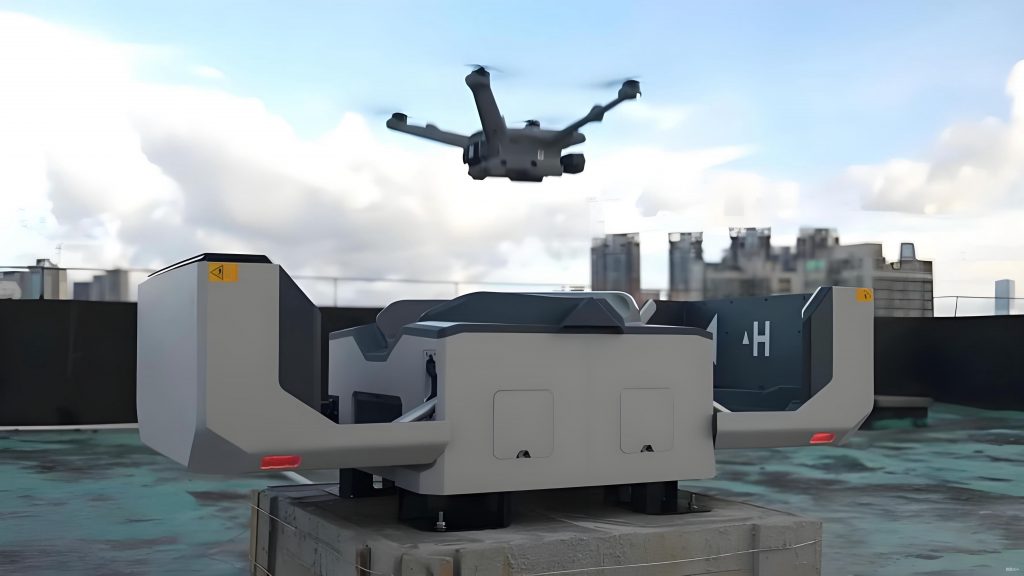
From my perspective, civilian drones can be categorized based on their primary用途. Broadly, UAVs are divided into military and civilian types, with the latter further split into consumer-grade and industrial-grade drones. These categories differ significantly in terms of onboard equipment, user base, and applications, as summarized in the table below.
| Category | Onboard Equipment | User Base | Primary用途 |
|---|---|---|---|
| Consumer-Grade Civilian Drones | Typically cameras, gimbals, and video transmission systems for photography and videography. | General consumers and hobbyists; emphasis on portability and ease of use, with price sensitivity. | Entertainment, aerial photography, and recreational activities. |
| Industrial-Grade Civilian Drones | Specialized sensors like thermal infrared cameras, multispectral imagers, LiDAR, or atmospheric probes, tailored to industry needs. | Enterprise clients seeking customized solutions; focus on overall system integration, often with higher costs and lower production volumes. | Applications in agriculture, construction, energy inspection, surveying, and emergency response. |
| Military Drones (for context) | Advanced military hardware such as electro-optical systems, radar, missiles, or supply payloads. | Armed forces, police, and security agencies. | Reconnaissance, combat, communication relay, or target simulation. |
The flexibility, cost-effectiveness, and safety of civilian drones have driven their adoption beyond military realms into diverse civilian sectors. I believe the market for civilian drones is experiencing explosive growth, with substantial potential for further expansion.
When analyzing the market size for civilian drones, I note that over 50 countries worldwide, including the United States and Israel, are actively developing UAV technologies. Conservatively, the global market is projected to reach $70 billion by 2025, with a compound annual growth rate (CAGR) exceeding 30%. This growth can be modeled using the CAGR formula:
$$ CAGR = \left( \frac{V_f}{V_i} \right)^{\frac{1}{n}} – 1 $$
Where \( V_f \) is the final value, \( V_i \) is the initial value, and \( n \) is the number of years. For instance, in China, the civilian drones market was valued at approximately $10.4 billion in 2015 and expanded to around $40.2 billion by 2018, reflecting a CAGR of over 57%. By 2019, it reached roughly $56.2 billion. With over 1,300 manufacturers and more than 330,000 registered drones in China alone, the civilian drones sector represents a burgeoning market with immense promise.
Key players in the civilian drones market include industry leaders like DJI from China and SkyCatch from the United States. DJI dominates the consumer segment with a market share exceeding 80% domestically and 60% globally across price points, driven by technological prowess in flight control and imaging. SkyCatch, on the other hand, exemplifies service innovation, offering drone-based data acquisition, analysis, and processing for construction, energy, and agriculture. These companies underscore the dual axes of hardware and service development within the civilian drones ecosystem.
The application prospects for civilian drones are vast. Industrial-grade civilian drones are pivotal in security patrols, medical rescue, and public monitoring, while logistics delivery via drones can reduce costs and enhance efficiency, especially in remote or complex terrains. Post-pandemic, consumer-grade civilian drones are expected to rebound, supported by growing demand for aerial photography and recreation. Additionally, regulatory requirements for drone pilot licenses are spurring growth in training institutions, further fueling the civilian drones market.
To quantify the adoption rate of civilian drones in various sectors, we can use a logistic growth model:
$$ P(t) = \frac{K}{1 + e^{-r(t – t_0)}} $$
Where \( P(t) \) is the penetration level at time \( t \), \( K \) is the carrying capacity (maximum market saturation), \( r \) is the growth rate, and \( t_0 \) is the inflection point. For civilian drones in logistics, for example, \( K \) might represent the total addressable market for last-mile delivery, with \( r \) influenced by technological advancements and regulatory support.
Despite the optimistic outlook, I recognize several constraints that could hinder the development of civilian drones. First, a complete industrial ecosystem has yet to mature. Traditionally, the civilian drones supply chain includes upstream R&D and component manufacturing, midstream assembly, and downstream sales and services, as depicted below.
| Traditional Civilian Drones Industrial Chain | Description |
|---|---|
| Upstream | R&D, component production (e.g., flight control systems, sensors, batteries). |
| Midstream | 整机组装 and manufacturing of civilian drones. |
| Downstream | Sales, maintenance, and operator training for civilian drones. |
However, the evolution toward a service-oriented ecosystem—encompassing data analytics, social platforms, insurance, and specialized applications—remains in its infancy. The synergy among these 12 key产业链, including cloud computing and AI integration, is crucial for sustained value creation. Without a robust ecosystem, the potential of civilian drones may be underutilized.
Second, technological barriers persist. While military-civil integration has propelled advancements in flight control and AI for civilian drones, core technologies like chipsets often rely on imports from developed nations. Challenges in battery life, payload capacity, and flight stability also need addressing. The innovation gap can be expressed as a function of R&D investment and collaboration:
$$ I(t) = \alpha \cdot R(t) + \beta \cdot C(t) $$
Where \( I(t) \) is the innovation output for civilian drones at time \( t \), \( R(t) \) is R&D expenditure, \( C(t) \) represents cross-sector collaboration (e.g.,军民融合), and \( \alpha, \beta \) are coefficients. Enhancing \( C(t) \) through deeper military-civil fusion could accelerate breakthroughs for civilian drones.
Third, venture capital support is inconsistent. Although China leads in the number of civilian drones firms and total funding, average investment per deal lags behind the United States. U.S. companies show a higher proportion of service innovation (36.7% versus lower rates in China), indicating a need for balanced capital allocation. The funding requirement for civilian drones growth can be modeled as:
$$ F = \sum_{i=1}^{n} (C_i \cdot \delta_i) $$
Where \( F \) is the total funding needed, \( C_i \) is the cost for segment \( i \) (e.g., hardware, services), and \( \delta_i \) is a growth factor. Adequate risk capital is essential to scale civilian drones applications and services.
Fourth,政策法规 frameworks are misaligned. While authorities like the Civil Aviation Administration have issued regulations—such as those for commercial operations and manufacturing standards—a cohesive national strategy is lacking. Fragmented policies across departments and regions hinder progress. Key issues like airspace management and pilot certification remain problematic; cumbersome licensing processes and high costs contribute to illegal flights (“black flights”). Streamlining regulations is vital for the safe integration of civilian drones into national airspace.
To summarize these constraints, I present a comparative analysis:
| Constraint | Impact on Civilian Drones | Potential Mitigation |
|---|---|---|
| Incomplete Ecosystem | Limits value creation from data and services for civilian drones. | Foster partnerships across hardware, software, and service providers. |
| Technological Shortfalls | Reduces performance and competitiveness of civilian drones. | Boost R&D and military-civil collaboration for core technologies. |
| Insufficient Venture Capital | Slows innovation and scaling of civilian drones startups. | Attract diversified投资 into both制造 and service models. |
| 政策法规 Gaps | Causes operational uncertainties and safety risks for civilian drones. | Establish unified regulations and simplify certification processes. |
In conclusion, the future of civilian drones is bright, with applications spanning from logistics to emergency response. However, realizing this potential requires addressing the constraints outlined above. By strengthening the industrial ecosystem, enhancing technological innovation through军民融合, securing adequate funding, and harmonizing政策法规, we can unlock the full capabilities of civilian drones. As I reflect on the trajectory, it is clear that civilian drones will play an increasingly pivotal role in shaping our technological landscape, provided these challenges are met with concerted effort and strategic vision. The journey ahead for civilian drones is one of both promise and perseverance, demanding collaboration across sectors to ensure sustainable growth and societal benefit.