
The application of plant protection UAV drones has revolutionized modern agriculture, offering significant advantages in operational efficiency and labor savings. However, a persistent challenge in field operations, particularly for row crops like corn, is the inherent spatial variability in planting patterns. Conventional UAV drone flight planning relies on pre-set, fixed-path routes based on assumed or nominal row spacing. This approach fails to account for real-world deviations caused by seeding machinery inconsistencies, soil topography, or field management practices. The result is often suboptimal chemical application, manifesting as missed sprays (leakage) and overlapping sprays (redundancy), which directly reduces pesticide utilization efficiency, increases operational cost, and can compromise pest control efficacy while raising environmental concerns. To address this fundamental limitation, this research focuses on the design, implementation, and field validation of an intelligent path planning algorithm that enables plant protection UAV drones to dynamically adapt their flight paths in real-time based on the actual, perceived row spacing within a cornfield, leveraging the high-precision positioning capabilities of China’s Beidou Navigation Satellite System (BDS).
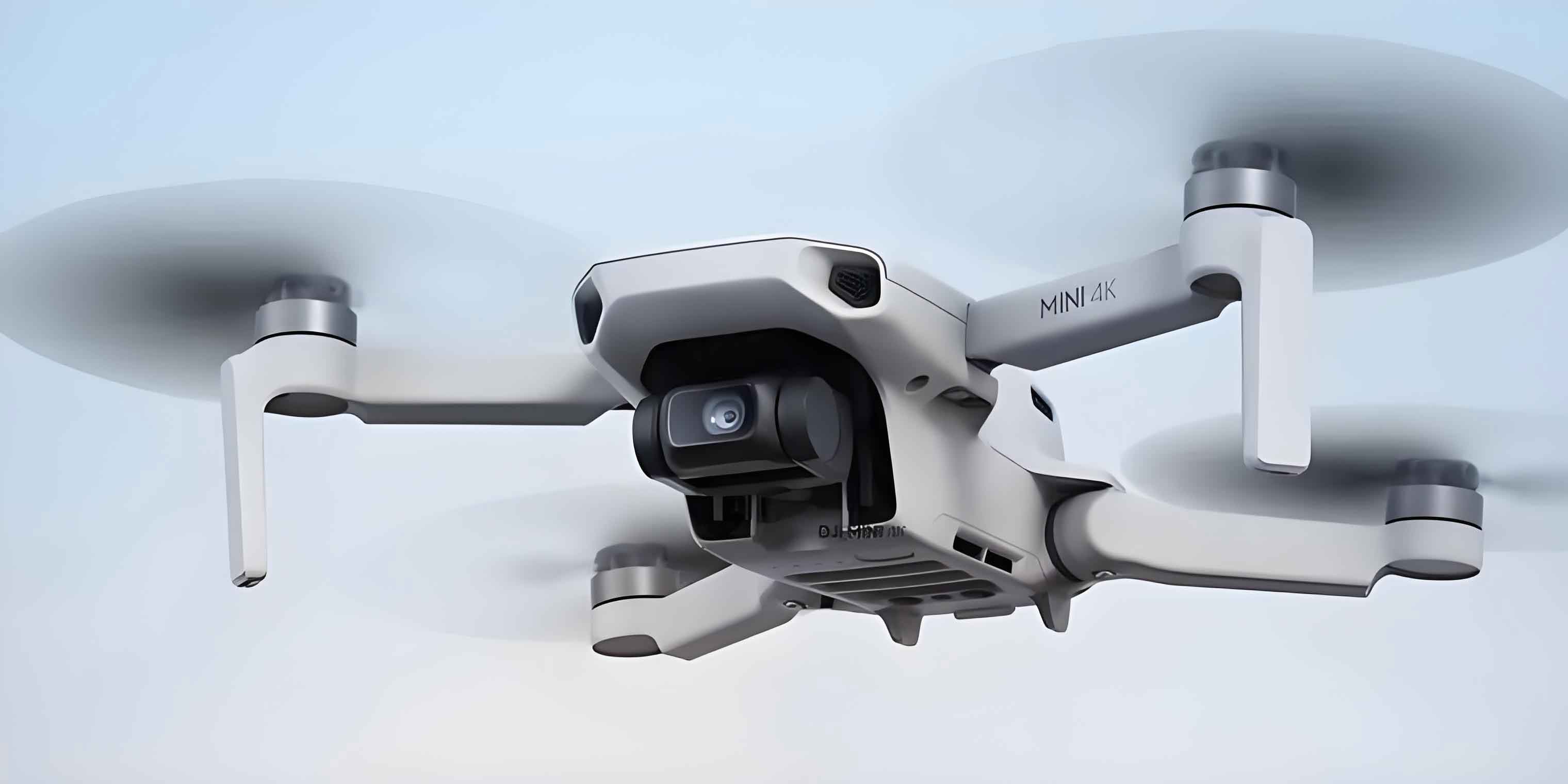
The core innovation of this work lies in creating a closed-loop control system for the UAV drone. The system integrates a perception module to “see” and measure the crop rows, a decision module to calculate necessary flight adjustments, and an execution module to seamlessly implement these adjustments via the drone’s flight controller. This transforms the UAV drone from a passive follower of a pre-programmed grid into an active, perceptive agent capable of responding to the immediate agricultural environment. The foundation for this spatial awareness is provided by BDS, which delivers continuous, centimeter-level accurate positioning and timing data. This geospatial anchor allows every perceived plant location and every calculated flight path correction to be grounded in an absolute geodetic frame, ensuring consistency and repeatability across vast and variable field terrains.
The technical challenge is multifaceted. It involves robust machine vision algorithms to reliably identify corn plants under varying growth stages and lighting conditions, efficient sensor fusion to marry visual data with precise BDS coordinates, and a robust control logic that translates perceived row-spacing discrepancies into smooth, stable, and safe flight path corrections for the UAV drone. The algorithm must balance responsiveness with flight stability—making quick adjustments to follow row variations without causing erratic drone movement that could disrupt spray uniformity or jeopardize flight safety. This document details the systematic approach taken to design this adaptive path planning algorithm, the hardware-software integration on a UAV drone platform, and the comprehensive field trials conducted to quantify its performance against traditional fixed-path methods.
Algorithm Design and System Architecture
The proposed system is architected around a real-time perception-decision-action pipeline. The primary objective is for the UAV drone to autonomously adjust its inter-line flight spacing (the distance between parallel flight swaths) to match the locally measured corn row spacing.
1. Row-Spacing Perception Module
The first critical step is endowing the UAV drone with the capability to perceive the crop structure beneath it. This is achieved through a multi-sensor fusion approach combining BDS and computer vision.
Data Acquisition Platform: A specialized data collection platform was configured using a commercial plant protection UAV drone frame. It was equipped with a high-precision BDS (Beidou III) RTK module providing real-time kinematic positioning, an integrated multi-spectral imaging camera, and an Inertial Measurement Unit (IMU). This platform was used to gather foundational datasets across diverse cornfields at key growth stages: seedling (≈30 cm height), jointing (≈120 cm height), and filling stage. The synchronized data streams—timestamped BDS/GNSS coordinates, multi-spectral image frames, and IMU orientation data—were logged to construct a georeferenced library of corn plant distribution patterns.
Row Identification Algorithm: Processing the visual data to extract row structure is a non-trivial task due to leaf occlusion, shadows, and weed interference. A deep learning-based approach was adopted for its robustness. An improved YOLOv5 model was trained on the collected multi-spectral image datasets to detect and localize individual corn plant stems or canopy centers within each image frame. The pixel coordinates of detected plants are then transformed into real-world geodetic coordinates using the camera’s intrinsic parameters and the synchronized, precise BDS position and attitude data of the UAV drone. This generates a georeferenced point cloud of plant locations directly below the drone’s recent flight path.
Real-time Spacing Calculation: A clustering and linear fitting algorithm operates on this localized plant point cloud. It groups points into distinct rows based on their spatial distribution and fits lines to represent the central axis of each row. The local row spacing ($d_{measured}$) is then calculated as the perpendicular distance between these fitted adjacent row centerlines. This calculation is performed continuously as the UAV drone advances, providing a stream of real-time spacing measurements. The process can be summarized by the following logical flow, where $P_{i}$ represents a plant’s geodetic coordinates and $L_{j}$ represents a fitted row line:
- Detection: $$P_{i} = (X_{i}, Y_{i}, Z_{i}) \quad \text{where } i=1,2,…,n, \text{ derived from image + BDS fusion.}$$
- Clustering & Fitting: Group ${P_{i}}$ into clusters $C_{k}$ corresponding to rows. For each cluster, fit a line $L_{k}$.
- Spacing Calculation: For adjacent lines $L_{j}$ and $L_{j+1}$, compute $$d_{measured} = \text{distance}(L_{j}, L_{j+1}).$$
2. Dynamic Path Adjustment Algorithm
The core intelligence of the system resides in the path adjustment algorithm. Its function is to translate the perceived row spacing ($d_{measured}$) into a corrective lateral offset for the UAV drone’s planned flight path. The target or set row spacing ($d_{set}$) is defined based on the field’s nominal planting specification or agronomic requirements.
The fundamental input is the spacing error:
$$\Delta d = d_{measured} – d_{set}$$
A naive approach would be to command an immediate lateral shift proportional to $\Delta d$. However, this can lead to oscillatory or jerky flight behavior, especially with sensor noise or rapid row spacing changes. Therefore, a “Segmented Smooth Control Strategy Based on Row-Spacing Variation Rate” was developed. This strategy categorizes the adjustment into three distinct modes based on the magnitude of the error, each with its own control gains and smoothing constraints to ensure flight stability for the UAV drone.
The logic for determining the adjustment mode and calculating the final lateral offset command ($\delta_{cmd}$) is defined as follows:
| Mode | Condition (Error Magnitude) | Control Logic & Offset Calculation | Purpose |
|---|---|---|---|
| Fine-Tuning Mode | $|\Delta d| \leq \alpha$ (e.g., $\alpha = 3$ cm) | $\delta_{cmd} = K_{f} \cdot \Delta d$, with $K_{f} = 0.5$. A low-pass filter is applied to the command for smooth, minor corrections. | Handles minor noise and very gradual variations, preventing high-frequency jitter in the UAV drone’s path. |
| Standard Adjustment Mode | $\alpha < |\Delta d| \leq \beta$ (e.g., $\beta = 5$ cm) | $\delta_{cmd} = K_{s} \cdot \Delta d$, with $K_{s} = 1.0$. Direct compensation is used with moderate smoothing. | Addresses typical, expected variations in row spacing, ensuring the UAV drone accurately tracks the rows. |
| Emergency Correction Mode | $|\Delta d| > \beta$ | $\delta_{cmd} = K_{e} \cdot \Delta d$, with $K_{e} = 1.0$. The command is combined with strict trajectory smoothing constraints (e.g., limiting maximum turn rate) to ensure stability. | Responds to sudden, large discrepancies (e.g., at field edges or major planting errors) while maintaining safe and stable flight for the UAV drone. |
The output $\delta_{cmd}$ is fed to the UAV drone’s flight controller as a continuous lateral offset to the baseline pre-planned path. This allows the drone to effectively “slide” its planned parallel swaths closer together or farther apart in real-time, ensuring the spray swath center aligns optimally with the perceived crop row center.
3. System Integration and Hardware Deployment
For practical operation, the algorithms were integrated into a cohesive system deployed on a standard plant protection UAV drone. The row identification and spacing calculation algorithms run on a dedicated, low-power edge computing unit (< 15W) mounted on the UAV drone. The dynamic path adjustment logic is implemented as an extension module within the drone’s open-source flight control software (e.g., PX4 or ArduPilot).
High-speed communication buses (CAN/CAN FD) ensure low-latency data exchange: the BDS-RTK module and IMU stream positioning/orientation data to both the edge computer and the flight controller. The edge computer processes images, computes $d_{measured}$, and passes this value to the flight controller’s path adjustment module. This module calculates $\delta_{cmd}$ and interfaces with the low-level attitude controller to adjust the drone’s trajectory. The entire loop, from image capture to actuator adjustment, is designed to have a total latency of less than 1 second, which is critical for maintaining effective tracking at typical UAV drone flight speeds of 3-6 m/s.
Performance Evaluation Methodology
To rigorously assess the effectiveness of the adaptive algorithm for the UAV drone, a set of quantitative performance indicators (KPIs) was established, focusing on application accuracy, economic efficiency, biological efficacy, and system stability.
| Category | Indicator | Definition / Formula | Optimal Value |
|---|---|---|---|
| Application Accuracy | Missed Spray Rate (MR) | Percentage of target plant canopy area receiving no spray deposit. Measured using water-sensitive papers or tracer dyes placed within the canopy. | Minimize |
| Overlap Spray Rate (OR) | Percentage of ground or plant area receiving spray deposits from two or more overlapping swaths. | Minimize | |
| Positioning Error (PE) | Euclidean distance between the BDS-reported UAV drone position and a ground-truth RTK base station measurement: $$PE = \sqrt{(X_{BDS}-X_{RTK})^2 + (Y_{BDS}-Y_{RTK})^2 + (Z_{BDS}-Z_{RTK})^2}$$ | Minimize (Target: < 3 cm) | |
| Economic & Biological Efficacy | Pesticide Utilization Efficiency (PUE) | Ratio of the pesticide mass deposited on the target canopy to the total mass sprayed. Higher PUE indicates less waste. Can be estimated from deposition studies. | Maximize |
| Control Efficacy (CE) for Corn Aphid | Percentage reduction in pest population post-application compared to an untreated control plot. $$CE = (1 – \frac{N_{treatment}}{N_{control}}) \times 100\%$$ where $N$ is aphid count. | Maximize | |
| System Stability | Row-Spacing Identification Accuracy Fluctuation (RSF) | The standard deviation of the row-spacing identification accuracy over a continuous operation period. Measures the consistency of the perception module on the UAV drone. | Minimize |
Field Validation and Results Analysis
Field trials were conducted in cornfields exhibiting different types and degrees of row-spacing variability to test the robustness of the adaptive UAV drone system. Three distinct test scenarios were defined:
- Scenario A (Mechanical Planting, Moderate Variation): Fields planted with modern machinery, nominal spacing 60 cm, with observed variations between 55-65 cm.
- Scenario B (Manual Planting, High Variation): Fields with manual or older mechanical planting, nominal spacing 60 cm, with large observed variations between 50-70 cm.
- Scenario C (Growth Stage Impact): Fields at different growth stages (seedling vs. jointing) to test the vision algorithm’s performance under varying canopy cover and plant height.
In each scenario, a comparative experiment was set up. The Experimental Group employed the UAV drone equipped with the Beidou-guided adaptive path planning algorithm. The Control Group used an identical UAV drone model operating a standard, fixed-line, equidistant flight path based on the field’s nominal row spacing. All other parameters (flight speed, spray rate, nozzle type, weather conditions) were kept constant between groups within a trial.
The results from the comparative trials are consolidated in the table below. The data clearly demonstrates the superior performance of the adaptive algorithm for the UAV drone across all challenging scenarios.
| Performance Indicator | Scenario A (Mech. Planting) | Scenario B (Manual Planting) | Scenario C (Jointing Stage) |
|---|---|---|---|
| Fixed-Path UAV / Adaptive UAV | |||
| Missed Spray Rate (MR) | 12.5% / 3.8% | 18.2% / 4.5% | 15.7% / 4.1% |
| Overlap Spray Rate (OR) | 25.3% / 6.2% | 35.1% / 7.9% | 28.8% / 6.8% |
| Pesticide Utilization Efficiency (PUE) | 38% / 47% | 32% / 46% | 35% / 48% |
| Control Efficacy – Aphids (CE) | 88% / 93% | 85% / 92% | 87% / 94% |
The adaptive UAV drone system consistently reduced missed spray rates to below 5% and overlap rates to below 8%, even in high-variability manual planting fields where traditional methods suffered from over 18% miss and 35% overlap. This direct improvement in application precision translated into a significant boost in Pesticide Utilization Efficiency (PUE), elevating it to over 45% across all tests. The biological consequence was also positive, with a measurable improvement in aphid control efficacy, consistently exceeding 90% for the adaptive UAV drone.
Beyond application quality, the operational stability of the integrated system on the UAV drone was monitored during extended operations. Over a continuous 50-acre mission, the system’s core technical metrics remained within excellent tolerances, confirming its reliability for practical farm-scale use.
| Stability Indicator | Mean Value | Standard Deviation (Fluctuation) | Performance Target |
|---|---|---|---|
| BDS Positioning Error (PE) | 2.1 cm | ± 0.8 cm | < 3.0 cm |
| Row-Spacing Identification Accuracy | 95.7% | ± 2.3% (RSF) | > 90% |
| Algorithm Loop Latency | 850 ms | ± 120 ms | < 1000 ms |
Conclusion and Future Perspectives
This research successfully developed and validated an intelligent path planning system for plant protection UAV drones that dynamically adapts to in-field corn row spacing variability. By fusing high-precision Beidou navigation with robust machine vision-based row perception, the system enables a UAV drone to autonomously adjust its flight path in real-time. The field trials conclusively demonstrated that this adaptive approach overcomes the major shortcomings of fixed-path operation, dramatically reducing both missed sprays and overlapping sprays. This leads to a substantial increase in pesticide utilization efficiency, promotes more effective pest control, and reduces the environmental footprint of chemical applications.
The implementation of the segmented smoothing control strategy ensured that these precision gains were achieved without compromising the flight stability and operational safety of the UAV drone. The system’s performance was consistent across different planting patterns and crop growth stages, proving its robustness and practical applicability. This work effectively bridges the gap between static automation and dynamic field intelligence in agricultural aviation. It significantly lowers the dependency on operator skill for optimal path planning, as the UAV drone itself becomes the primary sensor and decision-maker for swath alignment.
Looking forward, this technology paves the way for even more advanced capabilities. Future work could integrate this row-following UAV drone with disease or stress detection sensors, creating a system that not only applies chemicals precisely along rows but also variably applies them based on real-time phytosanitary needs. Furthermore, the algorithm framework could be extended to other row crops like cotton, soybeans, or orchards with structured planting. The integration of Beidou-guided adaptive UAV drones represents a meaningful step forward in the realization of fully autonomous, precise, and sustainable crop management systems, contributing directly to the goals of precision agriculture and intelligent farm machinery development.