
As a developer deeply involved in modern defense technologies, I have witnessed firsthand the rapid evolution of threats posed by unmanned aerial vehicles (UAVs). The proliferation of small, agile drones and the emergence of drone swarms have compelled military forces worldwide to prioritize the development of robust anti-UAV systems. In this article, I will explore the intricacies of these systems, focusing on sensor fusion, kinetic and non-kinetic solutions, and the integration of cutting-edge technologies into armored platforms. The goal is to provide a comprehensive overview of how anti-UAV capabilities are reshaping battlefield dynamics, ensuring that our forces can effectively counter these pervasive threats.
The growing menace of UAVs, particularly in asymmetric warfare, cannot be overstated. Small drones, often commercially available, have been weaponized to conduct surveillance, deliver explosives, and overwhelm defenses through swarm tactics. This has elevated anti-UAV operations to a critical priority for militaries globally. In response, we have embarked on ambitious projects to create systems that can detect, track, and neutralize these threats with precision. The integration of such systems into vehicles like the Stryker armored car represents a significant leap forward, combining mobility with lethal anti-UAV firepower.
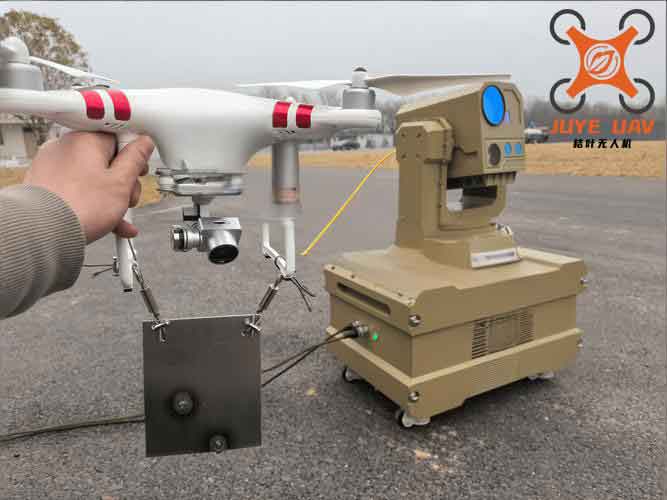
At the core of modern anti-UAV systems is sensor fusion, which amalgamates data from radar, electro-optical cameras, and electronic warfare sensors to provide a unified operational picture. This process enhances target acquisition accuracy and reduces reaction times. For instance, consider a scenario where a drone swarm approaches a defended position. The sensor fusion algorithm processes inputs from multiple sources to compute the position, velocity, and trajectory of each drone. Mathematically, this can be represented using a Kalman filter, which estimates the state of a dynamic system from noisy observations. The state vector $$ \mathbf{x}_k $$ at time $$ k $$ is updated as:
$$ \mathbf{x}_k = \mathbf{F}_k \mathbf{x}_{k-1} + \mathbf{B}_k \mathbf{u}_k + \mathbf{w}_k $$
where $$ \mathbf{F}_k $$ is the state transition model, $$ \mathbf{B}_k $$ is the control-input model, $$ \mathbf{u}_k $$ is the control vector, and $$ \mathbf{w}_k $$ is process noise. The measurement $$ \mathbf{z}_k $$ is given by:
$$ \mathbf{z}_k = \mathbf{H}_k \mathbf{x}_k + \mathbf{v}_k $$
with $$ \mathbf{H}_k $$ as the observation model and $$ \mathbf{v}_k $$ as measurement noise. By fusing data, the system achieves a high degree of situational awareness, crucial for engaging fast-moving UAVs. This anti-UAV approach minimizes false positives and ensures that only confirmed threats are engaged.
| Sensor Type | Detection Range | Accuracy | Advantages | Limitations |
|---|---|---|---|---|
| Radar | Up to 10 km | High for range and velocity | All-weather capability | Vulnerable to clutter and stealth |
| Electro-Optical | Up to 5 km | High for visual identification | Detailed imagery | Degraded by weather and darkness |
| Electronic Support Measures (ESM) | Varies by signal strength | High for RF emissions | Passive detection, no emission | Depends on enemy transmission |
| Acoustic | Up to 1 km | Moderate for direction | Low cost, passive | Limited range and noise sensitivity |
Kinetic solutions form the backbone of hard-kill anti-UAV capabilities. These involve direct fire from weapons such as 30mm autocannons or missiles. The fire control system on platforms like the Stryker uses laser rangefinders and ballistic computers to calculate firing solutions. The equation for projectile trajectory can be simplified as:
$$ y = x \tan(\theta) – \frac{g x^2}{2 v_0^2 \cos^2(\theta)} $$
where $$ y $$ is the vertical displacement, $$ x $$ is horizontal distance, $$ \theta $$ is the elevation angle, $$ v_0 $$ is initial velocity, and $$ g $$ is acceleration due to gravity. For engaging UAV swarms, proximity-fused munitions are particularly effective. These rounds explode at a predetermined point, creating a fragmentation field that can neutralize multiple drones. The effectiveness of such munitions against a swarm can be modeled using probability theory. If each round has a kill probability $$ p $$ against a single drone, the probability of neutralizing at least $$ k $$ drones in a swarm of size $$ n $$ with $$ m $$ rounds is given by:
$$ P = 1 – \sum_{i=0}^{k-1} \binom{n}{i} (1 – p)^i p^{n-i} $$
This highlights the challenge of countering swarms, where even a few surviving drones can complete missions. Thus, anti-UAV systems must achieve high kill probabilities through rapid, accurate fire.
Non-kinetic solutions, especially electronic warfare (EW), offer a soft-kill alternative for anti-UAV operations. EW systems can be passive or active. Passive systems, like the “Freedom” EW suite, listen for enemy RF emissions without transmitting, making them covert. The signal-to-noise ratio (SNR) for detection is critical:
$$ \text{SNR} = \frac{P_r}{N_0 B} $$
where $$ P_r $$ is received power, $$ N_0 $$ is noise spectral density, and $$ B $$ is bandwidth. By analyzing these signals, passive EW can identify and track UAV controllers. Active EW, on the other hand, jams or spoofs drone communications. The jamming-to-signal ratio (J/S) determines effectiveness:
$$ J/S = \frac{P_j G_j R_s^2}{P_s G_s R_j^2} $$
where $$ P_j $$ and $$ P_s $$ are jamming and signal powers, $$ G_j $$ and $$ G_s $$ are antenna gains, and $$ R_j $$ and $$ R_s $$ are distances from jammer to receiver and transmitter to receiver, respectively. High J/S ratios can disrupt drone control links, causing them to crash or return to base. This anti-UAV tactic is invaluable against swarms, as it can disable multiple drones simultaneously without physical destruction.
| EW Mode | Principle | Advantages | Disadvantages | Typical Use Case |
|---|---|---|---|---|
| Passive Listening | Detects RF emissions without transmitting | Covert, low risk of detection | Requires enemy transmission | Surveillance in contested environments |
| Active Jamming | Transmits noise to overload receiver | Immediate disruption | Reveals position, may affect friendly systems | Countering imminent drone attacks |
| Spoofing | Transmits deceptive signals | Can take control of drones | Complex to implement | Neutralizing drones for capture |
| Cyber Attacks | Exploits software vulnerabilities | Precise, minimal collateral damage | Requires intelligence on drone systems | Targeted anti-UAV operations |
The integration of anti-UAV systems into mobile platforms like the Stryker armored vehicle enhances their operational flexibility. These vehicles combine sensors, EW suites, and weapons into a cohesive unit. The command and control (C2) architecture relies on networked systems to share data across units, forming a distributed anti-UAV grid. The effectiveness of such a grid can be analyzed using network theory. If each node (e.g., a Stryker vehicle) has a detection probability $$ d $$ and engagement probability $$ e $$, the overall probability of neutralizing a threat in a network of $$ N $$ nodes is:
$$ P_{\text{network}} = 1 – (1 – d \cdot e)^N $$
This shows how scalability improves anti-UAV coverage. Moreover, the use of autonomous targeting algorithms reduces human reaction times. These algorithms employ machine learning to classify threats based on sensor data. For example, a convolutional neural network (CNN) can process electro-optical imagery to identify drone types with accuracy $$ A $$ given by:
$$ A = \frac{\text{True Positives} + \text{True Negatives}}{\text{Total Samples}} $$
As these technologies mature, anti-UAV systems will become more autonomous, capable of engaging swarms with minimal human intervention.
Looking ahead, the future of anti-UAV warfare will involve multi-layered defense systems. This includes directed-energy weapons like lasers and high-power microwaves, which offer near-instantaneous engagement. The power density $$ I $$ of a laser at range $$ R $$ is:
$$ I = \frac{P}{\pi (R \theta)^2} $$
where $$ P $$ is laser power and $$ \theta $$ is beam divergence. Such weapons can be highly effective against small drones, providing a cost-effective anti-UAV solution. Additionally, advances in artificial intelligence will enable predictive analytics, anticipating swarm behaviors based on historical data. The integration of space-based sensors could further extend detection ranges, creating a global anti-UAV network.
In conclusion, the development of comprehensive anti-UAV systems is pivotal to modern military strategy. Through sensor fusion, kinetic and non-kinetic solutions, and platform integration, we are building defenses that can counter evolving drone threats. The anti-UAV landscape is dynamic, requiring continuous innovation to stay ahead of adversaries. As we refine these technologies, the goal remains clear: to protect our forces and assets from the pervasive danger of UAVs, ensuring dominance in future conflicts.
The journey toward advanced anti-UAV capabilities is ongoing, with each breakthrough bringing us closer to a secure battlespace. From testing grounds to deployment, these systems represent a synergy of engineering, tactics, and vision. I am confident that, with sustained effort, anti-UAV technologies will become a cornerstone of defense, mitigating risks and saving lives in an era where drones are ubiquitous.