
Reflecting on the global economic landscape since the 2008 financial crisis, I observe a pervasive ‘new normal’ characterized by low growth, high unemployment, and diminished investment returns in many advanced economies. Yet, amidst this backdrop, one sector has defied the trend and erupted with remarkable vitality: the civilian Unmanned Aerial Vehicle (UAV) market. From my perspective, the journey of civilian UAVs from niche applications to a burgeoning industry encapsulates a significant technological and economic shift. This narrative will explore the development trajectory, inherent characteristics, future directions, and necessary policy frameworks for civilian UAVs, weaving in data and analytical models to substantiate the discussion.
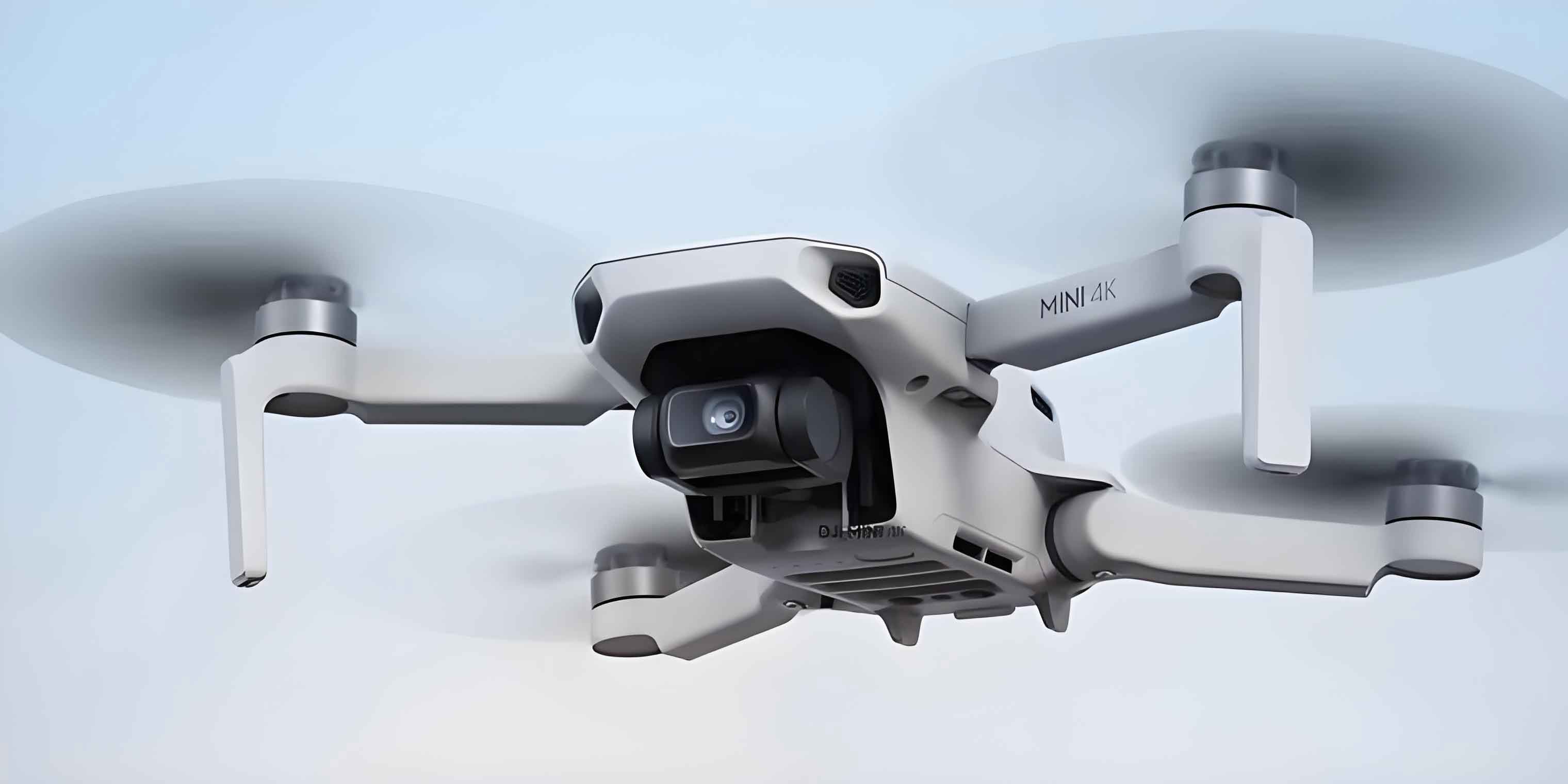
The term ‘Unmanned Aerial Vehicle’ or UAV refers to an aircraft piloted by remote control or onboard computers. Compared to manned aircraft, civilian UAVs offer distinct advantages: compact size, operational flexibility, and significantly lower costs. Historically, UAVs originated in military contexts as target drones. However, technological maturation and cost reduction have propelled their entry into the civilian sphere. We can categorize civilian UAVs broadly into professional-grade and consumer-grade segments. Professional civilian UAVs serve sectors like meteorological sensing, agricultural monitoring, and infrastructure inspection. In contrast, consumer civilian UAVs cater to photography, recreation, and personal navigation. The evolution of the civilian UAV is a testament to adaptive innovation.
Tracing the lineage of civilian UAVs requires acknowledging their military ancestry. The conceptual seeds were sown in the early 20th century, but modern development accelerated during the late 20th century’s conflicts. It was in the post-Cold War era, and particularly the early 21st century, that concerted efforts emerged to transition UAV technology for civilian purposes. Internationally, agencies like NASA in the United States established dedicated centers for civilian UAV application research around 2002. The European Union formulated a roadmap for civilian UAV integration in 2006. Nations including Israel, Japan, and South Korea have also implemented policies to foster their civilian UAV sectors. Domestically, China’s civilian UAV story began in earnest much later. While early drone systems existed in the mid-20th century for tasks like aerial surveying, the modern industry catalyst was the founding of companies like DJI in 2006. The subsequent decade witnessed an explosion of startups and increasing interest from large corporations, marking the true birth of a mass market for civilian UAVs.
Several defining characteristics mark the current state of the civilian UAV industry. First and foremost is its explosive growth and promising market potential. Despite the global economic headwinds, demand for civilian UAVs has skyrocketed. The data below illustrates the projected sales scale for the civilian UAV market in China, a leading region in this industry. The growth rates are consistently high, underscoring the sector’s dynamism.
| Year | Market Size (Billion RMB) | Year-on-Year Growth Rate |
|---|---|---|
| 2014 | 1.5 | 50% |
| 2015 | 2.33 | 55.3% |
| 2016 | 3.95 | 69.5% |
| 2017 | 6.72 | 70.2% |
| 2018 (Projected) | 11.09 | 65.0% |
This growth can be modeled using a compound annual growth rate (CAGR) formula. If we denote the market size in year \( t \) as \( S_t \), the initial size as \( S_0 \), and the average growth rate as \( r \), the projection for a future year \( n \) can be expressed as:
$$ S_n = S_0 \times (1 + r)^n $$
For instance, using the 2014 size of 1.5 billion RMB and an approximate CAGR derived from the table, one can forecast future values. The robustness of this growth highlights the immense economic potential embedded in the civilian UAV ecosystem.
The second hallmark is the vast and expanding application spectrum for civilian UAVs. Their utility spans from precision agriculture and environmental conservation to logistics, disaster response, and media. In disaster management, for example, civilian UAVs have proven invaluable for rapid assessment and mapping in inaccessible areas. The operational efficiency gain can be quantified. Consider a traditional land survey task versus one conducted by a civilian UAV. The time saved, \( \Delta T \), and cost reduction, \( \Delta C \), are significant:
$$ \Delta T = T_{\text{manual}} – T_{\text{UAV}} $$
$$ \Delta C = C_{\text{manual}} – C_{\text{UAV}} $$
where \( T_{\text{manual}} \) and \( C_{\text{manual}} \) represent the time and cost of manual methods, and \( T_{\text{UAV}} \) and \( C_{\text{UAV}} \) represent those for civilian UAV-based methods. This efficiency drives adoption across sectors, continuously unlocking new use cases for civilian UAVs.
However, the rapid proliferation of civilian UAVs has unveiled a third characteristic: regulatory challenges and safety incidents. The phenomenon of ‘rogue flights’—unauthorized operations—poses risks to airspace security, public privacy, and even national safety. The absence of a mature, globally harmonized regulatory framework is a critical friction point. The probability of an incident, \( P_{\text{incident}} \), could be loosely correlated with the number of operational units \( N \) and the regulatory laxity \( L \):
$$ P_{\text{incident}} \propto N \times L $$
This underscores the urgent need for structured oversight as the civilian UAV population grows.
Looking ahead, I anticipate several dominant trends will shape the future of civilian UAVs. Intelligentization stands at the forefront. As labor costs rise and pilot certification becomes stricter, embedding artificial intelligence (AI) is key. Future civilian UAVs will possess enhanced autonomous capabilities for navigation, obstacle avoidance, and target recognition. This shift can be framed as increasing the autonomy level \( A \), which reduces the required human intervention \( H \):
$$ H = f(A) \quad \text{where} \quad \frac{dH}{dA} < 0 $$
Higher \( A \) means a civilian UAV can perform complex tasks with minimal human input, broadening its applicability and reducing operational costs.
The second trend is Industrialization. The market’s diversification will push the industry toward a specialized, integrated supply chain. No single company can master all components—from airframe materials and propulsion systems to flight controllers and sensors. The industry will stratify into layers: upstream (raw materials, core components like engines and chips), midstream (system integration, whole machine manufacturing), and downstream (application services, data analysis). The value added at each layer \( V_i \) contributes to the total industry value \( V_{\text{total}} \):
$$ V_{\text{total}} = \sum_{i=1}^{n} V_i $$
where \( n \) represents the number of specialized industrial segments. This industrialization is already visible, with firms focusing exclusively on gimbal technology, propulsion, or software development for civilian UAVs.
Branding will emerge as the third critical trend. In the growth phase, technical specs dominate, but as the civilian UAV market matures and products homogenize, brand equity becomes a primary differentiator. Brand loyalty influences repurchase rates and allows for premium pricing. The relationship between brand strength \( B \), market share \( M \), and profit margin \( \pi \) can be conceptualized as:
$$ M, \pi = g(B) \quad \text{with} \quad \frac{dM}{dB} > 0, \frac{d\pi}{dB} > 0 $$
Companies will invest in community building, customer experience, and brand storytelling to foster emotional connections with users of their civilian UAVs.
To harness these trends and ensure sustainable growth, proactive policy measures are indispensable. First, governments must establish and refine regulatory and oversight systems for civilian UAVs. This involves defining clear airspace corridors (especially for low-altitude operations), streamlining flight approval processes, setting technical standards for communication and identification, and mandating pilot training and certification. A risk-based regulatory model could be employed, where the regulatory burden \( R \) is a function of the UAV’s weight \( w \), operational altitude \( h \), and proximity to sensitive areas \( s \):
$$ R = k \cdot f(w, h, s) $$
where \( k \) is a compliance constant. Such a framework balances innovation with safety for civilian UAV operations.
Second, a dual-track approach involving both state support and corporate innovation is vital. Public policy should encourage civilian UAV development through R&D tax incentives, grants for foundational research, and support for testing infrastructure. Simultaneously, firms must drive technological breakthroughs. The innovation output \( I \) can be seen as a function of government support \( G \) and private investment \( P \):
$$ I = \alpha G + \beta P + \gamma G P $$
where \( \alpha, \beta, \gamma \) are coefficients representing the effectiveness of each factor and their synergy. This collaborative model accelerates the advancement of civilian UAV technology and its integration into the national economy.
In conclusion, the ascent of civilian UAVs represents a bright spot in the contemporary economic narrative. From humble beginnings, civilian UAVs have evolved into versatile tools with profound impacts across myriad sectors. The path forward is marked by intelligentization, industrialization, and branding. However, realizing the full potential of civilian UAVs hinges on constructing a robust regulatory ecosystem that promotes safe and innovative use. As we navigate the complexities of the global economy, the continued evolution of the civilian UAV industry stands as a powerful example of how technology, when guided by thoughtful policy and market dynamics, can create new frontiers for growth and human endeavor. The future sky will undoubtedly be busier, smarter, and more connected, thanks to the ever-evolving capabilities of civilian UAVs.
The integration of civilian UAVs into daily operations across industries is not merely a possibility but an ongoing reality. Consider the logistical sector, where last-mile delivery experiments using civilian UAVs are refining efficiency models. The optimization function for a delivery network incorporating civilian UAVs might minimize total cost \( C_{\text{total}} \) subject to time constraints \( T_{\text{max}} \):
$$ \text{Minimize } C_{\text{total}} = C_{\text{fleet}} + C_{\text{energy}} + C_{\text{maintenance}} $$
$$ \text{Subject to } T_{\text{delivery}} \leq T_{\text{max}} $$
where \( C_{\text{fleet}} \) is the capital cost of the civilian UAV fleet, \( C_{\text{energy}} \) is the energy consumption cost, and \( C_{\text{maintenance}} \) is upkeep cost. Solving such optimization problems is key to scalable deployment.
Furthermore, data acquisition via civilian UAVs generates immense value. In agriculture, multispectral imaging from civilian UAVs allows for precise calculation of vegetation indices like NDVI (Normalized Difference Vegetation Index):
$$ \text{NDVI} = \frac{(\text{NIR} – \text{Red})}{(\text{NIR} + \text{Red})} $$
where NIR is near-infrared reflectance and Red is red reflectance. This data drives decisions on irrigation and fertilization, boosting crop yield—a direct economic benefit enabled by civilian UAV technology.
The global nature of the civilian UAV supply chain also merits analysis. Production relies on a network spanning multiple continents for semiconductors, batteries, and composite materials. The resilience of this supply chain, \( R_{\text{chain}} \), can be modeled as a function of node diversity \( D \) and inventory buffers \( B \):
$$ R_{\text{chain}} = h(D, B) $$
Disruptions highlight the need for strategic stockpiling and diversified sourcing to sustain civilian UAV manufacturing.
Finally, societal acceptance is a variable in the adoption equation. Public perception \( P_{\text{public}} \) of civilian UAVs influences regulatory speed and market penetration. It is shaped by factors like perceived utility \( U \), privacy concerns \( Q \), and safety record \( S \):
$$ P_{\text{public}} = j(U, Q, S) $$
Industry stakeholders must engage in transparent communication about the benefits and safeguards associated with civilian UAVs to foster positive perception and ensure the technology’s social license to operate continues to grow in tandem with its technological capabilities.