
The modern security landscape presents unprecedented complexities, demanding law enforcement agencies to evolve continuously. Central to this evolution is the cultivation of highly skilled, operationally-ready personnel. Traditional training paradigms often struggle to keep pace with rapid technological integration and shifting threat environments. Therefore, constructing a scientific, rational, and sustainable model for cultivating operational police talent is a paramount task for law enforcement education systems worldwide.
This necessity is profoundly exemplified in the realm of emerging technologies, particularly the integration of police drone systems. Police drone technology has transitioned from a novel gadget to a critical force multiplier, deployed across diverse operational domains such as criminal investigation, narcotics interdiction, border and coastal patrols, traffic management, and public order maintenance. However, the effective deployment of a police drone is not merely a function of hardware; it is fundamentally dependent on the human operator’s expertise, tactical judgment, and seamless integration into broader police operations. The current phase of police drone utilization often remains rudimentary, highlighting a significant gap between technological acquisition and the development of corresponding operational human capital. This article, from a practitioner’s perspective, explores a holistic educational model that bridges this gap, synthesizing formal academic education with continuous professional training throughout an officer’s career.
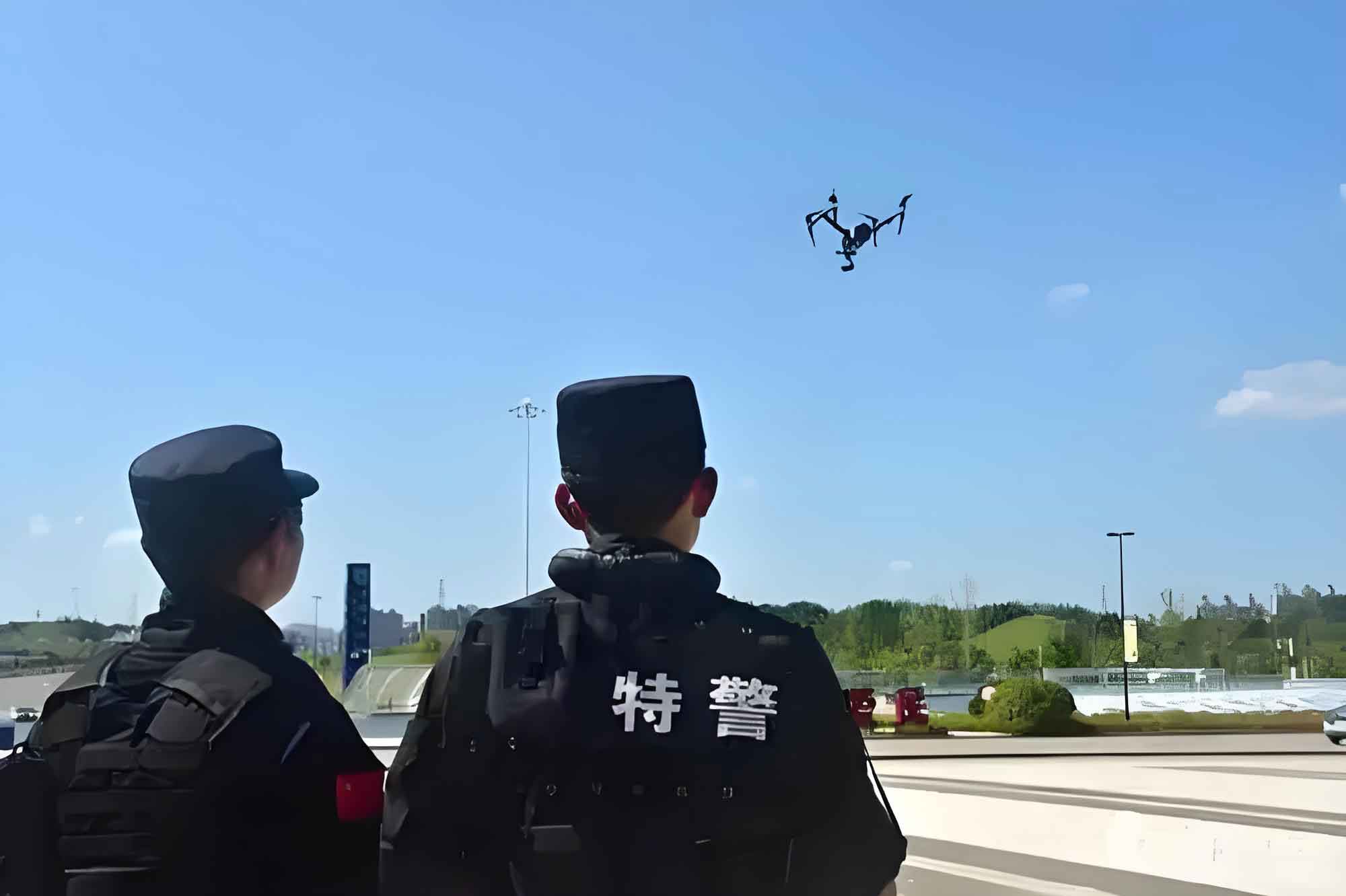
The core thesis is that operational proficiency, especially for technology-intensive tools like the police drone, cannot be achieved through a single educational event. It requires a “whole-process” management approach. This model positions formal academy education as the foundational starting point, characterized by its integration of theory and initial practice. This foundation must then be continuously reinforced, adapted, and expanded upon through mandatory, systematic, and career-long professional training programs. Only such a holistic framework can ensure that law enforcement personnel remain agile, proficient, and capable of leveraging assets like the police drone to their full potential in service of public safety.
I. The Contemporary Imperative for Operational Talent Development
The mandate for operational excellence is clear. Law enforcement agencies globally face pressures to enhance effectiveness, legitimacy, and efficiency. This necessitates a workforce that is not only ethically grounded and legally knowledgeable but also tactically adept and technologically literate. The call is for personnel with “iron-clad” ideals, responsibility, skills, and discipline—attributes forged through relentless focus on real-world application.
In recent years, major initiatives have been launched to elevate the political caliber and operational readiness of entire police forces. These large-scale rotational training and实战大练兵 (practical combat drilling) campaigns underscore a paradigm shift towards an “一切围绕实战、一切服务实战” (everything centers on actual combat, everything serves actual combat) ethos. The educational philosophy within police academies has similarly evolved, championing an integrated “teach, learn, drill, and deploy” model. This model emphasizes the fusion of academic instruction with field exercises and extended operational internships, providing a valuable template for specialized fields like police drone operations.
Despite progress, significant challenges persist in the realm of in-service training. While efforts to enhance officers’ professional capabilities are ongoing, the systems governing such training often lack uniformity, robust institutional safeguards, and a cohesive strategic vision. Training can be sporadic, inconsistently evaluated, and not fully integrated into career progression pathways. For a technology as dynamic as the police drone, this ad-hoc approach is insufficient. The rapid iteration of platforms, sensors, software, and countermeasures means that an officer’s certification at one point in time may become obsolete without periodic, structured re-education.
This analysis, therefore, seeks to synthesize the strengths of existing academy-based education with the urgent need for systematic career-long learning. Using the police drone operator as a case study, we propose a structured, holistic educational model designed to produce and sustain true operational experts.
II. Foundational Pillar: Academy-Based Education for Operational Readiness
Formal education at police academies and affiliated universities serves as the indispensable bedrock for operational talent. This stage is not merely about conferring a degree; it is about instilling the core identity, knowledge base, and initial skill set of a professional law enforcement officer. For police drone talent, this education must be meticulously engineered to blend rigorous academic theory with tangible, operationally-relevant practice. The goal is to produce graduates who are not just certified remote pilots, but tactically-minded public safety professionals who understand how to integrate aerial assets into the policing mission. The successful implementation of this pillar relies on six critical, interlocking components.
| Component | Core Objective | Key Actions & Strategies |
|---|---|---|
| 1. Grounding in Frontline Needs | Align curriculum and training with real-world operational gaps and requirements. | Establish permanent liaison channels with operational units. Conduct systematic needs analyses. Organize joint forums and实战化 (operationalization) research projects where faculty and students validate concepts in real-field conditions. |
| 2. Scientific Talent Cultivation Scheme | Create a master educational blueprint that defines goals, standards, and processes. | Define clear operational competency profiles. Increase the weight of practical training hours. Design immersive field internship programs with specific, measurable objectives tied to police drone applications. |
| 3. Integrated Curriculum System | Build a coherent course structure balancing theory, skill, and tactical application. | Develop three core modules: Police Drone Theory (e.g., regulations, airspace, physics), Police Drone Piloting Skills, and Police Drone Tactical Integration. Create hybrid courses like “UAV-Enhanced Police Command” and “Tactical Drone Operations.” |
| 4. Strategic Internship Base Planning | Translate academic learning into applied competence under realistic conditions. | Co-design internship bases with partner agencies to feature典型实战场景 (typical实战 scenes): crime scene勘察 (scene examination), mobile surveillance, narcotics search patterns. Establish clear protocols for on-site mentorship and performance assessment. |
| 5. Optimized Dual-Source Faculty | Assemble a teaching corps with both academic depth and frontline experience. | Implement mandatory faculty sabbaticals for operational immersion (e.g., 2+ months annually). Institute a “dual-instructor” system for tactical courses, pairing an academic professor with a serving operational drone教官 (instructor). |
| 6. Dynamic Quality Evaluation Standards | Continuously assess and improve the educational output based on operational feedback. | Develop a multi-dimensional evaluation index system encompassing knowledge, skills, tactical thinking, and innovation. Implement a robust graduate tracking and feedback mechanism to inform curriculum adjustments. |
The effectiveness of the academy phase can be conceptualized as a function of the synergy between these components. We can propose a simplified relational formula:
$$ E_{academy} = \\alpha \\left( \\sum_{i=1}^{6} C_i \\cdot S_i \\right) + \\beta F $$
Where:
- $E_{academy}$ represents the overall effectiveness of the academy education phase.
- $C_i$ denotes the quantitative strength or implementation level of each of the six Components (from Table 1).
- $S_i$ is a synergy coefficient for component $i$, representing how well it is integrated with the others ($0 < S_i \\leq 1$).
- $\\alpha$ is a normalization constant.
- $F$ represents the quality and frequency of feedback from the graduate tracking system, and $\\beta$ is its weighting factor.
This model underscores that simply having strong individual components ($C_i$) is insufficient; their integration ($S_i$) and the system’s capacity for self-correction via feedback ($F$) are critical multipliers.
III. Sustaining Pillar: Career-Long In-Service Professional Training
Academy graduation is the commencement, not the conclusion, of an officer’s educational journey. The dynamic nature of crime, technology, and society dictates that skills must be perpetually refreshed and expanded. This is the realm of in-service professional training—a systematic, career-spanning process of skill sustainment and enhancement. For police drone operators, this is non-negotiable. The technology, regulations, and tactical applications evolve too rapidly for initial training to remain valid for an entire 25-30 year career. A holistic model must institutionalize this continuous learning phase.
The transition to effective in-service training requires a fundamental shift in organizational mindset. Training must be viewed not as a discretionary perk or a disruption to “real work,” but as an integral, core component of professional duty and organizational resilience. It is the primary mechanism for maintaining the “iron-clad” operational本领 (competence) demanded of modern police forces. To actualize this, four strategic focal areas are essential.
| Strategic Focus | Challenge Addressed | Implementation Methodology |
|---|---|---|
| 1. Institutionalizing Training & Shifting Mindsets | Training viewed as secondary to operations; lack of systemic mandate. | Embed training completion and performance into promotion and appraisal systems. Secure executive-level endorsement and resource allocation. Frame training as a critical investment in officer safety and mission efficacy. |
| 2. Developing Scenario-Based Training Modules | Generic training lacking operational relevance and tactical depth. | Collaboratively develop advanced courses focused on complex, multi-domain scenarios: Counter-UAV tactics, drone-involved hostage situations, major event security overwatch, integrated air-ground operations. |
| 3. Adopting Hybrid & Flexible Delivery Mechanisms | Operational tempo and resource constraints limiting access to集中培训 (centralized training). | Leverage “Micro-Learning” via short, focused video lessons on specific skills or updates. Utilize robust Police E-Learning platforms for mandatory theoretical and regulatory refreshers. Complement with intensive, short-duration (e.g., 5-day) hands-on field exercises. |
| 4. Fusing Academic and Operational Expertise | Gap between theoretical knowledge from academies and frontline practical know-how. | Constitute joint training teams featuring academy faculty (providing latest research, theory) and master operator教官 (instructors) from elite units (providing proven tactics, lessons learned). This ensures training is both前瞻性 (forward-looking) and immediately applicable. |
The impact of in-service training on maintaining operational capability can be modeled as a decay and reinforcement process. An officer’s operational proficiency $P(t)$ at time $t$ after initial academy training decays naturally due to skill fade, technological obsolescence, and evolving tactics. Periodic training interventions act as reinforcement functions.
$$ P(t) = P_0 \\cdot e^{-\\lambda t} + \\sum_{k=1}^{n} \\left( \\Delta P_k \\cdot e^{-\\lambda (t – t_k)} \\cdot H(t – t_k) \\right) $$
Where:
- $P_0$ is the initial proficiency post-academy.
- $\\lambda$ is the decay rate constant (dependant on technology volatility and individual factors).
- $\\Delta P_k$ is the proficiency gain from the $k$-th in-service training event.
- $t_k$ is the time at which the $k$-th training occurs.
- $H(t – t_k)$ is the Heaviside step function (ensuring training only affects time after it occurs).
- $n$ is the total number of training events.
This illustrates that without the summation term (the structured in-service training), proficiency exponentially decays. The training events $\\Delta P_k$ must be significant and timely to maintain $P(t)$ above a critical operational threshold.
IV. The Holistic Paradigm: Whole-Process Career Education
The proposed model culminates in the philosophy of Whole-Process Career Education. This is not merely the sequential occurrence of academy education followed by occasional training courses. It is the intentional, systematic design of learning as a continuous, seamless, and career-encompassing process. It embodies the principles of a “learning organization” and “lifelong learning” within the specific, high-stakes context of law enforcement. For a police drone specialist, this paradigm ensures their development trajectory is managed from cadet to seasoned expert.
The whole-process model rests on three axiomatic understandings:
- Academy Education as the Foundational Node: This is the primary, formalized intervention where professional identity is cast, core values are inculcated, and the foundational knowledge-skill matrix is established. It sets the trajectory and standard for all future learning. Its quality directly influences the efficiency and effectiveness of all subsequent in-service training.
- In-Service Training as the Sustaining Lifeline: This is the recurrent, adaptive mechanism that connects the foundational node to the ever-changing operational environment. It is the process through which the officer’s capability portfolio is periodically updated, upgraded, and recalibrated. It is not optional; it is an organizational imperative for maintaining readiness.
- The Integration of Learning Ecosystems: The model demands the dissolution of barriers between “the academy” and “the field.” This involves creating unified digital learning records (e.g., a “Police Credit Bank”), recognizing in-service training achievements formally, and ensuring the free flow of tactical lessons learned from the field back into the academy’s curriculum development cycle. The police drone operator’s learning journey is recorded, recognized, and built upon across both environments.
The ultimate measure of this holistic model is the operational output of the officer. We can define an Officer’s Operational Value $V_{op}$ as a composite metric:
$$ V_{op} = \\int_{0}^{T} \\left[ \\Gamma \\cdot E(t) + \\Lambda \\cdot A(t) \\cdot TQ(t) \\right] dt $$
Where:
- $T$ is the officer’s career duration.
- $E(t)$ is an ethical/decision-making fitness function (cultivated heavily in academy and reinforced in training).
- $A(t)$ is the technical aptitude function (e.g., police drone mastery), subject to the decay/reinforcement model $P(t)$ described earlier.
- $TQ(t)$ is the tactical integration quotient—the ability to apply technology $A(t)$ effectively within team-based policing strategies.
- $\\Gamma$ and $\\Lambda$ are weighting constants reflecting the organizational value placed on ethical conduct versus technological-tactical capability.
The holistic educational model aims to maximize $V_{op}$ by ensuring both $E(t)$ and the product $A(t) \\cdot TQ(t)$ are maintained at high levels throughout the entire integration interval $[0, T]$. A failure in the in-service training pillar would cause $A(t)$ to decay, diminishing $V_{op}$. A failure to integrate learning (low $TQ(t)$) would waste even high $A(t)$.
In conclusion, the cultivation of operational police talent, precisely illustrated through the case of the police drone operator, demands a break from episodic, siloed training approaches. It requires the committed adoption of a Whole-Process Career Education model. This model strategically intertwines robust,实战化 (operationalized) academy education with a mandatory, innovative, and career-long professional training system. By grounding education in frontline needs, developing scenario-based training, leveraging flexible learning technologies, and fusing academic and operational expertise, law enforcement agencies can build a sustainable pipeline of experts. This is not merely an educational strategy; it is a critical investment in public safety, ensuring that technological tools like the police drone are wielded by personnel whose skills are as advanced and reliable as the technology itself, throughout the entire arc of their service.