
As I reflect on the rapid transformation of the global unmanned aerial vehicle industry, it is clear that we are witnessing a paradigm shift largely driven by China drone innovation. From obscurity to dominance, the journey of China drone technology has not only reshaped markets but also spawned entirely new ecosystems. I remember when drones were niche military tools, prohibitively expensive and inaccessible. Today, thanks to breakthroughs spearheaded by Chinese enterprises, drones have become ubiquitous, powering everything from aerial photography to precision agriculture. This narrative explores how China drone advancements have built a new global ecology, fueled by relentless innovation, strategic policy support, and a thriving supply chain.
The concept of unmanned flight dates back over a century, but it was the convergence of technologies like signal transmission, integrated chips, and flight control systems that paved the way for modern drones. Initially confined to military applications due to high costs and specialized tech, the potential for civilian use remained untapped. In the 1990s, companies in Europe and America attempted to commercialize drones for tasks like surveying and patrols, but immature technology kept prices high and performance low. It wasn’t until the mid-2000s that a pivotal change occurred, centered in China. A key moment came when a Chinese entrepreneur, leveraging expertise in flight control systems, founded a company that would democratize drone technology. This marked the beginning of the China drone era, where barriers were shattered, and drones became affordable and reliable for the masses.
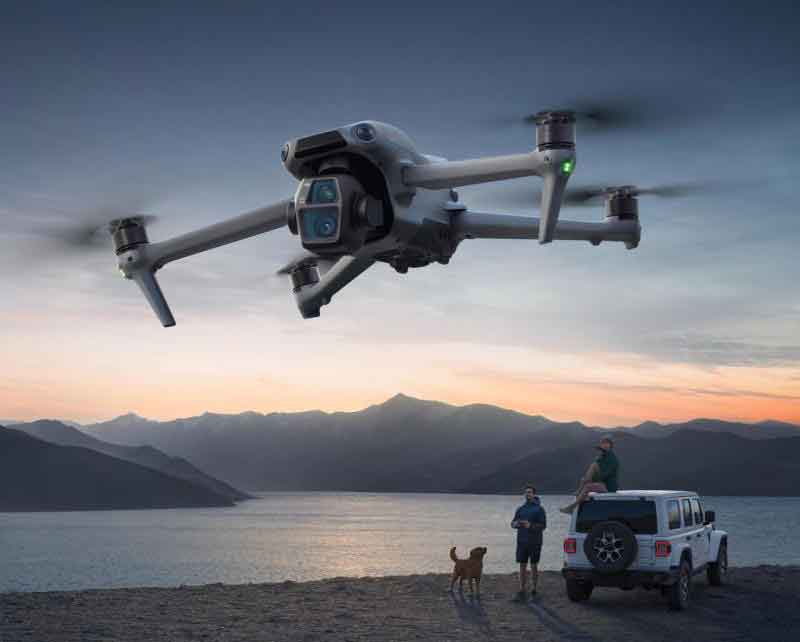
From my perspective, the rise of China drone manufacturers epitomizes how technological democratization can unlock vast markets. By developing advanced flight control systems and leveraging China’s manufacturing prowess, these companies reduced costs dramatically. For instance, the price of consumer drones dropped to one-third of international competitors while offering superior performance. This catalyzed global adoption, with China drone models dominating sales. The market expansion can be modeled using a growth formula: $$ M_t = M_0 \times e^{rt} $$ where \( M_t \) is the market size at time \( t \), \( M_0 \) is the initial size, \( r \) is the annual growth rate, and \( e \) is the base of natural logarithms. For consumer drones, \( r \) has exceeded 30% annually since 2012, largely due to China drone innovations.
The China drone ecosystem now spans multiple segments, each contributing to a robust industrial matrix. Below is a table summarizing the key market categories and China’s influence:
| Drone Category | Global Market Size (2024) | China Drone Share (Approx.) | Primary Applications |
|---|---|---|---|
| Consumer Drones | $51 billion | 70%+ | Aerial photography, hobbyist use |
| Industry Application Drones | $200 billion | 45% | Agriculture, logistics, surveillance, mapping |
| Military Drones | $49 billion | Data limited | Defense and security operations |
This table illustrates how China drone producers have captured significant shares, especially in consumer and industrial sectors. The growth trajectory is staggering: from a base of $1.5 billion in 2012, the industry application drone market expanded to $200 billion by 2024, fueled by China drone enterprises. In my analysis, this expansion is not accidental; it results from a synergistic ecosystem where hardware innovation meets software agility. The China drone supply chain, concentrated in regions like Shenzhen, offers unmatched efficiency. Components like flight controllers, sensors, and batteries are produced domestically at scale, driving down costs. This competitive edge allows China drone brands to outperform rivals globally, often described as “half the price, double the performance.”
Delving deeper, the China drone revolution has fostered a vibrant startup culture. Beyond major manufacturers, countless small and medium enterprises (SMEs) have emerged, specializing in niche applications. I’ve observed companies using drones for agricultural spraying, disaster response, cultural heritage monitoring, and even light shows. These SMEs thrive on the accessibility of China drone platforms, which provide reliable hardware for customization. For example, drone-assisted farming can be optimized using a formula for coverage efficiency: $$ A = v \times t \times w $$ where \( A \) is area covered, \( v \) is drone speed, \( t \) is operation time, and \( w \) is spray width. China drone solutions have made such calculations practical for farmers worldwide.
The economic impact extends to supporting industries. As China drone production scales, it boosts demand for navigation systems (e.g., BeiDou compatibility), radar technologies, and advanced materials like carbon fiber. This creates a multiplier effect, summarized in the input-output model: $$ Y = C + I + G + (X – M) $$ where \( Y \) is total economic output, \( C \) is consumption, \( I \) is investment in China drone infrastructure, \( G \) is government spending on low-altitude economy, and \( X – M \) is net exports of drone-related goods and services. With policy tailwinds, \( G \) and \( I \) are rising, amplifying growth.
Policy support has been a game-changer for the China drone sector. In early 2024, “low-altitude economy” was highlighted in national plans, followed by institutional setups like a dedicated government department. This mirrors past catalytic policies for renewables, accelerating industry maturity. From my viewpoint, these measures reduce regulatory uncertainty and encourage investment in China drone technologies. The low-altitude economy encompasses airspace management, infrastructure (e.g., drone airports), and service networks, all vital for scaling operations. We can estimate the policy impact using a logistic growth curve: $$ P(t) = \frac{K}{1 + e^{-a(t-t_0)}} $$ where \( P(t) \) is market penetration of China drone services, \( K \) is carrying capacity (market potential), \( a \) is growth rate, and \( t_0 \) is the inflection point (e.g., policy implementation year). Current trends suggest \( a \) is accelerating.
Innovation in China drone applications continues to explode. I’ve seen drones integrated with spectral imagers for road inspection, 3D infrared cameras for monument preservation, and AI for autonomous decision-making. This fusion drives new business models. Consider drone-based advertising: fleets perform synchronized light shows, with revenue modeled as $$ R = n \times s \times p $$ where \( R \) is revenue, \( n \) is number of shows, \( s \) is audience size, and \( p \) is monetization per viewer. China drone companies enable such ventures by providing affordable hardware and software tools.
The global rankings underscore China drone dominance. Of the top ten commercial drone firms, seven are Chinese, reflecting deep market integration. This leadership is sustainable due to continuous R&D. For instance, advancements in battery energy density, critical for flight time, follow Moore’s Law-like trends: $$ E = E_0 \times 2^{\frac{t}{T}} $$ where \( E \) is energy density, \( E_0 \) is initial value, \( t \) is time, and \( T \) is doubling period. China drone manufacturers are at the forefront, pushing \( T \) shorter through innovations in lithium and solid-state batteries.
Looking ahead, the China drone ecosystem is poised for exponential growth. International associations project the commercial drone market to exceed $800 billion by 2030, implying a compound annual growth rate (CAGR) above 20%. This can be expressed as: $$ FV = PV \times (1 + r)^n $$ where \( FV \) is future value (2030 market), \( PV \) is present value (2024 market), \( r \) is CAGR, and \( n \) is years. Plugging in estimates: $$ 800 = 251 \times (1 + r)^6 $$ solving for \( r \) yields approximately 21.5%, consistent with historical China drone-driven expansion.
To illustrate the sector diversity, here’s a table of emerging China drone applications and their economic potential:
| Application Sector | Key Technologies | Estimated Market Value (2030) | Growth Drivers |
|---|---|---|---|
| Precision Agriculture | Multispectral sensors, AI analytics | $120 billion | Food security, labor savings |
| Urban Air Mobility | eVTOL designs, traffic management | $150 billion | Congestion relief, policy support |
| Infrastructure Inspection | LiDAR, automated reporting | $80 billion | Aging assets, safety regulations |
| Entertainment and Media | Swarm intelligence, VR integration | $50 billion | Content demand, event marketing |
As a participant in this space, I believe the China drone phenomenon is more than manufacturing; it’s about ecosystem building. The interplay between hardware makers, software developers, service providers, and policymakers creates a virtuous cycle. For example, drone airports—automated bases for charging and dispatch—are becoming hubs for logistics networks. Their efficiency can be quantified with queuing theory: $$ L = \frac{\lambda}{\mu – \lambda} $$ where \( L \) is average number of drones in system, \( \lambda \) is arrival rate, and \( \mu \) is service rate. China drone firms are optimizing these parameters through smart infrastructure.
Moreover, the China drone wave benefits from digital twins and simulation tools. During development, engineers use computational models to test aerodynamics and battery life, reducing time-to-market. The governing equations often involve fluid dynamics: $$ \nabla \cdot \mathbf{v} = 0 $$ and $$ \rho \left( \frac{\partial \mathbf{v}}{\partial t} + \mathbf{v} \cdot \nabla \mathbf{v} \right) = -\nabla p + \mu \nabla^2 \mathbf{v} $$ where \( \mathbf{v} \) is velocity field, \( \rho \) is density, \( p \) is pressure, and \( \mu \) is viscosity. These principles, applied by China drone R&D teams, enhance design robustness.
In conclusion, the China drone ecosystem represents a cornerstone of modern industrial innovation. From humble beginnings to global leadership, China drone companies have not only captured markets but also inspired a new generation of entrepreneurs. The integration with AI, 5G, and IoT promises further disruption, turning sci-fi scenarios into daily realities. As low-altitude economies take flight, the China drone ethos—combining affordability, reliability, and scalability—will likely set global standards. For observers like myself, it’s exhilarating to witness this journey, where each advancement reinforces the narrative: the future of drones is inextricably linked to China’s vision and execution.
Reflecting on data, the China drone impact is measurable through employment and GDP contributions. By 2030, the sector could support millions of jobs globally, with China as the hub. This aligns with macroeconomic models where technology diffusion boosts total factor productivity: $$ Y = A \cdot F(K, L) $$ where \( Y \) is output, \( A \) is technological progress (driven by China drone innovations), \( K \) is capital, and \( L \) is labor. The ongoing story of China drone evolution is just beginning, and its chapters will be written in the skies above us.