
Asymmetry in defense, targeting the inherent vulnerabilities of an adversary’s systems, has long been a cornerstone of military strategy, particularly for nations facing resource constraints. In the modern battlespace, the proliferation and evolution of unmanned aerial systems (UAS) present a pervasive and growing threat. These systems, ranging from sophisticated military reconnaissance platforms to commercially available drones weaponized by non-state actors, challenge traditional defense paradigms with their low cost, small radar cross-section, and ability to operate in swarms. My analysis, based on extensive observation of contemporary conflicts, concludes that Russia has pursued a distinctly asymmetric approach to counter this threat, focusing on cost-effective electronic warfare (EW) and innovative kinetic solutions to develop a layered and increasingly automated anti-drone ecosystem.
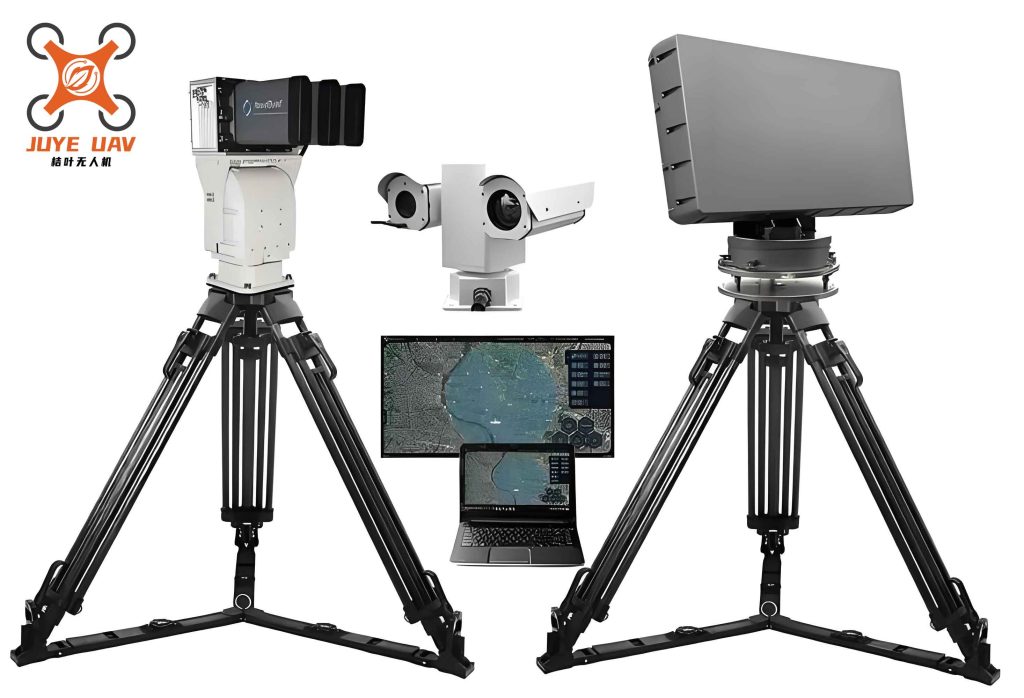
The threat environment is vividly illustrated by the January 2018 attacks on Russian military facilities in Syria. A mixed swarm of 13 crude, yet operationally effective, drones attempted coordinated strikes. The Russian response showcased their integrated anti-drone methodology: six drones were captured via radio-electronic control seizure (a soft-kill), while the remaining seven were physically destroyed by Pantsir-S1 air defense missiles (a hard-kill). This incident underscores the dual nature of the threat—improvised, low-tech systems used en masse, and the looming specter of more advanced, intelligent drone swarms. The effectiveness of even simple drones has driven Russia to institutionalize anti-drone training across its armed forces and establish dedicated electronic warfare units focused on this mission.
Operational Methodologies in Russian Anti-Drone Engagements
Russian anti-drone doctrine is built upon a triad of complementary approaches: electronic warfare, kinetic destruction, and electronic capture. The selection of method depends on the operational environment, desired outcome (denial vs. destruction), and the specific characteristics of the hostile UAS.
1. Electronic Warfare (EW) Engagement (Soft-Kill): This is Russia’s primary and most cost-effective layer of defense. It exploits a drone’s fundamental dependence on data links for navigation (GPS/GLONASS) and command & control (C2). The core principle is to jam, spoof, or hijack these signals.
- Data Link Jamming & Spoofing: By flooding the frequency bands used for C2 (typically in the 900 MHz, 2.4 GHz, and 5.8 GHz ranges) with high-power noise, the link between the operator and the drone can be severed, potentially triggering a lost-link protocol such as a forced landing or return-to-home. More sophisticated spoofing involves transmitting false C2 signals to take control or inject malicious navigation data.
- Navigation Spoofing: Targeting the drone’s GNSS receiver (GPS, GLONASS, Galileo) by broadcasting false satellite signals. This can corrupt the drone’s positional awareness, causing it to deviate from its intended flight path, become disoriented, or land at a location chosen by the defender.
The effectiveness of jamming is governed by factors like the jammer’s effective radiated power (ERP), the signal-to-noise ratio at the drone’s receiver, and the sophistication of the drone’s frequency-hopping or encrypted communication. A simplified representation of the jamming power required at the drone’s receiver is given by the one-way radar range equation adapted for communication jamming:
$$
P_j = \frac{P_t G_t G_j \lambda^2}{(4\pi R)^2 L}
$$
where $P_j$ is the jamming power at the receiver, $P_t$ is the transmitter power, $G_t$ and $G_j$ are the antenna gains of the transmitter and jammer respectively, $\lambda$ is the wavelength, $R$ is the range to the drone, and $L$ represents system losses.
2. Kinetic Hard-Kill: When electronic measures are insufficient or when permanent destruction is required, kinetic systems are employed. These range from traditional missile-based air defense to next-generation directed energy weapons (DEWs).
- Missile & Gun Systems: Systems like the Pantsir-S1 and Tor-M2 provide a terminal defense layer. While highly effective, the cost-exchange ratio is often unfavorable; a million-dollar missile against a thousand-dollar drone is unsustainable against large swarms.
- Directed Energy Weapons (DEWs): Laser and microwave systems offer a high-performance, low-cost-per-shot solution. High-energy lasers (HELs) thermally disable drones by burning through critical structures or optics. High-power microwaves (HPMs) generate an electromagnetic pulse to fry electronic components. The engagement range for a laser system is influenced by atmospheric attenuation ($\alpha$), beam quality ($\beta$), and required energy-on-target ($E_{target}$):
$$
R_{max} \propto \sqrt{\frac{P \cdot \beta \cdot \eta}{E_{target} \cdot \alpha}}
$$
where $P$ is laser power, and $\eta$ is system efficiency.
3. Electronic Capture (Spoofing & Hijacking): This is the most sophisticated soft-kill technique, exemplified by the 2011 capture of a US RQ-170 Sentinel drone by Iran, allegedly using Russian-supplied EW technology. It involves passively identifying the drone’s communication protocol, then actively transmitting counterfeit but valid-seeming C2 signals to override the legitimate operator’s commands and guide the drone to a safe landing zone for recovery and analysis.
Current Inventory of Russian Anti-Drone Systems
Russia’s anti-drone capabilities are embodied in a diverse family of systems, each filling a specific niche in the detection-track-engage chain.
Electronic Warfare & Cyber-Electronic Systems
This is Russia’s area of greatest strength, featuring mobile, high-power systems designed to dominate the electromagnetic spectrum.
| System Name | Platform / Type | Primary Function & Capabilities |
|---|---|---|
| Avtobaza / “Auto-base” | Mobile complex (multiple vehicles) | Strategic EW; renowned for GNSS & satellite link jamming/spoofing over wide areas (100+ km range). Credited with the RQ-170 capture. |
| Repellent / “Repellent-1” | Portable “EMP Rifle” | Short-range (1-2 km), man-portable jammer. Disrupts GNSS, Wi-Fi, and ISM bands. Used successfully at Khmeimim Air Base. |
| Krasukha / “Belladonna” | Vehicle-mounted mobile system | Broadband radar and datalink jamming. Designed to counter airborne surveillance and targeting systems, including radar on UAVs and AWACS aircraft. |
| R-330Zh Zhitel / “Resident” | Mobile jamming station | Focuses on satellite communication (UHF, SHF) and cellular network jamming, disrupting UAV C2 channels that rely on satellite relays. |
| RB-341V Leer-3 / “Leer-3” | EW complex with Orlan-10 UAVs | A networked system. Orlan-10 UAVs act as radio-electronic reconnaissance nodes and relay jamming signals, creating a mobile, elevated jamming field. |
Kinetic Hard-Kill & Air Defense Systems
These systems provide the physical destruction layer, evolving to be more cost-effective against small, low, and slow targets.
| System Name | Type | Engagement Envelope & Anti-Drone Role |
|---|---|---|
| Pantsir-S1 / SA-22 | Combined Gun-Missile SHORAD | Radar/Optical guidance. 12-20 km missile range, 4 km gun range. Effective against small, low-flying UAVs, as proven in Syria. High per-engagement cost. |
| Tor-M2 / SA-15 | Tracked SAM System | All-weather, vertical launch. ~12 km range. Can engage multiple low-RCS targets simultaneously. Arctic variant (Tor-M2DT) exists. |
| 9K333 Verba / “Willow” | MANPADS (Man-Portable) | Tri-band IR seeker (UV, near-IR, mid-IR). ~6 km range. Can discriminate low-IR signatures of small UAVs against background clutter. |
| Gibka-S | Air Defense Module | Remote weapon station mounting 12.7mm machine guns or 30mm grenade launchers, integrated with optronics and radar. AI-assisted tracking for low-cost swarm engagement. |
Detection, Command & Control, and Novel Systems
A robust anti-drone network relies on effective sensors and battle management, as well as novel counter-UAS concepts.
Detection & C2: Systems like the Podsolnukh / “Sunflower” over-the-horizon radar and specialized anti-drone radar variants of the Sopka / “Hill” series provide long-range detection of small, low-flying objects by exploiting their Doppler signature against ground clutter. The PY12M7 reconnaissance and command vehicle can track up to 120 aerial targets at ranges up to 25 km, fusing data to cue interceptors.
Directed Energy Weapons: Russia has publicly tested several DEW systems. Peresvet, a combat laser system deployed for strategic air defense, is believed to have blinding/dazzling capabilities against EO/IR sensors on UAVs and satellites. Zadira is a more powerful, vehicle-mounted laser reported to have physically destroyed small drones at a range of several kilometers during trials. Microwave systems like Rassvet / “Dawn” are designed for area denial against micro-UAV swarms.
Counter-Swarm Munitions: To address the cost-exchange problem of missiles, Russia is developing specialized anti-drone airburst munitions. These are typically 30mm or 57mm shells fired from autocannons (e.g., on the Derivattsiya air defense system or upgraded Tunguska) that detonate near a drone swarm, creating a lethal cloud of fragments. The probability of kill ($P_k$) for such a fragmentation warhead against a drone swarm can be modeled as:
$$
P_k = 1 – e^{-n \cdot A_d \cdot \rho}
$$
where $n$ is the number of fragments, $A_d$ is the vulnerable area of the drone, and $\rho$ is the spatial density of fragments at the drone’s range.
Future Trajectories and Strategic Developments
Russian anti-drone development is not static; it is evolving to counter predicted advancements in UAS technology, particularly autonomy and swarming.
1. Enhanced Autonomy and AI Integration: Future systems will move beyond operator-in-the-loop jamming towards fully autonomous detection and response cycles. AI algorithms will be used for faster drone classification (friend/foe, type, intent) based on RF fingerprinting and flight patterns. AI will also manage the coordinated response of layered defenses—e.g., using EW to herd a swarm into the engagement zone of a DEW or fragmentation cannon. This reduces the sensor-to-shooter timeline critical for defeating fast, intelligent swarms.
2. Scalable and Networked Directed Energy: The development of more powerful, efficient, and electrically powered DEWs is a priority. The focus will be on creating scalable effects: low-power lasers for dazzling sensors, medium-power for damaging structures, and high-power for instant kills. These will be integrated into mobile platforms (trucks, armored vehicles) and networked with detection radars to create mobile anti-drone “domes.” Microwave systems, with their wide-area coverage, will be optimized for neutralizing dense micro-drone swarms in a single pulse.
3. Drone-vs-Drone (DvD) Combat: The development of interceptor drones, like the mentioned “Predator,” represents a shift towards an intelligent, mobile layer of defense. These counter-UAS drones could be equipped with nets, lasers, or even kamikaze warheads. They offer the advantage of engaging enemy UAVs beyond the line-of-sight of ground-based systems and in complex urban terrain. Swarms of defensive drones could be deployed to physically intercept and overwhelm an incoming hostile swarm, a highly asymmetric response.
4. Next-Generation Multi-Function Munitions: Research into specialized, low-cost interceptors continues. This includes developing smaller, cheaper missiles with multi-mode seekers (RF/IR) specifically tuned for small UAV signatures, and perfecting the airburst fragmentation and shotgun-like canister rounds for existing gun systems. The goal is to drive down the cost-per-kill to a level sustainable for defending against massed attacks.
5. Holistic Spectrum Dominance: Russia will continue to invest in wide-band, agile, and cognitive EW systems. The next generation will not only jam known frequencies but also use AI to rapidly identify and adapt to new, unknown drone communication protocols and frequency-hopping patterns, maintaining the soft-kill advantage in a dynamically contested electromagnetic spectrum.
Conclusion
Russia’s approach to anti-drone warfare is a pragmatic case study in asymmetric defense development. Confronted with advanced drone technologies and constrained resources, Moscow has leveraged its historic strength in electronic warfare to create a disruptive and cost-effective first line of defense. This is complemented by the modernization of traditional air defense systems for hard-kill and a serious investment in next-generation directed energy and autonomous systems. The evolving strategy is clearly oriented towards countering the ultimate threat: large, intelligent, and autonomous drone swarms. By integrating AI for rapid decision-making, developing scalable DEW and kinetic effects, and exploring novel concepts like interceptor drones, Russia is building a multi-layered, automated anti-drone ecosystem designed to negate the numerical and cost advantages of adversarial UAVs, ensuring its defensive capabilities remain relevant in the rapidly evolving landscape of unmanned warfare.