
The explosive growth of the civilian drone industry and its expanding footprint across diverse sectors stand as a potent testament to our technological progress. In recent years, drone technology has matured significantly, moving far beyond the familiar realm of aerial photography. Today, the applications for civilian drones are vast and varied, encompassing critical tasks such as aerial reconnaissance, power line and pipeline inspection, meteorological observation, and logistics delivery. This rapid proliferation, however, has occurred alongside a regulatory and operational framework struggling to keep pace. The result is a significant prevalence of unauthorized or “rogue” flights, posing substantial risks. In essence, while the industry advances at a breakneck speed, its governance lags behind, creating a precarious gap between innovation and safety.
The gradual liberalization of low-altitude airspace policies has led to a marked increase in general aviation and, more notably, civilian drone operations. This surge in activity, confined within an airspace already segmented by numerous restrictions, renders the shared aerial environment more congested and complex than ever before. This new reality presents profound challenges and imposes higher demands on aviation safety management and the secure operation of scheduled flights. Without a robust and comprehensive legal system to provide a foundation, effective management becomes an exceedingly difficult task.
The statistics underscore both the opportunity and the peril. While the civil aviation sector itself experiences rapid growth, China’s civilian drone market is expanding at an annual rate exceeding 50%, with its scale projected to reach 75 billion yuan by 2025. Concurrently, an estimated 20,000 drones are believed to be operating in a “rogue” state. The safety incidents are alarming. Data shows that in just one month between mid-January and mid-February 2017, 12 incidents of unauthorized drone flights threatening civil aviation safety were recorded. A particularly egregious event occurred on May 12, 2017, at Chongqing Jiangbei International Airport, where a drone incursion into the airport’s clearance zone caused massive disruption: 67 flights were delayed, 58 were canceled, 6,000 passengers were stranded in the terminal, and 45 flights were forced to divert or return to their origin. This single incident had a colossal impact on airport operations and severely compromised aviation safety and traffic order. The threat escalated further in October 2017 with the first recorded collision between a civilian drone and a commercial airliner in Canada. Experimental data quantifies the danger: a collision between a 10 kg drone and an airliner traveling at 900 km/h can generate an instantaneous impact force of approximately 1.25 million Newtons. This energy is comparable to that of a small-caliber artillery shell, carrying the potential for catastrophic damage. This formidable threat has now supplanted traditional hazards like bird flocks and kites as the primary concern within airport clearance zones. Therefore, reconciling the healthy development of the civilian drone industry with the imperative of safe commercial flight operations is a matter of pressing urgency.
We can conceptualize the kinetic energy of such a collision using the formula:
$$KE = \frac{1}{2} m v^2$$
Where \(m\) is the mass of the drone and \(v\) is the relative velocity. The resulting force upon impact is staggering, explaining the severe damage potential.
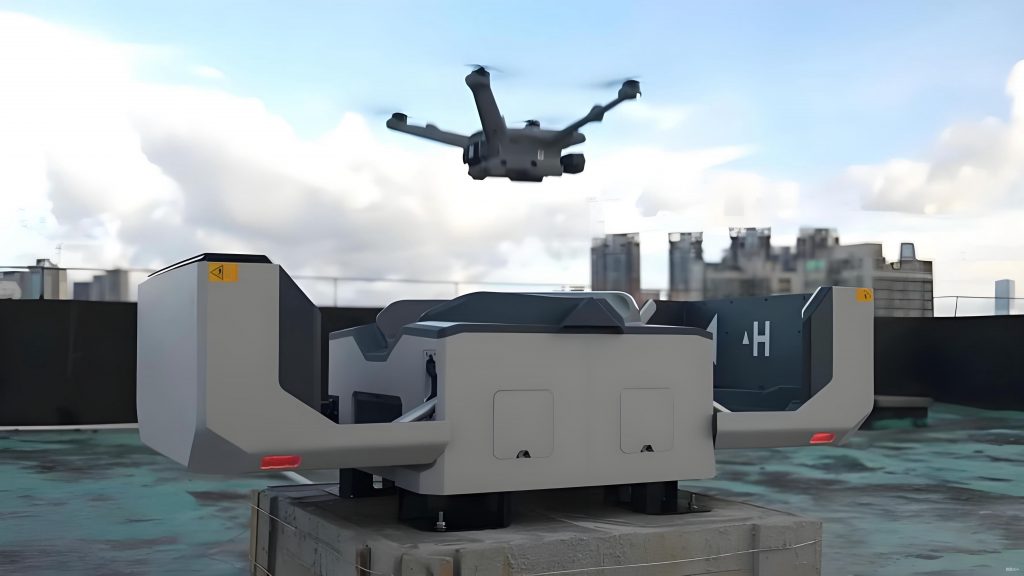
To mitigate the impact of civilian drones on normal flight operations and airport activities, a multi-faceted control strategy must be implemented. This strategy can be structured around four key pillars: regulatory framework, proactive prevention, technological oversight, and emergency response.
I. Establishing a Robust Regulatory Framework
The cornerstone of safe integration is a clear, standardized legal system. Authorities have begun to fill the regulatory void with rules targeting both the machine and the operator, such as the “Air Traffic Management Measures for Civil Unmanned Aircraft Systems” and the “Regulations on the Management of Civil Unmanned Aircraft Pilots.” Effective regulation mandates a tripartite approach:
- Mandatory User Registration: A nationwide real-name registration system for drone owners (individuals and entities) is essential. Manufacturers and vendors should be legally obligated to facilitate this process at the point of sale, creating a traceable chain of custody.
- Licensed Operators (“Drone Pilots”): Drone operators must obtain a license through certified training and examination programs, potentially administered by authorized local aviation or air traffic control units. Training must cover relevant civil aviation regulations, airspace knowledge, and mandatory flight application procedures. No flight should be conducted without prior application and explicit approval from the relevant authorities.
- Airworthiness Certification for Drones: Every civilian drone model must undergo testing against unified technical quality standards and obtain an airworthiness certificate before it can be legally sold. This ensures a baseline level of safety and performance reliability.
| Measure | Target | Key Requirement | Enforcement Mechanism |
|---|---|---|---|
| Real-Name Registration | Owner/Operator | Register personal and drone details with authorities. | Mandatory at point of sale; vendor responsibility. |
| Operator Licensing | Pilot (“Flyer”) | Complete certified training on regulations & procedures. | License required for legal operation; linked to registration. |
| Airworthiness Certification | Drone (Hardware) | Meet defined technical safety standards before sale. | Certificate of airworthiness required for market entry. |
II. Proactive Prevention: Geofencing and Clear Zones
Prevention is superior to intervention. A primary preventive measure is the clear demarcation of no-fly zones, particularly around critical infrastructure like airports. Leading manufacturers have pioneered the implementation of “geo-fencing” or electronic containment systems. An electronic fence is a software and hardware system that uses geographic coordinates to define a virtual boundary (a geofence), preventing a civilian drone from entering or leaving a specific area through its flight control system.
The geofence model can be mathematically represented as a four-dimensional spatial constraint defined by longitude (\( \lambda \)), latitude (\( \phi \)), maximum allowable altitude (\( h_{max} \)), and an effective time window (\( t_{start}, t_{end} \)):
$$G = \{ (\lambda, \phi, h, t) \ | \ \lambda_{min} \leq \lambda \leq \lambda_{max}, \ \phi_{min} \leq \phi \leq \phi_{max}, \ 0 \leq h \leq h_{max}, \ t_{start} \leq t \leq t_{end} \}$$
A drone’s permitted flight volume \( V_{flight} \) must be a subset of this geofence: \( V_{flight} \subseteq G \). If the drone’s position \( P(\lambda, \phi, h, t) \) violates these constraints (e.g., \( h > h_{max} \) or \( \lambda < \lambda_{min} \)), the onboard GPS and control system can trigger automatic compliance actions such as a forced hover, automatic return-to-home, or a controlled landing.
The standard basis for these exclusion zones is the Obstacle Limitation Surface as defined by ICAO Annex 14. For practical application and to add a safety buffer, airport clearance zones are often simplified to a rectangular area extending 10 km from the runway centerline and 20 km from each runway threshold. This area is critical as it encompasses the approach and departure phases—the so-called “critical 11 minutes” of a flight—where aircraft have minimal time and space for maneuvering in an emergency.
III. Technological Oversight: The “Drone Cloud” Monitoring System
The small size, high mobility, and rapid launch capability of civilian drones make them difficult to detect and monitor through traditional means like radar. A promising technological solution is the implementation of a centralized “Drone Cloud” platform. This system functions analogously to a flight data recorder or a dynamic database for light and small civilian drones.
The Drone Cloud serves a dual purpose: it provides essential services (e.g., weather, navigation information) to operators while simultaneously enabling real-time monitoring for regulators. During a flight, key operational parameters—collectively known as the flight state vector—are continuously transmitted to and stored in the cloud database. This state vector \( \vec{S} \) typically includes:
$$\vec{S}(t) = [ \lambda(t), \ \phi(t), \ h(t), \ v(t), \ \psi(t), \ \text{Operator ID}, \ \text{Drone ID} ]^T$$
where \( v(t) \) is ground speed and \( \psi(t) \) is heading. Any deviation from a filed flight plan or intrusion into restricted airspace becomes immediately visible on regulatory terminals, providing a powerful tool for evidence-based law enforcement and proactive traffic management.
| Aspect | Traditional Visual/Radar Surveillance | Cloud-Based UTM (Unmanned Traffic Management) |
|---|---|---|
| Detection Capability | Poor for small, low-flying drones; relies on pilot reports. | Excellent for registered drones; based on active data transmission. |
| Data Available | Approximate location (if seen), type. | Real-time precise position, altitude, speed, heading, identity. |
| Regulatory Action | Reactive, after a potential conflict is visually identified. | Proactive, can warn operator or authorities of a developing violation. |
| Scalability | Does not scale with increasing drone numbers. | Highly scalable through automated data processing. |
IV. Developing an Effective Emergency Response Protocol
Despite preventative measures, incidents will occur. A standardized, effective emergency response procedure is therefore non-negotiable. Key elements include:
- Information Sharing Protocol: Establish a multi-agency information-sharing mechanism involving civil aviation authorities, military air traffic control, law enforcement, and airport operators. Reliable communication links and pre-defined reporting procedures ensure the fastest possible dissemination of information when an unauthorized drone is detected, enabling a coordinated risk mitigation response.
- Technical Countermeasures: Designate and employ technical means to intercept or neutralize threatening drones. This can involve using dedicated radio frequency bands (e.g., 840.5–845 MHz, 1430–1444 MHz) for command and control, and deploying mobile signal jamming systems to disrupt the drone’s control link and navigation (GPS), forcing it to land or return to its point of origin as a fail-safe. In extreme cases, kinetic takedown methods may be authorized.
- Systematic Exercises and Evaluation: Regularly conduct multi-stakeholder emergency drills to test and refine the response protocol. This ensures all parties are prepared and can identify weaknesses in the system before a real incident occurs.
Envisioning the Future: Advanced Integration and Service Architecture
Looking ahead, the sustainable integration of civilian drones into the national airspace system will require more sophisticated technological adoption and service-oriented infrastructure.
A. Adopting Mature Aviation Technologies for Drones
Three technologies standard in manned aviation could revolutionize drone safety:
- Secondary Surveillance Radar (SSR) Transponders: Equipping drones with lightweight SSR transponders or ADS-B Out units would make them clearly visible to air traffic control radar screens, transforming them from invisible hazards to identifiable traffic. ATC could then monitor their altitude \( h_{uav} \), speed \( v_{uav} \), and heading \( \psi_{uav} \) in relation to manned aircraft, assessing potential conflicts using standard separation minima formulas (e.g., horizontal separation \( \Delta d \), vertical separation \( \Delta h \)).
- Direct ATC Communication Link: Establishing a reliable data link (e.g., via C2 link or dedicated app) would allow air traffic controllers to issue direct instructions to a drone operator in controlled airspace, enabling positive control and seamless integration, much like they do with airline pilots.
- Detect-and-Avoid (DAA) Systems: Integrating a fusion of ADS-B In and a miniaturized Traffic Collision Avoidance System (TCAS) logic would grant drones a measure of autonomous sense-and-avoid capability. The drone’s onboard system could calculate the time to closest point of approach (CPA) with an intruder and execute a coordinated avoidance maneuver if a threshold is breached. This is crucial for mitigating the risk of drone-on-drone and drone-on-aircraft collisions.
The combined application of these three technologies would create a layered defense, significantly enhancing situational awareness for both regulators and operators, and fostering a safer, more orderly airspace.
B. Establishing a National Network of Drone Flight Service Centers (FSCs)
The current process for airspace application and approval for civilian drones is often fragmented and inefficient. The establishment of regional Drone Flight Service Centers, building on the model pioneered in Chengdu, offers a streamlined solution. These centers would act as one-stop hubs, leveraging cloud technology and internet connectivity.
A national network of such centers, sharing data with relevant civil and military authorities, would provide immense benefits. Operators would register their drones and flight plans here. The FSC would provide essential services: real-time airspace status, weather briefings, flight planning tools, and automated approval for pre-defined, low-risk flight areas. Crucially, it would clearly publish and manage geofenced data for restricted, dangerous, and prohibited zones across its region.
The user interface could be a dedicated mobile application. Through this app, users could:
- Complete identity verification and drone registration.
- Access learning materials on regulations, airspace structure, and procedures.
- View interactive maps with dynamically updated no-fly zones and special-use airspace.
- Submit and receive approvals for flight plans in a simplified, standardized digital workflow.
This service-oriented architecture promises to bring order to the current chaos. By providing clear rules, easy access to information, and a streamlined administrative process, it incentivizes compliance and responsible operation. Only through such a unified, rules-based ecosystem can the operations of civilian drones be normalized, legalized, and truly integrated, allowing them to fly higher, farther, and most importantly, safer.
In conclusion, the civilian drone sector represents a dynamic and transformative force, brimming with economic and social potential. Its rapid ascent, however, presents a formidable challenge to the established norms of aviation safety. The path forward is not to stifle innovation but to thoughtfully engineer the framework within which it operates. By implementing a synergistic combination of stringent regulation, intelligent preventative technology, continuous cloud-based oversight, and prepared emergency response—and by boldly adopting next-generation integration technologies—we can bridge the gap between the thrilling potential of civilian drones and the non-negotiable imperative of safe skies. Resolving this tension is the key to unlocking the vast, expansive future that awaits this revolutionary industry.