
As I delve into the dynamic landscape of global technology, it becomes increasingly evident that the China drone industry stands as a pivotal force reshaping the narrative of “Made in China.” From my perspective, having observed the sector’s evolution, the rise of China drone is not merely a trend but a testament to innovation, strategic policy, and market agility. This article explores how China drone has emerged as a new名片 for Chinese manufacturing, delving into its growth trajectories, challenges, and future potentials, all while emphasizing the keyword “China drone” to underscore its centrality.
The global无人机 system industry has witnessed exponential growth, with investments soaring thirtyfold over the past two decades. According to recent analyses, the worldwide annual output value now approximates $150 billion, and projections suggest a cumulative产值 exceeding $4 trillion over the next decade, potentially catalyzing trillions in ancillary markets. In this context, the China drone sector has flourished, driven by rapid expansion in consumer and industrial applications. I recall attending various expos where the buzz around China drone was palpable, highlighting its appeal as a朝阳产业. The integration of China drone into areas like racing赛事 has added a new dimension, merging technology with education and innovation, thus fueling further growth. For instance, competitive drone racing, with its extended reach, has become a fresh增长点, attracting enthusiasts and investors alike, all eyes聚焦 on China drone manufacturing capabilities.
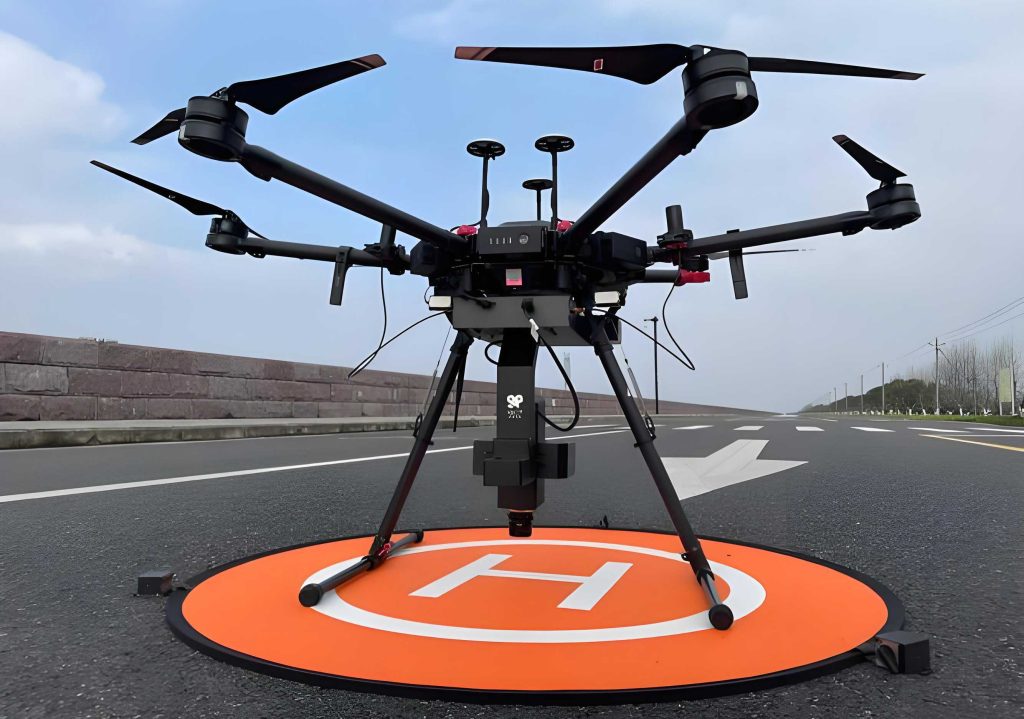
From my analysis, the China drone industry’s转型升级 is evident in its widespread adoption across diverse sectors. To quantify this, consider the following table summarizing key growth indicators for China drone market segments:
| Segment | 2015 Market Size (亿元) | 2018 Projected Market Size (亿元) | Annual复合增速 (%) | Primary Applications |
|---|---|---|---|---|
| Consumer China Drone | 8.2 | 22.5 | 165 | Aerial photography, recreation |
| Industrial China Drone | 3.1 | 10.24 | 180 | Agriculture, inspection, logistics |
| Overall Civil China Drone | 11.3 | 32.74 | 171 | Various integrated uses |
This data underscores how China drone applications have broadened, from气象监测 to快递 services, with the产业链 maturing and hardware costs declining. I’ve noted that over 300 enterprises now operate in the China drone space, many focusing on production and sales, yet innovation remains a critical area for enhancement. The军民融合 strategy has been instrumental, providing a shortcut for technology transfer from military to civil domains, thereby accelerating the China drone industry’s崛起.
In my assessment, policy引导 has played a crucial role. The “Guidance on Promoting and Regulating the Development of Civil无人机 Manufacturing” issued in December 2017 sets ambitious targets: by 2020, the civil China drone industry产值 should reach 60 billion yuan, with an average annual growth rate exceeding 40%; by 2025, it aims for 180 billion yuan, growing at over 25% annually. These goals align with cultivating world-class enterprises in the China drone sector. To illustrate the projected growth mathematically, we can model the产值 using an exponential function. Let \( V(t) \) represent the产值 in billion yuan at year \( t \), with \( t = 0 \) corresponding to 2018. Based on the targets, we can derive:
$$ V(t) = V_0 \cdot e^{rt} $$
Where \( V_0 \) is the initial value, and \( r \) is the continuous growth rate. From the data, for 2020 (t=2), \( V(2) = 60 \), and for 2025 (t=7), \( V(7) = 180 \). Solving for \( V_0 \) and \( r \), we estimate:
$$ 60 = V_0 e^{2r} \quad \text{and} \quad 180 = V_0 e^{7r} $$
Dividing the second equation by the first:
$$ \frac{180}{60} = e^{5r} \implies 3 = e^{5r} \implies r = \frac{\ln 3}{5} \approx 0.2197 $$
Thus, the continuous growth rate is approximately 21.97%, reflecting the robust expansion of the China drone industry. This formula highlights how policy targets translate into tangible growth trajectories for China drone production.
However, from my observations, challenges persist in the China drone ecosystem. Issues such as limited battery续航, payload capacities, and underinvestment in R&D hinder technological leaps. Moreover, the absence of authoritative technical质量标准 and lagging监管 frameworks pose risks. The “Guidance” addresses these by outlining eight key tasks: fostering innovation, improving quality, cultivating leading enterprises, expanding applications, establishing standards, regulating frequency usage, building管控 platforms, and enhancing检测认证. For example, by 2020, a national safety platform is to be established, with all China drone products requiring unique codes for 100% automatic recognition. This initiative aims to mitigate “black flights” or unauthorized operations, a concern I’ve seen rise with the proliferation of China drone devices.
To better understand the regulatory landscape, here’s a table summarizing the key policy measures for China drone development:
| Policy Aspect | Target by 2020 | Target by 2025 | Impact on China Drone Industry |
|---|---|---|---|
| Standard Development | 200+ standards formulated | Complete standard system | Enhances quality and safety for China drone |
| Safety Platform | National platform基本建立 | Full enterprise coverage | Improves监管 for China drone operations |
| Frequency Management | Regulations drafted | Integrated usage norms | Ensures频谱 efficiency for China drone |
| Innovation Support | 军工技术转化 accelerated | 军民融合 deepened | Boosts China drone technology advancement |
As I reflect on these measures, it’s clear that the China drone industry is poised for a new wave of growth. With policies加速落地 and market demand rising, experts point to barriers like technology gaps, workforce quality, and legal frameworks. In my view, building a产学研一体 mechanism is essential for China drone progress. This involves fostering collaboration among research institutions, industries, and enterprises to drive innovation. For instance, encouraging more players to enter the China drone field can create synergies, benefiting实体经济发展 while addressing data security concerns to prevent hacking vulnerabilities.
Looking ahead, I foresee the China drone industry transitioning from野蛮生长 to精细化 operations. Multiple business models will协同发展, forming industrial闭环. To quantify future trends, we can use a logistic growth model to predict the saturation point of China drone adoption. Let \( N(t) \) be the number of China drone units in use, with carrying capacity \( K \) and growth rate \( g \):
$$ \frac{dN}{dt} = gN \left(1 – \frac{N}{K}\right) $$
Solving this differential equation yields:
$$ N(t) = \frac{K}{1 + \left(\frac{K – N_0}{N_0}\right) e^{-gt}} $$
Where \( N_0 \) is the initial number. Assuming \( K = 10^7 \) units for China drone penetration, \( N_0 = 10^6 \), and \( g = 0.25 \) based on current growth, we can project adoption over time. This model illustrates how the China drone market might evolve, eventually stabilizing as maturity sets in.
In conclusion, from my first-hand perspective, the China drone revolution is reshaping global perceptions of Chinese manufacturing. The emphasis on innovation, backed by strategic policies, positions China drone as a leader in high-tech exports. As the industry overcomes hurdles through enhanced R&D, standardized regulations, and global collaboration, the future of China drone appears boundless. I advocate for continued policy support across state-owned and private enterprises, fostering a competitive “national team” in the China drone arena. By leveraging regional strengths and cultivating open产业链, China drone can not only drive domestic growth but also set benchmarks worldwide, truly embodying the spirit of “中国智造.” Thus, the ascent of China drone symbolizes a new chapter where technology and industry converge, promising transformative impacts on economies and societies globally.