
The global economic landscape is witnessing the rapid emergence of a new frontier: the low-altitude economy. Representing a quintessential form of new quality productive forces, this sector is experiencing vigorous growth and has established itself as a significant engine for economic expansion. At the heart of this revolution lies unmanned aerial vehicle (UAV) technology, with DJI drone systems standing as a paramount example. These aerial platforms have transcended their initial recreational and photographic applications to become indispensable tools across diverse sectors including agriculture, construction, media, and most pivotally, logistics. Within the logistics industry, the application of DJI drone technology and similar systems demonstrates immense potential to redefine efficiency, cost structures, and service reach. This analysis adopts a first-person perspective to delve into the impact of developing the low-altitude economy on the logistics sector. We will employ strategic frameworks such as Porter’s Five Forces and SWOT analysis to dissect the industry dynamics and the competitive position of a leading player like DJI, culminating in an examination of prevailing challenges and forward-looking recommendations.
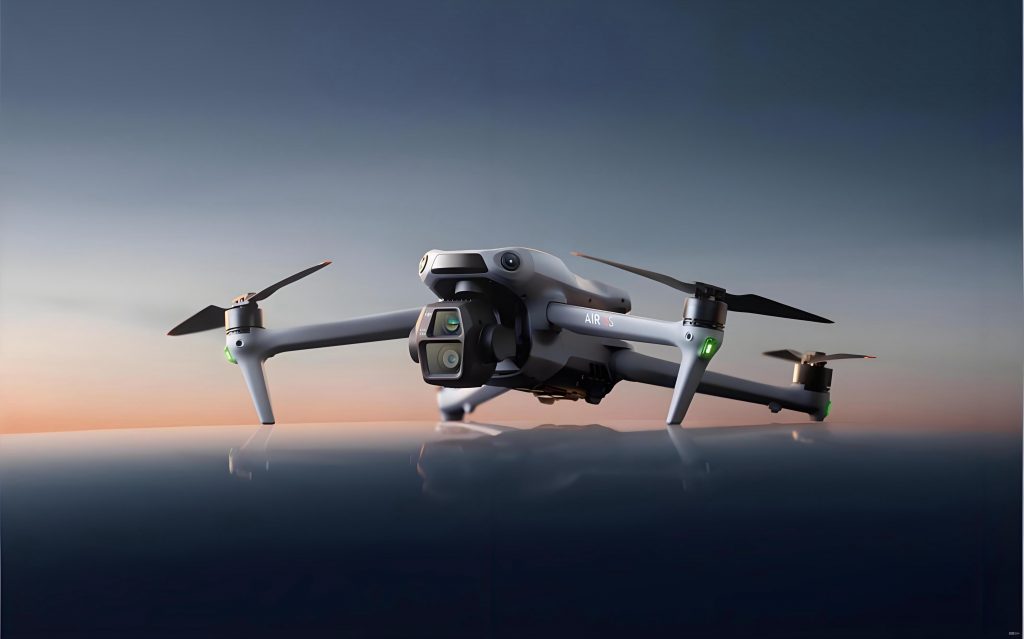
The concept of the Low-Altitude Economy (LAE) can be formally described as an integrated economic system operating within designated airspace, typically below 1000 meters. Its core value proposition is derived from the convergence of advanced aviation technology, digital infrastructure, and innovative operational models. The economic impact (EI) of LAE can be modeled as a function of several key variables:
$$ EI_{LAE} = f(T, I, R, M, P) $$
Where:
- T represents Technological Sophistication (e.g., autonomy, battery density).
- I represents Infrastructure Density (vertiports, charging networks).
- R represents Regulatory Openness and Clarity.
- M represents Market Demand across various sectors.
- P represents Public Acceptance and Safety Assurance.
The logistics sector stands to gain disproportionately from the optimization of this function. The integration of DJI drone fleets into supply chains addresses critical pain points such as last-mile delivery inefficiency, access to remote areas, and high variable costs associated with ground transportation.
Porter’s Five Forces Analysis of the UAV Logistics Industry
Michael Porter’s Five Forces framework provides a powerful lens to analyze the competitive intensity and attractiveness of the UAV logistics industry. This analysis helps identify where power lies and how companies like DJI can shape sustainable strategies.
1. The Bargaining Power of Suppliers
A DJI drone is an assembly of numerous specialized components, each sourced from distinct markets with varying supplier concentration. The bargaining power is highly asymmetric across the supply chain.
| Component Category | Examples | Supplier Concentration | Bargaining Power | Impact on DJI Drone Manufacturing |
|---|---|---|---|---|
| High-Tech Core Systems | Flight controllers, IMUs, specialized sensors (LiDAR, multispectral) | High (Few global specialists) | Very High | Critical dependency; high R&D collaboration needed; significant cost driver. |
| Propulsion & Energy | Brushless motors, high-density batteries | Medium-High | High | Key for performance and safety; limited number of premium suppliers. |
| Standardized Hardware | Fasteners, screws, basic connectors, plastic housings | Very Low (Many manufacturers) | Very Low | Commoditized; high price sensitivity; easy to switch suppliers. |
| Software & Firmware | Autopilot algorithms, computer vision SDKs | Variable | Medium-High (if outsourced) | Core IP for DJI is largely internal, mitigating this power. For others, it can be a constraint. |
The overall supplier power for a vertically integrated leader like DJI is mitigated by its in-house development of key technologies like flight controllers and gimbals. However, for battery technology and certain advanced sensors, they remain subject to supplier innovation cycles and pricing.
2. The Bargaining Power of Buyers
In the logistics application space, buyers range from large logistics firms (integrators like SF Express, JD Logistics) to individual businesses seeking delivery solutions. Their power is substantial and growing:
- Price Sensitivity: Logistics is a cost-center business. Buyers meticulously calculate Total Cost of Ownership (TCO). The TCO for a DJI drone logistics solution includes not just the unit price, but also maintenance, training, software subscriptions, and compliance costs. Buyers aggressively compare these metrics against alternative delivery methods.
- Low Switching Costs & High Information Availability: With multiple UAV manufacturers (e.g., Autel, Skydio, domestic Chinese brands) offering logistics-focused platforms, buyers can easily benchmark performance. Detailed operational data from pilot projects is widely shared within the industry, empowering buyers.
- Demand for Integration: Buyers do not want isolated DJI drone hardware; they demand seamless integration with their existing Warehouse Management Systems (WMS), Fleet Management Systems, and order tracking platforms. This need for customization increases buyer leverage in negotiations.
The buyer power force can be quantified by the elasticity of demand relative to the TCO. A high elasticity indicates strong buyer power.
3. The Threat of New Entrants
While the market potential is enormous, barriers to entry are significant but not insurmountable.
$$ Barrier\ to\ Entry = \alpha( R&D ) + \beta( Regulation ) + \gamma( Capital ) + \delta( Ecosystem ) $$
- High R&D & Technology Hurdles (α): Achieving the reliability, safety, and efficiency of a mature DJI drone platform requires immense investment in aerodynamics, materials science, robotics, and AI. New entrants must innovate to differentiate, not just imitate.
- Regulatory Maze (β): Navigating complex and evolving aviation regulations (e.g., EASA, FAA, CAAC rules) for Beyond Visual Line of Sight (BVLOS) operations is a major hurdle. Certification processes are lengthy and expensive.
- Capital Intensity (γ): Building manufacturing capacity, a global service network, and a brand requires substantial capital. While venture funding is available, achieving scale to compete on cost is challenging.
- Ecosystem & Brand Loyalty (δ): DJI benefits from a vast ecosystem of developers, accessory makers, and trained pilots. Overcoming incumbent brand loyalty, especially in professional markets where reliability is paramount, is difficult for a new entrant. Their threat is highest in niche applications where incumbents are not focused.
4. The Rivalry Among Existing Competitors
Competition is intensifying on multiple fronts within the logistics UAV space. The rivalry matrix is multi-dimensional:
| Competitor Type | Primary Focus | Competitive Leverage vs. DJI Drone | Market Approach |
|---|---|---|---|
| Integrated Logistics Giants (e.g., SF Express, Amazon Prime Air) | In-house fleet for proprietary network enhancement. | Control over the entire logistics chain; massive operational data; no need to sell hardware externally. | Vertical integration; closed ecosystem. |
| Specialized Industrial UAV Firms (e.g., EHang, XAG) | Heavy-lift, agricultural, or passenger drones adapting to logistics. | Deep expertise in specific payloads or use-cases (e.g., EHang’s focus on autonomous aerial vehicles). | Niche application dominance. |
| Western Technology Challengers (e.g., Skydio, Wingcopter) | Advanced autonomy (Skydio) or efficient hybrid VTOL designs (Wingcopter). | Perceived advantage in AI/autonomy or specific flight performance; favorable regulatory positioning in certain Western markets. | Technology-led differentiation, often targeting government/enterprise contracts. |
| Consumer-Grade Diversifiers | Adapting consumer drones for light logistics tasks. | Extremely low cost; high volume production. | Price competition for ultra-light payloads (e.g., documents, small medicines). |
The rivalry is not just about hardware specs but increasingly about the “logistics-as-a-service” model, data analytics capabilities, and regulatory partnerships.
5. The Threat of Substitute Products or Services
Substitutes challenge the value proposition of DJI drone logistics solutions.
- Ground-Based Alternatives: This includes traditional vans, motorcycles, bicycles, and emerging autonomous ground vehicles (AGVs) and robots. Their competitive edge lies in lower regulatory barriers, higher payload capacity, and public acceptance in dense urban areas. The economic crossover point where a DJI drone becomes preferable can be modeled by comparing cost per delivery over distance and terrain complexity.
- Alternative “Last-Mile” Technologies: Automated lockers/pickup stations and crowd-sourced delivery apps fulfill a similar need for convenience but lack the speed and directness for urgent or remote deliveries.
- Systemic Substitutes: Advanced inventory management (e.g., hyper-local micro-fulfillment centers) can reduce delivery distance, potentially negating the need for aerial speed from a DJI drone.
The threat of substitutes is highest for standard, non-urgent, urban deliveries and lowest for time-critical, remote, or emergency logistics.
Resource and Capability Analysis for DJI’s Logistics Business Development
DJI’s position in the logistics arena is built upon a formidable foundation of tangible and intangible resources, translated into distinct capabilities.
1. Technological Innovation and R&D Prowess: This is DJI’s cornerstone capability. It is evidenced by:
- Sustained Investment: A significant portion of revenue is reinvested into R&D, supporting a large team of engineers dedicated to advancing core technologies relevant to logistics: endurance, sense-and-avoid, payload efficiency, and operational software.
- Vertical Integration: In-house development of critical components (flight controllers, gimbals, transmission systems) ensures quality control, rapid iteration, and protection of intellectual property, reducing dependency on the powerful suppliers identified in the Five Forces analysis.
- Platform Architecture: The development of flexible platforms (like the Matrice series) allows for customization with various payloads (thermal cameras, parcel hooks, medical containers), making a single DJI drone platform adaptable to multiple logistics sub-tasks.
2. Ecosystem and Partnership Orchestration Capability: DJI excels at building and managing a synergistic network.
- Developer Ecosystem (SDK): The DJI SDK enables third-party developers to create specialized logistics applications for route planning, fleet management, and data integration, exponentially increasing the value of the hardware without DJI bearing all the development cost.
- Strategic Alliances: Forming partnerships with logistics companies (e.g., pilot projects with SF Express), telecom providers for network connectivity, and software giants for cloud analytics.
- Training and Certification: Offering official training programs creates a global pool of certified DJI drone pilots and technicians, reducing adoption friction for enterprise clients.
3. Supply Chain and Manufacturing Mastery: The ability to produce high-quality, sophisticated DJI drone systems at scale and competitive cost is a key advantage. This capability insulates DJI from some competitive pressures and allows for aggressive pricing in key market segments.
4. Brand Strength and Global Market Access: The DJI brand is synonymous with reliability and innovation in the UAV space. This brand equity lowers the perceived risk for logistics companies considering adoption and provides a significant marketing advantage over lesser-known competitors.
SWOT Analysis: A Deeper Look at DJI’s Competitive Position in Logistics
Combining the external industry analysis (Porter’s Five Forces) with the internal resource audit, we can construct a detailed SWOT matrix for DJI’s logistics endeavors.
| Helpful | Harmful | |
|---|---|---|
| Internal Origin |
STRENGTHS
|
WEAKNESSES
|
| External Origin |
OPPORTUNITIES
|
THREATS
|
The optimal strategy lies at the intersection of these factors: leveraging technological strengths (S) to capitalize on regulatory and market opportunities (O) while developing robust software and partnerships to address weaknesses (W) and mitigate geopolitical and competitive threats (T).
Quantifying the Impact: Efficiency and Cost Models
The strategic rationale for adopting DJI drone technology in logistics is rooted in measurable efficiency gains and cost transformation. We can model these advantages.
1. Efficiency Gain Model: The primary efficiency gain is in time savings, particularly for medium-distance, terrain-challenged routes.
$$ Time\ Saving\ Ratio\ (TSR) = \frac{T_{ground}}{T_{air}} $$
Where $T_{ground}$ is the traditional ground transport time and $T_{air}$ is the DJI drone flight time. For a route with traffic congestion or natural barriers, $TSR$ can be significantly greater than 1 (e.g., 3 or 4), indicating a 3-4x speed improvement.
2. Total Cost of Delivery (TCD) Comparison: The business case is determined by comparing TCD.
$$ TCD_{ground} = C_{vehicle}(depreciation, fuel, maint.) + C_{driver}(wage, benefits) + C_{infrastructure}(tolls, parking) + C_{delay}(value of time lost) $$
$$ TCD_{drone} = C_{UAV}(depreciation, batteries, maint.) + C_{software/licensing} + C_{pilot/monitor}(remote) + C_{energy}(electricity) + C_{compliance}(permits, insurance) $$
The inflection point where $TCD_{drone} < TCD_{ground}$ is reached sooner for:
- High-value, urgent items.
- Routes with high $C_{delay}$ or $C_{infrastructure}$.
- Areas with high driver wages.
As battery technology improves (lowering $C_{energy}$ and increasing UAV lifespan) and autonomy reduces $C_{pilot}$, this economic advantage expands.
3. Network Effect and Scalability: The value of a DJI drone logistics network grows non-linearly with the number of nodes (vertiports) and vehicles, as described by Metcalfe’s Law in a simplified form:
$$ V \propto n^2 $$
Where $V$ is the value of the network and $n$ is the number of connected nodes/vehicles. A large, interoperable fleet of DJI drone systems managed by a central AI platform can dynamically optimize routes in real-time, a capability that becomes exponentially more valuable as the network scales.
Critical Challenges and Strategic Recommendations
Despite the compelling models, the path forward is fraught with challenges that require proactive strategies.
| Challenge Category | Specific Issues | Strategic Recommendations for DJI & the Industry |
|---|---|---|
| Regulatory & Airspace Integration | Fragmented BVLOS rules; crowded low-altitude airspace risk; complex certification. |
1. Lead in Standards Development: Actively participate in ASTM, ISO, and regulatory bodies to shape sensible, performance-based standards. 2. Develop & Advocate for UTM Solutions: Invest in and promote robust Unmanned Traffic Management (UTM) systems that allow a DJI drone to be seamlessly integrated into airspace, akin to an “internet for drones.” 3. Create “Regulatory-Friendly” Products: Embed Remote ID, geofencing, and advanced detect-and-avoid as standard features to ease regulatory approval. |
| Safety, Security & Public Acceptance | Mid-air collision risk; ground safety; noise pollution; data privacy; fears of surveillance. |
1. Achieve Ultra-High Reliability: Pursue aviation-grade safety certifications for critical logistics models. 2. Transparent Communication: Launch public education campaigns on safety features and benefits (e.g., delivering defibrillators). 3. Privacy-by-Design: Implement technical measures (e.g., data anonymization, encrypted feeds) and clear policies to ensure a DJI drone is perceived as a tool, not a threat. 4. Noise Reduction Technology: Prioritize R&D into quieter propulsion systems. |
| Technical & Operational | Limited payload/range; battery life; operation in adverse weather; fleet management complexity. |
1. Hybrid-Electric & New Energy R&D: Explore hydrogen fuel cells or hybrid designs to dramatically extend range and payload for a DJI drone. 2. AI-Powered Fleet Management: Develop sophisticated cloud AI that manages hundreds of drones simultaneously, optimizing for weather, traffic, and priority. 3. Robustness Engineering: Design logistics-specific drones for all-weather operation (rain, light wind) with higher redundancy in critical systems. |
| Economic & Business Model | High upfront CAPEX; uncertain ROI models; insurance costs; competition from substitutes. |
1. Promote Drone Logistics-as-a-Service (DLaaS): Shift from pure hardware sales to offering managed services—leasing drones, managing operations, and charging per delivery—lowering client entry barriers. 2. Develop Comprehensive ROI Tools: Provide potential clients with sophisticated modeling tools to accurately project their savings and efficiency gains. 3. Foster Insurance Partnerships: Work with insurers to create tailored, data-driven insurance products for DJI drone operations, using flight data to lower premiums for safe fleets. |
Future Trajectory and Concluding Perspective
The evolution of the low-altitude economy, propelled by continuous advancements in DJI drone technology, is poised to irrevocably alter the logistics landscape. We anticipate several key trajectories:
1. The Autonomy Continuum: Progress will move from remotely piloted to fully autonomous BVLOS operations. A single human manager will oversee a large fleet of DJI drone systems, with AI handling real-time routing, contingency management, and coordination with other airspace users.
2. Hyper-Specialization of Platforms: The generic cargo DJI drone will give way to highly specialized variants: ultra-fast models for critical medical deliveries, heavy-lift drones for construction, and stealthy, quiet models for nighttime urban operations.
3. Deep Integration with Smart City Infrastructure: Drones will become an integrated component of urban IoT. Vertiports will be as common as bus stops, and DJI drone flight paths will be dynamically allocated by city-wide UTM systems interacting with smart traffic lights and building management systems.
4. New Logistics Paradigms: Concepts like “aerial micro-fulfillment” will emerge, where small, automated aerial warehouses (dirigibles or tall drone towers) stationed above cities dispatch DJI drone systems for instant delivery within minutes.
In conclusion, the development of the low-altitude economy represents a paradigm shift for the logistics industry. As a central actor, DJI drone technology embodies both the immense potential and the complex challenges of this transition. Through relentless technological innovation, strategic ecosystem building, and proactive engagement with regulatory and social concerns, the vision of a seamlessly integrated, efficient, and intelligent aerial logistics layer can be realized. This will not merely optimize existing processes but will catalyze the creation of entirely new services and business models, fundamentally driving the logistics industry—and the broader economy—toward a more digital, agile, and intelligent future. The journey is complex, but the strategic analysis confirms that the destination holds transformative value.