
From my perspective as a researcher deeply embedded in the field of unmanned systems, the past decade has witnessed a transformative shift propelled by the rapid evolution of civilian drones. These versatile aerial platforms have ceased to be mere novelties or military derivatives; they have matured into indispensable tools reshaping industries and societal functions. The integration of cloud computing, big data analytics, and artificial intelligence has catalyzed this growth, enabling civilian drones to process information in real-time and execute complex tasks with minimal human intervention. I believe we are at a pivotal juncture where the regulatory frameworks and technological standards are finally catching up with the explosive innovation in this sector, particularly in critical domains like disaster management and emergency response.
The proliferation of civilian drones is not an isolated phenomenon but a global trend with significant contributions from various regions. The strategic importance of this industry is underscored by its integration into national economic planning. The operational paradigms for civilian drones have expanded from basic photography to sophisticated applications such as precision agriculture, infrastructure inspection, and most importantly, disaster mitigation. This expansion necessitates a robust foundation of rules and technical specifications to ensure safety, reliability, and interoperability. In my analysis, the development of a cohesive ecosystem for civilian drones hinges on three pillars: adaptive regulation, comprehensive standardization, and continuous technological innovation.
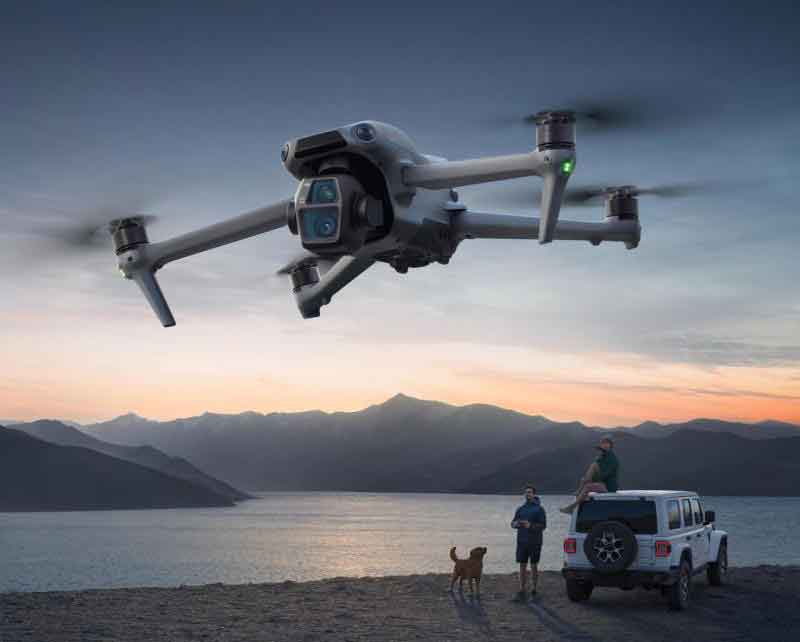
One cannot overstate the role of regulatory frameworks in guiding the safe integration of civilian drones into national airspace and public life. A multi-layered approach has emerged, involving central government ministries, aviation authorities, and local legislatures. The core objective is to balance innovation with public safety, security, and privacy concerns. From my observation, the regulatory landscape for civilian drones is characterized by a dynamic interplay between top-down mandates and bottom-up experiential learning from early deployments. The following table summarizes the key dimensions of this regulatory architecture, which is crucial for any entity operating or manufacturing civilian drones.
| Regulatory Dimension | Primary Focus | Exemplary Measures/Requirements | Impact on Civilian Drones Ecosystem |
|---|---|---|---|
| Spectrum & Frequency Management | Ensuring non-interfering communication and control links. | Designation of specific frequency bands for command, control, and payload data. | Defines technical requirements for drone communication systems; prevents signal jamming and loss of control. |
| Operator & Vehicle Registration | Establishing accountability and traceability. | Mandatory online registration of drones above a certain weight and certification of remote pilots. | Creates a database of users and assets; aids in incident investigation and enforcement. |
| Operational Limitations | Managing risk in shared airspace. | Geofencing, altitude caps, visual line-of-sight (VLOS) rules, and no-fly zones near sensitive areas. | Directly shapes where and how civilian drones can be flown, influencing application design. |
| Manufacturing & Quality Assurance | Ensuring airworthiness and product safety. | Type certification processes, quality management system standards for manufacturers. | Raises the baseline quality and reliability of civilian drones entering the market. |
| Data Security & Privacy | Protecting collected information and individual rights. | Guidelines on data encryption, storage, and processing; requirements for informed consent for surveillance. | Builds public trust and defines ethical boundaries for applications like monitoring and mapping. |
The formulation of these rules is an iterative process. For instance, the operational risk for a civilian drone can be modeled as a function of multiple variables, which guides regulatory segmentation. A simplified risk assessment formula might be:
$$ R_{op} = k \cdot \left( \frac{M \cdot V \cdot E}{C \cdot S} \right) $$
Where:
- $R_{op}$ represents the operational risk score.
- $M$ is the drone mass (kg).
- $V$ is the maximum attainable speed (m/s).
- $E$ is the environmental complexity factor (e.g., urban vs. rural, on a scale of 1-10).
- $C$ is the competency level of the operator (certification level, on a scale of 1-5).
- $S$ is the sophistication of safety systems (e.g., parachutes, detect-and-avoid, on a scale of 1-5).
- $k$ is a normalization constant.
This kind of quantitative approach helps regulators categorize civilian drones into different classes, applying proportionate rules—lighter regulations for low-risk models used for recreation, and stringent requirements for larger drones carrying critical payloads over populated areas.
Parallel to regulatory efforts, the establishment of technical standards is the bedrock for industry growth and global trade. Standards ensure that civilian drones from different manufacturers can interact safely with each other and with air traffic management systems. I have been involved in numerous discussions where the lack of a standard interface or data protocol hindered collaborative disaster response efforts. The standardization landscape is now becoming more structured, progressing from isolated industry specifications to a more harmonized system. The following table categorizes the primary layers of standards affecting civilian drones.
| Standard Level | Governance Body | Primary Focus Areas | Example Impact on Civilian Drones |
|---|---|---|---|
| International Standards | ISO (International Organization for Standardization), IEC | Terminology, classification, safety, quality, and global interoperability. | ISO 21895 on classification provides a common global language, facilitating international trade and regulatory alignment. |
| National Standards | National Standardization Bodies (e.g., SAC in China, ANSI in USA) | Adapting international standards, addressing specific national requirements for testing, performance, and interfaces. | National standards for flight performance testing ensure drones sold in a country meet baseline performance and safety criteria. |
| Industry Standards | Sector-specific regulators and associations (Aviation, Agriculture, Surveying) | Application-specific protocols, data formats, and operational procedures. | A standard data format for aerial survey outputs allows seamless integration with Geographic Information System (GIS) software across the industry. |
| Group Standards (Consortia/Alliances) | Industry alliances, technical associations | Rapid innovation, pre-standardization for emerging technologies, filling gaps where formal standards are under development. | Standards for drone docking station interfaces enable the development of automated charging networks for beyond visual line of sight (BVLOS) operations. |
The economic and operational efficacy of deploying civilian drones, especially in sectors like disaster management, can be rigorously analyzed. Consider a scenario for post-disaster damage assessment. The traditional method might involve ground teams, which is slow and hazardous. A drone-based approach offers rapid coverage. The time-saving efficiency can be expressed as:
$$ T_{saved} = T_{ground} – T_{drone} = \frac{A}{v_{ground} \cdot \rho_{ground}} – \frac{A}{v_{drone} \cdot \rho_{drone} \cdot n} $$
Where:
- $T_{saved}$ is the net time saved using civilian drones.
- $A$ is the total area to be assessed (in km²).
- $v_{ground}$ and $v_{drone}$ are the effective survey speeds of ground teams and drones respectively (km²/hour).
- $\rho_{ground}$ and $\rho_{drone}$ are the data resolution or detail factors (unitless, representing detail level).
- $n$ is the number of drones deployed in a swarm or fleet.
Typically, $v_{drone} >> v_{ground}$, and for large areas, $T_{saved}$ becomes significantly positive, justifying the investment in civilian drone fleets for emergency services.
Furthermore, the cost-benefit analysis over the lifecycle of a civilian drone program for a fire department, for example, can be modeled. The total cost of ownership (TCO) versus total value generated (TVG) provides insight:
$$ \text{Return Index } (RI) = \frac{TVG}{TCO} = \frac{\sum_{t=1}^{N} (B_{direct, t} + B_{indirect, t})}{(C_{acq} + \sum_{t=1}^{N} (C_{op, t} + C_{maint, t} + C_{training, t})) \cdot (1 + r)^{-t}} $$
Where:
- $N$ is the operational lifespan in years.
- $B_{direct, t}$: Direct benefits in year $t$ (e.g., reduced property loss due to faster fire mapping).
- $B_{indirect, t}$: Indirect benefits in year $t$ (e.g., saved lives, reduced risk to firefighters).
- $C_{acq}$: Initial acquisition cost for drones and systems.
- $C_{op, t}$: Annual operational costs (logistics, energy).
- $C_{maint, t}$: Annual maintenance and repair costs.
- $C_{training, t}$: Annual training costs.
- $r$: Discount rate.
An $RI > 1$ indicates a positive return. For disaster response, the indirect benefits often make the case for civilian drones overwhelmingly positive, though challenging to quantify precisely.
The application depth and breadth of civilian drones are truly staggering. Beyond disaster response, which I will detail shortly, they are revolutionizing fields. In precision agriculture, drones monitor crop health using normalized difference vegetation index (NDVI) sensors, allowing targeted intervention. The NDVI is calculated from multispectral imagery:
$$ \text{NDVI} = \frac{(NIR – Red)}{(NIR + Red)} $$
Where $NIR$ is the reflectance in the near-infrared band and $Red$ is the reflectance in the red band. Drones automate the collection of this data over vast fields, enabling variable-rate application of water and fertilizers, which optimizes yield and minimizes environmental impact. In infrastructure inspection, civilian drones equipped with high-resolution cameras and LiDAR (Light Detection and Ranging) create detailed 3D models of bridges, wind turbines, and power lines. The point cloud density $D_{pc}$ from a LiDAR-equipped drone is a key metric:
$$ D_{pc} = \frac{f_{pulse} \cdot \eta \cdot t_{scan}}{A_{scan}} $$
where $f_{pulse}$ is the laser pulse frequency, $\eta$ is the scanner efficiency, $t_{scan}$ is the scan time over an area $A_{scan}$. Higher $D_{pc}$ allows for the detection of minute cracks or corrosion, enabling predictive maintenance.
However, it is in the realm of disaster management—encompassing mitigation, preparedness, response, and recovery—where civilian drones are proving to be true game-changers, acting as “eyes in the sky.” They fill a critical gap between satellite imagery, which may have revisit latency or resolution limitations, and manned aircraft, which are costly and may not be deployable in immediate post-disaster conditions due to damaged infrastructure or weather.
For disaster preparedness and mitigation, civilian drones are used to create high-resolution baseline topographic maps and 3D models of flood-prone areas or seismic zones. These models are essential for running simulations and planning evacuation routes. The volume of earthwork needed for a mitigation levee, for instance, can be calculated from drone-generated digital elevation models (DEMs):
$$ V = \int\!\!\!\int_{A} (z_{new}(x,y) – z_{original}(x,y)) \,dx\,dy $$
where $z_{original}$ is the pre-construction elevation and $z_{new}$ is the designed elevation, both obtained from drone surveys.
During the response phase, immediately after an event like an earthquake, flood, or wildfire, the primary goals are search and rescue (SAR), situational awareness, and damage assessment. Civilian drones equipped with thermal imaging cameras can detect human body heat signatures in rubble or dense smoke, greatly accelerating SAR operations. The probability of detection $P_d$ by a thermal sensor on a drone can be modeled as a function of several factors:
$$ P_d = 1 – \exp\left(-\lambda \cdot \frac{A_{sensor} \cdot \Delta T \cdot t_{dwell}}{R^2 \cdot \text{NEDT}}\right) $$
Here, $\lambda$ is a scaling constant, $A_{sensor}$ is the sensor’s effective aperture, $\Delta T$ is the temperature contrast between the target and background, $t_{dwell}$ is the time the sensor observes a point, $R$ is the range to target, and $\text{NEDT}$ is the Noise-Equivalent Delta Temperature of the sensor. This formula illustrates why lower-flying civilian drones (smaller $R$) with advanced sensors can be more effective than higher-altitude platforms for SAR.
For damage assessment, drones rapidly capture overlapping images that are processed into orthomosaics and 3D models using photogrammetry software. The speed of this processing is crucial. The time to generate a 3D model $T_{process}$ for an area $A$ can be approximated by:
$$ T_{process} \approx \frac{N_{images} \cdot C_{pixel}}{F_{computing}} $$
where $N_{images}$ is the number of images, proportional to $A$ and the desired ground sampling distance (GSD), $C_{pixel}$ is the computational cost per pixel, and $F_{computing}$ is the available computing power (e.g., in cloud servers). The immediacy of this data allows emergency managers to prioritize response efforts efficiently.
In the recovery phase, civilian drones monitor reconstruction progress, assess the stability of slopes and structures, and help in planning new, more resilient infrastructure. They provide documented evidence for insurance claims and governmental aid disbursement.
The future trajectory for civilian drones points towards greater autonomy, swarm intelligence, and deeper system integration. Swarm operations, where multiple drones coordinate to perform a task, promise unprecedented scalability. The efficiency of a swarm for area coverage can be described. If a single drone covers an area $A_s$ in time $t$, a swarm of $m$ drones, assuming perfect coordination and no interference, could cover the same area in time $t/m$. However, in practice, coordination overhead and communication latency reduce this gain. A more realistic model for swarm coverage time $T_{swarm}$ for a large area $A_{total}$ is:
$$ T_{swarm} \approx \frac{A_{total}}{m \cdot v \cdot w} + \tau \cdot \log(m) $$
where $v$ is the drone speed, $w$ is the effective sensor swath width, and $\tau$ is a time constant representing the coordination overhead, which grows logarithmically with the number of drones $m$. This demonstrates the powerful yet complex nature of scaling civilian drone operations.
Moreover, the integration of civilian drones into urban air mobility concepts and Unmanned Traffic Management (UTM) systems is the next frontier. This will require even more sophisticated standards for communication, navigation, and surveillance (CNS) to ensure the safe coexistence of thousands of drones in dense airspace. Concepts like dynamic geofencing, where no-fly zones are updated in real-time based on events, will rely on continuous data streams from the drones themselves.
In conclusion, the journey of civilian drones from niche gadgets to strategic industrial assets has been remarkable. The synergistic development of pragmatic regulations, comprehensive standards, and cutting-edge technology has been key. As a participant in this field, I am convinced that civilian drones will become as ubiquitous and essential as smartphones, fundamentally enhancing our ability to monitor, manage, and protect our environment and communities. Their role in building more resilient societies, especially against the increasing frequency and intensity of natural disasters, is not just promising—it is already being proven indispensable. The continuous iteration on rules and technical specifications will ensure that the immense potential of civilian drones is realized safely, ethically, and for the broad benefit of all.