
From a tool for photography and recreation, the DJI drone has fundamentally transformed into a cornerstone of modern emergency management. Our journey began with applications like power grid inspection, but the inherent flexibility, efficiency, and intelligence of our platforms revealed a far greater potential. Since 2017, we have deliberately expanded our focus, channeling innovation into the critical fields of firefighting, disaster relief, and broader emergency response mechanisms. This shift represents a core commitment: to infuse the modernization of public safety with robust technological动力. The unique capabilities of a DJI drone—rapid deployment, aerial perspective, and data acquisition in inaccessible areas—have made it an indispensable asset for first responders worldwide.
The operational advantages are best understood through quantifiable metrics. A DJI drone deployed for initial incident reconnaissance can compress what was traditionally a lengthy, risky manual process into a matter of minutes. This efficiency gain is not merely observational; it translates directly into faster, more informed decision-making at the command level, potentially saving lives and property.
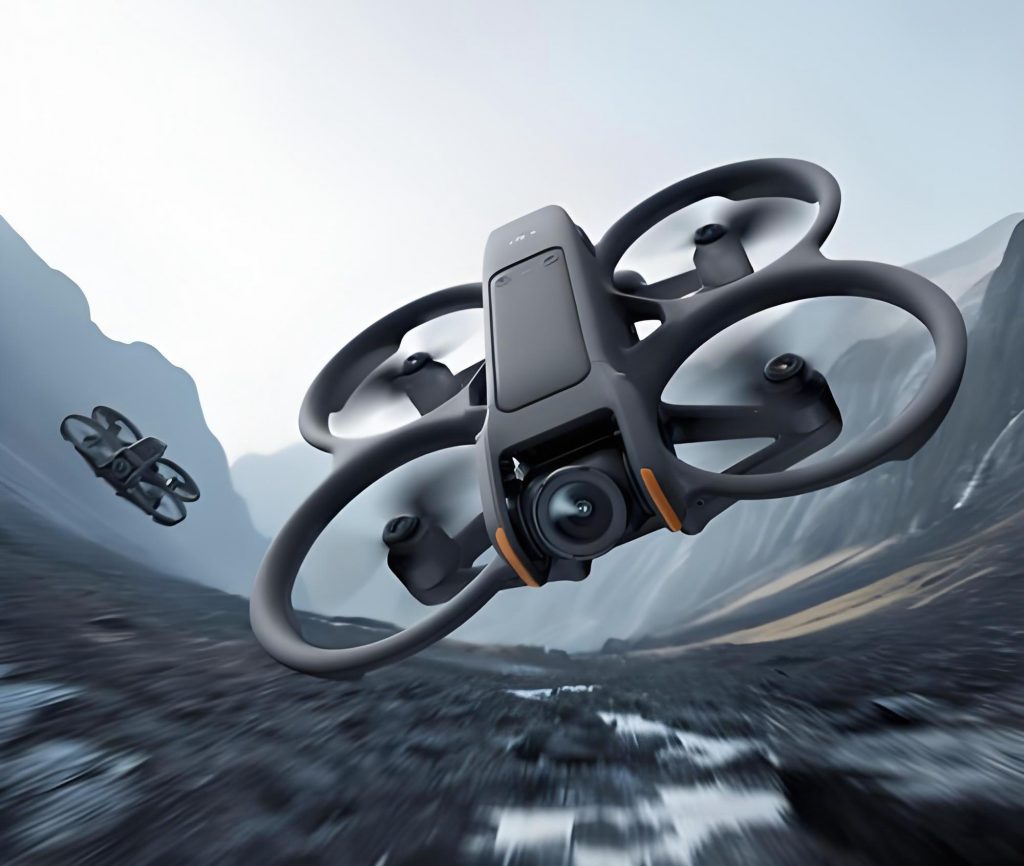
A prime example of this operational philosophy is our autonomous drone-in-a-box solution. This high-performance, compact station is designed for 24/7 unattended operation. Its lightweight and easily deployable nature allows for strategic placement in high-risk zones such as industrial complexes, dense residential areas, and public venues. By automating routine patrols and instant incident response, these systems provide continuous monitoring, acting as a persistent aerial sentinel for urban fire safety. The system’s value proposition can be summarized by its impact on reducing the time-to-awareness for an emerging incident, a critical factor in emergency response.
The efficiency of drone-based reconnaissance versus traditional methods can be modeled. Let \( T_t \) represent the time for traditional ground-based scouting, which includes approach time \( t_a \), on-site assessment time \( t_s \), and return time \( t_r \). Let \( T_d \) represent the drone-based scouting time, consisting of launch/ascend time \( t_l \), aerial survey time \( t_{survey} \), and landing/data transfer time \( t_{dt} \). The time compression factor \( \kappa \) achieved is significant:
$$ \kappa = \frac{T_t}{T_d} = \frac{t_a + t_s + t_r}{t_l + t_{survey} + t_{dt}} $$
In complex disaster scenarios—building collapses, floods, landslides—where \( t_a \) and \( t_r \) are prohibitively high and \( t_s \) is dangerous, the value of \( \kappa \) can be an order of magnitude greater than 1, illustrating the transformative speed of a DJI drone.
| Scenario | Traditional Method Challenge | DJI Drone Application | Key Outcome |
|---|---|---|---|
| Firefighting | Slow situational awareness, risk to scouts, difficulty locating water sources. | Live aerial feed, thermal imaging, rapid mapping of perimeter and hazards. | Dramatically reduced reconnaissance time, improved firefighter safety, informed resource deployment. |
| Urban Search & Rescue (USAR) | Unstable structures prevent entry, visual coverage is limited and slow. | Rapid aerial assessment of collapse structure, identification of potential void spaces, survivor detection via zoom/thermal. | Faster localization of survivors, mapping of safe access routes, overall acceleration of rescue operations. |
| Flood Disaster | Inaccessible terrain, wide-area assessment is time-prohibitive, communication blackouts. | Rapid mapping of inundated areas, identification of stranded individuals, payload delivery (life vests, communications relays). | Comprehensive situational overview delivered to command, enables targeted boat/helicopter dispatch. |
| Hazardous Material (HazMat) | Extreme risk of exposure to personnel for initial assessment. | Remote visual and (with payloads) gas/chemical sensing from a safe standoff distance. | Critical data gathered with zero risk to human life, informs containment and mitigation strategy. |
Guided by real-world feedback, our development process is fundamentally实战导向. We establish dedicated R&D teams that engage directly with frontline responders. This collaboration ensures our products are not conceived in isolation but are forged in the context of actual operational needs and constraints. For instance, when developing a specialized heavy-lift delivery DJI drone, our engineers conducted extensive field measurements within fire station equipment depots. This direct engagement led to a precise payload specification of 30-40 kg, a range designed to transport the majority of essential firefighting gear. Furthermore, practical considerations like transportability were paramount; the resulting design is foldable, portable by two personnel, and easily fits into a standard SUV. This fusion of engineering and frontline practicality has yielded nearly twenty specialized hardware and software products for the emergency domain, each designed to break traditional limitations of manpower and logistics.
The concept of payload delivery introduces another critical equation: the operational efficiency gain in logistics. Consider a scenario where hot meals need to be delivered to a team cut off by terrain. Traditional foot transport takes time \( t_{foot} \) and consumes human resources \( R \). A DJI drone with payload capacity \( m_{payload} \) and average velocity \( v_{drone} \) completes the round trip in \( t_{drone} = \frac{2d}{v_{drone}} \), where \( d \) is the one-way distance. The resource liberation multiplier \( \lambda \) is substantial:
$$ \lambda = \frac{R \cdot t_{foot}}{t_{drone}} $$
Here, \( R \) (the personnel required for foot delivery) is reallocated to core rescue tasks, while the DJI drone handles supply, enhancing overall team effectiveness and morale.
Recognizing that technology’s impact is multiplied by coordinated human effort, we pioneered an initiative to凝聚公益应急救援力量. This alliance brings together drone service providers, experts, and enthusiasts under a common framework to support official emergency management agencies with personnel, equipment, and expertise. The goal is to help standardize operational protocols and accelerate the adoption of无人机技术在应急救援领域的普及应用. This network has proven its value repeatedly. During a major flood disaster in 2021, the alliance coordinated 42 teams from across the nation, contributing over 2,000 sorties for tasks ranging from damage assessment and loudspeaker guidance to night illumination and supply airdrops. The alliance’s formal integration into a national-level major disaster coordination mechanism in 2023 has further streamlined its ability to respond rapidly and effectively to large-scale crises.
| Metric | Initial Launch (2020) | Status (Current) | Growth Factor |
|---|---|---|---|
| Number of Partner Teams | Founding Members | 89 Teams | ~12x |
| Geographic Coverage | Select Regions | Most Provincial Capitals | Nationwide Expansion |
| Cumulative Mission Count | 0 | ~300 | N/A |
| Key Mission Types | N/A | Flood Relief, Wildfire Support, Search & Rescue, Large-event Security | Diversification of Response Portfolio |
The evolution of regulatory frameworks and national strategy, emphasizing holistic risk management—prevention, preparedness, response, and recovery—guides our forward vision. In response, we have formalized a comprehensive framework that outlines how无人机技术为核心 can help build an integrated, agile emergency response system. This framework is structured around three pillars: Natural Disaster Prevention & Mitigation, Production Safety & Law Enforcement Supervision, and Emergency Plan Management & Rescue Coordination. The aim is to contribute to a unified command structure with seamless air-ground coordination, meeting the demands of a “comprehensive disaster, full-spectrum response” paradigm.
This strategic shift expands our focus from primarily灾中救援 to a full-cycle commitment. In the灾前预防 phase, aerial imagery and data captured by DJI drone platforms are powerful tools for public education and hazard mapping, raising community awareness. Post-disaster, in the recovery phase, drones equipped with surveying payloads can rapidly generate accurate maps, 3D models, and damage assessments, providing the essential data foundation for reconstruction planning and environmental monitoring. The shift represents a move from reactive tools to proactive components of a resilient system.
The future trajectory is clear. We will continue to deepen our specialization in应急管理领域, collaborating closely with agencies and upholding the principle of ‘Technology for Good.’ By remaining steadfastly guided by实战需求 and driven by relentless technological innovation, we strive to fulfill our corporate social responsibility. Our mission is to serve the cause of technological self-reliance in emergency management and contribute new, qualitative productive forces to the era of intelligent emergency response. The DJI drone, therefore, is more than a product; it is an evolving platform at the heart of building safer, more resilient communities through the power of aerial intelligence.