
Agricultural drone technology revolutionizes pest management by enabling precise interventions. Modern agricultural UAVs integrate flight platforms, navigation systems, and spraying mechanisms to perform targeted operations. These systems collect environmental data through integrated sensors, monitoring critical variables like temperature ($T$) and humidity ($H$), which govern pest development cycles. For example, corn borer egg hatching peaks at 26°C ($T_{opt} = 26^\circ C$), while cotton bollworms thrive at 60-90% humidity ($H_{opt} \in [0.6, 0.9]$).
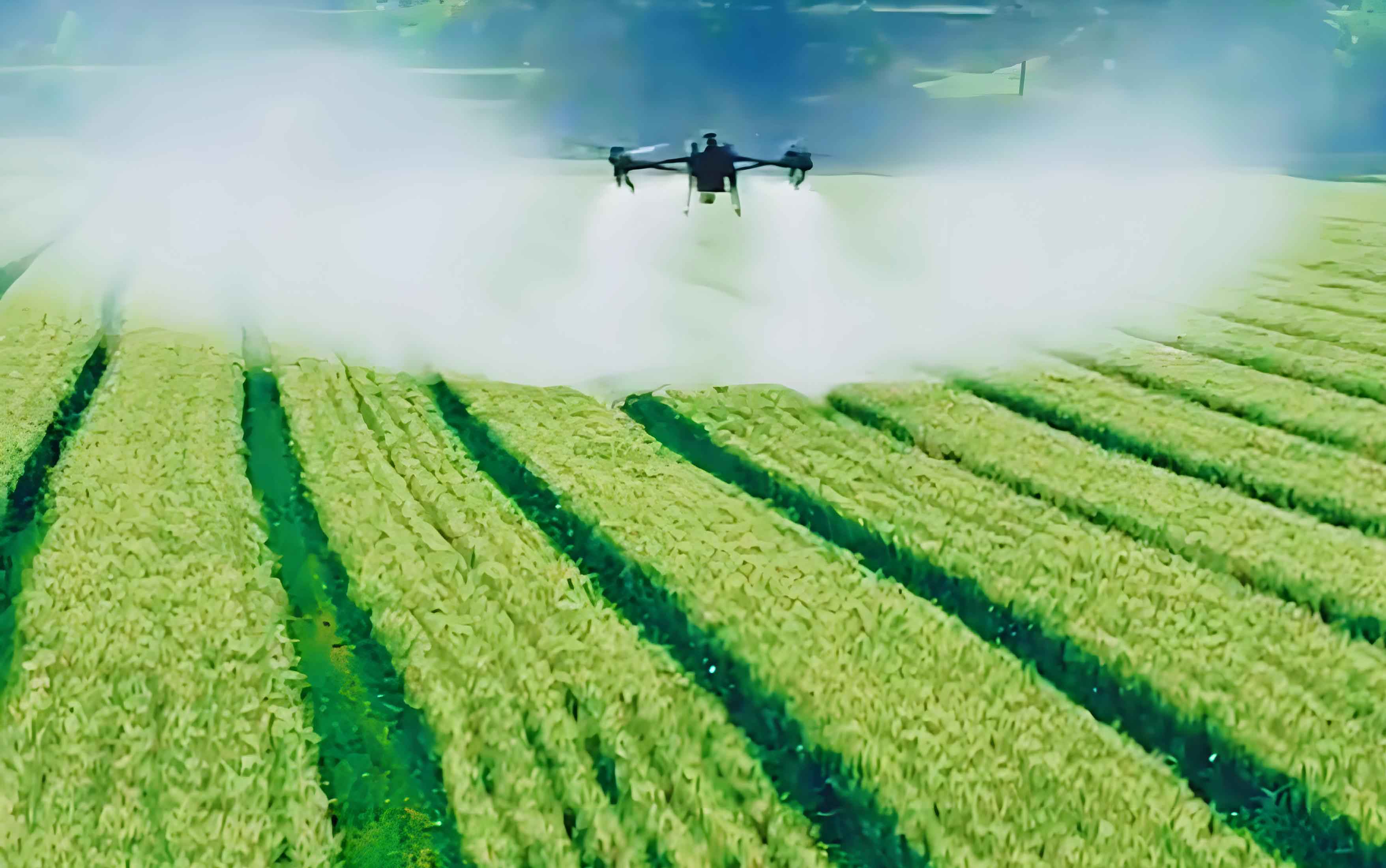
Field efficiency comparisons demonstrate the agricultural drone advantage:
| Operation Metric | Manual Labor | Agricultural UAV | Improvement Factor |
|---|---|---|---|
| Daily Coverage (hectares) | 0.67 – 1.33 | 16.67 – 20.00 | 15 – 25× |
| Pesticide Utilization | 100% (Baseline) | 40 – 60% | 40 – 60% reduction |
| Labor Requirements | 15 – 25 persons | 1 operator | 93 – 96% reduction |
The operational efficiency of agricultural UAVs follows the equation:
$$E_{uav} = \frac{A_c}{t_m \cdot C_p}$$
where $E_{uav}$ = UAV efficiency (ha/hour), $A_c$ = coverage area, $t_m$ = mission time, and $C_p$ = operational cost coefficient. Precision spraying algorithms minimize chemical usage through:
$$Q_{opt} = k \cdot \sqrt[3]{\frac{I_s \cdot D_i}{V_w}}$$
where $Q_{opt}$ = optimal discharge rate, $I_s$ = infestation severity index, $D_i$ = pest density, and $V_w$ = wind velocity.
Implementation barriers require strategic solutions:
| Challenge Category | Impact Level | Mitigation Strategy |
|---|---|---|
| Technical Standardization | High | Implement GB/T 43071-2023 framework with regional adaptations |
| Operator Training | Critical | Hybrid learning models: 70% field practice + 30% theory |
| Technology Adoption | Moderate-High | Subsidize 30-50% of acquisition costs |
Sensor-based decision systems enhance agricultural drone functionality through multispectral analysis. The vegetation health index ($VHI$) is calculated as:
$$VHI = \frac{NIR – RED}{NIR + RED} \times \gamma$$
where $NIR$ = near-infrared reflectance, $RED$ = visible red spectrum reflectance, and $\gamma$ = calibration constant. This enables early detection of pathogen hotspots before visible symptoms manifest. Future agricultural UAV systems will incorporate AI-driven predictive analytics:
$$P_{outbreak} = \sigma\left(\sum_{i=1}^{n} w_i x_i + b\right)$$
where $P_{outbreak}$ = outbreak probability, $\sigma$ = sigmoid function, $w_i$ = weighted environmental factors, $x_i$ = sensor inputs, and $b$ = bias term.
Economic models confirm the agricultural drone return on investment (ROI):
$$ROI = \frac{\sum (Y_i \cdot P_c) – (C_d + C_o)}{C_i} \cdot 100\%$$
where $Y_i$ = yield preservation, $P_c$ = crop value, $C_d$ = operational costs, $C_o$ = labor savings, and $C_i$ = initial investment. Typical break-even occurs within 2-3 growing seasons. Integration with IoT networks creates responsive protection systems that automatically trigger agricultural UAV deployments when threshold conditions are met:
$$\begin{cases}
T \geq T_{crit} \\
H \geq H_{crit} \\
VHI \leq VHI_{min}
\end{cases}
\Rightarrow \text{Autonomous Response Activation}$$
Global adoption roadmaps prioritize three development phases:
| Implementation Phase | Core Objectives | Technology Focus |
|---|---|---|
| Immediate (0-2 years) | Standardize interfaces | Swarm coordination protocols |
| Mid-term (3-5 years) | Automate decision loops | Edge computing integration |
| Long-term (6-10 years) | Full ecosystem integration | AI-phytopathology fusion |
The evolution of agricultural UAV technology follows Moore’s Law analogues, with sensor density doubling every 18 months. Current limitations in battery capacity ($C_b$) are being addressed through hydrogen fuel cell innovations:
$$C_b = \mu \cdot \rho_e \cdot V_{fc}$$
where $\mu$ = energy conversion efficiency, $\rho_e$ = energy density, and $V_{fc}$ = fuel cell volume. These advances will enable 8+ hour continuous agricultural drone operations by 2030.