
The evolution of warfare has entered a definitive era of unmanned and intelligent systems, with unmanned aerial vehicles (UAVs) emerging as a paramount force. Their advantages—cost-effectiveness, operational flexibility, high precision, and reduced risk to human operators—have made them central to modern battlefields, from the Nagorno-Karabakh conflict to the ongoing war in Ukraine. This proliferation has inevitably spurred the critical development of countermeasures, making anti-UAV capabilities not merely an auxiliary function but a strategic imperative for national defense. The core challenge lies in the profound asymmetry between the scalable, low-cost threat and the traditionally expensive, often cumbersome defense systems. This article explores the multifaceted technical and tactical困境 encountered in contemporary anti-UAV operations and proposes a framework for a more resilient and cost-effective defensive posture.
The scale of the challenge is starkly illustrated by recent conflicts. Open-source analyses suggest that in a single year of intense warfare, the number of UAVs deployed can exceed one million units per side. Despite thousands of claimed interceptions, the kill ratio often remains alarmingly low, estimated in the low single-digit percentages. This discrepancy highlights the inadequacy of existing anti-UAV paradigms. The problem is systemic, stemming from fundamental physical, economic, and psychological factors that favor the offense.
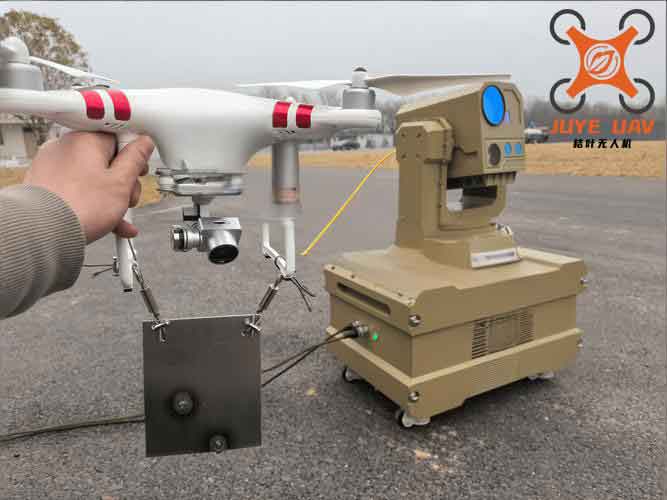
Core Technical Challenges in Anti-UAV Operations
The efficacy of any anti-UAV system is predicated on a “Detect-Track-Identify-Engage” chain. Current technologies face significant hurdles at every link when dealing with small, low-altitude, and slow-moving (SLS) or weaponized commercial UAVs.
1. The Stealth and Accessibility of the Threat
Modern commercial and tactical UAVs present a minimal radar cross-section (RCS) and acoustic signature. A typical small quadcopter generates noise below 60 dB at source, becoming inaudible to human ears at distances beyond 30-50 meters. Visually, they become difficult to spot well within their own sensor range. This creates a severe detection gap. While a UAV can conduct surveillance from 3-5 km using electro-optical/infrared (EO/IR) sensors, the defending force may remain entirely unaware of its presence until attacked. The fundamental inequality in situational awareness often leads to tactical paralysis. The RCS can be modeled as a function of its physical dimensions and material properties:
$$ \sigma_{UAV} = \frac{4\pi A^2}{\lambda^2} $$
where \( \sigma_{UAV} \) is the radar cross-section, \( A \) is the characteristic area, and \( \lambda \) is the radar wavelength. For small UAVs, \( A \) is exceptionally small, resulting in a minuscule \( \sigma_{UAV} \) that challenges conventional radar systems designed for larger aircraft.
2. Limitations of Current Countermeasure Hardware
Existing anti-UAV systems can be broadly categorized into detection and interception/neutralization suites. Each category suffers from specific drawbacks in a dynamic battlefield.
| System Category | Examples | Key Limitations in Field Deployment |
|---|---|---|
| Detection | Radar, RF Scanners, EO/IR, Acoustic | Radar: Clutter from ground/urban environments, low RCS. RF/EO: Line-of-sight required, affected by weather. Acoustic: Short range, high false alarms in noisy battlespace. |
| Kinetic Intercept | Guns, Missiles, Nets, Lasers | Extremely high cost-per-kill for missiles vs. cheap UAVs. Guns and nets have limited range and require precise targeting. High-energy lasers demand massive, stable power supply and are affected by atmospheric conditions. |
| Electronic Warfare (EW) | Jamming, Spoofing | Jamming requires constant high power for area defense, revealing emitter location. Risk of fratricide (disabling friendly systems). Spoofing effectiveness depends on specific UAV communication protocols. |
The power requirement for effective, wide-area jamming or for sustaining a high-energy laser is a critical vulnerability. As seen in recent conflicts, large, power-hungry systems like electronic warfare vehicles or tactical lasers become priority targets themselves once located. Their deployment is often static or semi-static, making them susceptible to the very threat they are meant to counter. The power \( P_{req} \) needed for effective directed energy engagement over a range \( R \) with atmospheric attenuation coefficient \( \alpha \) is given by:
$$ P_{req} = \frac{E_{kill} \cdot v_{track}}{A_{spot} \cdot \eta_{sys}} \cdot e^{\alpha R} $$
where \( E_{kill} \) is the required energy density on target, \( v_{track} \) is the tracking accuracy, \( A_{spot} \) is the laser spot area, and \( \eta_{sys} \) is the system efficiency. The exponential term \( e^{\alpha R} \) shows how atmospheric effects drastically increase power needs with distance.
3. The Gridded, Transparent Battlefield
The pervasive use of UAVs for intelligence, surveillance, and reconnaissance (ISR) has rendered traditional concealment for large military assets nearly obsolete. This creates a paradox for anti-UAV defense: the most powerful countermeasure systems are themselves large, high-value signatures easily detectable by adversary UAVs. This forces a shift towards smaller, distributed, mobile, and networked anti-UAV assets—a significant doctrinal and engineering challenge.
4. Prohibitive Cost Exchange Ratios (CER)
This is perhaps the most intractable economic problem. Using a missile costing hundreds of thousands of dollars to destroy a UAV costing a few thousand dollars is unsustainable. Even if technically successful, such an exchange rapidly depletes a defender’s resources while the attacker can maintain or even increase the tempo of attacks. The Cost Exchange Ratio (CER) is defined as:
$$ CER = \frac{C_{interceptor} + C_{opportunity}}{C_{UAV}} $$
where \( C_{interceptor} \) is the cost of the interceptor (missile, laser shot, etc.), \( C_{opportunity} \) is the cost of revealing the defensive system’s location, and \( C_{UAV} \) is the cost of the neutralized threat. For a sustainable defense, the CER must be driven as close to or below 1 as possible. Current missile-based solutions have CER values in the hundreds, representing a catastrophic economic defeat.
5. The Psychological Warfare Dimension
The constant, unseen threat of UAV surveillance and sudden attack exerts a debilitating psychological pressure on troops. The feeling of being perpetually watched degrades morale, disrupts communication and movement, and can lead to a loss of confidence in traditional protective measures. Operators of static anti-UAV systems work under extreme stress, knowing they are high-priority targets, which can impair performance and decision-making.
Toward a Layered, Integrated, and Asymmetric Anti-UAV System
Addressing these challenges requires moving beyond single-point solutions to a multi-layered, networked system-of-systems approach. The goal is to raise the cost and complexity for the attacker at every layer while protecting the defender’s high-value assets.
| Defense Layer | Goal | Recommended Technologies & Tactics | Key Metric to Optimize |
|---|---|---|---|
| Strategic Denial | Disrupt production, supply, and C2 links far from frontline. | Cyber operations against manufacturing/payload software, satellite navigation spoofing in rear areas, interdiction of supply chains. | Attrition rate of UAVs before deployment; Delay in adversary’s operational cycle. |
| Operational Area Defense | Create a denied volume around high-value areas (HVAs). | Networked radar/RF sensors fused with AI-based tracking. High-power microwave (HPM) or long-range laser systems for area defense. Deployable RF jamming curtains. | Probability of kill (Pk) within the defended volume; Time from detection to engagement. |
| Tactical Point Defense | Protect mobile units and forward operating bases. | Mobile, vehicle-mounted EW/jamming systems. Short-range kinetic effectors (microwave, lasers, nets). Drone-on-drone combat (interceptor UAVs). | System mobility and setup time; Cost-per-engagement; Ability to handle swarm attacks. |
| Last-Ditch & Passive Defense | Survive and mitigate the impact of a breakthrough. | Camouflage, deception (decoys), and hardening of assets. Electronic hardening (EM shielding).Active protection systems (APS) adapted for UAV threats. | Survivability of defended asset; Reduction in mission degradation if hit. |
Optimizing the Engagement: The Role of AI and Asymmetric Solutions
The core of an effective anti-UAV system lies in command, control, and decision-making. Artificial Intelligence (AI) and Machine Learning (ML) are force multipliers here:
- Sensor Fusion and Track Management: AI algorithms can correlate data from disparate sensors (radar, RF, EO/IR, acoustic) to maintain a continuous, high-confidence track of low-signature UAVs in cluttered environments.
- Threat Prioritization and Weapon Assignment: In a swarm attack, AI can instantly calculate optimal engagement sequences, assigning the most cost-effective effector to each target based on threat level, trajectory, and available resources.
- Predictive Analysis: ML models can predict likely launch points, attack vectors, and UAV behaviors based on historical data and real-time battlefield intelligence.
The probability of successfully neutralizing a threat in a layered system can be expressed as:
$$ P_{success} = 1 – \prod_{i=1}^{n} (1 – P_{detect,i} \cdot P_{engage,i} \cdot P_{kill,i}) $$
where \( n \) is the number of defense layers, \( P_{detect,i} \) is the probability of detection in layer \( i \), \( P_{engage,i} \) is the probability of a successful engagement attempt, and \( P_{kill,i} \) is the conditional probability of kill given engagement. This formula underscores the value of multiple, independent layers.
Furthermore, the development of asymmetric, low-cost interceptors is critical for improving the CER. Examples include:
- Interceptor UAVs designed for aerial “dogfighting” or net-casting.
- Compact, solid-state high-power microwave devices for short-range area denial.
- Advanced ammunition for existing artillery or mortars that disperses a wide-area effector (e.g., fragmenting or RF-emitting submunitions).
Cost-Benefit Analysis and the Path Forward
Investment in anti-UAV technology must be guided by a rigorous analysis of cost versus operational benefit. The following table contrasts traditional and emerging approaches:
| Engagement Option | Approx. Cost per Engagement | Advantages | Disadvantages / Risks | Suitability |
|---|---|---|---|---|
| Surface-to-Air Missile (SAM) | $200,000 – $2M+ | High Pk, long range. | Catastrophic CER, exposes radar/launcher, limited magazine depth. | Defending national infrastructure against large, high-altitude UAVs. |
| Counter-UAV Artillery/Mortar Round | $5,000 – $50,000 | Lower cost than missiles, can engage multiple targets/area. | Lower precision, requires accurate targeting data, risk of collateral damage. | Area defense against predicted swarm ingress routes. |
| Mobile High-Power Microwave | $500 – $5,000 (per shot) | Very low cost-per-effect, can engage multiple drones in cone, hard to detect. | Limited range, requires precise pointing, potential fratricide on electronics. | Point defense of convoys, forward bases. |
| Interceptor UAV / Drone-on-Drone | $1,000 – $20,000 | Good CER, highly mobile, can pursue target. | Requires skilled operator/AI, can be countered by adversary EW. | Tactical protection of maneuvering units, urban environments. |
| Electronic Jamming (Directional) | $100 – $1,000 (energy cost) | Non-kinetic, reusable, can force landing or return-to-home. | Reveals emitter location, effectiveness varies by UAV model/protocol. | Creating localized “bubbles” of protection for sensitive activities. |
The future of anti-UAV warfare will be defined by integration and automation. Key trends include:
- Network-Centric, Distributed Architecture: Small, cheap sensors and effectors dispersed across the battlespace, connected via resilient communications, allowing for coordinated “swarm” defense.
- Directed Energy Maturation: Development of more efficient, compact, and power-efficient laser and microwave systems suitable for integration on lighter tactical vehicles.
- Quantum Sensing: Exploration of quantum radar and other quantum-enhanced sensors promising dramatically improved detection of stealthy targets.
- Automated Kill Chains: Further integration of AI to enable rapid, automated detect-to-engage sequences for time-critical threats, reducing the human decision loop.
In conclusion, the challenge posed by modern UAVs is profound and systemic. A successful anti-UAV strategy cannot rely on a single technological silver bullet. It demands a holistic, layered defense that integrates strategic denial, operational area defense, tactical point protection, and passive survival measures. The core principles must be network-centricity, cost-exchange inversion through asymmetric technologies, and the leveraging of artificial intelligence for decision superiority. The nation or alliance that most effectively builds and deploys such an integrated anti-UAV ecosystem will gain a decisive advantage in the conflicts of the 21st century.