
From my perspective as an educator within a secondary vocational system, the integration of Unmanned Aerial Vehicle (UAV) technology into the curriculum is no longer a futuristic concept but a pressing necessity. The rapid proliferation of agricultural UAV applications, particularly in plant protection, represents a significant technological shift in modern farming. This shift replaces labor-intensive, traditional methods with efficient, precise, and environmentally conscious operations. Therefore, developing effective pedagogical strategies for courses like Agricultural UAV Plant Protection Technology is crucial to equipping students with the relevant skills demanded by this evolving industry.
The imperative for this focus is underscored by national strategic directives. In recent years, the Chinese government has elevated the UAV industry to a position of national importance, enacting a series of supportive policies. These policies provide a clear roadmap for industry development and, by extension, for the educational frameworks that must supply a skilled workforce. A summary of key policies is presented in the table below.
| Year | Policy Document | Issuing Authority | Key Relevance to Agricultural UAVs |
|---|---|---|---|
| 2017 | Notice on Pilot Subsidies for Standardized Application of Plant Protection UAVs | Ministry of Agriculture, etc. | Promoted standardized use, addressing pest control challenges in complex environments. |
| 2017 | Guiding Opinions on Promoting and Regulating the Development of the Civil UAV Manufacturing Industry | Ministry of Industry and Information Technology (MIIT) | Outlined directions for fostering and regulating civil UAV manufacturing. |
| 2022 | “14th Five-Year” Plan for National Pesticide Industry Development | Ministry of Agriculture and Rural Affairs, etc. | Explicitly advocated for phasing out manual sprayers and promoting agricultural UAV and other advanced equipment. |
| 2023 | Interim Regulations on Flight Management of Unmanned Aircraft | State Council, Central Military Commission | Established a comprehensive regulatory framework for the entire lifecycle of UAV operations. |
These policies, alongside other top-level documents, create a favorable ecosystem. Industry data reflects this growth: over 170,000 operational enterprises, a registered UAV fleet exceeding 1.1 million units, and an industry output value surpassing 152 billion RMB. This booming sector necessitates a parallel expansion in vocational education to produce certified pilots (over 182,000 licenses issued) and competent technicians. However, my analysis and experience indicate a discrepancy. While higher education institutes have produced considerable research on UAV pedagogy, focused exploration at the secondary vocational level remains proportionally limited. Furthermore, educational resources often lag behind industry advancements, with challenges in curriculum completeness, teacher expertise, and the richness of application scenarios.
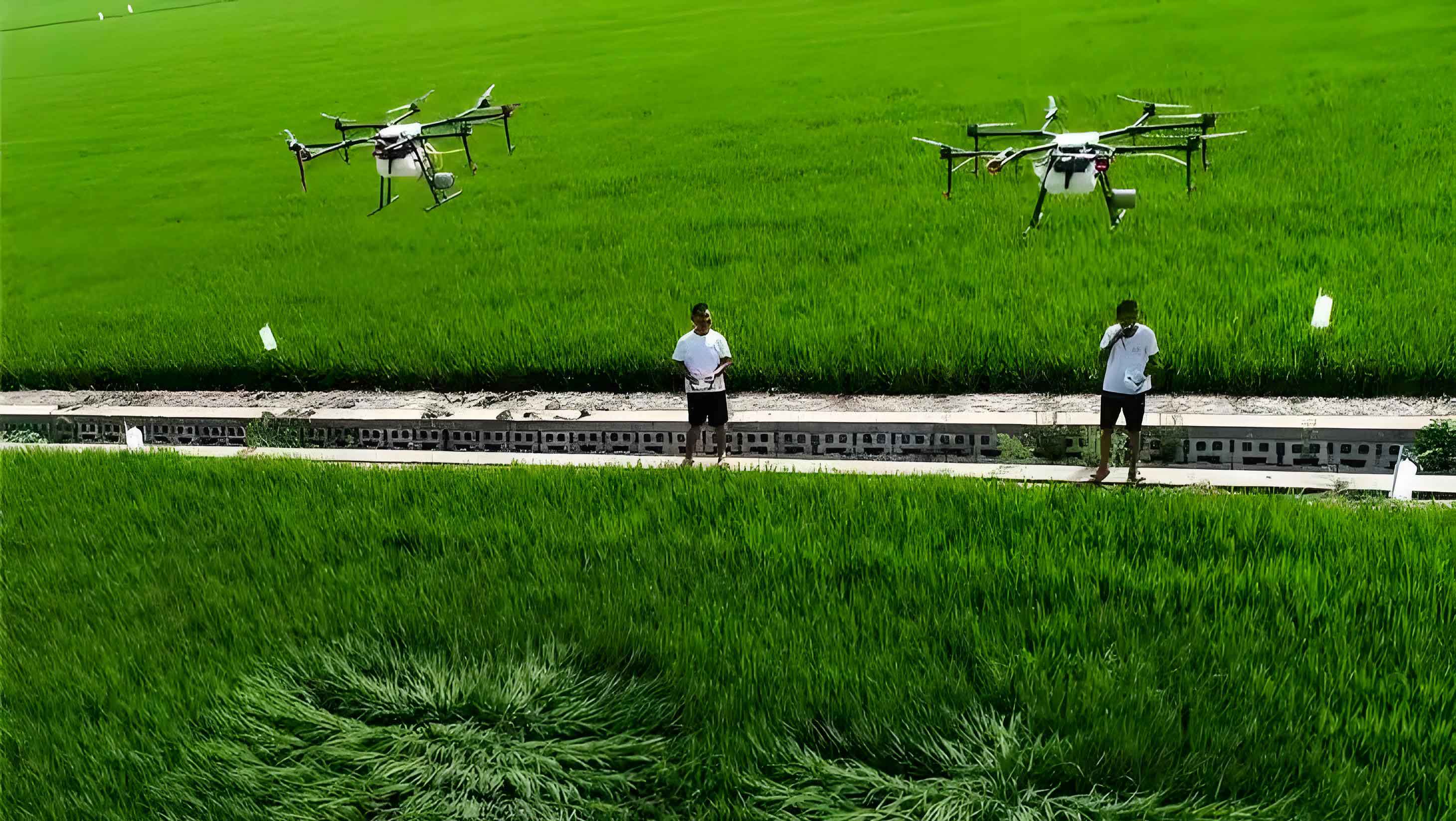
To bridge this gap, my teaching approach for the Agricultural UAV Plant Protection Technology course is built on a dual foundation: aligning with vocational skill standards and meticulously designing content and delivery methods. The course objectives are directly mapped to vocational skill level certificates, such as the “Plant Protection UAV Application” certificate. These standards define clear competency hierarchies:
• Primary Level: Focus on legal knowledge, basic assembly, pre-flight checks, safe chemical handling, and visual-line-of-sight (VLOS) operation.
• Intermediate Level: Builds on primary skills, adding knowledge of crop cycles and pests, ability to set parameters based on field conditions, and beyond-visual-line-of-sight (BVLOS) operation.
• Advanced Level: Encompasses intermediate skills, plus pest/disease diagnosis, advanced chemical formulation, complex mission execution, data analysis for efficacy evaluation, and fault troubleshooting.
Guided by these standards and industry needs, I construct a progressive course system. The content is segmented into logical modules, often compiled into a flexible, school-enterprise co-developed校本教材 (school-based textbook) format. This modular structure is outlined below.
| Core Part | Modules | Key Learning Tasks |
|---|---|---|
| UAV Operation | 1. UAV Familiarization | Classification, principles, system components (flight controller, propulsion, control link). |
| 2. Flight Control & Mission Execution | Pre-flight inspection, manual control, automated mission planning (mapping, route planning). | |
| Agronomic Knowledge | 3. Pesticides & Pest Management | Pesticide fundamentals, common crop pests/diseases/weeds, safe handling and preparation. |
| Maintenance & Application | 4. Assembly, Maintenance & Troubleshooting | Disassembly/assembly, routine保养 (maintenance), common fault analysis (spray system, power, control). |
| 5. Comprehensive Field Application | Developing operation plans, emergency response (crash, entanglement), efficacy assessment. |
The teaching content is stratified into three interconnected layers: Theoretical Knowledge (principles, regulations, agronomy), Practical Operations (progressive skill training), and Innovation & Professional Literacy (safety, ethics, problem-solving). The practical operations layer itself follows a staged approach:
1. Foundation – Field Crops: Training on basic病虫草害防治 (pest, disease, weed control) for open fields, focusing on autonomous operation and simple mapping.
2. Intermediate – Orchards: Advancing to complex terrains, focusing on spray penetration, manual precision flying, and adapting to canopy structures.
3. Advanced – Integrated Case Studies: Simulating real enterprise workflows: order reception, team-based task allocation, multi-scenario operations, and emergency handling.
In practice, calculating key parameters is essential. For instance, the required liquid flow rate ($Q$) for an agricultural UAV can be determined by the application rate ($A$ in L/ha), flight speed ($v$ in m/s), and effective spray swath width ($W$ in m):
$$Q = \frac{A \times v \times W}{10000} \quad \text{(L/s)}$$
Similarly, the theoretical area coverage rate ($R_{area}$ in ha/h) is a function of speed, swath, and operational efficiency ($\eta$, accounting for turns and reloading):
$$R_{area} = 3.6 \times v \times W \times \eta$$
My instructional methodology actively moves away from traditional lecture-based models towards student-centered, interactive approaches. I employ a blended learning model. The online phase uses platforms for distributing pre-class materials like safety manuals or simulation software tutorials. The offline, in-person phase is dedicated to hands-on practice, discussion, and simulation.
Simulation software is invaluable here. It allows students to virtually practice missions in varied environments—rice paddies, orchards, terraced fields—adjusting parameters like flight altitude ($h$), speed ($v$), and droplet size without real-world risks. They can analyze the simulated deposition effect and its relation to parameters. A key metric analyzed is the droplet deposition density ($D_d$ in droplets/cm²), influenced by flow rate ($Q$), spray volume, and environmental factors like wind speed ($v_w$).
To further engage students, I incorporate Game-Based Learning (GBL). Drawing inspiration from popular tactical games, I design training modules with missions like “Precision Supply Drop” (targeted spraying), “Obstacle Course” (navigating virtual poles and wires), and “Rapid Response” (simulating sudden pest outbreak in a defined zone). This contextualizes skill practice, significantly boosting motivation and engagement.
Furthermore, I utilize a role-playing group method to mimic real-world enterprise operations. Student teams form a “micro-service company.” Each member assumes a role: Team Manager (client communication, order planning), Agronomy Surveyor (field scouting, pest identification), Chemicals Handler (safe pesticide mixing and loading), UAV Pilot (mission execution), Data Analyst (post-operation efficacy data review), and Maintenance Technician (UAV upkeep and troubleshooting). Rotating through these roles ensures students understand the entire workflow and develop both technical and soft skills like communication and teamwork.
Enterprise collaboration is vital for resource integration. I actively seek partnerships for guest lectures from industry experts, joint development of实训 projects, access to the latest agricultural UAV models for training, and opportunities for students to participate in skill competitions or internships at external training bases. This connection ensures the curriculum remains relevant and enhances student employability.
Finally, assessing student performance requires a multi-dimensional, dynamic evaluation system that goes beyond a single final exam. I have implemented a four-dimensional framework:
| Dimension | Assessment Focus | Tools/Methods |
|---|---|---|
| Temporal Dimension | Evaluates progress over time (pre-class, in-class, post-class). | Online quiz scores, in-task performance logs, final project reports. |
| Process vs. Outcome | Balances the final result (spray quality) with the operational process (flight path accuracy, safety compliance). | Flight log analysis, supervisor observation checklists, final outcome measurement (e.g., using tracer dyes). |
| Source Perspective | Incorporates feedback from teachers (including enterprise mentors), peers, and self-assessment. | Peer review of team contributions, instructor evaluation, student self-reflection journals. |
| Comprehensive Criteria | Assesses knowledge, skill mastery, attitude, and capacity for improvement. | Written tests, practical skill tests, evaluation of professionalism and problem-solving during exercises. |
This comprehensive strategy—clear objective alignment with vocational standards, a structured and layered curriculum, innovative student-centered teaching methods, strong industry links, and a holistic evaluation system—has proven effective. It fosters an environment where students are not merely passive recipients of information but active participants in developing the competencies needed to thrive in the dynamic field of agricultural UAV technology. Their heightened engagement leads to stronger theoretical understanding, proficient practical skills, and a professional demeanor aligned with industry expectations, ultimately fulfilling the core mission of secondary vocational education in this high-tech agricultural domain.