
In my extensive research and analysis of aerial systems, I have come to recognize the military drone as a pivotal asset in modern warfare. The rapid proliferation of these unmanned platforms across global defense forces underscores the necessity to thoroughly understand their target characteristics. From my perspective, examining these characteristics is not merely an academic exercise but a critical endeavor with profound implications for military strategy, sensor design, threat assessment, and countermeasure development. This review, based on my first-hand experience and synthesis of field observations, aims to systematically delineate the target signatures of military drones from both design and operational viewpoints. I will focus on their combat employment, structural attributes, flight performance, and electromagnetic manifestations, employing quantitative models, tables, and formulas to encapsulate their essence. The term “military drone” will be frequently reiterated to emphasize the core subject of this discourse.
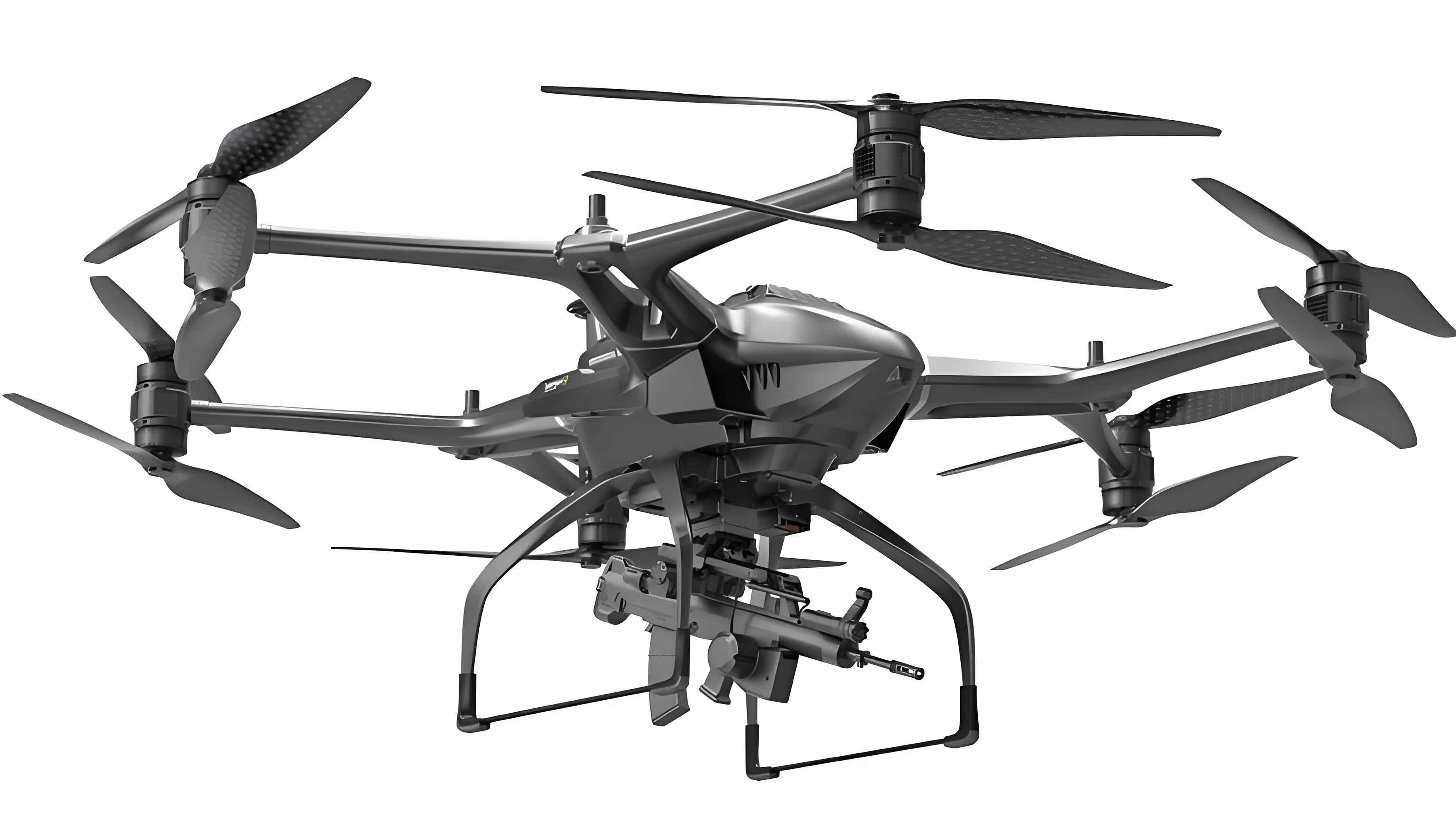
When I consider the operational utility of a military drone, I see a system engineered to transcend human physiological limits, enabling missions in high-risk, contested, or monotonous environments where manned platforms are unsuitable. The combat roles assigned to a military drone are diverse, spanning intelligence, surveillance, reconnaissance (ISR), precision strike, electronic warfare, communication relay, and logistics. This versatility necessitates a deep understanding of its usage profile. From my analysis, I categorize military drones based on operational altitude: high-altitude (near-space), medium-altitude, low-altitude, and ultra-low-altitude types. Each category exhibits distinct mission profiles and, consequently, unique target characteristics. For instance, a high-altitude military drone like strategic ISR platforms prioritizes endurance and sensor payload, operating above 15 km for over 24 hours, while a tactical low-altitude military drone might focus on agility and covert penetration below 1 km.
To quantify the operational scope, I often refer to the concept of the mission radius, which is intrinsically linked to the data-link and control systems. A military drone operating within line-of-sight (LOS) is constrained by the horizon, whereas one employing satellite communications (SATCOM) can achieve global reach. The payload capacity, a key structural and operational parameter, directly determines the mission equipment a military drone can carry—be it electro-optical/infrared (EO/IR) sensors, synthetic aperture radars (SAR), signal intelligence (SIGINT) suites, or ordnance. Modern military drone designs increasingly favor multi-role capabilities, integrating ISR and strike functions into a single platform, which complicates the target signature due to varied external stores and operational modes.
In my examination of deployment patterns, I note that current military drone operations are predominantly single-platform or simple linear formations. However, the future points toward networked swarms—coordinated groups of military drones operating collaboratively. This evolution will significantly alter the target characteristics from discrete point targets to complex, distributed systems, presenting new challenges for detection and engagement. The following table summarizes the primary operational characteristics of different military drone classes based on typical mission sets.
| Military Drone Class | Typical Altitude Range | Primary Missions | Endurance | Typical Payload Mass Range | Control Range |
|---|---|---|---|---|---|
| High-Altitude Long Endurance (HALE) | > 15 km | Strategic ISR, Persistent Surveillance | > 24 hours | 500-2000 kg | Global (SATCOM) |
| Medium-Altitude Long Endurance (MALE) | 5-15 km | Tactical ISR, Close Air Support, Strike | 15-40 hours | 200-1000 kg | Extended (SATCOM/LOS) |
| Low-Altitude/ Tactical | 1-5 km | Reconnaissance, Target Designation, Light Strike | 5-15 hours | 50-200 kg | LOS (up to 200 km) |
| Small/Minature (MAV/UAV) | < 1 km | Platoon-level ISR, Indoor Operations | 1-2 hours | < 5 kg | Short-range LOS (< 10 km) |
| Vertical Take-Off and Landing (VTOL)/Rotary-wing | 0-3 km | Ship-based ISR, Cargo, Urban Operations | 2-6 hours | 20-300 kg | LOS |
Transitioning from operation to physical form, the structural characteristics of a military drone are the bedrock of its observable features. In my design assessments, I focus on three core aspects: external geometry, material composition, and internal payload arrangement. The geometry of a military drone is primarily driven by aerodynamic efficiency and low observability requirements. Common configurations include conventional layouts (tapered fuselage, high-aspect-ratio wings, tail assembly), flying wings for stealth, or rotary-wing designs for VTOL capability. The principal dimensions—length (L), wingspan (W), and height (H)—define its spatial footprint. A simple geometric model for radar cross-section (RCS) estimation often treats components as canonical shapes. For example, the fuselage of a military drone might be approximated as a cylinder or a combination of ellipsoids.
Let the fuselage be modeled as a cylinder of length \(L_f\) and radius \(r\). For a wave incident broadside, the approximate RCS \(\sigma_{cyl}\) is given by:
$$\sigma_{cyl} \approx \frac{2\pi r L_f^2}{\lambda}$$
where \(\lambda\) is the radar wavelength. This formula, while simplistic, highlights how the physical size of a military drone directly influences its radar signature.
Material selection has undergone a revolutionary shift. Early military drone constructions heavily relied on aluminum and steel alloys, but contemporary platforms extensively utilize composite materials like carbon-fiber-reinforced polymers (CFRP), glass-fiber-reinforced polymers (GFRP), and advanced epoxy matrices. In my analysis, I’ve observed that a modern military drone can have a composite content exceeding 80-90% by surface area. This transition reduces structural mass significantly, enhancing the payload fraction. The reduced weight \( \Delta W \) can be estimated if the density of composites \( \rho_c \) is lower than that of metals \( \rho_m \) for the same volume \(V\) and stiffness:
$$\Delta W = V (\rho_m – \rho_c)$$
This weight saving is critical for a military drone’s endurance and performance. Furthermore, composites often have different dielectric and thermal properties than metals, affecting both radar and infrared signatures.
The internal layout, or payload arrangement, is crucial for understanding the mass distribution and vulnerable areas of a military drone. A typical fixed-wing military drone segments its internal volume into bays: a nose bay for sensors/radome, forward avionics bay, central fuel/battery and primary payload bay, engine compartment, and aft section for control actuators. External hardpoints on wings or fuselage carry stores like missiles or fuel tanks. This arrangement defines the center of gravity (CG) and moments of inertia, influencing flight dynamics. For a cylindrical fuselage with distributed masses, the longitudinal CG position \(x_{cg}\) can be calculated as:
$$x_{cg} = \frac{\sum_{i=1}^{n} m_i x_i}{\sum_{i=1}^{n} m_i}$$
where \(m_i\) and \(x_i\) are the mass and longitudinal position of the i-th component (engine, fuel, payload). This parameter is vital for the stability and control of the military drone.
To encapsulate common structural parameters, I present the following representative table. Note that these are generalized values for a conceptual medium-altitude military drone.
| Structural Component | Typical Dimensions / Description | Common Materials | Mass Fraction (Approx.) |
|---|---|---|---|
| Fuselage | Length: 8-12 m, Diameter: 0.5-0.8 m | CFRP Monocoque, Aluminum frames | 25-35% |
| Wings | Span: 15-20 m, Aspect Ratio: 15-25 | CFRP Spars and Skins, Nomex Honeycomb core | 20-30% |
| Empennage (Tail) | V-tail or Conventional, Area: 2-4 m² | CFRP, GFRP | 5-10% |
| Landing Gear | Retractable or Fixed | Steel/Aluminum, Composites | 5-8% |
| Propulsion System | Turbo-prop or Diesel engine, Propeller | Steel, Titanium, Aluminum | 15-25% |
| Payload Bay | Volume: 0.5-1.5 m³, Located near CG | Aluminum rails, Composite doors | Payload Dependent (10-30%) |
The flight performance of a military drone is the dynamic expression of its design, dictating how it moves through the battlespace. In my evaluations, I break this down into the flight envelope, steady-state performance, and maneuverability. The flight envelope defines the boundaries of achievable speed (\(V\)), altitude (\(h\)), and load factor (\(n\)). It is often described by a \(V-h\) or \(V-n\) diagram. For a military drone, the maximum altitude \(h_{max}\) is limited by engine thrust \(T\) and lift capability. The steady level flight condition requires thrust to equal drag \(D\) and lift \(L\) to equal weight \(W\):
$$T = D = \frac{1}{2} \rho V^2 S C_D$$
$$L = W = \frac{1}{2} \rho V^2 S C_L$$
where \(\rho\) is air density (a function of altitude \(h\)), \(S\) is wing area, \(C_L\) is lift coefficient, and \(C_D\) is drag coefficient. The drag coefficient for a military drone can be modeled as:
$$C_D = C_{D0} + K C_L^2$$
Here, \(C_{D0}\) is the zero-lift drag coefficient (influenced by skin friction and form drag of the military drone’s shape), and \(K\) is the induced drag factor related to aspect ratio \(AR\):
$$K = \frac{1}{\pi e AR}$$
where \(e\) is Oswald efficiency factor. These equations govern the fundamental flight mechanics of any military drone.
For specific performance metrics, the maximum range \(R_{max}\) for a propeller-driven military drone (using Breguet range equation) is:
$$R_{max} = \frac{\eta}{c} \frac{L}{D} \ln \left( \frac{W_{initial}}{W_{final}} \right)$$
where \(\eta\) is propeller efficiency, \(c\) is specific fuel consumption, and \(L/D\) is the lift-to-drag ratio—a key aerodynamic efficiency metric for a long-endurance military drone. For jet-powered military drones, a different form applies. The maximum endurance \(E_{max}\) relates similarly but with fuel flow rate.
Maneuverability is characterized by the available load factor \(n_{available}\) and turn rate \(\dot{\psi}\). The sustained turn rate at a given speed and altitude depends on excess power. The maximum instantaneous load factor is limited by structural limits \(n_{max}\) (e.g., +3g to +5g for many MALE military drones, compared to +9g for fighter aircraft). The turn rate \(\dot{\psi}\) in a coordinated level turn is:
$$\dot{\psi} = \frac{g \sqrt{n^2 – 1}}{V}$$
where \(g\) is acceleration due to gravity. Most military drones are not designed for high-g combat maneuvers; their maneuverability is often tailored for station-keeping, orbit patterns, or defensive avoidance. The following table compares key flight performance parameters across military drone classes.
| Performance Metric | HALE Military Drone | MALE Military Drone | Tactical Fixed-Wing Military Drone | VTOL/Rotor Military Drone |
|---|---|---|---|---|
| Max Operating Altitude | 18-20 km | 7-15 km | 5-7 km | 3-5 km |
| Cruise Speed | 150-200 m/s (0.5-0.7 Ma) | 80-150 m/s (0.3-0.5 Ma) | 60-100 m/s | 30-60 m/s |
| Max Endurance | > 30 hours | 20-40 hours | 6-15 hours | 2-6 hours |
| Typical Cruise \(L/D\) | 25-35 | 18-25 | 12-18 | 4-8 (Equivalent) |
| Maximum Load Factor \(n_{max}\) | +2.5 / -1 g | +3.0 / -1 g | +4.0 / -1.5 g | +2.0 / -0.5 g |
| Typical Turn Radius at Cruise* | 5-10 km | 2-5 km | 1-2 km | 0.2-0.5 km |
*Estimated for a sustained turn at 2g load factor.
Perhaps the most critical aspect for sensor engagement is the electromagnetic signature of a military drone. This encompasses radar scattering and infrared radiation. From my sensor-based analysis, the radar signature is quantified by the Radar Cross Section (RCS), denoted as \(\sigma\). The RCS of a military drone is a complex function of aspect angle, frequency, polarization, and the target’s geometry and materials. For a complex target like a military drone, the total RCS can be approximated by the sum of contributions from major scattering centers: nose, engine inlet, wing leading/trailing edges, vertical stabilizers, and any external stores. A simplified model for a military drone’s monostatic RCS \(\sigma_{total}\) at a given aspect \(\theta\) might be:
$$\sigma_{total}(\theta) \approx \left| \sum_{k=1}^{N} \sqrt{\sigma_k} e^{j\phi_k(\theta)} \right|^2$$
where \(\sigma_k\) and \(\phi_k\) are the RCS magnitude and phase of the k-th scatterer. For a stealthy military drone, design techniques aim to reduce \(\sigma_k\) and align \(\phi_k\) for destructive interference.
The RCS depends on the radar frequency band. A typical non-stealthy military drone might have an average RCS on the order of 1 m² to 10 m² in the S-band (2-4 GHz). For a military drone with shaping and radar-absorbent materials (RAM), the RCS can be reduced to 0.01 m² or lower. The frequency dependence often follows trends where smaller features become significant at higher frequencies. The RCS of a flat plate, representative of a wing or tail surface, varies as:
$$\sigma_{plate} = \frac{4\pi A^2}{\lambda^2} \quad \text{(for normal incidence)}$$
where \(A\) is the plate area. This shows why a military drone’s large planar surfaces are primary contributors unless tilted or treated.
Beyond the airframe, a military drone emits signals from its data-link and navigation systems, providing a passive electronic signature. Most military drones use L-band (1-2 GHz), S-band (2-4 GHz), C-band (4-8 GHz), or Ku-band (12-18 GHz) for command and control (C2) and data transmission. The effective radiated power (ERP) and modulation schemes of these emissions are distinctive features for electronic support measures (ESM).
The infrared (IR) signature of a military drone arises from two primary sources: aerodynamic heating of the skin and propulsion system emissions. For a turbo-prop or piston-engine military drone, the main IR sources are the engine exhaust plume and hot engine parts (e.g., turbocharger, exhaust pipe). For jet-powered military drones, the plume is dominant. The total radiant intensity \(I_{total}\) in a given waveband (e.g., 3-5 µm or 8-12 µm) can be modeled as the sum of component intensities. The skin emission intensity \(I_{skin}\) depends on the skin temperature \(T_{skin}\) and emissivity \(\epsilon_{skin}\) over the projected area \(A_{proj}\):
$$I_{skin} = \epsilon_{skin} \int_{\lambda_1}^{\lambda_2} \frac{2\pi h c^2}{\lambda^5} \frac{1}{e^{\frac{hc}{\lambda k_B T_{skin}}}-1} d\lambda \times A_{proj}$$
where \(h\) is Planck’s constant, \(c\) is speed of light, \(k_B\) is Boltzmann’s constant, and the integral is over the spectral band. The skin temperature \(T_{skin}\) increases with speed due to kinetic heating: \(T_{skin} \approx T_{ambient} + C V^2\), where \(C\) is a constant.
The exhaust plume, a cloud of hot gases (CO2, H2O, CO, soot), is a strong emitter in specific IR bands. Its intensity \(I_{plume}\) is a function of temperature distribution, composition, and volume. A simplified approach treats it as a gray body at an effective temperature \(T_{eff}\). The contrast between the military drone’s IR signature and the background (sky, terrain) determines detectability. The following table summarizes key electromagnetic characteristics for a generic non-stealthy MALE military drone.
| Signature Type | Key Sources / Components | Typical Magnitude / Range | Dominant Frequency / Band | Notes |
|---|---|---|---|---|
| Radar Cross Section (RCS) | Fuselage, Wings, Tail, Engine Inlet | 1-10 m² (avg, S-band) | UHF to Ku-band (0.3-18 GHz) | Highly aspect-dependent; can be reduced by stealth shaping for a military drone. |
| Data-Link Emissions | C2 Uplink, Video Downlink | ERP: 10-100 W | C-band (5-6 GHz), Ku-band (15-17 GHz) | Intermittent or continuous; used for passive detection of military drone activity. |
| IR Signature (3-5 µm) | Exhaust Plume, Hot Engine Parts | Radiant Intensity: 10-100 W/sr | Mid-Wave Infrared (MWIR) | Strongest from rear aspect; varies with throttle. |
| IR Signature (8-12 µm) | Aerodynamically Heated Skin, Plume | Radiant Intensity: 1-10 W/sr | Long-Wave Infrared (LWIR) | More uniform but weaker; depends on speed and ambient conditions for the military drone. |
To tie these characteristics together, I often employ integrated models for signature prediction. For instance, the probability of detecting a military drone \(P_d\) by a radar depends on its RCS \(\sigma\), range \(R\), and radar parameters. The radar range equation provides the signal-to-noise ratio (SNR):
$$SNR = \frac{P_t G_t G_r \lambda^2 \sigma}{(4\pi)^3 R^4 k T_s B F L}$$
where \(P_t\) is transmit power, \(G_t\) and \(G_r\) are transmit and receive antenna gains, \(k\) is Boltzmann’s constant, \(T_s\) is system noise temperature, \(B\) is bandwidth, \(F\) is noise figure, and \(L\) is losses. A low-RCS military drone forces the radar to close range or integrate more energy for detection.
In the infrared domain, the detection range for an IR seeker depends on the contrast irradiance \(E_{contrast}\) at the sensor aperture:
$$E_{contrast} = \frac{I_{drone} – I_{background}}{R^2}$$
where \(I_{drone}\) and \(I_{background}\) are the radiant intensities of the military drone and background in the sensor’s field of view. Advanced military drones may incorporate IR suppression techniques, such as mixing cool air with exhaust or using low-emissivity coatings, to reduce \(I_{drone}\).
Throughout this review, I have emphasized that the target characteristics of a military drone are not static but evolve with technology and mission adaptation. Future military drone designs will likely push further into extreme altitudes (near-space) and deeper into miniaturization (swarm drones). These directions will alter the characteristic scales: a near-space military drone may have a very large wingspan but operate in thin air, reducing its radar and IR signatures due to lower skin temperature and different material interactions. Conversely, a swarm of miniaturized military drones presents a distributed, low-RCS target with cooperative behaviors that challenge traditional tracking algorithms.
Moreover, the integration of artificial intelligence and autonomous systems will enable military drones to dynamically adapt their flight profiles and possibly even their electronic emissions to evade detection—a concept known as cognitive electronic warfare. This adds a layer of unpredictability to the target characteristics. The structural use of metamaterials and adaptive skins could allow a military drone to alter its radar scattering or thermal emission in real-time.
In conclusion, from my comprehensive analysis, understanding the target characteristics of a military drone requires a multi-disciplinary approach merging aerodynamics, materials science, electromagnetics, and propulsion. I have presented key parameters, models, and tables to encapsulate the operational, structural, flight, and electromagnetic signatures. As the military drone continues to proliferate and advance, continuous research into these characteristics is imperative for effective counter-drone systems and for designing the next generation of unmanned platforms. The interplay between stealth, endurance, payload, and cost will remain the central trade-space in military drone development, and accurately modeling their target signatures is essential for dominance in the modern battlespace.