
In recent years, the popularity of civilian drones has remained high, with their applications expanding across various industries. As civilian drones become more integrated into professional fields, the need for optimized market segmentation is critical to shape a new competitive landscape. Consequently, companies and participants in the civilian drone industry are actively preparing for the next wave of competition. From my perspective, analyzing the potential competitive strategies and industry applications through the STP (Segmenting, Targeting, Positioning) framework provides valuable insights. This article will delve into these aspects, emphasizing the growing importance of civilian drones in modern markets.
The evolution of civilian drones has transformed them from niche gadgets to essential tools in numerous sectors. I believe that understanding the dynamics of market segmentation is the first step toward effective strategy formulation. Civilian drones can be broadly categorized based on their primary functions, which influence how they are marketed and adopted. Below, I present a detailed analysis using tables and formulas to summarize key concepts.
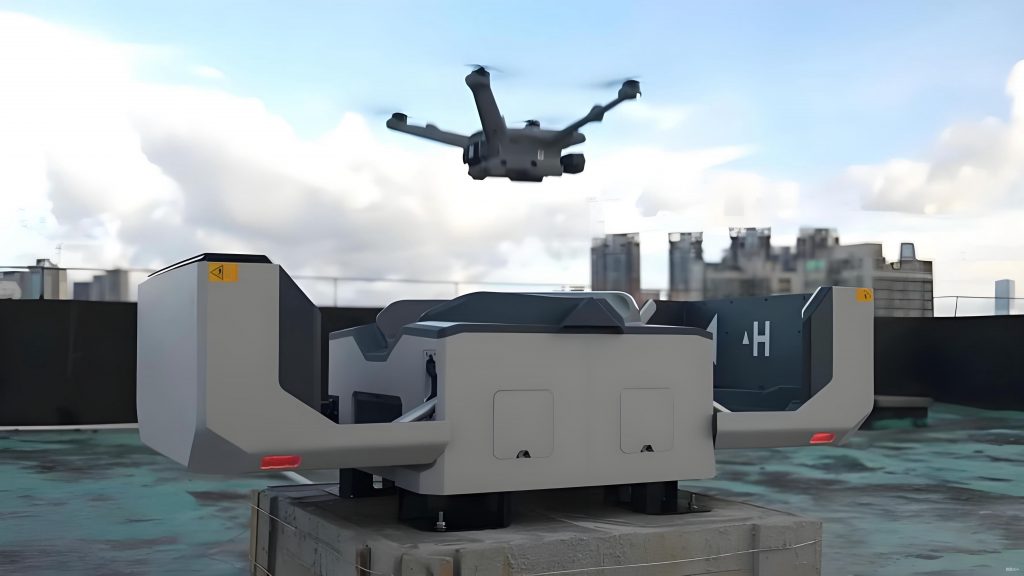
Market segmentation for civilian drones involves dividing the broad market into distinct subgroups based on specific criteria. From my analysis, these segments primarily fall into two categories: tools and toys. The tool segment focuses on professional applications, while the toy segment caters to recreational and hobbyist uses. This segmentation helps companies tailor their offerings to meet diverse customer needs. The attractiveness of each segment can be modeled using a formula that considers factors like market size, growth potential, and competitive intensity. For instance, the attractiveness score \( A \) for a segment can be expressed as:
$$ A = \alpha \cdot S + \beta \cdot G – \gamma \cdot C $$
Where \( S \) represents the segment size, \( G \) denotes the growth rate, \( C \) is the competition intensity, and \( \alpha, \beta, \gamma \) are weighting coefficients that reflect strategic priorities. This formula allows companies to prioritize segments where civilian drones can have the most impact.
To illustrate the segmentation of civilian drones, I have compiled a table that outlines key categories, applications, and examples. This table emphasizes the versatility of civilian drones across different fields.
| Category | Sub-segment | Applications | Examples of Use Cases |
|---|---|---|---|
| Tools | Military | Reconnaissance, target acquisition, logistics, combat support | Surveillance in hostile environments, supply delivery |
| Civilian | Agriculture, infrastructure inspection, emergency response, environmental monitoring | Crop spraying with civilian drones, power line inspections | |
| Toys | Aerial Photography | Film production, real estate, event coverage | Cinematic shots in movies, property showcases |
| Racing | Competitive sports, entertainment | Drone racing events with high-speed civilian drones | |
| Social Connectivity | Live streaming, social media sharing | Real-time video feeds from civilian drones to mobile apps |
The tool segment for civilian drones, especially in civilian applications, offers vast growth potential. Industries such as agriculture, telecommunications, and energy are increasingly adopting civilian drones to enhance efficiency and safety. For example, in agriculture, civilian drones can be used for precision farming, where they monitor crop health and apply pesticides. The economic benefit can be quantified using a formula for cost savings \( CS \):
$$ CS = (L_{traditional} – L_{drone}) \cdot t + R_{efficiency} $$
Here, \( L_{traditional} \) and \( L_{drone} \) represent labor costs for traditional and drone-based methods, respectively, \( t \) is time saved, and \( R_{efficiency} \) accounts for improved resource utilization. This demonstrates how civilian drones can drive value in professional settings.
Moving to target market strategies, companies in the civilian drone industry must select appropriate approaches to reach their desired customers. Based on my observations, there are three primary strategies: undifferentiated, differentiated, and concentrated marketing. Each strategy has its advantages and drawbacks, which I summarize in the following table to guide decision-making for civilian drone firms.
| Strategy | Description | Advantages | Disadvantages | Applicability to Civilian Drones |
|---|---|---|---|---|
| Undifferentiated | Targeting the entire market with standardized products | Cost efficiency, brand consistency, economies of scale | Limited customization, vulnerability to niche competitors | Suitable for entry-level civilian drones with broad appeal |
| Differentiated | Tailoring products to specific segments | Higher customer satisfaction, competitive edge | Increased complexity and costs | Ideal for specialized civilian drones in industries like film or agriculture |
| Concentrated | Focusing on a single or few segments | Deep market penetration, resource optimization | High risk if segment declines | Useful for startups targeting niche applications of civilian drones |
In the undifferentiated strategy, companies market civilian drones as universal tools for general consumers. This approach relies on mass production and uniform marketing campaigns to create brand awareness. For instance, many consumer-grade civilian drones are designed for aerial photography and easy operation, appealing to a wide audience. The market potential \( P \) for such strategies can be estimated as:
$$ P = N \cdot p \cdot q $$
Where \( N \) is the total number of potential customers, \( p \) is the penetration rate, and \( q \) is the average quantity purchased. This formula helps in forecasting demand for standardized civilian drones.
Differentiated strategies, on the other hand, involve developing unique products for distinct segments of the civilian drone market. Companies identify unmet needs and innovate to offer specialized features. For example, civilian drones used in filmmaking may include high-end cameras and stabilization systems, while those for agricultural purposes might have spraying mechanisms. The value of differentiation \( V_d \) can be expressed as:
$$ V_d = \sum_{i=1}^{n} (w_i \cdot f_i) $$
Here, \( w_i \) represents the weight of customer need \( i \), and \( f_i \) is the level of product feature fulfillment. This highlights how civilian drones can be optimized for specific applications.
Concentrated strategies are often adopted by smaller firms or new entrants in the civilian drone industry. By focusing on a narrow segment, such as drone racing or a particular industrial inspection service, companies can build expertise and loyalty. However, this strategy carries risks if the targeted segment faces disruptions. The risk assessment \( R \) can be modeled as:
$$ R = \sigma^2 \cdot D $$
Where \( \sigma^2 \) is the variance in segment demand, and \( D \) is the dependency level. This underscores the importance of diversification for long-term stability in the civilian drone market.
Regarding market positioning, I believe that the future of civilian drones lies in becoming integrated solution providers rather than mere hardware sellers. Positioning involves crafting a distinct image for civilian drones that resonates with customers. Companies should emphasize their ability to deliver comprehensive solutions that address specific industry challenges. For instance, positioning civilian drones as “aerial robots” for automation can open new opportunities in logistics and surveillance.
To achieve effective positioning, firms can leverage data analytics and customer feedback. The positioning score \( PS \) for a civilian drone brand might be calculated as:
$$ PS = \frac{I \cdot A}{C} $$
In this formula, \( I \) denotes brand image strength, \( A \) is market awareness, and \( C \) represents competitive clutter. A higher score indicates stronger positioning for civilian drones in the minds of consumers.
Marketing strategies for civilian drones must align with the chosen positioning. Industry-specific approaches are crucial for expanding the adoption of civilian drones. I have compiled another table to showcase how civilian drones can be applied across various sectors, along with the marketing channels used to reach these customers.
| Industry | Application of Civilian Drones | Marketing Channels | Expected Benefits |
|---|---|---|---|
| Agriculture | Crop monitoring, pesticide spraying | Trade shows, direct sales, partnerships | Increased yield, reduced labor costs |
| Telecommunications | Signal testing, tower inspection | Industry conferences, online demos | Faster maintenance, enhanced safety |
| Energy | Pipeline and power line inspection | B2B platforms, consultant referrals | Cost savings, minimized downtime |
| Public Safety | Search and rescue, disaster management | Government tenders, training programs | Improved response times, risk reduction |
| Entertainment | Film production, live events | Social media, influencer collaborations | Creative flexibility, audience engagement |
In agriculture, for example, civilian drones can revolutionize farming practices. Marketing efforts should highlight how these drones enable precision agriculture, leading to sustainable practices. The return on investment \( ROI \) for farmers using civilian drones can be derived as:
$$ ROI = \frac{B – C}{C} \times 100\% $$
Where \( B \) is the benefit from increased crop output or reduced waste, and \( C \) is the cost of deploying civilian drones. This quantitative approach helps in persuading industry clients.
Distribution channels for civilian drones are equally important. Companies utilize a mix of intermediaries and direct sales to reach global markets. For civilian drones, online platforms have become a dominant channel due to their reach and convenience. The efficiency of a channel \( E \) can be assessed using:
$$ E = \frac{S_c}{T_c} $$
Here, \( S_c \) is sales volume through the channel, and \( T_c \) is the total cost associated with it. Optimizing channel mix is key to maximizing the penetration of civilian drones.
Looking ahead, I envision civilian drones evolving into intelligent systems that leverage cloud computing and big data. By integrating civilian drones with IoT platforms, companies can offer predictive analytics and automated services. This transition from products to solutions will create new revenue streams and strengthen customer relationships. The future market size \( M_f \) for civilian drones can be projected using a growth model:
$$ M_f = M_0 \cdot e^{rt} $$
In this equation, \( M_0 \) is the current market size, \( r \) is the annual growth rate, and \( t \) is time in years. Given the expanding applications, civilian drones are poised for exponential growth.
In conclusion, the marketing of civilian drones requires a nuanced approach based on segmentation, targeting, and positioning. As I have analyzed, civilian drones are not just devices but enablers of innovation across industries. By adopting tailored strategies and continuously innovating, companies can capitalize on the opportunities presented by civilian drones. The competitive landscape will remain dynamic, but those who understand and adapt to market needs will thrive. Civilian drones, with their versatility and advancing technology, are set to redefine how we work and play, making strategic marketing more critical than ever.
To further illustrate the competitive dynamics, consider the following formula for market share \( MS \) in the civilian drone industry:
$$ MS_i = \frac{V_i}{\sum_{j=1}^{n} V_j} $$
Where \( V_i \) is the value offered by company \( i \)’s civilian drones, and the denominator sums values across all competitors. This emphasizes the need for continuous improvement and customer-centric innovation in marketing civilian drones.
Ultimately, the success of civilian drones hinges on how well companies execute their marketing strategies. From segmentation to positioning, every step must be aligned with evolving customer expectations. As I reflect on these insights, it is clear that civilian drones will continue to shape our future, and effective marketing will drive their adoption to new heights.