
The automotive industry is undergoing its most profound transformation in a century, propelled by the dual engines of electrification and digital intelligence. Within this revolution, intelligent driving has emerged as the definitive battleground for the next decade, transitioning from a conceptual “black technology” to a core purchasing factor for consumers. It is within this dynamic and fertile landscape that I observe a fascinating strategic maneuver: the entry of DJI, the undisputed global leader in consumer and professional drones, into the intelligent vehicle domain. This move exemplifies a textbook case of related diversification. The strategic logic is compelling: leveraging deep technological competencies from the DJI drone ecosystem to address a nascent, high-growth market. My analysis will explore this strategic pivot through the lenses of macro-environmental forces, industry competition, and the unique competitive advantages stemming from DJI drone heritage.
Conceptual Foundation: Related Diversification
Related diversification is a corporate strategy where a firm enters a new business field that is linked to its existing products or services through tangible synergies. The objective is to achieve growth by applying core competencies to new, adjacent markets. DJI’s foray from drones into intelligent driving is a quintessential example. The commonalities are not superficial; they are deeply rooted in technology and capability. Firstly, both domains rely on the intricate interplay of hardware sensors—such as computer vision cameras, inertial measurement units (IMUs), and ultrasonic sensors—and sophisticated software algorithms for obstacle avoidance, path planning, and machine learning-based decision-making. The fundamental problem of enabling a machine to perceive, understand, and navigate a complex, dynamic environment autonomously is central to both a DJI drone and a self-driving car.
Secondly, as the dominant force in the global drone market, DJI possesses an unparalleled reservoir of talent, patented technology, and practical experience in real-time aerial navigation and stabilization. This reservoir provides a formidable foundation for “crossing the chasm” into terrestrial autonomous navigation. Thirdly, the market dynamics provide a clear impetus. While the consumer drone market is substantial, it faces certain saturation limits. In contrast, the intelligent driving sector represents a trillion-dollar frontier where competition is fierce but the prize is monumental. For DJI, having achieved a position of strength in drones, the logical progression into the expansive automotive intelligence space is a strategic imperative to fuel its next phase of growth. This synergy can be expressed as a function of transferred capability:
$$ S = \sum_{i=1}^{n} (T_i^{Drone} \cdot \alpha_i + P_i^{Drone} \cdot \beta_i) $$
Where \( S \) represents the strategic synergy score for diversification, \( T_i^{Drone} \) are the core technologies from the DJI drone platform (e.g., computer vision, flight control), \( P_i^{Drone} \) are the proprietary assets (patents, talent), and \( \alpha_i, \beta_i \) are application-fit coefficients for the automotive domain.
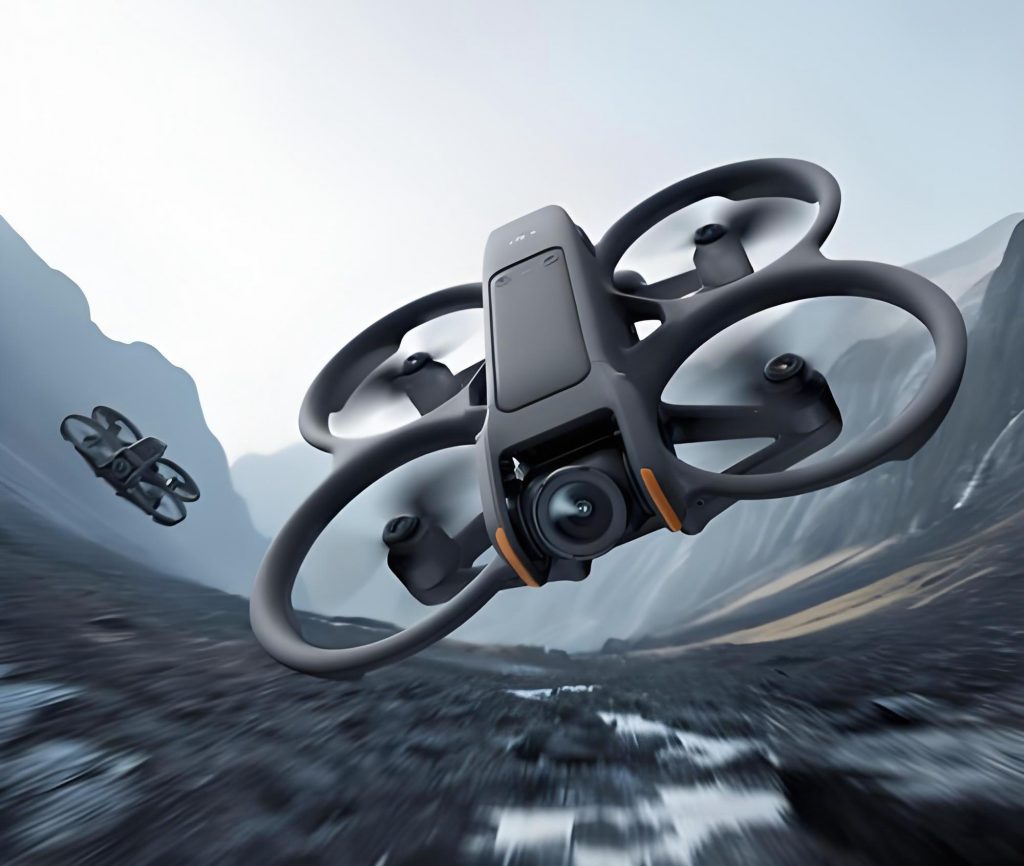
Macro-Environment Analysis: A PESTEL Framework
Understanding the strategic landscape requires a thorough examination of the macro-environmental forces shaping the intelligent driving industry. The PESTEL model provides a structured analysis of Political, Economic, Social, Technological, Environmental, and Legal factors.
| Factor | Key Drivers & Implications |
|---|---|
| Political | National strategies like China’s “14th Five-Year Plan” and the development of “New Quality Productive Forces” place technological self-reliance and innovation at the core. Intelligent driving is a focal point for cultivating strategic emerging industries. Government work reports repeatedly highlight new energy vehicles (NEVs) as a pillar for new quality productive forces, creating a supportive regulatory and funding atmosphere for related technologies. |
| Economic | The automotive market is massive, with over 336 million cars in China alone. The NEV segment is the growth engine, with penetration rates exceeding 50% in monthly retail sales as of mid-2024. This rapid electrification creates the perfect hardware base for deploying intelligent driving software. The economic scale justifies massive R&D investments. The growth trajectory can be modeled as: $$ P_{NEV}(t) = P_0 \cdot e^{rt} $$ where \( P_{NEV}(t) \) is NEV penetration at time \( t \), \( P_0 \) is the initial base, and \( r \) is the rapid adoption rate driven by policy and consumer acceptance. |
| Social | Consumer acceptance is accelerating. Intelligent driving features are now a top-4 purchase decision factor after range, price, and brand. The industry is moving from a hardware-centric “first half” to a software and experience-driven “second half.” Public exposure, through large-scale robotaxi pilots like “Baidu Apollo Go” and “Ruoxin,” is demystifying the technology and fostering familiarity. |
| Technological | China is a leader in patent filings for autonomous driving, particularly in hardware sensors like LiDAR. The competitive landscape is stratified: Tech giants (Baidu, Huawei) lead in R&D; traditional OEMs (SAIC, Geely) are aggressively integrating; and well-funded startups focus on specific solutions. However, dependencies persist in key areas like high-performance automotive chips. |
| Environmental | Global “Dual Carbon” goals (Carbon Peak, Carbon Neutrality) are phasing out internal combustion engine (ICE) vehicles. Major automakers have announced ICE phase-out plans for 2030-2040. EVs, the primary platform for advanced intelligence, offer a ~43% reduction in operational carbon emissions. This green transition is a powerful, non-negotiable tailwind for intelligent driving adoption. |
| Legal | A comprehensive, multi-layered policy framework is emerging. National-level guidelines outline developmental visions and application scenarios, while local governments (e.g., Beijing, Shanghai, Wuhan) are competing to establish pilot zones, build infrastructure, and create favorable regulatory sandboxes. This evolving legal framework reduces uncertainty for companies like DJI investing in the long term. |
Industry Competition: Porter’s Five Forces Analysis
The competitive intensity within the intelligent driving sector in China can be assessed using Michael Porter’s Five Forces model. My analysis indicates an industry in its late introductory or early growth phase, characterized by high potential but significant barriers.
| Force | Assessment | Rationale |
|---|---|---|
| Rivalry Among Existing Competitors | Moderate to High | Multiple player types (tech firms, OEMs, startups) vie for dominance. No single entity holds a monopoly. Competition is currently focused on technology demonstration, talent acquisition, and forging alliances rather than direct price wars, keeping rivalry intense but not yet destructive. |
| Threat of New Entrants | Low | The barriers are exceptionally high. Entry requires colossal capital for R&D, access to scarce AI/robotics talent, complex supply chain partnerships, and navigating stringent safety regulations. New players typically enter via strategic collaboration with incumbents. |
| Bargaining Power of Suppliers | High | For critical components like advanced system-on-chips (SoCs) for computation and high-resolution LiDAR sensors, the industry relies on a handful of specialized global or domestic suppliers. This concentration grants suppliers significant pricing and terms power. |
| Bargaining Power of Buyers (OEMs) | Medium & Increasing | Automakers (OEMs) are the primary buyers of intelligent driving solutions. Currently, with many competing solutions, OEMs have choices. However, as solutions differentiate and prove reliability, top-tier suppliers like DJI or Huawei could gain leverage. The power balance is dynamic. |
| Threat of Substitute Products | Low | There is no direct technological substitute for vehicle automation that offers equivalent value in safety, convenience, and efficiency. The only substitute is the status quo: human driving. The long-term societal and economic trends are strongly against this substitute. |
The overall industry attractiveness can be summarized by an aggregate score. If we assign a value from 1 (Low Threat/High Attractiveness) to 5 (High Threat/Low Attractiveness) to each force, the composite score suggests a favorable, albeit challenging, arena for well-positioned firms:
$$ A = \frac{1}{5} \left( \frac{1}{F_R} + \frac{1}{F_E} + \frac{1}{F_S} + \frac{1}{F_B} + \frac{1}{F_T} \right) $$
Where \( A \) is the relative attractiveness score, and \( F_R, F_E, F_S, F_B, F_T \) represent the threat level scores for Rivalry, New Entrants, Supplier Power, Buyer Power, and Substitutes, respectively. A lower composite threat score yields a higher \( A \).
Deconstructing DJI’s Core Competitiveness in Automotive
DJI does not enter the automotive space as a novice but as a technology powerhouse translating a decade of dominance in aerial robotics. Its competitive edge, branded as the “DJI Automotive” or “Chengxing Platform,” is built on two pillars that directly stem from its DJI drone DNA: radical cost efficiency and unprecedented adaptability.
1. The Cost-Disrupting Advantage
The prevailing paradigm for high-end intelligent driving has been the “fusion” approach: combining LiDAR, radar, cameras, and high-definition maps, all processed by power-hungry, expensive computing platforms. This has kept advanced assisted driving features confined to premium vehicles. DJI’s strategy is a disruptive counterpoint. It champions a vision-centric, map-agnostic approach, mirroring the sensor fusion and navigation principles perfected in its drones.
Instead of relying on costly LiDARs, the core of DJI’s automotive solution is a sophisticated stereo vision system coupled with powerful visual perception algorithms. This is a direct technological transfer from the obstacle avoidance and navigation systems found in advanced DJI drone models like the Mavic and Air series. The cost differential is staggering. A typical “fusion” hardware suite (dual LiDAR + high-end SoC) can cost upwards of $3,000. DJI’s visual-based solution achieves comparable, and in some cases superior, functionality for a fraction of the cost.
| Feature / Component | Traditional High-End “Fusion” Solution | DJI Automotive “Chengxing Platform” |
|---|---|---|
| Primary Sensors | LiDAR, High-Res Radar, Cameras | Stereo/Binocular Cameras, Ultrasonic, IMU |
| Key Dependency | High-Definition (HD) Maps | Map-Agnostic; Real-Time Perception |
| Compute Requirement | Very High (100s+ TOPS) | Moderate (Tens of TOPS) |
| Estimated Hardware Cost (BOM) | $2,500 – $4,000+ | $500 – $1,500 |
| Target Vehicle Segment | Premium (>$40,000) | Mass-Market ($15,000 – $30,000) |
| Core Technology Origin | Ground-up Automotive R&D | Adapted & Scaled from DJI Drone Vision/Control Systems |
This cost equation, \( C_{DJI} \ll C_{Fusion} \), where \( C \) represents total system cost, is DJI’s most potent weapon. It enables features like Navigation on Autopilot (NOA) without HD maps, lane keeping, adaptive cruise, and automated parking to be deployed on vehicles priced as low as $15,000, such as the Baojun Yunduo. This democratizes advanced driving assistance in a way previously thought impossible.
2. Unmatched Adaptability and “Fuel-Agnostic” Deployment
The second disruptive advantage is platform versatility. Most advanced intelligent driving systems are designed for electric vehicles (EVs), which have high-voltage electrical systems capable of powering energy-intensive sensors and computers continuously. Traditional internal combustion engine (ICE) vehicles struggle with this constant high-power demand, making them unsuitable hosts for most high-end systems. DJI’s efficient, low-power architecture, honed through the battery-conscious design of every DJI drone, breaks this barrier.
DJI’s platform is “fuel-agnostic.” It can be effectively integrated into both new energy vehicles and traditional ICE vehicles. This is a monumental shift, opening up a vast installed base of ICE models to intelligent upgrades. A landmark example is the upcoming Volkswagen Tiguan L Pro, an ICE SUV, which will feature DJI’s intelligent driving system. This adaptability massively expands DJI’s total addressable market (TAM). The TAM can be modeled as:
$$ TAM_{DJI} = (V_{NEV} \cdot \rho_{DJI}^{NEV}) + (V_{ICE} \cdot \rho_{DJI}^{ICE}) $$
where \( V \) represents vehicle production volumes and \( \rho \) represents DJI’s potential penetration rate in the NEV and ICE segments, respectively. \( \rho_{DJI}^{ICE} \) was effectively zero before DJI’s solution.
This technical and strategic advantage has rapidly translated into commercial partnerships. DJI has secured collaborations with major automakers including SAIC-GM-Wuling, Chery, FAW, Volkswagen, and BYD. Models like the Baojun Yunduo, Chery iCAR, and the aforementioned VW Tiguan L Pro are already on the market or即将上市 with DJI’s technology onboard. The partnership velocity demonstrates strong industry validation of DJI’s unique value proposition.
Conclusion: Accelerating an Intelligent Era
In conclusion, DJI’s strategic diversification into intelligent driving is a masterclass in leveraging deep, synergistic competencies. The analysis of the PESTEL environment reveals a near-perfect alignment of political will, economic shift, social acceptance, and technological readiness, all set against a backdrop of environmental imperative and evolving legal support. The Five Forces analysis confirms an attractive, if competitive, industry structure where a player with distinct advantages can thrive.
DJI’s cardinal advantages—radical cost efficiency and universal adaptability—are not accidental innovations; they are the direct descendants of technologies refined and proven in billions of flight hours of its drones. The vision algorithms, sensor fusion logic, and power-efficient computing required to keep a DJI drone stable in gusty winds or navigate autonomously through a forest are conceptually identical to those needed for a car to navigate urban traffic. By applying this mature, cost-optimized DJI drone technology stack to the automotive world, DJI is not merely entering a new market; it is poised to reshape its economics and accelerate its普及. It brings the promise of advanced intelligent driving from the exclusive realm of luxury vehicles into the heart of the mass market, for both electric and traditional cars. In doing so, DJI is positioned not just as a participant, but as a potent catalyst for the widespread adoption of intelligent driving technology.