
In recent years, the rapid proliferation of civilian drones has transformed various industries, from agriculture and logistics to entertainment and surveillance. However, this growth poses significant challenges for regulatory bodies, as the number of civilian drones far exceeds that of manned aircraft. For instance, while manned aircraft count in the thousands, registered civilian drones have reached hundreds of thousands globally. This surge necessitates robust management systems to ensure safety, security, and efficient airspace utilization. Without effective control, the sustainable development of the civilian drone industry is at risk. Central to this control is the concept of digital identity identification for civilian drones, which involves assigning unique codes to each drone for lifecycle management. In this research, we delve into the standardization of unique identification codes for civilian drones, analyzing existing technologies and proposing a comprehensive framework. Our goal is to highlight the necessity and feasibility of such standardization, which can facilitate full lifecycle administration and foster the healthy growth of the civilian drone ecosystem.
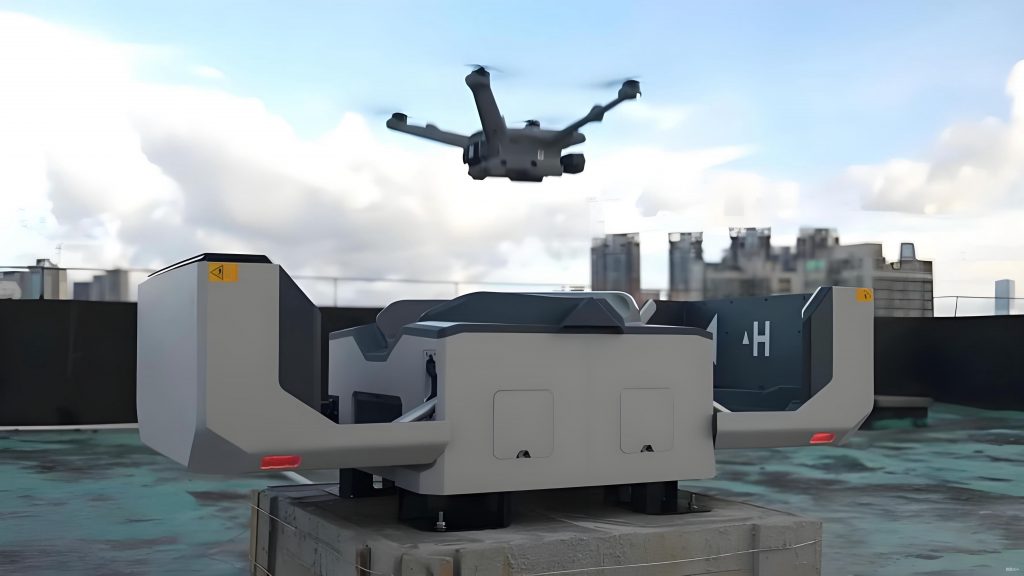
The management of civilian drones differs fundamentally from that of manned aircraft. Manned aircraft typically operate on fixed routes with designated takeoff and landing zones, making identity verification relatively straightforward through established protocols. In contrast, civilian drones are produced and used in a decentralized manner, with diverse applications, variable flight paths, and no fixed bases. This complexity, combined with their large numbers, requires automated, electronic solutions for identity recognition. We argue that a digital identity system for civilian drones is essential, built upon unique codes that enable unambiguous identification throughout production, sale, operation, and decommissioning. This system not only enhances regulatory oversight but also reduces management costs and mitigates risks associated with unauthorized or reckless drone activities. As civilian drones become more integrated into daily life, standardized identification will serve as the backbone for safe and efficient airspace integration.
Globally, efforts to standardize civilian drone identification are still evolving. International organizations like ISO/IEC and ICAO have yet to release comprehensive standards, though initiatives such as ISO/IEC JTC 1 WG 12 are working on drone license and identity module specifications. For example, the upcoming ISO 22460-2 standard focuses on drone identity modules, indicating progress in this area. In the United States, the FAA mandates registration for drones over 250 grams, and standards like ANSI-CTA2063 are under discussion for coding management. However, no country has a perfect, holistic solution for civilian drone监管, and international standards remain nascent. This gap underscores the urgency for coordinated action, as civilian drones operate across borders in applications like delivery and monitoring.
Domestically, significant strides have been made in civilian drone identification. Companies like DJI and Feima Robotics have developed systems using cellular networks to monitor their drones, while research institutions have leveraged technologies such as BeiDou short-message transmission for management systems. For instance, the Zhongke Tianwang drone management system has undergone nationwide testing and operational deployment. Additionally, collaborations between industry and regulators, such as Huawei’s experiments with 5G networks for drone control, demonstrate the potential of digital identity systems. Despite these advancements, a unified approach for civilian drone lifecycle management is lacking. Our research aims to bridge this gap by exploring a standardized digital identity system that integrates various technological components.
At the core of our proposal is the digital identity identification system for civilian drones. This system encompasses several key elements: unique coding schemes, three-dimensional spatial grid position encoding, identity modules, transmission technologies, and information security measures. Each component plays a vital role in ensuring that every civilian drone can be uniquely identified and tracked in real-time. We define digital identity identification as the process of assigning a unique code to each civilian drone and using information technology to store and report identity, location, and flight data throughout its lifecycle. This enables efficient, accurate recognition across production, distribution, usage, and监管 phases. For civilian drones, such a system lowers regulatory barriers and enhances safety, paving the way for innovative applications. Below, we detail each element, supported by tables and formulas to summarize key concepts.
The unique code for civilian drones serves as a genetic identifier, akin to a digital fingerprint. We propose a structured code comprising three segments: Manufacturer Code (MFC), Product Model Code (PMC), and Serial Number (SN). This aligns with emerging national standards and ensures global compatibility. The MFC and PMC are each 4-character strings, while the SN is 12 characters, all drawn from alphanumeric sets excluding ambiguous characters like ‘O’ and ‘I’. Mathematically, the total number of unique combinations can be expressed as:
$$ N = C_{MFC} \times C_{PMC} \times C_{SN} $$
where $C_{MFC}$ and $C_{PMC}$ are the combinations per segment (e.g., using 34 possible characters per position: digits 0-9 and letters A-Z except O and I), and $C_{SN}$ is for the serial number. For a 4-character segment, the combinations are $34^4$, and for a 12-character SN, $34^{12}$. This yields a vast space for identifying civilian drones, sufficient for global scalability. The table below summarizes the code structure:
| Segment | Length | Character Set | Purpose |
|---|---|---|---|
| MFC | 4 | Digits 0-9, letters A-Z (excl. O, I) | Identifies manufacturer |
| PMC | 4 | Digits 0-9, letters A-Z (excl. O, I) | Identifies product model |
| SN | 12 | Digits 0-9, letters A-Z (excl. O, I) | Unique serial for each drone |
This unique code is immutable and assigned during production, forming the basis for all subsequent identity checks. For civilian drones, it enables traceability from factory to end-user, facilitating recalls, maintenance, and compliance audits. In practice, the code can be embedded in hardware and software systems, ensuring that every civilian drone carries a distinct identifier. We emphasize that standardization of this code across manufacturers is crucial to avoid fragmentation and ensure interoperability in监管 networks.
Complementing the unique code, three-dimensional spatial grid position encoding provides a framework for locating civilian drones in airspace. Traditional coordinates (latitude, longitude, altitude) are insufficient for dynamic management due to their continuous nature. Instead, we adopt a global subdivision grid model, such as GeoSOT-3D, which partitions space into discrete cells. This approach assigns a grid code to each drone’s position, enabling efficient collision detection, route planning, and监管. The grid encoding can be represented mathematically. Let $G(x, y, z)$ denote the grid code for a point with spatial coordinates $(x, y, z)$, where $x$ is longitude, $y$ is latitude, and $z$ is altitude. The encoding process involves hierarchical subdivision:
$$ G = \sum_{i=0}^{n} b_i \cdot 4^i $$
where $b_i$ represents the quadrant index at level $i$ of subdivision, and $n$ is the depth level. For civilian drones, the grid size can be adjusted based on drone type and operational requirements. For example, smaller grids (e.g., 1 meter resolution) might be used for high-precision applications, while larger grids suffice for general tracking. The table below outlines grid encoding parameters for different civilian drone categories:
| Drone Type | Typical Altitude Range | Recommended Grid Size | Encoding Level |
|---|---|---|---|
| Micro Drones (<250g) | 0-50 meters | 1 meter | High (n=10) |
| Commercial Drones | 50-500 meters | 5 meters | Medium (n=8) |
| Industrial Drones | 500-2000 meters | 10 meters | Low (n=6) |
This grid system supports various identity-related data, including manufacturer location, user registration details, airspace allocation, and real-time flight positions. For civilian drones, it enhances situational awareness and enables proactive management, such as geofencing and conflict avoidance. By standardizing grid encoding, we can create a unified spatial reference for civilian drone operations, facilitating data exchange between stakeholders like regulators, operators, and air traffic control.
The identity module is the hardware or software component that stores the unique code and related data. We envision a module with three distinct storage areas: a read-only zone for the immutable unique code, a rewritable zone for registration information (e.g., owner details, insurance), and a dynamic data zone for real-time flight parameters. This design mirrors the “black box” concept in manned aviation, providing a comprehensive record for each civilian drone. The storage architecture can be modeled as:
$$ M = \{R_{static}, R_{config}, R_{dynamic}\} $$
where $R_{static}$ is the static read-only memory, $R_{config}$ is the configurable memory, and $R_{dynamic}$ is the volatile memory for flight data. The module’s functions include identity verification, data logging, and secure communication with ground systems. For civilian drones, such modules can be integrated into the flight controller or as separate units, depending on size and cost constraints. The table below summarizes the storage areas:
| Storage Area | Content | Access Control | Purpose for Civilian Drones |
|---|---|---|---|
| Read-Only | Unique identification code | Immutable | Base identity, anti-tampering |
| Rewritable | Registration, owner info | Conditionally updatable | Lifecycle management |
| Dynamic | Flight data (speed, route, etc.) | Continuously updated | Real-time monitoring, forensics |
Transmission technologies are critical for relaying identity information from civilian drones to监管 platforms. We identify three primary methods: cellular network-based transmission, ground control unit (GCU) relay, and BeiDou short-message transmission. Each has advantages depending on the operational environment. Cellular transmission leverages existing mobile networks for real-time data streaming, ideal for urban areas with coverage. GCU relay is useful in remote regions without cellular service, as the drone communicates with a local unit that then forwards data via other networks. BeiDou transmission offers global coverage via satellites, suitable for beyond-visual-line-of-sight operations. The choice of technology impacts latency, reliability, and cost for civilian drone management. The table below compares these methods:
| Transmission Method | Coverage | Latency | Best Use Case for Civilian Drones |
|---|---|---|---|
| Cellular Network | Urban/suburban areas | Low (milliseconds) | Real-time tracking in populated zones |
| Ground Control Unit Relay | Local area, extendable | Medium (seconds) | Remote inspections, agriculture |
| BeiDou Short-Message | Global (satellite-based) | High (minutes) | Maritime, wilderness operations |
Mathematically, the transmission efficiency can be expressed in terms of data rate $R$ and reliability $P_{success}$. For cellular networks, $R$ might be high (e.g., 100 Mbps) but $P_{success}$ depends on signal strength. For satellite links, $R$ is lower but $P_{success}$ is more consistent over distance. In practice, civilian drones may employ hybrid systems, switching between methods based on location and mission requirements. Standardizing transmission protocols ensures that identity data from civilian drones is uniformly formatted and secure, enabling seamless integration into监管 clouds.
Information security is paramount for protecting the identity system of civilian drones from threats like spoofing, eavesdropping, or tampering. We propose a multi-layered security framework involving encryption, authentication, and physical safeguards. The unique code and transmission data should be encrypted using algorithms such as AES-256, with keys managed through public-key infrastructure (PKI). Authentication mechanisms verify the legitimacy of drones and ground stations, preventing unauthorized access. Additionally, the identity module should have tamper-resistant hardware to deter physical attacks. Security metrics can be quantified using formulas. For instance, the probability of a successful attack $P_{attack}$ can be modeled as:
$$ P_{attack} = 1 – \prod_{i=1}^{k} (1 – p_i) $$
where $p_i$ represents the vulnerability probability for each security layer $i$. By implementing multiple layers (e.g., encryption, authentication, hardware security), we minimize $P_{attack}$ for civilian drones. Standardized security protocols ensure that all civilian drones adhere to baseline protections, fostering trust among users and regulators. This is especially important as civilian drones handle sensitive data in applications like surveillance or delivery.
In conclusion, the standardization of unique identification codes for civilian drones is both necessary and feasible. Our research demonstrates that a digital identity system, built on unique codes, grid encoding, identity modules, robust transmission, and strong security, can address the regulatory challenges posed by the booming civilian drone industry. By adopting such standards, we enable full lifecycle management—from production and sale to operation and retirement—enhancing safety, reducing costs, and promoting innovation. The integration of these technologies will pave the way for smarter airspace management, where civilian drones coexist safely with manned aircraft and other airspace users. We urge industry stakeholders, regulators, and standards bodies to collaborate on this endeavor, ensuring that civilian drones continue to thrive as a transformative technology.
Looking ahead, future work should focus on refining the technical specifications, conducting pilot tests in diverse environments, and harmonizing standards internationally. As civilian drones evolve with advancements in AI and 5G, their identity systems must adapt to new use cases, such as autonomous swarms or urban air mobility. We believe that standardized identification will serve as the cornerstone for a sustainable and secure civilian drone ecosystem, unlocking economic and social benefits worldwide. Through continued research and collaboration, we can build a future where civilian drones are seamlessly integrated into our daily lives, guided by robust and universal identity standards.