
In this thesis, I focus on the problem of spectrum allocation and decision-making for multiple unmanned aerial vehicles (unmanned aerial vehicles) in cognitive wireless networks. The rapid development of unmanned aerial vehicles has opened new opportunities in many fields, such as disaster rescue, logistics delivery, environmental monitoring, and military operations. However, the scarce spectrum resource has become a critical bottleneck that restricts the further development of multi-UAV communication technology. Cognitive radio technology provides a promising way to improve spectrum utilization through dynamic spectrum access. Based on cognitive radio, cognitive wireless networks further enable spectrum sharing and intelligent decision-making among heterogeneous users. Nevertheless, due to the inherent heterogeneity and dynamic nature of cognitive wireless networks, the spectrum allocation and decision for unmanned aerial vehicles still face severe challenges, including diverse interference forms, unfair spectrum distribution in dense user scenarios, and inaccurate decisions under time-varying channel conditions. In this work, I investigate three typical scenarios and propose corresponding optimization methods. Specifically, I first design a joint channel and power allocation algorithm for mixed interference scenarios using block coordinate descent and heuristic methods. Then, I develop a joint UAV placement and bandwidth allocation algorithm for high-density user scenarios using K-Means clustering and a linear precision method. Finally, I propose a dynamic spectrum decision algorithm based on multi-agent proximal policy optimization with a temporary memory mechanism for time-varying channel environments. Simulation results demonstrate that the proposed methods can significantly improve the transmission rate of secondary users, enhance the fairness of spectrum allocation, and reduce spectrum conflicts.
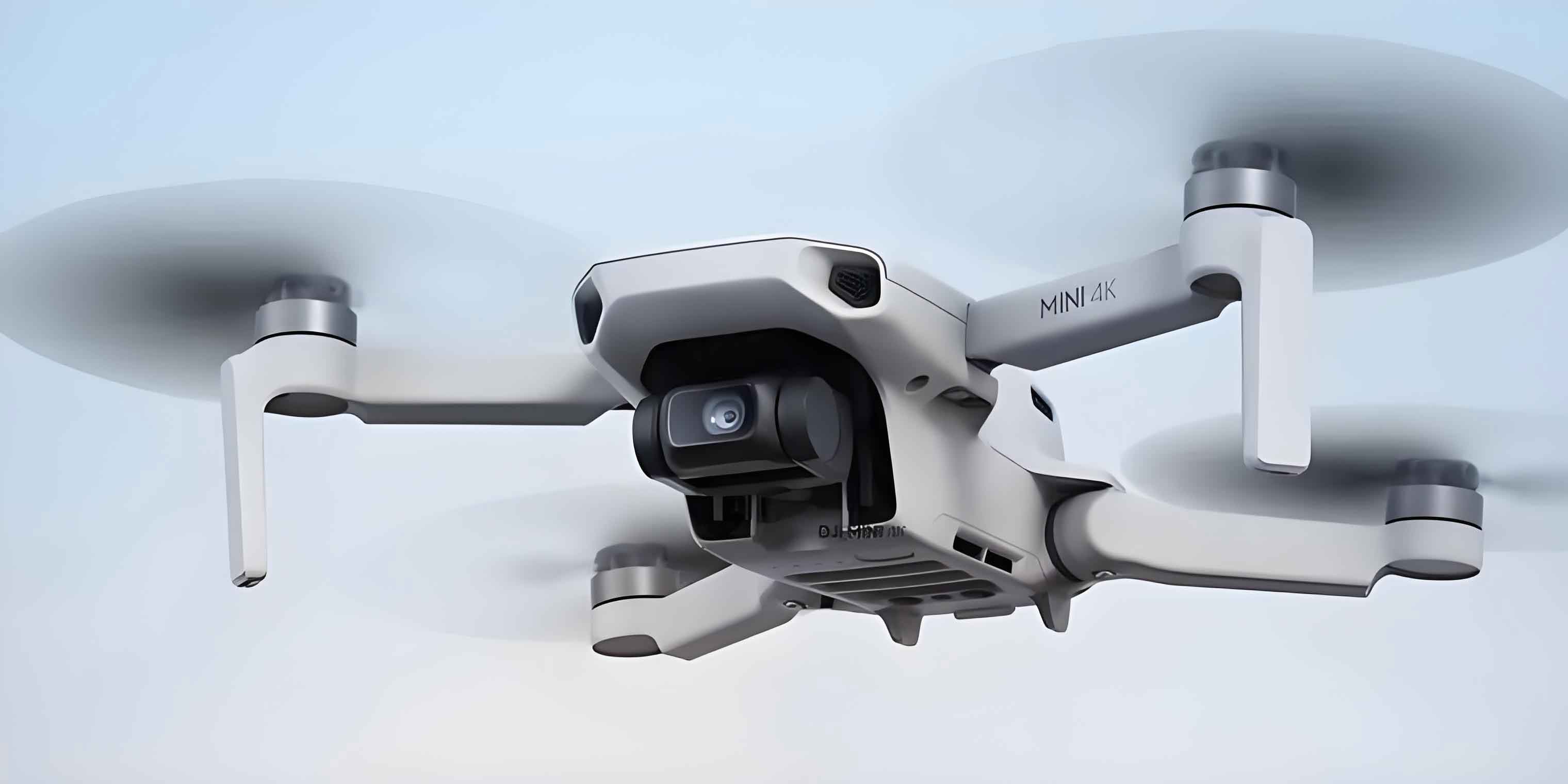
The remainder of this thesis is organized as follows. Chapter 2 studies the spectrum resource allocation problem of multi-UAV information transmission in a mixed interference scenario. Chapter 3 addresses the spectrum allocation issue in a high-density user scenario where UAVs act as aerial relays. Chapter 4 concentrates on the spectrum decision problem under time-varying channel states. Chapter 5 concludes this thesis and outlines future research directions.
1. Mixed Interference Spectrum Resource Allocation
In this chapter, I consider a cognitive wireless network where multiple unmanned aerial vehicles serve as temporary aerial base stations to provide downlink communication for ground users. The primary network and the secondary network share the same spectrum in an underlay mode. In this situation, the secondary network inevitably causes interference to the primary network, and in turn the primary network also interferes with the secondary users. Moreover, due to imperfect receive filters, adjacent channel interference may arise between different subchannels. To simultaneously suppress co-channel interference and adjacent channel interference, I formulate a mixed-integer nonlinear optimization problem that jointly optimizes the UAV-user association, subchannel assignment, and power allocation. The objective is to maximize the minimum signal-to-interference-plus-noise ratio (SINR) among all secondary users, thereby guaranteeing fairness.
Let \(\mathcal{M}=\{1,2,\ldots,M\}\) denote the set of UAVs, \(\mathcal{K}=\{1,2,\ldots,K\}\) the set of ground users, and \(\mathcal{N}=\{1,2,\ldots,N\}\) the set of channels. The channel gain between UAV \(m\) and user \(k\) is modeled as a probabilistic line-of-sight (LoS) and non-line-of-sight (NLoS) combination:
$$g_{m,k} = \eta_{LoS} P_{LoS} d_{m,k}^{-\alpha} + \eta_{NLoS} (1-P_{LoS}) d_{m,k}^{-\alpha},$$
where \(\alpha\) is the path-loss exponent, \(d_{m,k}\) is the distance between UAV \(m\) and user \(k\), \(\eta_{LoS}\) and \(\eta_{NLoS}\) are the attenuation factors for LoS and NLoS links, and \(P_{LoS}\) is the LoS probability given by a specific environment-dependent formula.
The binary variable \(w_{m,k}\) indicates whether UAV \(m\) serves user \(k\). Each user must be served by exactly one UAV, which gives the constraint:
$$\sum_{m=1}^{M} w_{m,k} = 1, \quad \forall k.$$
The subchannel assignment variable \(a_{k,n}\) indicates whether user \(k\) occupies channel \(n\). Each user selects exactly one channel, and for any given UAV, one channel can only be assigned to one user served by that UAV. These constraints are expressed as:
$$\sum_{n=1}^{N} a_{k,n} = 1, \quad \forall k,$$
$$\sum_{k=1}^{K} w_{m,k} a_{k,n} \leq 1, \quad \forall m,n.$$
Let \(p_{m,n}\) be the transmit power of UAV \(m\) on channel \(n\). The total transmit power of each UAV is limited by \(P_{m}^{max}\):
$$\sum_{n=1}^{N}\sum_{k=1}^{K} w_{m,k} a_{k,n} p_{m,n} \leq P_{m}^{max}, \quad \forall m.$$
The SINR experienced by user \(k\) associated with UAV \(m\) on channel \(n\) is written as:
$$\gamma_{k} = \frac{w_{m,k} a_{k,n} p_{m,n} g_{m,k}}{I_{CCI} + I_{ACI} + \sigma_{n}^{2}},$$
where \(\sigma_{n}^{2}\) is the additive white Gaussian noise power, \(I_{CCI}\) is the co-channel interference from the primary network, and \(I_{ACI}\) is the adjacent channel interference from other secondary users. The co-channel interference is given by \(I_{CCI}=a_{k,n} p_{p} g_{1}\) where \(p_{p}\) is the primary transmitter power and \(g_{1}\) is the channel gain from the primary transmitter to the secondary user. The adjacent channel interference is modeled as:
$$I_{ACI} = \sum_{n=1}^{N}\sum_{j=1, j \neq k}^{K} a_{k,n} a_{j,n} \mu_{k,j} p_{m,n} g_{m,k},$$
where \(\mu_{k,j}\) is the adjacent channel interference coefficient between the channels chosen by users \(k\) and \(j\).
The optimization problem is formulated as:
$$
\begin{aligned}
\max_{\mathbf{W}, \mathbf{A}, \mathbf{P}} &\quad \min_{k} \gamma_{k} \\
\textrm{s.t.} &\quad \sum_{m=1}^{M} w_{m,k}=1, \quad \forall k, \\
&\quad \sum_{n=1}^{N} a_{k,n}=1, \quad \forall k, \\
&\quad \sum_{k=1}^{K} w_{m,k} a_{k,n} \leq 1, \quad \forall m,n, \\
&\quad p_{m,n} \geq 0, \\
&\quad \sum_{n=1}^{N}\sum_{k=1}^{K} w_{m,k} a_{k,n} p_{m,n} \leq P_{m}^{max}, \quad \forall m, \\
&\quad \sum_{m=1}^{M}\sum_{n=1}^{N} w_{m,k} a_{k,n} p_{m,n} g_{m} \leq \delta, \\
&\quad w_{m,k} \in \{0,1\}, \quad a_{k,n} \in \{0,1\}.
\end{aligned}
$$
To solve this challenging problem, I decompose it into three subproblems. First, I use the K-Means clustering algorithm to determine the UAV-user association and UAV positions. Second, for a fixed power allocation matrix, I use a genetic algorithm to optimize the subchannel assignment. Third, for a fixed channel assignment, I use a particle swarm optimization algorithm to optimize the power allocation. These subproblems are iterated alternately in a block coordinate descent fashion until convergence. The key steps of the proposed joint optimization algorithm are listed below:
| Algorithm 1: Joint Optimization of User Association, Channel Assignment, and Power Allocation |
|---|
|
1: Input: number of channels \(N\), number of users \(K\), number of UAVs \(M\), user positions. 2: Initialize \(\mathbf{A}^{(0)}\), \(\mathbf{P}^{(0)}\) satisfying constraints. 3: Obtain UAV positions via K-Means clustering. 4: Repeat: 5: Use genetic algorithm to solve subproblem for \(\mathbf{A}^{r}\). 6: Use particle swarm optimization to solve subproblem for \(\mathbf{P}^{r}\). 7: Update iteration index \(r \leftarrow r+1\). 8: Until maximum iterations reached. 9: Output: \(\mathbf{W}^{*}, \mathbf{A}^{*}, \mathbf{P}^{*}\). |
In the simulations, I set the network area as 1000 m × 1000 m, with UAVs flying at an altitude of 100 m. The primary network is located 500 m away from the secondary network. The main parameters are listed in Table 1.
| Parameter | Value |
|---|---|
| Number of UAVs \(M\) | 5 |
| Number of users \(K\) | 20 |
| UAV flight altitude | 100 m |
| Path-loss exponent \(\alpha\) | 3 |
| Primary base station position | (700, 700) |
| Environment constants \(a,b\) | 11.95, 0.136 |
| Noise power | -90 dBm |
| Primary transmit power | 5 W |
| NLoS attenuation factor | 0.001 |
| UAV transmit power max | 1 W |
| Number of channels \(N\) | 20 |
The simulation results show that the proposed joint optimization method can effectively improve the SINR of the minimum user and maintain fairness among users. The convergence behavior demonstrates that the block coordinate descent method converges smoothly. Moreover, I compare the proposed method with a random channel assignment benchmark and a fixed channel assignment benchmark. The results, presented in Table 2, reveal that the joint optimization outperforms the benchmarks, especially when the number of users is small, because the limited channel and power resources can be utilized more effectively.
| Scheme | Minimum SINR (dB) |
|---|---|
| Proposed joint optimization | 14.2 |
| Random channel assignment | 11.8 |
| Fixed channel assignment | 12.5 |
| Ideal filter (no adjacent interference) | 16.3 |
2. Spectrum Allocation in High-Density User Scenarios
In this chapter, I extend the study to a high-density user scenario where multiple unmanned aerial vehicles work as aerial relays. The dense distribution of users in urban environments often causes severe signal blockage and spectrum congestion. To solve this issue, I deploy multiple UAVs as relays between a temporary source node and ground users. The cognitive wireless network still follows the underlay spectrum sharing mode, so the secondary network must limit its interference to the primary network. The objective is to maximize the minimum user throughput while guaranteeing fairness.
Consider a set of UAV relays \(\mathcal{M}\) and a set of ground users \(\mathcal{K}\). The UAV-user association variable is again denoted by \(w_{m,k}\), with the constraint that each user is served by exactly one UAV. The bandwidth allocated to UAV \(m\) is \(W_{m}\), and the bandwidth allocated to user \(k\) is \(W_{k}\). The total bandwidth from the temporary node is \(W_{g}\). The optimization problem is formulated to maximize the minimum achievable throughput among all users, subject to bandwidth constraints and backhaul limitations.
Let \(T_{m,k}\) denote the throughput of user \(k\) served by UAV \(m\). The SINR of user \(k\) on the link from UAV \(m\) is:
$$\gamma_{m,k} = \frac{w_{m,k} p_{m} g_{m,k}}{I_{CCI} + \sigma^{2}},$$
where \(p_{m}\) is the transmit power of UAV \(m\), \(g_{m,k}\) is the channel gain, and \(I_{CCI}\) is the interference from the primary base station. The throughput is then computed by Shannon’s formula:
$$T_{m,k} = W_{k} \log_{2}(1+\gamma_{m,k}).$$
The overall optimization problem is:
$$
\begin{aligned}
\max_{\mathbf{W}, \mathbf{W}_{u}} &\quad \min_{k} T_{k} \\
\textrm{s.t.} &\quad \sum_{m=1}^{M} w_{m,k}=1, \quad \forall k, \\
&\quad W_{m} \geq W_{relay}^{min}, \quad W_{k} \geq W_{user}^{min}, \\
&\quad \sum_{m=1}^{M} W_{m} = W_{g}, \\
&\quad \sum_{k=1}^{K} w_{m,k} W_{k} = W_{m}, \quad \forall m, \\
&\quad \sum_{k=1}^{K} w_{m,k} T_{k} \leq T_{m}, \quad \forall m, \\
&\quad \sum_{m=1}^{M} T_{m} \leq \tau, \\
&\quad p_{m} g_{m,k^{*}} \leq \delta, \quad \forall m,
\end{aligned}
$$
where \(\tau\) is the backhaul capacity, \(\delta\) is the interference threshold of the primary user, and \(g_{m,k^{*}}\) is the channel gain from UAV \(m\) to the primary user.
To solve this problem, I first apply the K-Means clustering algorithm to optimize the UAV deployment positions. The UAVs are placed near the centroids of their assigned user clusters, while also respecting the interference constraint to the primary network. Then, for the bandwidth allocation, I propose a linear precise algorithm. The main idea is to iteratively identify the user with the minimum throughput and increase its bandwidth until the total bandwidth is exhausted or the backhaul limit is reached. The pseudocode is given below.
| Algorithm 2: Linear Precise Bandwidth Allocation |
|---|
|
1: Input: user set, UAV positions, backhaul limit \(\tau\). 2: Initialize each UAV bandwidth to \(W_{relay}^{min}\), and distribute equally among users in the cluster. 3: Compute initial user throughput. 4: Repeat: 5: Find the user with minimum throughput \(T_{min}\) and the user with second minimum throughput \(T_{M}\). 6: Increase the bandwidth of the minimum-throughput user by \(\beta (T_{M}-T_{min})\) worth of throughput. 7: Compute \(\beta\) using the formula with available bandwidth. 8: If \(\beta < 0\), break. 9: Until convergence or maximum iterations. 10: If total throughput exceeds \(\tau\), reduce the throughput of the highest-throughput users until the constraint is satisfied. 11: Output final bandwidth allocation. |
Table 3 lists the main simulation parameters for this scenario.
| Parameter | Value |
|---|---|
| Number of UAVs \(M\) | 5 |
| Number of users \(K\) | 100 |
| UAV altitude | 100 m |
| Path-loss exponent | 3 |
| Primary base station position | (700, 700) |
| Noise power | -90 dBm |
| Primary transmit power | 5 W |
| UAV transmit power | 1 W |
| Total bandwidth \(W_{g}\) | 20 MHz |
Simulation results show that the proposed method significantly improves the minimum user throughput compared to the initial uniform bandwidth allocation. The optimized bandwidth distribution gives more resources to clusters that experience stronger interference from the primary network, thus compensating for the higher interference and achieving better fairness. I also compare the proposed linear precise algorithm with genetic algorithm and particle swarm optimization. The results are summarized in Table 4. It is observed that the proposed algorithm achieves the highest minimum throughput while maintaining a reasonable convergence speed.
| Algorithm | Minimum User Throughput (Mbps) | Convergence Speed |
|---|---|---|
| Proposed linear precise | 2.35 | Medium |
| Genetic algorithm | 2.10 | Medium |
| Particle swarm optimization | 2.02 | Fast |
3. Spectrum Decision under Time-Varying Channel States
In this chapter, I investigate the dynamic spectrum decision problem in a cognitive wireless network where the primary network’s channel occupancy changes over time. Multiple unmanned aerial vehicles act as secondary users that communicate with a ground base station in the downlink. Since the channel state is time-varying, the UAVs must make decisions on which channel to access in each time slot, without full knowledge of the environment. To this end, I formulate the problem as a partially observable Markov decision process and solve it using a multi-agent proximal policy optimization (MAPPO) algorithm.
Let \(\mathcal{M}=\{1,\ldots,M\}\) be the set of UAVs, and \(\mathcal{N}=\{1,\ldots,N\}\) be the set of channels. At time slot \(t\), the state of channel \(n\) is \(X_{n,t} \in \{+1,-1\}\), where \(+1\) denotes that the channel is idle and \(-1\) denotes that it is occupied by the primary user. The UAV \(m\) chooses one channel \(n\) according to its policy. The observation of UAV \(m\) is the received signal strength indicator (RSSI) vector of all channels at time \(t\):
$$o_{m,t} = \left[ \mathrm{RS}_{m,1,t}, \mathrm{RS}_{m,2,t}, \ldots, \mathrm{RS}_{m,N,t} \right],$$
where each RSSI component is:
$$\mathrm{RS}_{m,n,t} = \sum_{i=1}^{M} p_{i} g_{i,m} \phi_{i,n,t} + p_{G} g_{G,m} \chi_{n,t} + \sigma_{n}^{2},$$
with \(\phi_{i,n,t}\) being the indicator that UAV \(i\) selects channel \(n\) at time \(t\), \(\chi_{n,t}\) the primary occupancy indicator, and \(g_{i,m}\) the channel gain between UAV \(i\) and UAV \(m\).
The action space of each UAV is the set of channels \(\mathcal{A}_{m} = \{1,2,\ldots,N\}\). The reward function is defined as the sum of achievable rates of all UAVs:
$$r_{t} = \sum_{m=1}^{M} \sum_{n=1}^{N} R_{m,n,t},$$
where \(R_{m,n,t} = B \log_{2}(1+\gamma_{m,n,t})\) is the achievable rate on channel \(n\) for UAV \(m\) at time slot \(t\), and \(\gamma_{m,n,t}\) is the corresponding SINR.
I adopt the MAPPO framework with centralized training and distributed execution. The network architecture consists of an actor network and a critic network for each UAV. The actor network maps local observations to action probabilities, while the critic network evaluates the global state. The actor is updated by maximizing a clipped surrogate objective:
$$
L(\theta) = \frac{1}{DM} \sum_{i=1}^{D} \sum_{m=1}^{M} \min \left( r_{i}^{m}(\theta) A_{i}^{m}, \operatorname{clip}\left( r_{i}^{m}(\theta), 1-\epsilon, 1+\epsilon \right) A_{i}^{m} \right),
$$
where \(r_{i}^{m}(\theta)\) is the probability ratio, and \(A_{i}^{m}\) is the advantage function computed by generalized advantage estimation.
In addition, I introduce a temporary memory mechanism in the policy network. Instead of relying only on the current observation, the actor network also receives the RSSI observations from the previous \(L\) time steps. This memory enables the UAVs to infer the temporal evolution of the channel state and to make better access decisions. The input of the actor network becomes a concatenation of the current and past observation vectors.
The simulation environment considers a 1000 m × 1000 m area with the secondary base station at the origin and the primary base station at (7000, 3500) m. The number of channels is 16, and the network has 5 UAVs. The relevant simulation parameters are listed in Table 5.
| Parameter | Value |
|---|---|
| Secondary base station position | (0, 0) |
| Primary base station position | (7000, 3500) |
| Number of channels \(N\) | 16 |
| Channel bandwidth \(B\) | 1 MHz |
| UAV transmit power | 23 dBm |
| Primary transmit power | 60 dBm |
| Environment constants \(b_{1}, b_{2}\) | 0.13, 11.9 |
| NLoS path-loss factor | 20 dB |
| Noise power spectral density | -100 dBm/MHz |
| GAE parameter \(\lambda\) | 0.95 |
| Discount factor \(\gamma\) | 0.99 |
| Clip parameter \(\epsilon\) | 0.2 |
| Learning rates | 5e-4 |
The simulation results, shown in Fig. 1 and Fig. 2, demonstrate that the proposed MAPPO algorithm can effectively learn the dynamic channel access strategy without prior knowledge of the channel statistics. The total reward converges to a stable value after about 600 iterations. The number of spectrum conflicts first increases and then decreases, which is a typical exploration-exploitation behavior. Compared with scenarios with more channels, the system with fewer channels has a higher peak conflict number, but eventually it also converges to a similar low conflict level. This indicates that the algorithm can adapt to the scarcity of spectrum resources and improve the coexistence with the primary network.
I also compare different numbers of UAVs and idle channels. The results in Table 6 indicate that the total throughput increases with more UAVs until the number of UAVs exceeds the number of idle channels. When more UAVs than idle channels are present, co-channel interference increases and the total throughput decreases.
| Number of UAVs | Idle Channels | Total Throughput (Mbps) |
|---|---|---|
| 3 | 6 | 12.8 |
| 5 | 6 | 19.5 |
| 6 | 5 | 18.2 |
| 6 | 8 | 21.4 |
Furthermore, I verify the benefit of the temporary memory mechanism. In Table 7, I show the average reward and conflict count with and without memory. The results show that using the memory of past observations significantly improves the average reward and reduces the number of conflicts, especially when the channel state changes rapidly.
| Mechanism | Average Reward | Average Conflicts per Episode |
|---|---|---|
| Without memory | 15.2 | 4.6 |
| With memory length \(L=3\) | 18.7 | 2.1 |
| With memory length \(L=5\) | 19.1 | 1.8 |
4. Conclusion and Future Work
In this thesis, I have presented comprehensive studies on spectrum allocation and decision-making for multiple unmanned aerial vehicles in cognitive wireless networks. I have addressed three major challenges: mixed interference, high-density users, and time-varying channels. For the mixed interference scenario, I proposed a joint optimization of UAV-user association, subchannel assignment, and power allocation using K-Means, genetic algorithm, particle swarm optimization, and block coordinate descent. For the high-density user scenario, I developed a joint UAV deployment and bandwidth allocation method using K-Means and a linear precise algorithm, which effectively improves the minimum user throughput and fairness. For the time-varying channel scenario, I introduced a multi-agent proximal policy optimization algorithm with a temporary memory mechanism, enabling the UAVs to make intelligent dynamic spectrum access decisions with limited feedback. Simulation results confirmed that the proposed methods can significantly improve the performance of secondary networks while protecting the quality of service of primary networks.
There are several limitations and future directions. First, the proposed algorithms assume static or quasi-static user positions; a more realistic mobile scenario could be considered. Second, the energy consumption of unmanned aerial vehicles was not modeled, and a tradeoff between energy and spectrum efficiency could be introduced. Third, the presence of malicious jamming was not considered; future work should incorporate anti-jamming strategies to enhance the security of unmanned aerial vehicle communications. Fourth, the three-dimensional trajectory design of unmanned aerial vehicles combined with dynamic spectrum access is an interesting extension. Finally, the algorithms can be further improved by using more advanced deep reinforcement learning architectures, such as graph neural networks or transformer-based policies, to handle more complex network scenarios.
In summary, this thesis contributes to the field of cognitive radio and multi-UAV communications by providing effective spectrum allocation and decision-making methods. The proposed solutions are promising for practical applications in emergency communication, smart city, and military networks.