
CHONGQING – Spatiotemporal intelligence, a cutting-edge technology integrating spatial and temporal data with artificial intelligence, is rapidly transforming various sectors in Chongqing, from urban management to manufacturing. Recent developments highlight its role in improving disaster warning efficiency, advancing smart factories, and fostering new quality productive forces. Experts and industry leaders emphasize its potential to create trillion-yuan industries while addressing complex urban challenges.
- Expert Insights: The Transformative Power of Spatiotemporal IntelligenceAccording to Li Deren, a renowned academician of both the Chinese Academy of Sciences and the Chinese Academy of Engineering, as well as a recipient of the National Highest Science and Technology Award, spatiotemporal intelligence spans a wide range of fields from deep space to underwater environments, fundamentally altering how humans perceive and utilize the world. “Spatiotemporal intelligence is not merely a technological innovation but a driving force for industrial transformation and social progress,” Li stated. He illustrated its impact with examples such as precision agriculture, where AI systems analyze data to identify areas needing water, fertilizer, or pest control, and then guide autonomous equipment via (Beidou satellites) to perform tasks efficiently. Similarly, in national parks, spatiotemporal intelligence enables satellites, China UAVs (unmanned aerial vehicles), and robots to monitor wildlife and natural resources in real-time, providing critical data to management authorities. This technology also empowers the Internet of Things, delivering fast, accurate, and flexible services that could spawn multiple trillion-yuan industries rooted in new quality productive forces.
- Breakthroughs in Urban Governance and Disaster ManagementThe Chongqing Surveying and Mapping Science Research Institute has unveiled a series of innovations in spatiotemporal intelligence, significantly enhancing the city’s governance capabilities. By leveraging spatiotemporal perception technologies, the institute has integrated satellite positioning, IoT sensors, China drones, mobile scanning vehicles, and other devices to construct an integrated sky-land-space (three-dimensional perception and monitoring network). This network ensures that China UAV (UAV perception services) can cover the central urban areas within two hours and the entire Chongqing region within four hours, supporting scenarios like precision agriculture, emergency response, and urban renewal. For instance, in disaster management, the institute’s self-developed intelligent hardware and software systems, including image vision monitoring, have been deployed to establish safety perception platforms. These platforms conduct round-the-clock remote monitoring on over 1,000 infrastructure projects and more than 200,000 monitoring points, drastically improving the efficiency of urban governance and disaster early warning systems. The use of China UAVs has been pivotal in rapid data collection and analysis, enabling proactive measures against potential hazards.
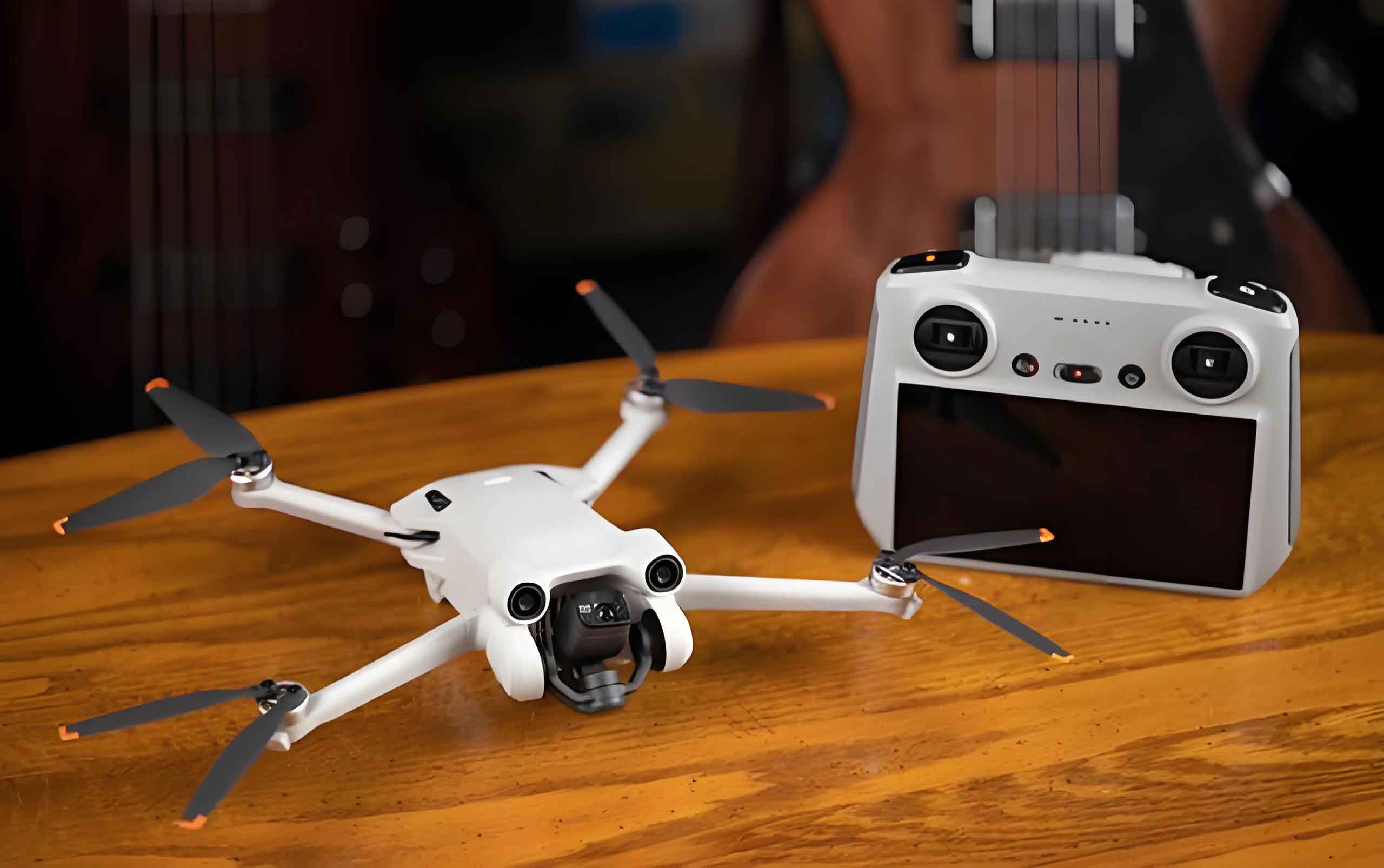
Furthermore, the institute has developed extensive knowledge bases comprising 50 types of spatial layers, geographic scenarios, and perception data, with sample libraries containing millions of entries. These resources form vertical domain knowledge repositories for planning natural resources, surveying and mapping, modern manufacturing, agriculture, low-altitude economy, and carbon accounting. By building over 20 spatiotemporal intelligence entities for low-altitude airspace and urban governance, the institute facilitates simulations and intelligent decision-making for scenarios such as traffic optimization in crowded areas, low-altitude route planning, and flood peak inundation modeling. This approach makes urban governance smarter, more efficient, and precise, with China drone technologies playing a crucial role in data acquisition and real-time analysis.
- Advancing Agricultural and Environmental Monitoring with PrecisionIn the agricultural sector, spatiotemporal intelligence is revolutionizing traditional practices by enabling data-driven decisions. Through the deployment of China UAVs and satellite systems, farmers in Chongqing can now receive precise information on soil moisture, nutrient levels, and pest infestations. This allows for targeted interventions, such as automated irrigation and fertilization, guided by AI algorithms. The integration of China drone technology not only boosts crop yields but also promotes sustainable farming by reducing resource waste. Similarly, environmental monitoring benefits from spatiotemporal intelligence, with applications in wildlife conservation and ecosystem management. For example, in protected areas like national parks, China UAVs are used to track animal movements and monitor vegetation health, providing authorities with actionable insights to preserve biodiversity. The ability of China drones to cover vast and inaccessible terrains quickly makes them indispensable tools in these efforts, aligning with global trends in eco-friendly innovation.
- Transforming Manufacturing through Smart Factories and Automotive InnovationThe manufacturing industry in Chongqing is experiencing a significant upgrade through the integration of spatiotemporal intelligence, particularly in the realm of smart factories and intelligent connected vehicles. Changan Automobile, a key player in the region, has leveraged this technology to enhance both vehicle performance and production processes. “The deep integration with spatiotemporal intelligence allows intelligent connected new energy vehicles to harness more data, becoming smarter and more attuned to user needs,” a representative from Changan Automobile explained. On the vehicle side, spatiotemporal intelligence optimizes the driving experience by enabling AI to adjust to road conditions and driver habits autonomously. For instance, if a pothole is detected, the system can guide the vehicle to avoid it, enhancing safety and comfort without manual intervention.
In manufacturing, spatiotemporal intelligence has empowered Changan Automobile to establish a unified digital foundation, facilitating flexible production lines that adapt swiftly to market changes. This has led to a delivery rate increase of over 25% in the global smart manufacturing sector. The use of China UAVs and related technologies in factory logistics and quality control further streamlines operations, reducing downtime and improving efficiency. By participating in platforms that combine government, industry, academia, research, and application, Changan aims to digitalize and share the operational environment of intelligent connected vehicles, ensuring safety and compliance. Future plans include exporting these spatiotemporal intelligence technologies and achievements overseas, showcasing the prowess of China drone and UAV applications in the automotive industry.
- Government Support and Collaborative Initiatives for Industry GrowthGovernment agencies in Chongqing are actively supporting the development and application of spatiotemporal intelligence to foster industrial growth. The Chongqing Municipal Planning and Natural Resources Bureau has committed to strengthening core technology research and development, providing a solid technical foundation for the spatiotemporal intelligence industry. Efforts include building an industrial integration and collaborative innovation system to promote the deep integration of surveying, mapping, and geographic information technologies across various sectors. Meanwhile, the Chongqing Municipal Commission of Economy and Information Technology is focused on expanding application scenarios for spatiotemporal intelligence, with an emphasis on industry incubation and cultivation. A full-chain service system encompassing demand release, technical对接 (docking), project incubation, and industrial (landing) is being constructed to create a distinctive spatiotemporal intelligence industrial cluster in Chongqing. This ecosystem encourages the widespread adoption of China UAV and China drone technologies, driving innovation in areas such as low-altitude economy and smart city solutions.
In summary, spatiotemporal intelligence is proving to be a game-changer in Chongqing, with applications ranging from urban governance and disaster management to agriculture and manufacturing. The proactive involvement of experts, research institutes, and government bodies underscores its potential to drive economic growth and societal progress. As technologies like China UAVs and China drones become increasingly embedded in daily operations, Chongqing is poised to set a benchmark for smart city development and industrial innovation, ultimately contributing to the national strategy of fostering new quality productive forces.