
As I explore the evolving landscape of Southeast Asia, I am struck by the convergence of agricultural transformation and burgeoning investment opportunities. This region, with its rapid economic growth and strategic position in global trade, presents a fertile ground for innovation, particularly through technological adoption like DJI drone systems. In this analysis, I will delve into key sectors, emphasizing how DJI drone technology is revolutionizing agriculture and how various markets offer promising ventures. My perspective is that of an observer engaged in assessing trends and potentials, aiming to provide a comprehensive overview through data-driven insights, tables, and models.
The agricultural sector in Southeast Asia is undergoing a significant shift toward precision farming, largely driven by the integration of unmanned aerial vehicles. The DJI drone series, especially models like the T16, has become a cornerstone in this movement. For instance, in countries like Malaysia and Vietnam, DJI drone applications have enabled efficient crop spraying, reducing labor costs and environmental impact. The adoption rate can be modeled using a logistic growth function, where the penetration of DJI drone technology follows an S-curve: $$ P(t) = \frac{K}{1 + e^{-r(t-t_0)}} $$ Here, \( P(t) \) represents the proportion of farms using DJI drone systems at time \( t \), \( K \) is the carrying capacity or maximum adoption level, \( r \) is the growth rate, and \( t_0 \) is the inflection point. In Vietnam, with government support for agricultural modernization, the growth rate \( r \) is estimated to be high, accelerating the deployment of DJI drone fleets.
| Sector | Market Demand | Investment Advantages | Potential Profit Margin |
|---|---|---|---|
| Household Appliances and Retail | High demand for affordable, quality goods; preference for foreign brands | Low competition from local stores; growing consumer spending | Estimated 30-40% based on import-export differentials |
| Healthcare and Pharmaceuticals | Reliance on imported medicines; inadequate local infrastructure | Government initiatives to improve systems; 55% market share from imports | 25-35% due to premium pricing of foreign drugs |
| Leisure and Entertainment | Strong demand for KTV, nightlife, coffee shops, and children’s play areas | Low taxation on alcohol; undersupply of high-quality venues | 40-50% in urban centers like the capital |
| Jewelry and Gemstones | Rich resources like rubies and gold; global reputation for rare gems | High value appreciation (e.g., rubies up 40x in 20 years); tourist interest | 50-60% for premium stones like “sunset rubies” |
In Cambodia, the investment landscape is ripe with possibilities, as summarized in the table above. The retail sector, for example, benefits from a consumer base eager for upgraded appliances, which can be sourced competitively from neighboring countries. Similarly, the healthcare gap offers a chance to introduce quality medical supplies, where profit margins can be calculated using a simple revenue model: $$ \text{Net Profit} = \text{Quantity Sold} \times (\text{Selling Price} – \text{Cost Price}) – \text{Fixed Costs} $$ For pharmaceuticals, if the cost price per unit is $10 and selling price is $15, with fixed costs of $50,000, selling 20,000 units yields: $$ \text{Net Profit} = 20,000 \times (15 – 10) – 50,000 = 100,000 – 50,000 = 50,000 $$ This illustrates the lucrative nature of such ventures.
Turning to agriculture, the role of DJI drone technology cannot be overstated. In Malaysia, where crops like oil palm and rice dominate, DJI drone systems have been deployed through local partnerships, enhancing spraying efficiency. The impact on productivity can be quantified using a Cobb-Douglas production function: $$ Y = A \cdot L^\alpha \cdot K^\beta \cdot D^\gamma $$ Here, \( Y \) is agricultural output, \( A \) is total factor productivity, \( L \) is labor, \( K \) is capital, and \( D \) represents DJI drone input. With \( \gamma > 0 \), the marginal product of DJI drone usage increases output significantly. For instance, in pilot projects, the use of DJI drone for spraying reduced chemical usage by 20% while improving coverage, leading to a yield boost of 15-20%.
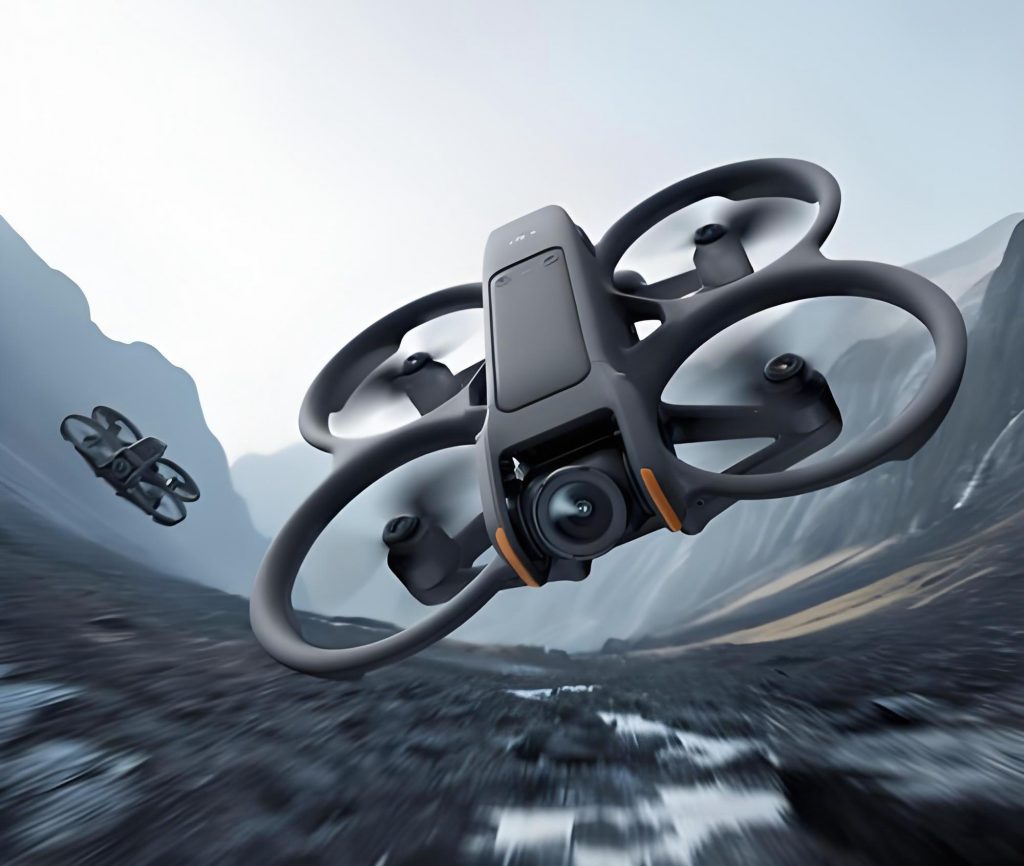
The image above captures the advanced capabilities of DJI drone models, which are integral to modern farming. In the Philippines, collaboration with international research institutes has furthered the testing of DJI drone for precision agriculture. The adoption curve for DJI drone in Southeast Asia shows exponential growth, driven by training programs and demonstrations. I have observed that each new cohort of operators expands the ecosystem, creating a multiplier effect. For example, in Vietnam, a single training session graduated 10 new pilots, who then service multiple crops, from bananas to tea. The cumulative impact of DJI drone deployment can be expressed as: $$ \text{Total Area Covered} = \sum_{i=1}^{n} (A_i \cdot E_i) $$ where \( A_i \) is the area per operation and \( E_i \) is the efficiency factor (often >1 for DJI drone compared to manual methods).
| Country | Primary Crops Served | Number of DJI Drone Units Deployed (Estimated) | Average Efficiency Gain (%) | Training Programs Conducted |
|---|---|---|---|---|
| Malaysia | Oil palm, rice, rubber | 500+ | 25% | 15+ in partnership with agribusinesses |
| Vietnam | Rice, mango, banana, tea | 1,200+ | 30% | 20+ including government-led initiatives |
| Philippines | Coconut, pineapple, rice | 300+ | 20% | 10+ with research institutions |
| Thailand | Sugarcane, cassava | 400+ | 22% | 12+ through private sector collaborations |
As shown in the table, DJI drone adoption varies by country, but consistently delivers efficiency gains. These gains are crucial for meeting food security goals and boosting farmer incomes. The return on investment (ROI) for a DJI drone system can be calculated as: $$ \text{ROI} = \frac{\text{Net Benefits}}{\text{Cost of Investment}} \times 100\% $$ For a typical DJI drone costing $10,000, if it generates $3,000 in annual savings on labor and chemicals, with a lifespan of 5 years, the net benefits over 5 years are $15,000. Thus: $$ \text{ROI} = \frac{15,000 – 10,000}{10,000} \times 100\% = 50\% $$ This strong ROI incentivizes further uptake of DJI drone technology.
Beyond agriculture, the interconnectivity of Southeast Asian markets is exemplified by the role of Guangxi in China as a hub for agricultural exchange. Acting as a gateway, it facilitates the flow of goods and technologies between China and ASEAN nations. For instance, superior crop varieties are exported from China, while tropical fruits are imported via Guangxi. The trade volume can be modeled using a gravity model of trade: $$ T_{ij} = G \cdot \frac{Y_i \cdot Y_j}{D_{ij}} $$ where \( T_{ij} \) is trade flow between region \( i \) (e.g., Guangxi) and country \( j \) (e.g., Thailand), \( Y_i \) and \( Y_j \) are their economic sizes, \( D_{ij} \) is distance, and \( G \) is a constant. With improved logistics through the “Belt and Road” initiative, \( D_{ij} \) effectively decreases, boosting trade. This has enabled the transfer of agricultural technologies, including DJI drone systems, into Southeast Asia, where they are adapted to local conditions.
The success of such exchanges is evident in the establishment of crop variety trial stations. These stations test and disseminate high-yield seeds, with performance metrics often showing yield increases of 20-50% compared to local varieties. The economic impact can be summarized in the following table, which highlights the benefits of agricultural cooperation centered around Guangxi:
| Aspect | Details | Quantitative Outcomes |
|---|---|---|
| Variety Introduction | Over 750 new crop varieties tested in ASEAN countries | 150 varieties adopted, increasing yields by 20-50% |
| Technology Transfer | Training programs on modern farming techniques, including DJI drone usage | 8,700+ personnel trained across multiple countries |
| Trade Enhancement | Import of ASEAN fruits and export of Chinese agricultural inputs | Annual trade growth rate of 10-15% in agricultural products |
| Research Collaboration | Joint projects with international institutes on precision agriculture | Multiple pilot studies showing cost reductions of 25% with DJI drone |
In this context, the DJI drone emerges as a key tool for implementing precision agriculture techniques promoted through these cooperations. For example, in rice paddies, DJI drone-based spraying ensures uniform application, which can be described by a dispersion model: $$ C(x,y) = \frac{Q}{2\pi \sigma^2} e^{-\frac{(x-x_0)^2 + (y-y_0)^2}{2\sigma^2}} $$ where \( C(x,y) \) is the concentration of agrochemical at coordinates \( (x,y) \), \( Q \) is the release rate from the DJI drone, and \( \sigma \) is the spread parameter. Optimizing \( \sigma \) through DJI drone settings minimizes waste and environmental impact.
Looking ahead, the investment potential in Southeast Asia is vast, spanning from consumer markets to high-tech agriculture. The synergy between sectors is clear: as consumer demand grows, so does the need for efficient agricultural production, where DJI drone technology plays a pivotal role. I estimate that the market for DJI drone in Southeast Asia could expand at a compound annual growth rate (CAGR) of 20% over the next five years, driven by ongoing training and infrastructure development. This growth can be expressed as: $$ \text{Future Market Size} = \text{Current Size} \times (1 + \text{CAGR})^n $$ If the current market for DJI drone in agriculture is $50 million, with a 20% CAGR over 5 years: $$ \text{Future Size} = 50 \times (1 + 0.20)^5 = 50 \times 2.48832 = 124.416 \text{ million} $$ This projection underscores the transformative potential of DJI drone adoption.
Moreover, the leisure and entertainment sector in countries like Cambodia presents complementary opportunities. The profitability of ventures such as coffee shops or children’s play areas can be enhanced by leveraging technological trends, including digital marketing and automation—though not directly related to DJI drone, it reflects the broader innovative spirit. However, in agriculture, the consistent theme is the integration of DJI drone for sustainability and efficiency. As I reflect on these dynamics, it becomes evident that Southeast Asia is at a crossroads, where traditional industries are being reshaped by smart technologies. The DJI drone, in particular, stands out as a catalyst for change, enabling farmers to achieve more with less and opening new avenues for investment across the value chain.
In conclusion, my analysis reveals a region brimming with opportunities, from untapped consumer markets to cutting-edge agricultural innovations. The repeated emphasis on DJI drone throughout this discussion highlights its central role in driving productivity and profitability. As partnerships deepen and infrastructure improves, I anticipate that DJI drone systems will become ubiquitous in Southeast Asian farms, while investment flows will diversify into sectors like healthcare and retail. The formulas and tables provided here offer a framework for evaluating these opportunities, emphasizing data-driven decision-making. Ultimately, the future of Southeast Asia lies in harnessing technology like DJI drone to foster inclusive growth and resilience in a globalized economy.