
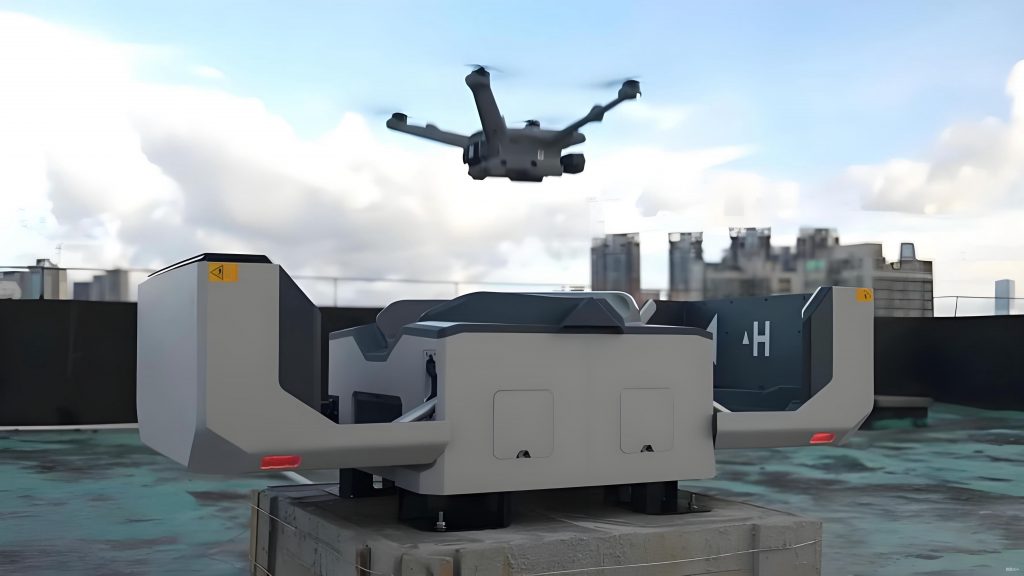
The proliferation of civilian drones has ushered in a new era of innovation across numerous sectors, from aerial photography and infrastructure inspection to agriculture and emergency response. However, this rapid adoption has simultaneously exposed critical vulnerabilities in their operational security. Among the most potent threats is the control link spoofing attack, a method that targets the very command-and-control lifeline of a drone. This article, from my research perspective, delves into the mechanics of this attack, analyzes the inadequacy of current data protection in some civilian drones, and proposes a robust cryptographic defense mechanism. I will systematically evaluate candidate encryption algorithms and provide a quantitative assessment of the proposed method’s effectiveness.
The Anatomy of a Control Link Spoofing Attack
Unlike physical attacks or jamming, control link spoofing is a deceptive assault. It aims not to destroy but to deceive and usurp. The attack vector focuses on the wireless channel between the remote controller and the drone. The fundamental principle involves a three-stage process: reconnaissance, analysis, and execution. An attacker first intercepts the legitimate radio frequency signals exchanged between the controller and the target civilian drone. Using software-defined radios (SDRs) or similar equipment, they capture these signals for analysis. The core objective of this analysis is to reverse-engineer the communication protocol—understanding the data packet structure, timing, and, most critically, the mapping between physical control inputs (like joystick movements) and the transmitted data values. Once this mapping is deduced, the attacker can generate and transmit forged command packets that appear legitimate to the drone’s receiver. If the spoofed signal is sufficiently powerful and accurate, the drone’s flight controller, which typically prioritizes commands from its control link above all else, will execute them, leading to hijacking or disruptive behavior.
The feasibility of this attack heavily depends on the security of the control data. In many commercially available civilian drones, especially those using proprietary protocols, the protection of remote control data is often minimal. A stark example from practical research illustrates this point. Analysis of captured telemetry from a popular model revealed a remote control packet format as shown below:
| Packet Segment | Length (Bytes) | Purpose | Vulnerability |
|---|---|---|---|
| Transmitter Address | 5 | Identity verification for the drone. | Spoofable; attacker can mimic a legitimate address. |
| Control Data | 24 | Encoded flight commands (pitch, roll, throttle, yaw, switches). | Initially obfuscated but easily reversible, revealing direct mapping to stick positions. |
| CRC Checksum | 2 | Error detection for data integrity. | Prevents random errors but offers no protection against intentional, correctly formatted spoofed packets. |
The control data, though initially appearing scrambled, was found to be protected by a simple, deterministic transformation (e.g., XOR operations between fixed byte blocks within the packet). This weak obfuscation was easily broken, allowing the attacker to establish a clear, one-to-one relationship between a specific joystick position and a specific byte sequence in the control data field. Combined with the ability to spoof the transmitter address, this vulnerability rendered the drone completely susceptible to a full takeover via control link spoofing. This case underscores a critical flaw: the absence of strong cryptographic protection for command data turns the control link into a liability for civilian drones.
Selecting the Cryptographic Shield: Algorithm Analysis
To fortify the control link of civilian drones against spoofing, integrating encryption is imperative. The choice of encryption algorithm must balance two paramount factors: security strength and implementation performance. The constrained resources (processing power, memory, energy) and stringent real-time requirements (low latency, high packet rate) of drone systems preclude the use of asymmetric cryptography for bulk data encryption. Therefore, my analysis focuses on three prominent symmetric algorithms representing different design philosophies: the Advanced Encryption Standard (AES, a robust block cipher), PRESENT (a lightweight block cipher), and RC4 (a stream cipher).
Security Strength Assessment
The primary metric for security is the computational infeasibility of recovering the secret key. I evaluate the best-known cryptanalytic attacks against each algorithm in the context of a control link spoofing scenario.
| Algorithm | Best-Known Key Recovery Attack | Time/Space Complexity | Feasibility in Spoofing Context |
|---|---|---|---|
| AES-128 | Biclique Attack | Time: ~$2^{126.1}$, Space: ~$2^{122}$ | Infeasible. Requires $2^{126}$ operations, far beyond computational limits for real-time attacks. |
| PRESENT-128 | Algebraic Analysis | Time: Several hours on a PC. | Theoretically possible but impractical for real-time command injection during a short flight. |
| RC4 | Biases in Keystream / Full Table Lookup | Time: ~$2^{30}$ requests (for biases) / Space: ~10 TB (for lookup) | Bias-based attacks require massive, sustained data collection (millions of packets), unlikely in a brief attack window. Full lookup is physically impractical. |
From a pure cryptographic security perspective, all three algorithms present significant barriers to a practical key recovery attack within the timeframe of targeting a specific civilian drone. However, RC4 has known statistical weaknesses in its output keystream, which have been exploited in protocols like TLS. While not directly enabling trivial key recovery for this use case, this historical vulnerability motivates a preference for more modern, thoroughly vetted algorithms like AES for securing civilian drones.
Implementation Performance Evaluation
Security is useless if it cripples system functionality. I conducted performance tests on a representative embedded platform (an ARM Cortex-M3 MCU at 24 MHz, akin to processors found in many civilian drones) to measure execution speed and memory footprint. The test encrypted/decrypted a 32-byte block, representative of a typical command packet.
| Metric | AES-128 | PRESENT-128 | RC4 | Drone System Requirement |
|---|---|---|---|---|
| Encryption Time (ms) | 0.212 | 5.363 | 0.561 | Must be << command interval (e.g., ~7ms) |
| Decryption Time (ms) | 0.339 | 5.334 | 0.560 | Must be << command interval |
| Code Size (KB) | ~12.1 | ~1.46 | ~0.44 | Should fit within available Flash memory (typically >256KB) |
| RAM Usage (KB) | ~0.78 | ~0.63 | ~0.59 | Should fit within available RAM (typically >64KB) |
| Throughput @24MHz (Kbps) | ~1207 | ~48 | ~456 | High throughput supports potential future data-rich commands. |
The results are revealing. PRESENT, while excellent for ultra-constrained hardware like RFID tags, is too slow for the real-time demands of a drone’s control link, where command intervals can be as low as 7ms. Its throughput is an order of magnitude lower than the others. RC4 performs adequately in speed and has a tiny footprint. AES offers the highest encryption speed and throughput, with a decrypt speed still well within acceptable limits. Although its code size is larger, the memory resources of modern drone flight controllers (often with 512KB+ Flash and 64KB+ RAM) are more than sufficient to accommodate it.
A useful composite metric, the Code-size × Cycle-count per Block (CM), further consolidates this analysis:
$$ CM = \frac{\text{Codesize} \times \text{EncryptionCycleCount}}{\text{Blocksize}} $$
Lower CM indicates better overall performance. Calculating with a 256-bit block size for comparison:
- AES: CM ≈ 1,970,328
- PRESENT: CM ≈ 6,017,286
- RC4: CM ≈ 190,179
While RC4 scores best on this metric due to its minuscule code size, the decisive factors for civilian drones are real-time latency and proven security. AES provides an optimal balance: it meets the stringent timing requirements, fits comfortably within available resources, and is a globally standardized, heavily scrutinized algorithm considered secure for the foreseeable future. Therefore, I select the AES algorithm as the cryptographic core for protecting the control link of civilian drones.
Proposed Protection Method and Integration
The proposed method integrates AES encryption seamlessly into the unidirectional control link of typical civilian drones. The process is illustrated in the following workflow:
- Key Establishment: During the standard “binding” or pairing procedure between the remote controller and the drone, a unique 128-bit symmetric key ($K$) is generated and securely stored in non-volatile memory on both devices. This key is never transmitted over the air during normal operation.
- Transmitter (Controller) Side:
a. The flight control software reads the physical state of joysticks and switches ($P_{plain}$).
b. It formats this state into a raw command packet, which may include a transmitter ID and sequence number.
c. This raw packet is encrypted using AES with key $K$ to produce the ciphertext ($C$): $$ C = \text{AES-Encrypt}(K, P_{plain}) $$
d. $C$ is transmitted over the radio link. - Receiver (Drone) Side:
a. The drone’s receiver obtains the ciphertext $C$.
b. It decrypts the packet using the same key $K$: $$ P_{decrypted} = \text{AES-Decrypt}(K, C) $$
c. The decrypted packet undergoes standard validation checks (e.g., verifying transmitter ID, sequence number, CRC).
d. If validation passes, $P_{decrypted}$ is sent to the flight controller for execution. If it fails (e.g., due to tampering or using a wrong key), the packet is discarded.
This scheme ensures that even if an attacker intercepts the transmitted signal, they only see ciphertext $C$. Without the secret key $K$, deducing the relationship between stick movements and the ciphertext becomes cryptographically infeasible, thereby neutralizing the core of the control link spoofing attack against civilian drones.
Quantitative Effectiveness Evaluation
To move beyond qualitative claims, I developed a metric-based framework to evaluate the defense effectiveness. The attacker’s goal in analysis is to find the mapping function $f_i$ that locates the data subsequence $d_i$ (for control element $i$) within the full captured data packet $D$. When $d_i$ changes due to a control input change, it causes a difference between two captured packets $D^a_i$ and $D^b_i$. A weak protection scheme results in a small, localized change, making $f_i$ easy to find.
I define two coefficients to measure this:
1. Difference Coefficient ($P^{a,b}_i$): The percentage of bits that change between two packets when only control element $i$ changes from state $a$ to $b$.
$$ P^{a,b}_i = \frac{C(Z^a_i \oplus Z^b_i)}{L} \times 100\% $$
where $Z$ is the packet in bit form, $C(x)$ counts the number of ‘1’s (changed bits), and $L$ is the total packet length in bits. A high $P^{a,b}_i$ indicates widespread change, obscuring the location of $d_i$.
2. Pearson Correlation Coefficient ($R^{a,b}_i$): Measures the linear correlation between the byte values of two packets.
$$ R^{a,b}_i = \frac{E[(G^a_i – \mu_{G^a})(G^b_i – \mu_{G^b})]}{\sigma_{G^a} \sigma_{G^b}} $$
where $G$ represents the packet as a vector of byte values, $\mu$ is the mean, and $\sigma$ is the standard deviation. A low absolute value of $R^{a,b}_i$ (near 0) indicates low similarity, making analysis harder.
I conducted an experiment using real command data patterns from a vulnerable civilian drone. I compared the coefficients for unencrypted data versus data encrypted with AES-128 in Electronic Codebook (ECB) mode. The baseline was a neutral command state ($Z_0$). I then simulated three separate control input changes and captured the resulting data states ($Z_1, Z_2, Z_3$).
| Control Change Action | $P^{a,b}_i$ (Unencrypted) | $P^{a,b}_i$ (AES-ECB Encrypted) | $R^{a,b}_i$ (Unencrypted) | $R^{a,b}_i$ (AES-ECB Encrypted) |
|---|---|---|---|---|
| Toggle a switch | 3.13% | 24.61% | 0.959 | 0.493 |
| Move left joystick | 4.69% | 46.48% | 0.748 | 0.093 |
| Move both joysticks | 7.81% | 46.88% | 0.724 | 0.180 |
The results are striking. Encryption dramatically increases the difference coefficient (from ~3-8% to ~25-47%) and drastically reduces the correlation (from strong positive correlation ~0.7-0.96 to very weak correlation ~0.1-0.5). This demonstrates the desired “avalanche effect” of AES: a single-bit change in the input plaintext causes approximately 50% of the ciphertext bits to change on average, effectively obscuring any predictable structure.
However, the ECB mode has a weakness: identical plaintext blocks encrypt to identical ciphertext blocks. If a control change only affects one block within a longer packet, other unchanged blocks remain identical, lowering the overall $P^{a,b}_i$. This is evident in the “toggle a switch” result above. To achieve optimal diffusion across the entire packet regardless of change location, I tested more secure modes like Cipher Block Chaining (CBC) and Cipher Feedback (CFB). The following simulation shows the impact of packet length on $P^{a,b}_i$ when a 1-byte change is made at the start of the packet:
| Encryption Mode | $P^{a,b}_i$ (L=16 Bytes) | $P^{a,b}_i$ (L=32 Bytes) | $P^{a,b}_i$ (L=64 Bytes) | $P^{a,b}_i$ (L=128 Bytes) |
|---|---|---|---|---|
| Unencrypted | 3.12% | 1.56% | 0.78% | 0.39% |
| AES-ECB | 49.86% | 24.92% | 12.44% | 6.23% |
| AES-CBC / CFB | ~50.00% | ~50.00% | ~50.00% | ~50.00% |
The superiority of CBC/CFB modes is clear. While ECB’s effectiveness degrades as packet length grows (because the unchanged portion becomes larger), CBC and CFB maintain the ideal ~50% bit change rate irrespective of packet size. This is because these modes introduce feedback or chaining, ensuring that a change in any part of the plaintext propagates through all subsequent ciphertext. Consequently, for implementing the protection method in civilian drones, AES in CBC or CFB mode is the recommended choice to provide maximum confusion and diffusion, making control data analysis for spoofing attacks computationally intractable.
Conclusion
The security of civilian drones is paramount for their safe and trustworthy integration into our airspace and daily operations. Control link spoofing represents a clear and present danger, exploiting weak or non-existent protection for command data. Through detailed analysis, I have demonstrated that integrating cryptographic protection is not only necessary but also feasible. The AES algorithm, particularly in a chaining mode like CBC or CFB, provides an optimal balance of robust security, meeting the real-time performance constraints of drone systems, and efficient resource utilization. The proposed method effectively transforms the exposed command data into unpredictable ciphertext, breaking the direct linkage between observable radio signals and flight commands. Quantitative evaluation using difference and correlation coefficients confirms that this approach significantly raises the bar for attackers, making reverse-engineering and spoofing attempts practically infeasible. As the ecosystem of civilian drones continues to expand, adopting such strong, standards-based encryption for control links must become a fundamental design principle, ensuring that these versatile tools remain under the legitimate user’s command.