
Over the past few years, the rapid development of low-altitude economy and urban air mobility has motivated the widespread deployment of unmanned aerial vehicles in communication systems. Unmanned aerial vehicles can act as aerial base stations, relay nodes, or mobile edge computing platforms, improving coverage and throughput in rural, disaster, and temporary hot-spot scenarios. However, the open nature of wireless channels introduces severe confidentiality risks especially when data is broadcast to distributed nodes. Concurrently, blockchain technology has been integrated into unmanned aerial vehicle networks to provide decentralized, tamper-resistant, and traceable data management for command, sensing, and transaction records. Yet, blocks generated and broadcast over wireless links may still be overheard by malicious eavesdroppers. Traditional cryptographic methods yield strong protection but often require significant computation and key management overhead, which is unsuitable for energy-constrained unmanned aerial vehicles. Therefore, the secure propagation of blockchain blocks becomes a fundamental issue.
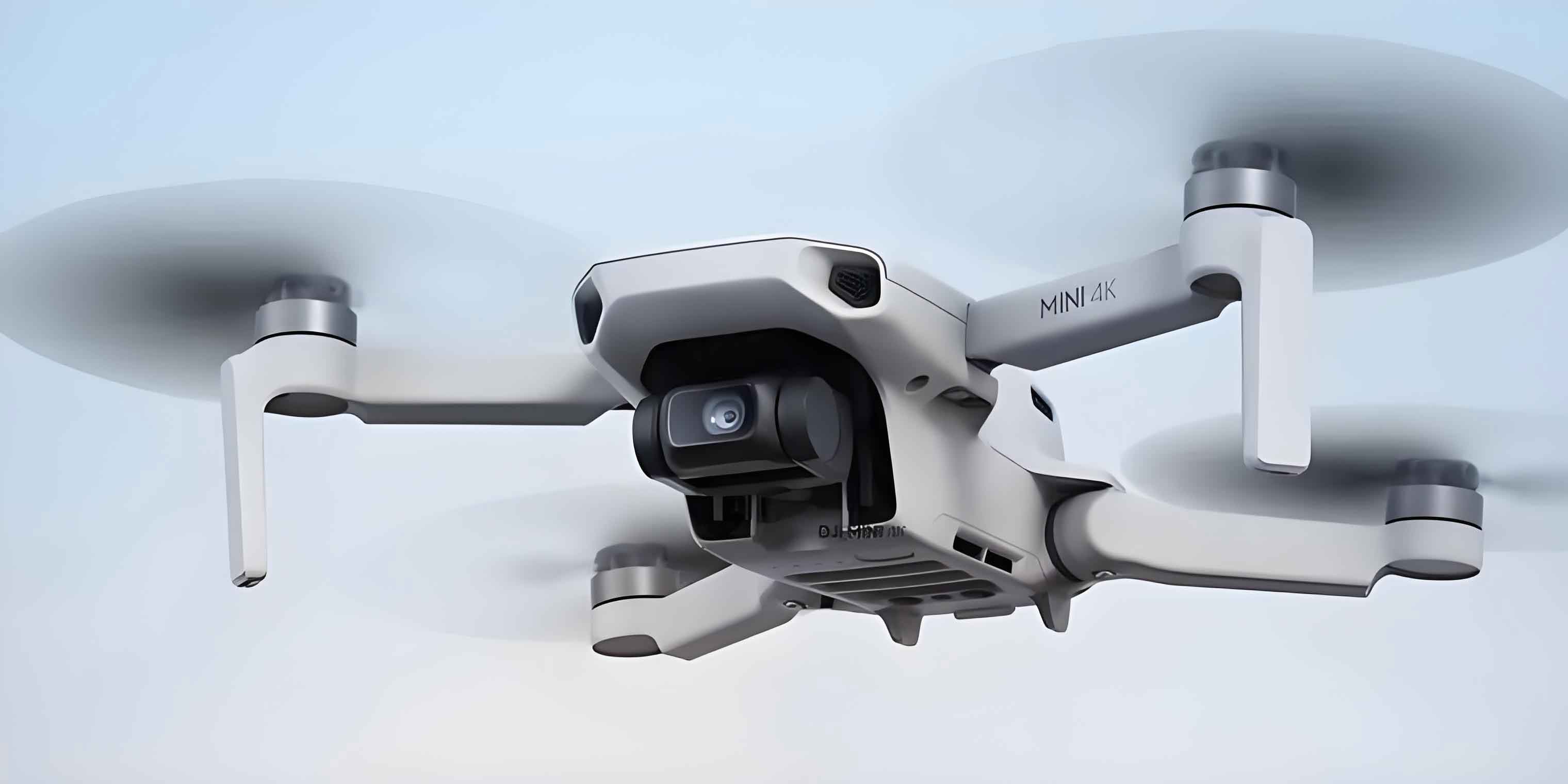
In this paper, I investigate secure block transmission in blockchain-enabled unmanned aerial vehicle networks. I first introduce physical layer security techniques to reduce the probability that block content is decoded by eavesdroppers. Subsequently, I jointly optimize block size, trajectory, power, and beamforming variables to improve both security and blockchain efficiency. The remainder of this paper is organized as follows. Section 2 presents the background on unmanned aerial vehicle communications, blockchain, beamforming, and optimization tools. Section 3 studies the single-antenna scenario. Section 4 extends to the multi-antenna scenario. Section 5 discusses a multi-unmanned aerial vehicle cooperative scenario based on virtual antenna arrays. Section 6 concludes the paper.
1 Background and Optimization Tools
Unmanned aerial vehicle communication has become a key component of the sixth-generation wireless ecosystem. The advantages of flexible deployment, low operational cost, and line-of-sight dominated channels allow unmanned aerial vehicles to provide reliable connectivity in complex environments. However, low-altitude platforms have limited battery capacity, stringent real-time constraints, and relatively simple embedded processors. Thus, any security mechanism added to such systems must be lightweight and adaptable to channel dynamics.
Blockchain provides distributed record-keeping through chained hash pointers, consensus protocols, and cryptographic verification. Its most valuable features are decentralization, transparency, immutability, and smart contract execution. In unmanned aerial vehicle networks, blockchain can store mission logs, spectrum sensing results, and transaction records. However, each block is transmitted wirelessly. The exact block length strongly influences latency, energy consumption, and security. Consequently, I treat block length as a design variable instead of an exogenous parameter.
Beamforming is a spatial filtering technique that adjusts amplitude and phase weights across an antenna array. It improves the received signal power toward the intended direction and suppresses undesired directions. In multi-antenna unmanned aerial vehicles, beamforming creates directional beams that increase the secrecy rate. Collaborative beamforming further extends this concept to distributed unmanned aerial vehicles. Multiple unmanned aerial vehicles form a virtual array and coherently combine signals at a remote base station.
Optimization methods are central to the proposed framework. Convex optimization and successive convex approximation are used to transform non-convex trajectory and power control problems into solvable subproblems. Block coordinate descent splits coupled variables and updates them alternately. For multi-objective cases with conflicting performance metrics, I adopt multi-objective particle swarm optimization. These tools appear throughout the following sections.
2 Single-Antenna Blockchain-Enabled Unmanned Aerial Vehicle Networks
2.1 System Model
I first consider a downlink scenario with one source unmanned aerial vehicle, one jamming unmanned aerial vehicle, one ground user, and one eavesdropper. The source unmanned aerial vehicle, labelled as UAV-B, transmits confidential blockchain blocks to the ground user. The jamming unmanned aerial vehicle, labelled as UAV-J, emits artificial noise toward the eavesdropper. Both unmanned aerial vehicles fly at a constant altitude \(H\). The horizontal position of unmanned aerial vehicle \(u\in\{B,J\}\) at time slot \(\tau\) is denoted as \(\mathbf{q}_u[\tau]\). The total flight period \(T\) is divided into \(I\) slots with duration \(\tau_d=T/I\). The maximum speed constraint is
\[
\|\mathbf{q}_u[\tau+1]-\mathbf{q}_u[\tau]\| \leq v_{\max}\tau_d=d_{\max}, \quad u\in\{B,J\}.
\]
To avoid collisions, the inter-drone distance is bounded below by \(d_{\min}\):
\[
\|\mathbf{q}_B[\tau]-\mathbf{q}_J[\tau]\| \geq d_{\min}.
\]
The channel between unmanned aerial vehicle \(u\) and ground node \(g\) follows Rayleigh fading:
\[
g_{u,g}[\tau] = \xi_{u,g}[\tau]d_{u,g}^{-\alpha/2},
\]
where \(\xi_{u,g}[\tau]\) is the random fading coefficient, \(d_{u,g}[\tau]\) is the distance, and \(\alpha=2\). The transmit powers of UAV-B and UAV-J are \(P_B[\tau]\) and \(P_J[\tau]\), respectively. They satisfy
\[
0 \leq P_B[\tau]\leq P_B^{\max}, \quad \frac{1}{I}\sum_{\tau=1}^{I}P_B[\tau]\leq \bar{P}_B,
\]
\[
0 \leq P_J[\tau]\leq P_J^{\max}, \quad \frac{1}{I}\sum_{\tau=1}^{I}P_J[\tau]\leq \bar{P}_J.
\]
2.2 Secrecy Rate with Finite Block Length
Let \(R_m[\tau]\) and \(R_e[\tau]\) denote the achievable rates at the legitimate user and eavesdropper, respectively. In the presence of jamming, these rates are
\[
R_m[\tau]=\log_2\left(1+\frac{P_B[\tau]\rho_{B,m}[\tau]\|\mathbf{q}_B[\tau]-\mathbf{q}_m\|^{-2}}{P_J[\tau]\rho_{J,m}[\tau]\|\mathbf{q}_J[\tau]-\mathbf{q}_m\|^{-2}}\right),
\]
\[
R_e[\tau]=\log_2\left(1+\frac{P_B[\tau]\rho_{B,e}[\tau]\|\mathbf{q}_B[\tau]-\mathbf{q}_e\|^{-2}}{P_J[\tau]\rho_{J,e}[\tau]\|\mathbf{q}_J[\tau]-\mathbf{q}_e\|^{-2}}\right).
\]
Because the block length \(l[\tau]\) is finite, the legitimate receiver may make decoding errors and information leakage cannot be completely suppressed. The secrecy rate of short-packet transmission is modelled as
\[
R_m^{\mathrm{sec}}[\tau]=\left[R_m[\tau]-R_e[\tau]-\frac{Q^{-1}(\varepsilon)V_m[\tau]}{\ln2\,l[\tau]}-\frac{Q^{-1}(\eta)V_e[\tau]}{\ln2\,l[\tau]}\right]^+,
\]
where \(\varepsilon\) is the decoding error probability, \(\eta\) is the information leakage probability, \(Q^{-1}\) is the inverse Gaussian Q-function, and \(V_x[\tau]=1-(1+r_x[\tau])^{-2}\) is the channel dispersion.
2.3 Blockchain Performance Model
Block size affects two vital metrics: block generation time and block propagation delay. The memory pool size is \(S_{\mathrm{mem}}\), and the size of each transaction is \(S_t\). Thus, the number of blocks is \(S_{\mathrm{mem}}/l[\tau]\), and the number of transactions contained in one block is \(l[\tau]/S_t\). Let \(M_{\mathrm{Merkle}}\) be the number of transactions in one Merkle tree and \(T_{\mathrm{Merkle}}\) be its construction time. The block generation time is
\[
T_g[\tau] = \left\lceil \frac{l[\tau]/S_t}{M_{\mathrm{Merkle}}}\right\rceil T_{\mathrm{Merkle}} + T_{\mathrm{overhead}},
\]
where \(T_{\mathrm{overhead}}\) is the fixed overhead time. The propagation delay is
\[
T_d[\tau] = hT_p + \frac{l[\tau]}{R},
\]
where \(h\) is the network depth, \(T_p\) is the per-node processing time, and \(R\) is the transmission rate of each blockchain node. The blockchain performance score is
\[
F(l[\tau]) = \rho T_d[\tau] + (1-\rho)T_g[\tau],
\]
with \(\rho\) being a weighting factor that balances delay and generation overhead. The overall objective is to maximize the average minimum secrecy rate (AMSR) while simultaneously improving \(F\):
\[
\max_{\substack{P_B,P_J\\\mathbf{q}_B,\mathbf{q}_J,l}}\frac{1}{I}\sum_{\tau=1}^{I}\left[\min_{m}R_m^{\mathrm{sec}}[\tau]-\omega F(l[\tau])\right].
\]
2.4 Proposed Iterative Algorithm
The optimization problem is non-convex because the secrecy rate expression is not concave with respect to position and power. I use block coordinate descent and successive convex approximation. The variables are divided into five blocks: UAV-B position, UAV-J position, block size, UAV-B power, and UAV-J power. In each iteration, one block is optimized while the rest are fixed. The non-convex constraints are approximated through first-order Taylor expansion.
For example, when optimizing UAV-B position, I introduce auxiliary variables \(t_g[\tau]\) and \(m_g[\tau]\) for \(g\in\{m,e\}\). The non-convex constraint on the instantaneous signal-to-interference-plus-noise ratio is replaced by
\[
t_g[\tau]\leq \frac{P_B[\tau]\rho_{B,g}[\tau]}{P_J[\tau]\rho_{J,g}[\tau]\|\mathbf{q}_J[\tau]-\mathbf{q}_g\|^2}\|\mathbf{q}_B[\tau]-\mathbf{q}_g\|^2.
\]
Then the right-hand side is lower-bounded at the point \(\hat{\mathbf{q}}_B[\tau]\) using
\[
\|\mathbf{q}_B[\tau]-\mathbf{q}_g\|^2 \geq \|\hat{\mathbf{q}}_B[\tau]-\mathbf{q}_g\|^2+2(\hat{\mathbf{q}}_B[\tau]-\mathbf{q}_g)^T(\mathbf{q}_B[\tau]-\hat{\mathbf{q}}_B[\tau]).
\]
Similar approximations are applied to other constraints. The algorithm repeats until the change of the objective value is below a preset threshold \(\epsilon\). Table 1 summarizes the key simulation parameters.
| Parameter | Value |
|---|---|
| Maximum speed \(v_{\max}\) | 25 m/s |
| Flight altitude \(H\) | 30 m |
| UAV-B maximum power | 10 W |
| UAV-J maximum power | 1 W |
| Decoding error probability \(\varepsilon\) | \(10^{-3}\) |
| Leakage probability \(\eta\) | \(10^{-2}\) |
| Noise power \(\sigma^2\) | -80 dBm |
| Maximum block length | 200 Kb |
| Memory pool size | 3000 Kb |
Simulation results show that the proposed strategy converges within about ten iterations, and AMSR maintains a nondecreasing trend. When the block length is optimized together with trajectory and power, the system achieves higher AMSR than the benchmark schemes that fix trajectory or block size. The block length is dynamically adjusted across time slots. When the source unmanned aerial vehicle is closer to the legitimate user, smaller blocks are selected to reduce latency; when the channel is weaker, larger blocks are used to carry more information. Thus, the proposed algorithm effectively balances security, latency, and blockchain throughput.
3 Multi-Antenna Blockchain-Enabled Unmanned Aerial Vehicle Networks
3.1 System Model
The single-antenna scheme restricts the source unmanned aerial vehicle to serve only one user. To enable simultaneous multi-user communication, I extend the framework to a multi-antenna scenario. The source unmanned aerial vehicle is equipped with a uniform linear array consisting of \(N_t\) antennas. It applies beamforming to direct confidential blocks toward \(M\) ground users. The jamming unmanned aerial vehicle is also equipped with \(N_t\) antennas and uses beamforming to transmit artificial noise toward \(E\) eavesdroppers. The model is shown conceptually by the described network architecture.
Let \(\mathbf{w}_B[\tau]\) and \(\mathbf{w}_J[\tau]\) be the beamforming vectors of UAV-B and UAV-J, respectively. The power constraints are
\[
\|\mathbf{w}_B[\tau]\|^2 \leq P_B,\quad \|\mathbf{w}_J[\tau]\|^2 \leq P_J.
\]
The instantaneous signal-to-interference-plus-noise ratio at ground user \(m\) is
\[
\gamma_{B,m}[\tau]=\frac{P_B|\mathbf{w}_B^H[\tau]\mathbf{h}_{B,m}[\tau]|^2}{P_J|\mathbf{w}_J^H[\tau]\mathbf{h}_{J,m}[\tau]|^2}.
\]
Similarly, the SNR at eavesdropper \(e\) is
\[
\gamma_{B,e}[\tau]=\frac{P_B|\mathbf{w}_B^H[\tau]\mathbf{h}_{B,e}[\tau]|^2}{P_J|\mathbf{w}_J^H[\tau]\mathbf{h}_{J,e}[\tau]|^2}.
\]
The finite block length secrecy rate at user \(m\) takes the same form as Equation (8). However, the objective changes because beamforming consumes energy and increases system complexity. I therefore formulate the secrecy energy efficiency (MSEE) as
\[
\mathrm{MSEE}=\frac{\sum_{\tau=1}^{I}\sum_{m=1}^{M}R_m^{\mathrm{sec}}[\tau]-\omega F(l[\tau])}{\sum_{\tau=1}^{I}E_{\mathrm{total}}[\tau]},
\]
where \(E_{\mathrm{total}}[\tau]\) includes the propulsion energy of two unmanned aerial vehicles and the blockchain energy. The propulsion power for rotor unmanned aerial vehicles is
\[
P_p[\tau]=P_0\left(1+\frac{3v[\tau]^2}{U_{\mathrm{tip}}^2}\right)+\frac{1}{2}d_0s A\left(1+\frac{v[\tau]^2}{v_0^2}\right)^{1/4}
+\frac{1}{2}d_0\rho s A v[\tau]^3,
\]
and \(E_{\mathrm{total}}[\tau]=P_p[\tau]\tau_d+E_{\mathrm{block}}[\tau]\). The blockchain energy is composed of generation energy, propagation energy, and queueing energy.
3.2 Problem Decomposition
The optimization variables are \(\mathbf{q}_B\), \(\mathbf{q}_J\), \(l\), \(\mathbf{w}_B\), and \(\mathbf{w}_J\). The problem is non-convex due to the fractional objective and the coupled beamforming variables. I decompose it into three subproblems: trajectory optimization, block length optimization, and beamforming optimization. Each subproblem is approximated by successive convex approximation. For trajectory optimization, auxiliary variables linearize the non-convex distance terms. For beamforming optimization, the squared beamforming gains are linearized by first-order Taylor expansion around the current points.
Table 2 lists the simulation parameters for the multi-antenna scenario. The simulator assumes four antennas at each unmanned aerial vehicle, four ground users, and one eavesdropper.
| Parameter | Value |
|---|---|
| Number of antennas \(N_t\) | 4 |
| Number of users \(M\) | 4 |
| Number of eavesdroppers \(E\) | 1 |
| Maximum speed | 30 m/s |
| Task duration | 30 s |
| Memory pool size | 4000 Kb |
| Maximum block length | 100 Kb |
The numerical results indicate that MSEE converges within a small number of iterations. Compared to the fixed block length baseline, the proposed dynamic block length scheme improves both security and blockchain delay performance. The block length is no longer always at its maximum; instead, it changes with the channel state. When the unmanned aerial vehicles are closer to the users, shorter blocks reduce propagation delay; when the aerial channel is less favourable, larger blocks are selected to boost the number of securely transmitted bits.
Moreover, the number of antenna elements has a direct effect on MSEE. When \(N_t\) increases from two to eight, the secrecy energy efficiency increases significantly. Similarly, increasing the number of served users improves the aggregate secure throughput, although the computational complexity also increases. These observations confirm that multi-antenna unmanned aerial vehicles equipped with beamforming can simultaneously improve security and energy efficiency.
4 Multi-Unmanned Aerial Vehicle Collaborative Beamforming for Secure Block Transmission
4.1 Motivation and System Model
In the two previous scenarios, only one source unmanned aerial vehicle communicates with ground nodes. However, when the base station is far away, the signal from a single unmanned aerial vehicle may be too weak to establish a reliable link. To overcome this issue, I consider a group of unmanned aerial vehicles that form a virtual antenna array and perform collaborative beamforming toward a remote base station. The cluster first exchanges information through air-to-air broadcast, and then collectively transmits blockchain blocks to the base station. During the broadcast, an adversary may overhear the data; hence, one unmanned aerial vehicle is selected as a friendly jammer to interfere with the eavesdropper.
The three-dimensional position of unmanned aerial vehicle \(n\) is \(\mathbf{P}_n=(x_n,y_n,z_n)\). The array factor of the virtual antenna array is defined as
\[
F(\theta[\tau],\phi[\tau])=\sum_{n=1}^{N}I_n e^{jk_c(x_n[\tau]\sin\theta[\tau]\cos\phi[\tau]+y_n[\tau]\sin\theta[\tau]\sin\phi[\tau]+z_n[\tau]\cos\theta[\tau])},
\]
where \(I_n\) is the excitation current weight, \(j\) is the imaginary unit, and \(k_c=2\pi/\lambda\) is the phase constant. The transmit antenna gain of the virtual array toward the base station is
\[
G_B[\tau]=\frac{4\pi |F(\theta_B,\phi_B)|^2}{\int_0^{2\pi}\int_0^{\pi}|F(\theta,\phi)|^2\sin\theta d\theta d\phi}\eta,
\]
where \(\eta\in[0,1]\) is the array efficiency. The achievable rate at the base station is
\[
R_B[\tau]=\log_2\left(1+\frac{P_t G_B[\tau]K_B d_{B,n}^{-\alpha}}{\sigma^2+P_J G_{J,e}K_{J,e}d_{J,e}^{-\alpha}}\right).
\]
Similarly, the rate at the eavesdropper is
\[
R_e[\tau]=\log_2\left(1+\frac{P_t G_e[\tau]K_e d_{e,n}^{-\alpha}}{\sigma^2+P_J K_{J,e}d_{J,e}^{-\alpha}}\right).
\]
The finite block length secrecy rate for the multi-unmanned aerial vehicle scenario is
\[
R_{\mathrm{sec}}[\tau]=R_B[\tau]-R_e[\tau]-\frac{Q^{-1}(\varepsilon)V_B[\tau]}{\ln2\,l[\tau]}-\frac{Q^{-1}(\eta)V_e[\tau]}{\ln2\,l[\tau]}.
\]
4.2 Multi-Objective Optimization
In the multi-unmanned aerial vehicle scenario, the system performance is characterized by several conflicting objectives. I formulate a multi-objective optimization problem that includes the transmission rate, the maximum side lobe level, the total energy consumption, and the blockchain performance. The first objective is to maximize the worst-case secrecy rate:
\[
f_2=-\min_{\tau}R_{\mathrm{sec}}[\tau].
\]
The second objective is to minimize the maximum side lobe level to reduce information leakage toward unknown directions:
\[
f_3=\frac{\max_{(\theta,\phi)\in\Omega_{\mathrm{SL}}}|F(\theta,\phi)|}{|F(\theta_{\mathrm{ML}},\phi_{\mathrm{ML}})|}.
\]
The third objective is to minimize the total energy consumption
\[
f_4=\sum_{\tau=1}^{I}E_{\mathrm{total}}[\tau],
\]
where \(E_{\mathrm{total}}[\tau]\) includes propulsion energy and blockchain-related energy. The block length \(l\) appears in the closed-form expressions of transaction confirmation delay and generation delay. A queuing model is introduced to compute the expected waiting time \(T_q\). The block generation delay is \(T_{bg}=1/(\lambda M)\), and the propagation delay is \(T_{bp}=l/c\). The transaction confirmation delay is given by
\[
T_{\mathrm{BC}}=\frac{T_q+T_{bg}+T_{bp}}{1-p_{\mathrm{fork}}},
\]
where \(p_{\mathrm{fork}}\) is the fork probability. The blockchain performance is included as a penalty term in the objective vector. The overall multi-objective problem is
\[
\min_{\{\mathbf{P}_n,I_n,l\}}\left(-R_{\mathrm{sec}},\, \mathrm{SLL},\, E_{\mathrm{total}},\, T_{\mathrm{BC}}\right),
\]
subject to altitude constraints, safe separation limits, block length bounds, and current weight constraints:
\[
z_{\min}\leq z_n\leq z_{\max},
\]
\[
\|\mathbf{P}_n-\mathbf{P}_{n’}\|\geq D_{\min},
\]
\[
0<l\leq 0\leq=""
4.3 MOPSO-Based Solution
Multi-objective particle swarm optimization is suitable for this problem because the four objectives are non-convex and non-smooth. I define each particle as a candidate decision vector containing all drone positions, current weights, and block lengths. The algorithm uses an external archive to store non-dominated solutions. In each iteration, every particle updates its velocity and position by
\[
\mathbf{v}_k^{(t+1)}=\omega^{(t)}\mathbf{v}_k^{(t)}+c_1r_1(\mathbf{p}_k^{(t)}-\mathbf{x}_k^{(t)})+c_2r_2(\mathbf{g}_k^{(t)}-\mathbf{x}_k^{(t)}),
\]
\[
\mathbf{x}_k^{(t+1)}=\mathbf{x}_k^{(t)}+\mathbf{v}_k^{(t+1)},
\]
where \(\mathbf{p}_k^{(t)}\) is the personal best position, \(\mathbf{g}_k^{(t)}\) is the leader selected from the external archive, \(\omega^{(t)}\) is the inertia weight, and \(c_1,c_2\) are acceleration coefficients. The inertia weight is linearly decreased to promote exploration in early iterations and exploitation in later iterations.
| MOPSO component | Setting |
|---|---|
| Number of particles | 100 |
| Maximum iterations | 200 |
| External archive size | 50 |
| Inertia weight range | 0.4 to 0.9 |
| Acceleration coefficients | 1.5, 1.5 |
After the iterative search, the external archive provides a set of Pareto-optimal solutions. In the simulation, I select the solution that gives the best trade-off among secrecy rate, side lobe level, and total energy consumption. Figure 4 shows the convergence behavior: the total utility increases rapidly in the first few iterations and then converges to a stable value. The proposed method outperforms a fixed benchmark that does not jointly optimize all variables.
I also study the impact of the number of unmanned aerial vehicles on the average secrecy rate. As \(N\) increases from two to twelve, the average secrecy rate improves because more array elements provide higher beamforming gain and more degrees of freedom for null steering. However, the growth rate decreases for large \(N\) because the additional drones also consume energy and require tighter coordination. This observation indicates that the number of collaborative unmanned aerial vehicles should be carefully chosen according to the required security level and energy budget.
Finally, I evaluate the three-dimensional beamforming gain pattern produced by the collaborative unmanned aerial vehicles. The main lobe is steered exactly to the base station direction, while the side lobes are suppressed. This pattern confirms that the cooperative virtual array can focus energy on the legitimate destination and reduce interception risk.
5 Comparison of Proposed Schemes
The three scenarios are designed in a progressive manner. The single-antenna scenario establishes the basic joint optimization of trajectory, power, and block size. The multi-antenna scenario adds beamforming and secrecy energy efficiency, which is important because arrays consume additional energy. The multi-unmanned aerial vehicle scenario distributes antennas across multiple platforms to achieve cooperative beamforming when a single unmanned aerial vehicle cannot communicate with a remote base station. Table 4 summarizes the differences in objectives, variables, and solution methods.
| Scenario | Objective | Optimization variables | Method |
|---|---|---|---|
| Single-antenna | AMSR | Trajectory, power, block size | BCD-SCA |
| Multi-antenna | MSEE | Trajectory, beamforming, block size | BCD-SCA |
| Multi-UAV collaborative | Multi-objective utility | Positions, current weights, block size | MOPSO |
One important conclusion obtained from these comparisons is that block size is not an isolated parameter. It couples the physical layer transmission rate, the finite block length secrecy penalty, the block generation time, and the propagation delay. If the block length is too large, the propagation delay increases; if it is too small, the number of blocks increases and the overhead becomes significant. The simulation results in all three scenarios verify that the optimal block length changes over time according to the channel quality and the position of unmanned aerial vehicles.
6 Conclusion and Future Outlook
I have studied secure block transmission in blockchain-enabled unmanned aerial vehicle networks. The central challenge is to prevent confidential block contents from being decoded by eavesdroppers while simultaneously maintaining low latency and reasonable energy consumption. I first proposed a single-antenna framework that jointly optimizes the source and jammer trajectories, transmit powers, and block length. The average minimum secrecy rate was maximized through a block coordinate descent and successive convex approximation algorithm. I then extended the framework to multi-antenna unmanned aerial vehicles where beamforming supports multi-user communication and improves secrecy energy efficiency. The simulation results demonstrated that the proposed dynamic block length policy outperforms fixed block length baselines in terms of both security and blockchain performance.
For scenarios in which unmanned aerial vehicles need to communicate with remote base stations, I introduced a collaborative beamforming architecture in which multiple unmanned aerial vehicles form a virtual antenna array. A multi-objective particle swarm optimizer was employed to jointly optimize the three-dimensional positions, excitation weights, and block size. The results show that cooperative unmanned aerial vehicles can steer a narrow beam toward the base station and suppress side lobes. Consequently, average secrecy rate is improved without excessively increasing total energy consumption.
Future research directions include robust optimization under imperfect channel state information and uncertain eavesdropper positions. The integration of consensus mechanisms, fork probabilities, and queuing delays into a unified cross-layer model deserves further study. Finally, real-world experiments with small-scale unmanned aerial vehicles and software-defined radios would help validate the practical performance of the proposed schemes in dynamic low-altitude environments.