
In the wave of the Fourth Industrial Revolution dominated by artificial intelligence and other new technological advancements, civilian UAVs (Unmanned Aerial Vehicles) have emerged and flourished, becoming vital carriers of advanced productivity. As a new format in the aviation industry, civilian UAVs represent a national innovation direction and are a crucial component of the civil aviation power strategy. In recent years, the application of civilian UAVs has gradually expanded from military to civilian domains, playing a versatile role in national economic construction and development. They have significantly impacted various fields such as police security, pipeline inspection, agricultural plant protection, logistics transportation, environmental monitoring, and emergency rescue. Thus, the civilian UAV market exhibits broad prospects, immense potential, and strong expandability, gradually occupying a prominent position in the market.
With the rapid development of civilian UAVs, product safety issues have become increasingly prominent. Due to the ease of operation, multiple open-source pathways, and simple assembly and modification of civilian UAVs, phenomena such as “illegal flights” and “disorderly flights” are severe. Poor product quality leads to frequent failures, and the lack of standardized operating instructions results in numerous safety accidents. These not only adversely affect personal and public safety but may also be exploited by terrorists for destructive activities, posing serious threats to national security and life and property safety. Therefore, the safety of civilian UAVs has gradually become a bottleneck restricting industry development.
In recent years, to standardize the development of the civilian UAV industry, the state has issued multiple management regulations such as the “Interim Regulations on Flight Management of Unmanned Aircraft” and the “Management Measures for the Production and Manufacturing of Civilian Unmanned Aerial Vehicles.” The Civil Aviation Administration of China has also conducted pilot projects for civilian UAV aviation test bases based on the “Construction of Civilian Unmanned Aerial Vehicle Test Bases (Test Areas).” Through these pilot projects, innovations in government regulatory services are being explored. Currently, inspection and testing have become powerful means in the production, manufacturing, sales, regulation, and technical application of civilian UAVs.
This article, based on the current development status of the civilian UAV industry, combines safety accident cases and product safety requirements to identify and classify risks associated with civilian UAVs. It sorts out key risk factors and safety accidents, analyzing their causes. With reference to standards and rules related to the准入, operation, and testing of civilian UAVs across various industries, and considering basic flight performance requirements and inspection and testing technologies, we focus on analyzing product safety technical indicators that influence civilian UAVs.
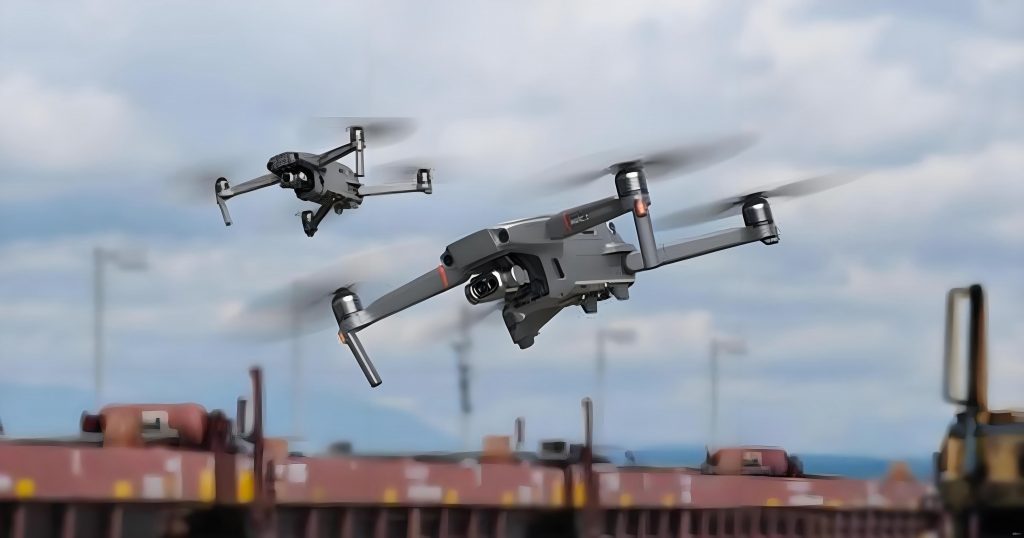
In this analysis, we adopt a first-person perspective to delve into the intricacies of safety risk identification and key indicator analysis for civilian UAVs. The goal is to provide a comprehensive reference for the design, manufacturing, operational safety, and quality enhancement of civilian UAVs, while offering a basis and support for the formulation of product safety standards, quality screening, and the implementation of detection and certification systems.
Safety Risk Identification for Civilian UAVs
The identification and classification of risks for civilian UAVs primarily consider three aspects: the likelihood of losses during use, the causes, and the extent of losses. Losses include personal safety and health damages, property losses (including the loss of the civilian UAV itself and third-party losses), environmental impacts, and social effects. If, during the use of a civilian UAV, external or internal factors may lead to such losses, resulting in corresponding safety accidents, these can be identified as safety risks. According to current accident category statistics, the risk identification factors, types, and causes for civilian UAV products are detailed in the table below.
| Risk Factor Category | Risk Type | Possible Safety Accidents | Cause Identification |
|---|---|---|---|
| Internal Factors | Flight Risk | Attitude loss of control, free-fall impact injuries, collisions and cuts, ground fire upon crash, control stall and loss of connection, positioning failure, severe route deviation, interference with ground radio, disruption of aviation order, entry into no-fly zones, terrorist attacks using the载体, privacy invasion, ground noise, etc. | Functional design defects, overload, loose propeller blades, installation bolt脱落, flight control algorithm issues, sensor faults, motor failures, battery safety problems, data link faults, electromagnetic compatibility issues, ground station network failures, etc. |
| Note: Internal factors are primarily related to the civilian UAV’s own design and components. | |||
| External Factors | Flight Environment Risk | Effects of阵风 and wind shear, temperature and humidity impacts, meteorological factors such as rain, snow, fog, and sandstorms, obstacles, ground radio interference, line-of-sight and signal reception遮挡, etc. | Environmental conditions that are external to the civilian UAV operation. |
| Human and Operational Risk | Failure to conduct pre-flight status checks, lack of training, unlicensed operation, insufficient safety controls or risk prevention, fatigue, malicious operation,私自 illegal modifications, improper flight path planning, etc. | Human errors and intentional actions during the operation of civilian UAVs. | |
From the table, it is evident that external factors mainly include the flight environment and human factors. Meteorological factors, obstacles, line-of-sight limitations, and signal reception遮挡 can be effectively avoided through the selection of作业场地 and time. However, sudden changes in high-altitude wind, especially风速 and wind shear, are difficult to predict and have the greatest impact on flight safety and reliability. Additionally, the flight of civilian UAVs离不开 human control; even with future autonomous intelligent flight, operator supervision and intervention will be necessary. Currently, human factors such as私自 illegal modifications, malicious操控, entry into no-fly zones, or disruption of aviation order are primarily addressed through design features like electronic fences, remote identification, and flight限制设定 to ensure flight safety. Although external environments and human操控 substantially impact civilian UAV safety, these influences are often complex and multifaceted, making it challenging to eliminate these external safety factors through检测试验 alone.
Internal factors are mainly functional design defects and faults. Any abnormality or failure in a civilian UAV component can trigger safety accidents. Through analysis, flight risks arising from incomplete functionality or performance deficiencies of the civilian UAV itself can be identified by pinpointing key technical indicators that affect flight safety. Then, based on inspection and testing methods, these indicators can be verified and confirmed to ensure their effectiveness, accuracy, and safety, thereby enhancing the quality and safety of civilian UAV system products and eliminating or reducing various flight safety hazards.
Analysis of Key Safety Technical Indicators for Civilian UAVs
To ensure the safety of civilian UAVs, it is essential to define and analyze key technical indicators that directly impact flight performance and risk mitigation. These indicators are derived from standards, regulations, and practical safety requirements. Below, we discuss each indicator in detail, incorporating mathematical formulations and tables where applicable.
1. Flight Parameter Limits and Accuracy
To prevent safety accidents such as airframe disintegration, loss of control, and stall during flight, the design of civilian UAVs must impose limits on flight parameter ranges. Key technical indicators include overload limits, maximum flight altitude and speed, maximum ascent/descent speed limits, and minimum turning radius. Similarly, accuracy-related indicators are crucial for control effectiveness, such as the precision of electronic fences, the accuracy of monitoring and identification reporting information, and positional safety (e.g., hover position accuracy,航迹保持, and route altitude保持精度). These technical indicators are measurable and should be considered critical for the detection and certification of civilian UAV flight safety.
For instance, the maximum velocity $v_{max}$ and maximum altitude $h_{max}$ can be defined as:
$$ v_{max} \leq V_{spec} \quad \text{and} \quad h_{max} \leq H_{spec} $$
where $V_{spec}$ and $H_{spec}$ are specified limits based on civilian UAV categories. The overload limit $n_{max}$ is given by:
$$ n_{max} = \frac{L}{W} \leq N_{spec} $$
with $L$ as lift, $W$ as weight, and $N_{spec}$ as the specified maximum load factor. Accuracy indicators like position error $\Delta p$ should satisfy:
$$ \Delta p = \sqrt{(\Delta x)^2 + (\Delta y)^2 + (\Delta z)^2} \leq \epsilon_p $$
where $\epsilon_p$ is the permissible error threshold for civilian UAV operations.
2. In-flight Emergency Response Capability
Control link中断 or failure, insufficient power energy, and navigation failure are three common突发情况 during civilian UAV flight. If a civilian UAV lacks corresponding emergency response capabilities, it will inevitably lead to safety accidents such as crash damage, injury, or damage to ground facilities. Therefore, the ability to automatically generate protective actions in emergency situations—such as hovering, circling, parachute deployment, return to home, or landing—is a key indicator for civilian UAV flight safety.
This capability can be modeled using state machines. Let $S$ be the system state, and $E$ be an emergency event. The transition function $f$ defines the response:
$$ S_{t+1} = f(S_t, E_t) $$
where $S_{t+1}$ is the state after applying an emergency action like hover or return. The probability of successful response $P_{success}$ should exceed a safety threshold $T_s$:
$$ P_{success} \geq T_s $$
for civilian UAV certification.
3. Flight Dynamic Data Reporting Capability
The safety management of civilian UAV operational environments relies on the establishment of a “cooperative” model. If every flying civilian UAV is identifiable and monitorable as a cooperative target, security threats are significantly reduced. During flight, civilian UAVs should possess the ability to actively send identification information and be reliably monitored in compliance with airspace management requirements. Remote identification functions based on broadcast and network途径 are key indicators for flight safety.
The data reporting rate $R_{report}$ and latency $L_{report}$ are critical metrics. For a civilian UAV, the reporting should satisfy:
$$ R_{report} \geq R_{min} \quad \text{and} \quad L_{report} \leq L_{max} $$
where $R_{min}$ is the minimum required data rate and $L_{max}$ is the maximum allowable latency for real-time monitoring.
4. Perception and Avoidance Capability
Currently, civilian UAVs face increasing collision risks with建筑物, vehicles, crowds, and bird flocks when flying in complex urban environments, severely affecting flight safety and public safety. Therefore, the ability of civilian UAVs to perceive their surrounding environment and perform real-time avoidance—such as obstacle perception, warning prompts, automatic hovering, avoidance, or landing—is a key flight safety indicator.
This can be quantified using detection range $D_{detect}$ and reaction time $T_{react}$. For a civilian UAV, the avoidance system must ensure:
$$ D_{detect} \geq v \cdot T_{react} + d_{safe} $$
where $v$ is the civilian UAV velocity, and $d_{safe}$ is a safe distance margin. The perception accuracy $A_{percept}$ for obstacle classification should meet:
$$ A_{percept} \geq A_{threshold} $$
with $A_{threshold}$ as the minimum accuracy required for reliable avoidance.
5. Data Link Protection
The data link is the core of a civilian UAV, and its security is paramount. In product design, besides using frequency bands that comply with national regulations, to enhance data link security protection and prevent unauthorized access, communication protocols are typically employed to achieve authentication between the airborne and ground ends, and cryptographic techniques are used to ensure the security protection of remote control and telemetry data. These constitute two key indicators for civilian UAV data link security.
Let $K$ be the encryption key, and $M$ the message. The encrypted data $C$ is:
$$ C = E(K, M) $$
where $E$ is the encryption function. The authentication success rate $P_{auth}$ must satisfy:
$$ P_{auth} \geq 1 – \delta $$
for a small $\delta$, ensuring robust security for civilian UAV communications.
6. Lithium Battery Safety
Currently, most civilian UAVs on the market are powered by lithium batteries. However, the stability of lithium batteries is generally moderate, and in recent years, many civilian UAV safety accidents have been caused by lithium battery quality issues. Therefore, lithium battery safety for civilian UAVs should be considered a key检测指标, ensuring that during use, they do not catch fire, explode, or leak. Additionally, the protective actions of the battery pack should be verified.
The battery state of charge (SOC) and state of health (SOH) are critical. The safe operating window for SOC is:
$$ SOC_{min} \leq SOC \leq SOC_{max} $$
typically with $SOC_{min} = 20\%$ and $SOC_{max} = 80\%$ to prevent damage. The SOH degradation over cycles $N$ can be modeled as:
$$ SOH(N) = SOH_0 \cdot e^{-\lambda N} $$
where $SOH_0$ is initial health and $\lambda$ is a decay constant. For civilian UAVs, battery temperature $T_{batt}$ must be controlled:
$$ T_{batt} \leq T_{max} $$
to avoid thermal runaway.
7. Electronic Fence Function
The electronic fence function is a technical means to control the飞行高度 and horizontal range of civilian UAVs. It involves preloading high-security-sensitive spatial data (such as civil aviation airport obstacle limitation surfaces, military areas, nuclear power plants, etc.) into the civilian UAV system. When the civilian UAV detects proximity to, entry into, or location within sensitive areas based on real-time position, the flight control system automatically executes flight预案 measures. This is a core function for preventing civilian UAVs from entering no-fly zones.
Mathematically, the electronic fence can be defined as a geofence $G$ in 3D space. The civilian UAV position $P(t) = (x(t), y(t), z(t))$ must satisfy:
$$ P(t) \notin G \quad \text{or} \quad \text{if } P(t) \in G, \text{ then take action } A $$
where $A$ is a predefined action like hover or land. The fence accuracy $\epsilon_f$ should be high to ensure safety:
$$ \epsilon_f \leq \epsilon_{f,max} $$
for reliable operation of civilian UAVs.
8. Electromagnetic Compatibility
If the wireless communication modules搭载 on a civilian UAV exceed certain limits, they will inevitably interfere with nearby other electronic communication devices and may even cause electromagnetic radiation harm to humans. Simultaneously, electromagnetic radiation sources present in daily environments, such as mobile phones, radio stations, and TV transmitters, generate electromagnetic fields that can also interfere with civilian UAV communications, affecting their normal operational state. Therefore, for civilian UAV flight safety, electromagnetic compatibility is also a key indicator to consider.
The electromagnetic interference (EMI) level $I_{EMI}$ should be below a threshold $I_{max}$:
$$ I_{EMI} \leq I_{max} $$
Similarly, the civilian UAV’s immunity to external EMI should be above a threshold $I_{immunity}$:
$$ I_{received} \leq I_{immunity} $$
where $I_{received}$ is the interference level received. These ensure that civilian UAVs operate safely in diverse electromagnetic environments.
To summarize these key indicators, we present a comprehensive table below.
| Indicator Category | Specific Indicator | Mathematical Representation | Safety Threshold | Remarks |
|---|---|---|---|---|
| Flight Parameters | Maximum Velocity | $v_{max} \leq V_{spec}$ | $V_{spec} = 25 \text{ m/s}$ (example) | Prevents structural failure and control loss in civilian UAVs. |
| Flight Parameters | Maximum Altitude | $h_{max} \leq H_{spec}$ | $H_{spec} = 120 \text{ m}$ (example) | Ensures airspace compliance for civilian UAV operations. |
| Flight Parameters | Position Accuracy | $\Delta p \leq \epsilon_p$ | $\epsilon_p = 5 \text{ m}$ (example) | Crucial for navigation and geofencing of civilian UAVs. |
| Emergency Response | Response Success Probability | $P_{success} \geq T_s$ | $T_s = 0.99$ | For reliable emergency actions in civilian UAVs. |
| Data Reporting | Reporting Latency | $L_{report} \leq L_{max}$ | $L_{max} = 1 \text{ s}$ | Ensures real-time monitoring of civilian UAVs. |
| Perception and Avoidance | Detection Range | $D_{detect} \geq v \cdot T_{react} + d_{safe}$ | $d_{safe} = 10 \text{ m}$ (example) | Minimizes collision risks for civilian UAVs. |
| Data Link Security | Authentication Success Rate | $P_{auth} \geq 1 – \delta$ | $\delta = 10^{-6}$ | Protects civilian UAVs from unauthorized access. |
| Battery Safety | Battery Temperature | $T_{batt} \leq T_{max}$ | $T_{max} = 60^\circ \text{C}$ | Prevents thermal incidents in civilian UAV batteries. |
| Electronic Fence | Fence Accuracy | $\epsilon_f \leq \epsilon_{f,max}$ | $\epsilon_{f,max} = 3 \text{ m}$ | Ensures precise no-fly zone enforcement for civilian UAVs. |
| Electromagnetic Compatibility | EMI Level | $I_{EMI} \leq I_{max}$ | $I_{max} = 10 \text{ dBm}$ (example) | Reduces interference from and to civilian UAVs. |
Inspection and Testing Technologies for Civilian UAVs
To validate the key safety technical indicators discussed above, robust inspection and testing technologies are essential for civilian UAVs. These technologies involve a combination of simulations, laboratory tests, and field trials to ensure comprehensive safety assessments.
For flight parameter testing, we can use dynamometers and wind tunnels. The force balance equation for a civilian UAV in hover is:
$$ \sum F = mg + D $$
where $m$ is mass, $g$ is gravity, and $D$ is drag. Testing verifies that thrust $T$ satisfies:
$$ T \geq mg \quad \text{for stable hover} $$
For battery safety, accelerated life testing models the cycle life $N_{cycles}$ as:
$$ N_{cycles} = A \cdot e^{-\frac{E_a}{kT}} $$
where $A$ is a constant, $E_a$ activation energy, $k$ Boltzmann’s constant, and $T$ temperature. This helps predict civilian UAV battery degradation.
Electromagnetic compatibility testing involves measuring radiated emissions $E_{rad}$ and susceptibility $S_{sus}$. For civilian UAVs, we ensure:
$$ E_{rad}(f) \leq E_{limit}(f) \quad \text{and} \quad S_{sus}(f) \geq S_{min}(f) $$
across frequencies $f$.
Data link security testing evaluates encryption strength using metrics like bit error rate (BER) after encryption:
$$ BER_{enc} \approx BER_{channel} $$
indicating robust protection for civilian UAV communications.
Perception and avoidance systems are tested with obstacle scenarios. The probability of detection $P_d$ and false alarm rate $P_{fa}$ are measured:
$$ P_d \geq 0.95, \quad P_{fa} \leq 0.01 $$
for civilian UAVs in urban environments.
These testing methodologies form the backbone of certification processes for civilian UAVs, ensuring that safety indicators are met consistently.
Conclusion
In this article, we have systematically identified safety risks and analyzed key technical indicators for civilian UAVs. The rapid expansion of civilian UAV applications necessitates rigorous safety measures to mitigate risks arising from both internal and external factors. By focusing on indicators such as flight parameter limits, emergency response capabilities, data reporting, perception and avoidance, data link protection, battery safety, electronic fences, and electromagnetic compatibility, we can enhance the overall safety and reliability of civilian UAVs.
The integration of inspection and testing technologies provides a practical means to validate these indicators, offering a pathway for improved design, manufacturing, and operational quality. As the civilian UAV industry evolves, continuous跟进 of safety indicators and exploration of advanced检测技术 will be crucial. This will ensure that safety protections are evidence-based throughout the lifecycle of civilian UAVs, supporting the broader adoption and responsible use of civilian UAV technology in various sectors.
Ultimately, a proactive approach to safety risk management and indicator analysis will foster trust in civilian UAV systems, paving the way for innovative applications while safeguarding public and national security interests. The insights presented here aim to contribute to the ongoing discourse on civilian UAV safety, encouraging standardized practices and robust certification frameworks globally.