
In the era of the fourth industrial revolution, driven by advancements in artificial intelligence and other cutting-edge technologies, civil drones have emerged as a transformative force, representing a significant innovation in national strategies and playing a crucial role in various sectors. These unmanned aerial vehicles have expanded from military applications to civil domains, acting as versatile tools in public security, pipeline inspections, agricultural operations, logistics, environmental monitoring, and emergency response. The market for civil drones is rapidly growing, with immense potential for further expansion. However, as the adoption of civil drones increases, safety concerns have become a critical bottleneck, threatening to hinder industry progress. Incidents involving uncontrolled flights, product failures, and lack of standardization have led to accidents that impact personal, public, and national security. This paper, from my perspective as a researcher in the field, aims to identify safety risks associated with civil drones and analyze key technical indicators that can mitigate these risks through rigorous testing and validation. By focusing on the inherent properties of civil drones, we can enhance their design, manufacturing, and operational safety, ultimately supporting the development of robust standards and certification frameworks.
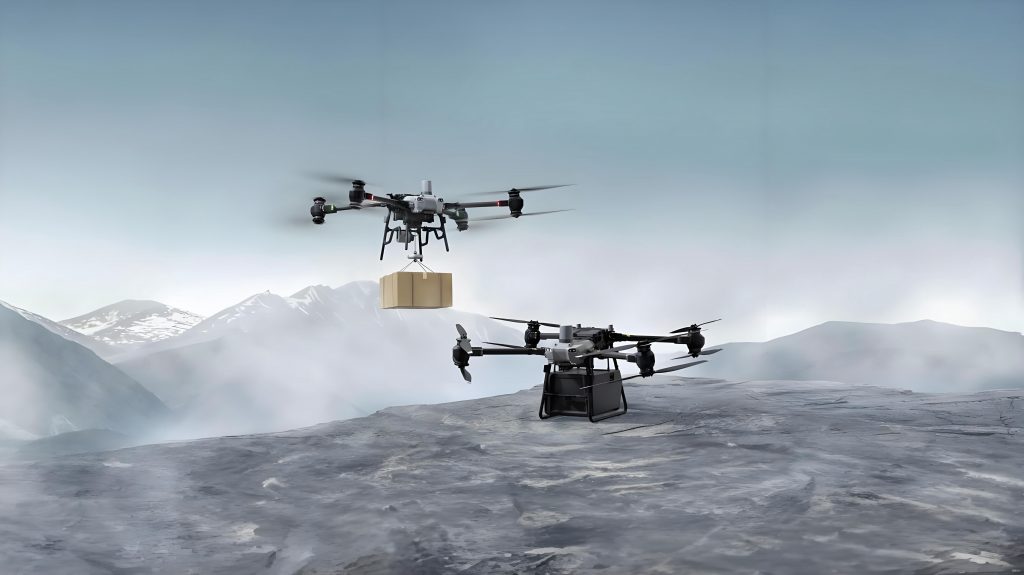
The proliferation of civil drones has underscored the urgency of addressing safety issues. Regulatory measures, such as flight management regulations and experimental base initiatives, have been introduced to govern the industry. Nonetheless, the complexity of civil drone operations necessitates a deeper understanding of risk factors. Safety risks in civil drones can be broadly categorized into external and internal factors. External factors include environmental conditions and human interventions, while internal factors stem from design flaws and functional failures. For instance, sudden wind gusts or operator errors can lead to accidents, but these are often unpredictable and challenging to control through testing alone. In contrast, internal factors related to the civil drone’s design and performance can be systematically evaluated and improved. This analysis will delve into the key safety technical indicators that are measurable and critical for ensuring the reliability of civil drones. By employing检验试验 techniques, we can verify these indicators and reduce安全隐患, thereby fostering a safer ecosystem for civil drone applications.
Safety Risk Identification for Civil Drones
Identifying safety risks for civil drones involves assessing the likelihood, causes, and severity of potential losses, including harm to human health, property damage, environmental impact, and social consequences. Based on incident analyses, risks can be classified into external and internal factors. External factors, such as flight environment and human操控, are often variable and difficult to mitigate entirely through testing. For example, meteorological conditions like wind shear or obstacles in the flight path can cause accidents, but these can be partially managed through operational guidelines. Human factors, including unauthorized modifications or malicious control, may be addressed by incorporating features like electronic fences and remote identification in civil drone systems. However, internal factors related to the civil drone’s functionality are more amenable to control via design and testing. Any component failure, such as in motors, batteries, or control systems, can lead to severe incidents like crashes or fires. The table below summarizes the primary risk factors, types, and causes for civil drones, providing a foundation for further analysis.
| Risk Factor Category | Risk Type | Potential Accidents | Cause Identification |
|---|---|---|---|
| Internal Factors | Flight Control Risks | Attitude loss, free-fall impacts, collisions, injuries from propellers, ground fires, loss of control, stalling, disconnection, positioning failure, severe route deviation | Design flaws in flight algorithms, sensor malfunctions, motor failures, battery issues, data link disruptions, electromagnetic compatibility problems, ground station network failures |
| Structural Risks | Component detachment, blade loosening, overload conditions | Poor assembly, material fatigue, exceeding payload limits | |
| Operational Risks | Interference with ground radio, disruption of aviation order, entry into no-fly zones, use in terrorist activities, privacy invasion, noise pollution | Inadequate shielding, lack of encryption, unauthorized access points | |
| Environmental Impact Risks | Electromagnetic radiation, battery leakage | Non-compliance with frequency regulations, poor battery management | |
| External Factors | Flight Environment Risks | Wind gusts, temperature and humidity effects, rain, snow, fog, dust, obstacles, radio interference, signal blockage | Unpredictable weather, physical obstructions, external electromagnetic sources |
| Human and Control Risks | Pre-flight neglect, lack of training, unlicensed operation, fatigue, malicious intent, illegal modifications, poor route planning | Insufficient regulations, operator error, intentional misuse |
From this table, it is evident that internal factors pose a direct threat to the integrity of civil drones and can be addressed through targeted technical indicators. For instance, the probability of an accident due to internal failures can be modeled using risk assessment formulas. Let $$ P_{\text{accident}} = P_{\text{failure}} \times P_{\text{exposure}} $$ where $$ P_{\text{failure}} $$ represents the likelihood of a component malfunction in a civil drone, and $$ P_{\text{exposure}} $$ denotes the probability of that failure leading to an accident. By focusing on reducing $$ P_{\text{failure}} $$ through design improvements, we can enhance the overall safety of civil drones. External factors, while significant, are less controllable and often require operational measures rather than pure technical fixes. Therefore, the subsequent analysis will emphasize internal key indicators that can be validated through检验试验 methods.
Analysis of Key Safety Technical Indicators for Civil Drones
The safety of civil drones hinges on a set of measurable technical indicators that address both performance and reliability. These indicators are derived from industry standards, flight performance requirements, and检验试验 techniques. By ensuring that civil drones meet these criteria, we can mitigate many of the identified risks. Below, I discuss eight key indicators in detail, incorporating mathematical models and tables to illustrate their importance. Each indicator is essential for the safe operation of civil drones and should be integral to certification processes.
1. Flight Parameter Limits and Accuracy
To prevent accidents such as structural disintegration, loss of control, or stalling, civil drones must adhere to defined flight parameter limits. These include maximum flight altitude, speed, ascent/descent rates, and minimum turn radius. Accuracy in parameters like position holding and electronic fence boundaries is equally critical for effective control. For example, the maximum allowable speed $$ v_{\text{max}} $$ can be derived from aerodynamic stability models: $$ v_{\text{max}} = \sqrt{\frac{2 \cdot L}{\rho \cdot C_L \cdot A}} $$ where $$ L $$ is the lift force, $$ \rho $$ is air density, $$ C_L $$ is the lift coefficient, and $$ A $$ is the wing area for fixed-wing civil drones. Similarly, position accuracy $$ \sigma_{\text{pos}} $$ can be modeled using Gaussian error distributions: $$ \sigma_{\text{pos}} = \sqrt{\sigma_{\text{GNSS}}^2 + \sigma_{\text{sensor}}^2} $$ where $$ \sigma_{\text{GNSS}} $$ and $$ \sigma_{\text{sensor}} $$ represent errors from global navigation systems and onboard sensors, respectively. The table below summarizes key flight parameters and their acceptable ranges for typical civil drones.
| Parameter | Description | Typical Range | Impact on Safety |
|---|---|---|---|
| Maximum Altitude | Highest allowable flight level | Up to 500 m | Prevents airspace conflicts and loss of control due to thin air |
| Maximum Speed | Top horizontal velocity | 20-30 m/s | Reduces risk of collisions and structural stress |
| Ascent/Descent Rate | Vertical speed limits | ±5 m/s | Avoids sudden maneuvers that could lead to stalls |
| Turn Radius | Minimum curvature in turns | 10-20 m | Ensures stability during directional changes |
| Position Accuracy | Deviation from intended path | < 1 m | Critical for obstacle avoidance and precise operations |
These parameters must be rigorously tested through flight trials and simulations to ensure that civil drones operate within safe bounds. By validating these limits, we can reduce the incidence of accidents caused by performance exceedances.
2. Emergency Response Capability During Flight
Civil drones often face emergencies such as control link loss, power depletion, or navigation failures. Without adequate response mechanisms, these situations can result in crashes. Key capabilities include automated actions like hovering, circling, parachute deployment, return-to-home, and safe landing. The effectiveness of these responses can be quantified using probability models. For instance, the probability of successful emergency landing $$ P_{\text{land}} $$ can be expressed as: $$ P_{\text{land}} = P_{\text{detect}} \times P_{\text{execute}} $$ where $$ P_{\text{detect}} $$ is the probability of detecting the emergency, and $$ P_{\text{execute}} $$ is the probability of correctly executing the landing sequence. Testing these capabilities involves simulating fault conditions and measuring response times and success rates. This indicator is vital for enhancing the resilience of civil drones in unpredictable scenarios.
3. Flight Dynamic Data Reporting Capability
To improve airspace management and security, civil drones should possess the ability to actively report identification and flight data via remote identification systems. This “cooperative” approach allows for monitoring and reduces safety threats. The reliability of data transmission can be assessed using communication models, such as the packet success rate $$ R_{\text{success}} = 1 – \left( \frac{\lambda}{\mu} \right)^k $$ where $$ \lambda $$ is the arrival rate of messages, $$ \mu $$ is the service rate, and $$ k $$ is the number of retries. Ensuring that civil drones can broadcast accurate information, including location and status, is a key indicator for regulatory compliance and public safety.
4. Perception and Avoidance Capability
In urban environments, civil drones must detect and avoid obstacles like buildings, vehicles, and people. This capability involves sensors (e.g., LiDAR, cameras) and algorithms for real-time decision-making. The avoidance performance can be modeled using reaction time $$ t_{\text{react}} $$ and minimum separation distance $$ d_{\text{min}} $$: $$ d_{\text{min}} = v \cdot t_{\text{react}} + \frac{a \cdot t_{\text{react}}^2}{2} $$ where $$ v $$ is the relative velocity and $$ a $$ is the deceleration. Testing this indicator requires obstacle-rich scenarios to validate the civil drone’s ability to halt, divert, or land safely. This is crucial for preventing collisions and ensuring public trust in civil drone operations.
5. Data Link Protection
The data link is a core component of civil drones, and its security is paramount to prevent unauthorized access and cyber threats. Indicators include authentication protocols and encryption mechanisms. For example, the strength of encryption can be evaluated using key length and algorithm complexity. A simple model for security strength $$ S $$ might be: $$ S = \log_2(L) \cdot c $$ where $$ L $$ is the key length and $$ c $$ is a constant based on the algorithm. Ensuring that civil drones use compliant frequency bands and robust cryptographic methods protects against hijacking and data breaches, thereby safeguarding operations.
6. Lithium Battery Safety
Lithium batteries power most civil drones, but their instability can lead to fires or explosions. Safety indicators include thermal stability, short-circuit protection, and leak prevention. The risk of battery failure $$ R_{\text{battery}} $$ can be modeled as: $$ R_{\text{battery}} = \int_{0}^{T} \lambda(t) \, dt $$ where $$ \lambda(t) $$ is the failure rate over time $$ T $$. Testing involves charge-discharge cycles, impact tests, and environmental exposure to verify that civil drone batteries remain safe under various conditions. This indicator directly addresses a common cause of accidents in civil drones.
7. Electronic Fence Functionality
Electronic fences define geofenced areas where civil drones are restricted from flying, such as near airports or sensitive sites. This functionality relies on pre-loaded spatial data and real-time position checks. The accuracy of geofencing can be represented by the false positive rate $$ FPR = \frac{\text{FP}}{\text{FP} + \text{TN}} $$ where FP is false positives (incorrectly blocking safe areas) and TN is true negatives. Validating this indicator ensures that civil drones automatically comply with no-fly zones, reducing the risk of unauthorized incursions.
8. Electromagnetic Compatibility
Civil drones must operate without causing or succumbing to electromagnetic interference. This involves emissions and immunity testing. The interference level $$ I $$ can be quantified as: $$ I = P_{\text{emit}} – L_{\text{path}} $$ where $$ P_{\text{emit}} $$ is the emitted power and $$ L_{\text{path}} $$ is the path loss. Ensuring that civil drones meet electromagnetic compatibility standards prevents malfunctions due to external sources and protects other electronic devices.
The integration of these key indicators into the design and testing of civil drones is essential for comprehensive safety. The table below provides a consolidated view of these indicators and their testing methods.
| Indicator | Description | Testing Approach |
|---|---|---|
| Flight Parameter Limits | Restrictions on altitude, speed, and maneuverability | Flight tests, simulation software |
| Emergency Response | Automated actions during failures | Fault injection, real-world scenarios |
| Data Reporting | Remote identification and monitoring | Communication range tests, data integrity checks |
| Perception and Avoidance | Obstacle detection and evasion | Sensor validation, obstacle course trials |
| Data Link Protection | Security against unauthorized access | Cryptanalysis, penetration testing |
| Battery Safety | Stability and protection mechanisms | Thermal cycling, short-circuit tests |
| Electronic Fence | Geofencing for restricted areas | GPS accuracy tests, boundary validation |
| Electromagnetic Compatibility | Resistance to interference | Emissions testing, immunity assays |
By focusing on these indicators, stakeholders can develop a standardized framework for civil drone safety, facilitating widespread adoption and trust.
Conclusion
In summary, the safety of civil drones is a multifaceted issue that requires a systematic approach to risk identification and indicator analysis. From my perspective, emphasizing internal technical indicators through检验试验 offers a practical path to enhancing the reliability and security of civil drones. The key indicators discussed—ranging from flight parameter accuracy to electromagnetic compatibility—provide a foundation for designing, manufacturing, and operating civil drones safely. As the industry evolves, continuous research into these areas will be crucial. By adopting rigorous testing protocols and updating standards based on empirical data, we can ensure that civil drones contribute positively to society while minimizing risks. This analysis underscores the importance of a proactive stance in civil drone safety, ultimately supporting sustainable growth in this dynamic field.