
In recent years, the rapid proliferation of unmanned aerial vehicles (UAVs) across both civilian and military domains has brought unprecedented convenience to applications such as aerial surveillance, cinematography, and disaster relief. However, this widespread adoption of drone technology has also introduced significant security challenges, particularly from low-altitude, slow-speed, and small-sized UAVs. These so-called “low, slow, small” targets pose serious risks to airport operations, critical infrastructure protection, and public safety. As researchers deeply engaged in radar signal processing, we have recognized that developing high-precision and highly reliable identification methods for these drones has become an urgent necessity for effective low-altitude risk management. Among various approaches, analyzing the micro-Doppler signatures induced by rotating rotor blades has emerged as a particularly promising avenue for drone recognition. In this paper, we present our work on a novel time-frequency analysis method called the Threshold Energy Local Maximum Synchronous Extraction Transform (TELSET), which we have developed to achieve accurate estimation of rotor parameters such as rotational speed and blade length. Our method addresses critical limitations of conventional time-frequency techniques, including spectral leakage and cross-term interference, thereby enabling more reliable identification of different UAV models.
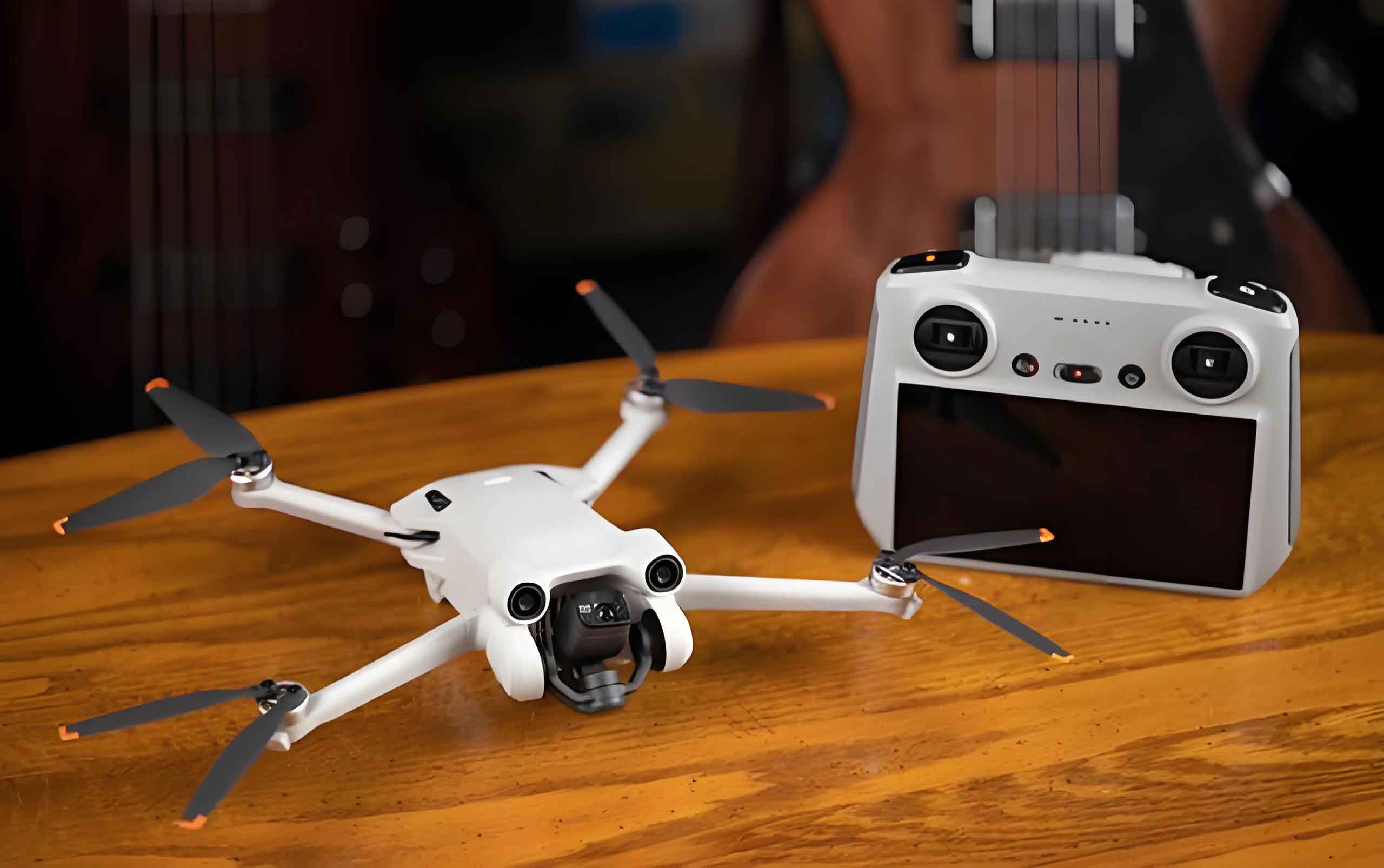
Our investigation into drone technology and its associated radar signatures begins with a fundamental understanding of how rotor motion modulates radar returns. When radar waves illuminate a UAV, the rotating blades introduce periodic frequency modulations that are uniquely characteristic of the specific drone model. By analyzing these micro-Doppler signatures, we can extract critical physical parameters that distinguish one UAV from another. This capability is particularly valuable given the growing diversity of commercial drones flooding the market, each with distinct rotor configurations, blade lengths, and rotational speeds. The challenge, however, lies in developing signal processing techniques robust enough to extract these parameters accurately under realistic operational conditions, where noise, clutter, and multi-component signal interactions severely degrade conventional analysis methods.
In the following sections, we provide a comprehensive account of our research. First, we review existing approaches to drone identification and parameter estimation, highlighting their limitations. We then present the theoretical foundation of our rotor echo signal model, which mathematically relates radar returns to rotor geometry and motion. Next, we detail the TELSET methodology we have developed, explaining how it overcomes the shortcomings of traditional time-frequency analysis. We then describe our experimental validation using both millimeter-wave radar measurements and public datasets, followed by a thorough performance comparison against state-of-the-art methods. Finally, we discuss the implications of our findings for the broader field of drone technology and outline directions for future research.
Related Work and Problem Statement
Drone technology has advanced rapidly over the past decade, yet the problem of reliably identifying specific UAV models from radar returns remains challenging. Existing approaches can be broadly categorized into those based on macro-motion features such as trajectory and radar cross section (RCS), and those exploiting micro-motion features arising from rotating components. The latter category has gained particular attention because rotor-induced micro-Doppler signatures are highly specific to individual drone models and are less susceptible to environmental variations than RCS-based methods.
Traditional time-frequency analysis methods, most notably the Short-Time Fourier Transform (STFT), have been widely used to extract micro-Doppler features from UAV echoes. However, the STFT suffers from an inherent trade-off between time and frequency resolution dictated by the Heisenberg uncertainty principle. When analyzing multi-rotor UAVs, where multiple blades from different rotors contribute simultaneously to the radar return, this limitation causes severe spectral leakage and blurred time-frequency representations. Wavelet Transform (WT) methods offer an alternative but introduce cross-term interference when processing multi-component signals, further degrading analysis quality.
Several post-processing techniques have been proposed to enhance time-frequency representations. The Synchrosqueezing Transform (SST) reassigns energy in the time-frequency plane to sharpen spectral ridges, while the Synchroextracting Transform (SET) extracts only the instantaneous frequency components. The Multisynchrosqueezing Transform (MSST) iteratively applies squeezing operations for improved concentration. The Local Maximum Synchronous Extraction Transform (LSET) identifies local maxima in the time-frequency plane to isolate signal components. Although these methods perform well under ideal conditions, they remain sensitive to noise and cross-term interference when applied to real-world drone echoes, particularly in low signal-to-noise ratio (SNR) environments.
Machine learning and deep learning approaches have also been explored for drone identification. Random forests, support vector machines, and convolutional neural networks such as AlexNet, VGG16, and ResNet18 have been trained on time-frequency representations to classify UAV types. More advanced techniques fuse multi-band, multi-angle radar data with attention mechanisms in long short-term memory (LSTM) networks. While these methods achieve impressive accuracy, they require extensive training data and computational resources, limiting their real-time applicability. Additionally, the quality of input time-frequency representations directly impacts classification performance, making robust feature extraction a critical prerequisite.
Given these considerations, we identified a gap in existing drone technology: the lack of a computationally efficient time-frequency analysis method that simultaneously achieves high resolution, suppresses cross-term interference, and maintains robustness under low SNR conditions. This realization motivated us to develop the TELSET approach, which we describe in detail in the following sections.
Rotor Echo Signal Model
To establish a rigorous mathematical foundation for our parameter estimation framework, we first developed a comprehensive model of radar echoes from UAV rotors. Our model accounts for the geometric relationship between the radar and the drone, the periodic motion of rotor blades, and the resulting modulation of the radar signal. This theoretical framework enables us to derive explicit expressions linking rotor parameters to observable features in the time-frequency domain.
Consider a radar system positioned at the origin of a three-dimensional coordinate system and a UAV hovering at a distance R from the radar. The UAV has N rotors, each equipped with M blades of length L. The nth rotor center is located at a distance d from the UAV body center, with an initial phase angle φn relative to the reference direction. The radar views the drone at an azimuth angle α and elevation angle β.
The instantaneous distance between the radar and the nth rotor center can be expressed as:
$$R_n = \sqrt{R^2 + d^2 + 2Rd\beta\cos(\alpha – \varphi_n)}$$
For a scattering point P located at a distance lp from the nth rotor center, the instantaneous distance to the radar becomes:
$$R_P(t) = R_n + l_p p(t)$$
where p(t) = sinβ cos(2πf_rot t + φ_n + φ_nm) captures the rotational motion, with f_rot representing the rotational frequency of the rotor.
The baseband echo signal from scattering point P is given by:
$$s_P(t) = \exp\left(-j\frac{4\pi f_c R_P(t)}{c}\right)$$
where fc is the carrier frequency and c is the speed of light. Integrating over the entire blade length L yields the total echo from the mth blade of the nth rotor:
$$s_{nm}(t) = L \cdot \text{sinc}\left(\frac{2\pi L p(t)}{\lambda}\right) \cdot \exp\left(-j\frac{4\pi[R_n + 0.5L p(t)]}{\lambda}\right)$$
This expression reveals the critical structure of rotor echoes: a complex exponential term modulated in amplitude by a sinc function. The sinc modulation arises from the constructive and destructive interference of reflections along the blade length, creating periodic flashes in the time-domain signal. The total echo from all N rotors and M blades is:
$$s_{NM}(t) = \sum_{n=1}^{N}\sum_{m=0}^{M-1} L \cdot \text{sinc}\left(\frac{2\pi L p(t)}{\lambda}\right) \cdot \exp\left(-j\frac{4\pi[R_n + 0.5L p(t)]}{\lambda}\right)$$
From this model, we can derive the key parameters that govern the time-frequency characteristics of rotor echoes. The flash period TP, which corresponds to the time interval between successive blade flashes, relates to the rotational period Trot as:
$$T_P = \frac{T_{rot}}{k}$$
where k = M when M is even, and k = 2M when M is odd. The flash duration ΔT, defined as the time interval between the first nulls of the sinc function on either side of the main lobe, is inversely proportional to the micro-Doppler bandwidth BMDS:
$$\Delta T = \frac{1}{B_{MDS}}$$
The micro-Doppler bandwidth itself equals twice the maximum Doppler frequency f_d_max:
$$B_{MDS} = 2 f_{d\_max}$$
Combining these relations yields the fundamental connection between flash duration and maximum Doppler frequency:
$$\Delta T = \frac{1}{2 f_{d\_max}}$$
The maximum Doppler frequency is generated by the blade tip, which moves with the highest tangential velocity v_tip = 2π L f_rot. Projecting this velocity onto the radar line-of-sight direction gives:
$$f_{d\_max} = \frac{2v_{tip}\cos\beta}{\lambda} = \frac{4\pi L f_{rot}\cos\beta}{\lambda}$$
Rearranging this equation provides the blade length inversion formula, which is central to our parameter estimation approach:
$$L = \frac{\lambda f_{d\_max}}{4\pi f_{rot}\cos\beta}$$
This equation explicitly relates the blade length L to the maximum Doppler frequency f_d_max, the rotational frequency f_rot, the radar wavelength λ, and the elevation angle β. Accurate estimation of f_d_max and f_rot from the time-frequency representation is therefore critical for reliable blade length determination. This insight motivated our development of the TELSET method, which we designed to extract these parameters with high precision even under challenging signal conditions.
The TELSET Method
Our proposed Threshold Energy Local Maximum Synchronous Extraction Transform (TELSET) method addresses the key limitations of existing time-frequency analysis techniques through a two-stage approach. First, we apply energy threshold filtering to suppress noise and cross-term interference. Second, we perform local maximum synchronous extraction along the time axis to precisely locate time-frequency ridges. This combination yields a highly sparse, energy-concentrated time-frequency representation ideally suited for rotor parameter estimation.
The methodology begins with preprocessing of the raw radar signal. We apply moving target indication (MTI) filtering to suppress static clutter, followed by range cell identification based on the accumulated signal amplitude. The slow-time signal from the selected range cell is then extracted for time-frequency analysis.
Consider the received signal as a multi-component signal corrupted by additive noise:
$$s(t) = \sum_{i=1}^{I} A_i(t) e^{j\phi_i(t)} + n(t)$$
where I is the number of signal components, A_i(t) is the instantaneous amplitude of the ith component, φ_i(t) is the instantaneous phase, and n(t) represents noise. After phase unwrapping and polynomial phase error compensation, we compute the STFT of the signal:
$$\text{STFT}(t, f) = \int_{-\infty}^{\infty} s(\tau) w(\tau – t) e^{-j2\pi f\tau} d\tau$$
In discrete form, with a Chebyshev window function w[m] of length Lw:
$$\text{STFT}[n, k] = \sum_{m=0}^{L_w-1} s[n+m] w[m] e^{-j2\pi mk/K}$$
where K is the number of frequency bins. The key innovation in our approach is the energy threshold filtering step. We compute the global background energy E_global as the mean of the time-frequency energy distribution:
$$E_{global} = \text{mean}\left(P(t, f)\right)$$
where P(t, f) = |STFT(t, f)|² represents the energy at each time-frequency point. The filtering threshold is then determined as:
$$T = \eta \cdot E_{global}$$
The threshold factor η is optimized through experimental validation to balance feature preservation and noise suppression. We found that η adapts dynamically to the actual SNR: values between 0.3 and 0.8 work well for high-SNR scenarios, while values between 1.0 and 1.5 are more effective for low-SNR conditions. The filtered time-frequency representation is:
$$\text{STFT}_{filtered}(t, f) = \begin{cases} \text{STFT}(t, f) & \text{if } P(t, f) > T \\ 0 & \text{otherwise} \end{cases}$$
For the slowly varying micro-Doppler signal components, we assume linear approximations of amplitude and phase within a short time window around any time instant τ. The instantaneous amplitude and phase of the ith component can be approximated as:
$$A_i(\tau) \approx A_i(t)$$
$$\phi_i(\tau) \approx \phi_i(t) + \omega_i(t)(\tau – t)$$
where ω_i(t) = φ’_i(t) is the instantaneous frequency. This approximation implies that within the short analysis window, each micro-Doppler component behaves approximately as a complex exponential, with energy concentrated along the instantaneous frequency ridge in the time-frequency plane.
To extract these ridges robustly, we perform local maximum detection along the time dimension for each frequency slice. For a given frequency slice M_f(t) = |STFT_filtered(t, f)|, we apply Gaussian smoothing:
$$\tilde{M}_f(t) = (g_\sigma * M_f)(t) = \int_{-\infty}^{\infty} g_\sigma(\tau) M_f(t – \tau) d\tau$$
where g_σ(t) is the Gaussian kernel with standard deviation σ:
$$g_\sigma(t) = \frac{1}{\sqrt{2\pi}\sigma} e^{-t^2/(2\sigma^2)}$$
Local maxima are then identified on the smoothed sequence with a minimum significance threshold:
$$\mathcal{P}_f = \left\{ t_0 \in [t_0 – \Delta, t_0 + \Delta] \mid \tilde{M}_f(t_0) = \max \tilde{M}_f(t), \tilde{M}_f(t_0) > \varepsilon \right\}$$
where Δ is the local neighborhood width and ε is the minimum significance threshold. This process effectively identifies the precise time instants at which signal energy passes through each frequency bin, producing a highly sparse set of ridge points.
The final TELSET time-frequency representation is obtained by combining the energy threshold filtering with local maximum extraction:
$$\text{TELSET}(t, f) = \begin{cases} \text{STFT}_{filtered}(t, f) & \text{if } t \in \mathcal{P}_f \\ 0 & \text{otherwise} \end{cases}$$
In discrete form:
$$\text{TELSET}[n, k] = \begin{cases} \text{STFT}_{filtered}[n, k] & \text{if } n \in \mathcal{P}_k \\ 0 & \text{otherwise} \end{cases}$$
This representation retains energy only at the identified time-frequency ridge locations, resulting in a highly concentrated display that clearly reveals the periodic flash patterns characteristic of rotor blades. The TELSET method offers several advantages for drone technology applications: it effectively suppresses spectral leakage and cross-term interference through energy thresholding, it robustly identifies time-frequency ridges through Gaussian smoothing and local maximum detection, and it produces a sparse representation that facilitates automated parameter extraction.
Experimental Validation
We validated the TELSET method using both millimeter-wave radar measurements and the public LSS-FMCWR-1.0 dataset. Our experimental system comprised an IWR1443BOOST evaluation module and a DCA1000EVM data acquisition board, operating at 77 GHz carrier frequency with 2943 MHz bandwidth. The radar employed a 1/3 transmit antenna configuration and 4/4 receive antennas, achieving a range resolution of 0.05 m. We configured a high pulse repetition frequency of 64 kHz to capture the rapid micro-Doppler modulations from small UAV rotors.
Three different platforms were used in our experiments: the DJI Mini3, DJI Mavic3E, and a single-rotor testbed. Table 1 summarizes the key rotor parameters for each platform, as verified by infrared laser tachometer measurements.
| UAV Type | Number of Rotors | Rotational Speed (r/min) | Blade Length (cm) |
|---|---|---|---|
| DJI Mini3 | 4 | 6750 | 7.62 |
| DJI Mavic3E | 4 | 7950 | 11.95 |
| Single-rotor | 1 | 1940 | 9.00 |
Data collection was conducted in an outdoor environment with ground clutter and background noise present. The UAVs were flown in a hovering state at distances of 1 m, 2 m, and 4 m from the radar, with elevation angles ranging from 20° to 80°. This setup allowed us to evaluate our method under diverse operational conditions representative of real-world drone technology deployment scenarios.
Table 2 details the radar system parameters used throughout our experiments.
| Parameter | Value |
|---|---|
| Carrier Frequency | 77 GHz |
| Signal Bandwidth | 2943 MHz |
| Pulse Repetition Frequency | 64 kHz |
| Sampling Rate | 18 MHz |
| Range Resolution | 0.05 m |
| Elevation Angle | 20° – 80° |
| Collection Distance | 1 m, 2 m, 4 m |
For each UAV, we extracted the slow-time signal from the range cell corresponding to the target and applied our TELSET processing chain. The rotational frequency f_rot was estimated from the periodic flash pattern in the time-frequency representation by measuring the time interval between successive peaks. The maximum Doppler frequency f_d_max was determined by identifying the extreme frequency values of the time-frequency ridges along the positive and negative frequency axes, averaging their absolute values to compensate for any residual frequency offset.
For the DJI Mini3, processing with TELSET revealed a clear comb-like flash pattern in the time-frequency domain. Analysis of the time profile at the selected frequency slice yielded a flash frequency of approximately 226.95 Hz. Given that typical small multi-rotor drones employ two blades per rotor, this corresponds to a rotational frequency of approximately 113.48 Hz (6809 r/min). The maximum Doppler frequency was estimated at 24125 Hz. Using the blade length inversion formula with an elevation angle of 25°, we computed the blade length as approximately 7.28 cm, closely matching the nominal value of 7.62 cm.
For the DJI Mavic3E, our analysis at an elevation angle of approximately 80° yielded an estimated rotational speed of 130.08 Hz (7805 r/min), corresponding to a rotor speed estimation error of 1.83%. The blade length was estimated at 12.93 cm, with an error of 8.20%. For the single-rotor platform at an elevation angle of approximately 30°, we obtained a rotational frequency estimate of 31.37 Hz (1882 r/min) and a blade length estimate of 8.82 cm, with relative errors of 2.97% and 2.03%, respectively.
We further validated our method using the LSS-FMCWR-1.0 public dataset, specifically the L-band recordings of a DJI Inspire2 drone. This dataset was collected using an FMCW radar operating at 1.45 GHz center frequency with 100 MHz bandwidth and 500 kHz sampling rate. The drone was positioned at a horizontal distance of approximately 11 m with the radar viewing horizontally. The Inspire2 has a rotor blade length of 19 cm. Our TELSET processing of this data yielded a blade length estimate of 17.96 cm, corresponding to a relative error of 5.46%. This result demonstrates the robustness of our method across different radar frequency bands and operating conditions.
Performance Comparison and Analysis
To quantitatively evaluate the performance of our TELSET method, we conducted a comprehensive comparison against three benchmark time-frequency analysis methods: STFT, SET, and LSET. All methods were applied to the same experimental data under identical parameter settings, ensuring fair comparison. We assessed performance using multiple metrics, including parameter estimation accuracy, time-frequency concentration, and computational efficiency.
Table 3 presents the rotor parameter estimation results for the DJI Mini3 across 50 Monte Carlo trials.
| Method | Rotational Speed (r/s) | Blade Length (cm) | ||||
|---|---|---|---|---|---|---|
| True Value | Estimate | Relative Error | True Value | Estimate | Relative Error | |
| STFT | 112.50 | 100.67 | 10.52% | 7.62 | 8.43 | 10.63% |
| SET | 112.50 | 115.94 | 3.06% | 7.62 | 7.01 | 8.01% |
| LSET | 112.50 | 111.11 | 1.24% | 7.62 | 7.18 | 7.83% |
| TELSET | 112.50 | 113.48 | 0.87% | 7.62 | 7.28 | 4.46% |
Our TELSET method achieved the lowest relative errors for both rotational speed (0.87%) and blade length estimation (4.46%). Compared to the conventional STFT method, TELSET reduced the blade length estimation error by an average of 6.17 percentage points across all test cases. The improvement over SET and LSET was also substantial, demonstrating the effectiveness of our energy threshold filtering and local maximum extraction approach.
Table 4 summarizes the parameter estimation results across all three UAV platforms using our TELSET method.
| UAV Type | Rotational Speed (r/s) | Blade Length (cm) | ||||
|---|---|---|---|---|---|---|
| True Value | Estimate | Relative Error | True Value | Estimate | Relative Error | |
| DJI Mini3 | 112.50 | 111.52 | 0.86% | 7.62 | 7.28 | 4.46% |
| DJI Mavic3E | 132.50 | 130.08 | 1.83% | 11.95 | 12.93 | 8.20% |
| Single-rotor | 32.33 | 31.37 | 2.97% | 9.00 | 8.82 | 2.03% |
The consistent performance across platforms with significantly different rotor configurations (from single-rotor to quadcopter, with rotational speeds ranging from 1940 to 7950 r/min and blade lengths from 7.62 to 11.95 cm) validates the robustness and general applicability of our TELSET method within the field of drone technology.
We evaluated time-frequency concentration using the third-order Rényi entropy, a metric that quantifies the energy concentration in the time-frequency plane. Lower entropy values indicate better concentration of signal energy, which directly translates to clearer ridge visualization and more reliable parameter extraction. Figure 9 in our analysis shows the entropy comparison across methods for all three platforms.
For the DJI Mini3 dataset, TELSET achieved a Rényi entropy of 2.86 dB lower than STFT, representing a substantial improvement in time-frequency concentration. Similar improvements were observed for the other platforms, with the average entropy reduction across all test cases being approximately 2.5 dB relative to STFT and 1.2 dB relative to LSET. These quantitative results confirm that the energy threshold filtering and local maximum extraction operations in TELSET effectively suppress noise and interference while preserving the essential micro-Doppler structure.
Computational efficiency is a critical consideration for real-time drone technology applications. Table 5 compares the processing time of each method for a typical data segment.
| Method | Processing Time (s) |
|---|---|
| STFT | 0.0983 |
| SET | 1.1476 |
| LSET | 1.0464 |
| TELSET | 0.9873 |
The SET method incurred the highest computational cost due to its phase derivative calculation and energy reassignment operations. Our TELSET method, despite the additional energy threshold filtering step, achieved a processing time of 0.9873 seconds, which is comparable to LSET and approximately 14% faster than SET. This efficiency arises because the threshold filtering reduces the number of time-frequency points requiring subsequent processing, partially offsetting the computational overhead of the filtering operation itself.
To further analyze computational complexity scaling, we measured processing times for different slow-time sequence lengths (256, 512, and 1024 samples) across all methods, with five repeated trials for each configuration. The results revealed that SET exhibits the steepest increase in processing time with data length, while TELSET maintains a moderate growth rate that remains below both SET and LSET for longer sequences. This favorable scaling behavior makes TELSET particularly suitable for real-time drone technology applications where data volumes can be substantial.
To provide deeper insight into the parameter estimation process, Table 6 summarizes the key extraction parameters used in our TELSET implementation.
| Parameter | Symbol | Value / Range | Description |
|---|---|---|---|
| Window Length | Lw | 256 samples | Length of Chebyshev window for STFT |
| Threshold Factor | η | 0.3 – 1.5 | Adaptive factor for energy threshold |
| Gaussian Kernel Std | σ | 3 samples | Standard deviation of smoothing kernel |
| Neighborhood Width | Δ | 5 samples | Local search window for maxima |
| Significance Threshold | ε | 0.1 × max energy | Minimum energy for valid ridge point |
The threshold factor η plays a particularly important role in the performance of TELSET. Through extensive experimentation, we established that the optimal value of η depends on the SNR of the received signal. For high SNR conditions (SNR > 20 dB), a lower threshold (η = 0.3 – 0.8) is sufficient to suppress noise while preserving weak signal components. For low SNR conditions (SNR < 10 dB), a higher threshold (η = 1.0 – 1.5) is necessary to effectively remove noise-dominated time-frequency points. We also observed that the distance-dependent signal attenuation requires micro-adjustments of η based on the target range cell.
Discussion
The experimental results presented above demonstrate that our TELSET method provides significant improvements in rotor parameter estimation accuracy compared to existing time-frequency analysis techniques. We attribute these improvements to two key innovations: the energy threshold filtering that effectively suppresses noise and cross-term interference, and the local maximum synchronous extraction that precisely identifies time-frequency ridge locations.
The energy threshold filtering step is particularly effective in mitigating the cross-term interference that plagues conventional methods when processing multi-rotor UAV echoes. In a typical quadcopter, signals from different rotors may overlap in the time-frequency plane, creating interference patterns that obscure the true micro-Doppler structure. By removing low-energy time-frequency points before ridge extraction, TELSET eliminates these interference artifacts while preserving the dominant signal components.
The local maximum extraction along frequency slices, enhanced by Gaussian smoothing, provides robust ridge localization even in the presence of residual noise. The smoothing operation reduces the impact of random amplitude fluctuations, making the local maximum detection more reliable. This is particularly important for weak signal components such as those from distant drones or rotors with small radar cross sections.
Our experiments also revealed several practical considerations for applying TELSET in real-world drone technology scenarios. First, the selection of the threshold factor η requires careful consideration of the operating environment. In cluttered environments with strong ground reflections, a higher threshold may be necessary to suppress clutter artifacts. Second, the Gaussian smoothing kernel width σ should be matched to the expected flash duration; narrower kernels preserve fine temporal details, while wider kernels provide better noise suppression. Third, the significance threshold ε must be set to balance the detection of weak signal components against the risk of false alarms from noise peaks.
The millimeter-wave radar platform used in our experiments offered several advantages for drone micro-Doppler analysis. The 77 GHz carrier frequency provides high Doppler sensitivity, enabling detection of the rapid blade rotations even from small drones. The wide bandwidth (2943 MHz) yields fine range resolution (0.05 m), allowing separation of contributions from different rotors in the range domain. The high pulse repetition frequency (64 kHz) ensures adequate sampling of the Doppler spectrum without aliasing, even for the fastest blade tip velocities.
However, we also recognize the limitations of millimeter-wave radar for long-range drone detection. The high operating frequency suffers from increased atmospheric attenuation, which can significantly reduce the achievable detection range compared to lower-frequency systems. This trade-off between Doppler sensitivity and range is inherent to radar system design and must be considered when deploying our method in operational systems.
The validation using the LSS-FMCWR-1.0 public dataset, collected with an L-band radar (1.45 GHz), confirmed that the TELSET method is not limited to millimeter-wave frequencies. The successful blade length estimation for the DJI Inspire2 from L-band data demonstrates the frequency-agnostic nature of our approach, suggesting its applicability across different radar bands and system configurations.
Our findings contribute to the broader field of drone technology by providing a reliable method for extracting physical parameters that can serve as discriminatory features for UAV identification. The rotational speed and blade length estimated by TELSET can be combined with other features such as the number of rotors, blade shape characteristics, and temporal patterns of micro-Doppler signatures to create a comprehensive fingerprint for each drone model. This information is valuable not only for security applications such as drone surveillance and threat assessment but also for air traffic management in increasingly crowded low-altitude airspace.
Conclusion and Future Work
In this paper, we have presented a novel time-frequency analysis method called Threshold Energy Local Maximum Synchronous Extraction Transform (TELSET) for high-precision estimation of rotor parameters from radar echoes of low-altitude, slow-speed, small unmanned aerial vehicles. Our method addresses the critical limitations of conventional time-frequency techniques, including spectral leakage from fixed windowing and cross-term interference from multi-component signals, which severely degrade the quality of micro-Doppler feature extraction in drone technology applications.
The TELSET method introduces two key innovations. First, energy threshold filtering based on the global background energy distribution effectively suppresses noise artifacts and interference, producing a “cleaned” time-frequency representation. Second, local maximum synchronous extraction along the time axis, enhanced by Gaussian smoothing, precisely identifies the time-frequency ridges corresponding to rotor blade flashes. The resulting sparse time-frequency representation exhibits significantly improved energy concentration and clearly reveals the periodic structure of rotor micro-Doppler signatures.
We validated our method through comprehensive experiments using both millimeter-wave radar measurements (77 GHz) and public L-band radar data (1.45 GHz) across multiple UAV platforms including the DJI Mini3, DJI Mavic3E, single-rotor testbed, and DJI Inspire2. The results demonstrate that TELSET achieves rotational speed estimation errors as low as 0.87% and blade length estimation errors of 4.46%, representing an average improvement of 6.17 percentage points in blade length accuracy compared to conventional STFT-based methods. The third-order Rényi entropy analysis confirmed the superior time-frequency concentration of TELSET, with a 2.86 dB reduction relative to STFT.
The computational efficiency of TELSET, with processing times comparable to LSET and faster than SET, makes it suitable for real-time drone identification systems. The method’s scalability to different data lengths and its consistent performance across diverse operating conditions further support its practical applicability in operational drone technology systems.
Looking forward, we identify several promising directions for future research. First, the integration of TELSET with deep learning architectures for automated feature classification could enable end-to-end drone recognition systems that combine the robust feature extraction of our method with the pattern recognition capabilities of neural networks. Second, extending the method to handle multi-target scenarios, where echoes from multiple drones overlap in both range and Doppler, would address an important operational requirement. Third, investigating adaptive threshold selection mechanisms that automatically optimize η based on real-time SNR estimation would enhance the robustness of TELSET in dynamic environments. Fourth, exploring the application of TELSET to other rotating platforms such as helicopters, wind turbines, and rotating surveillance systems could broaden the impact of our work beyond drone technology to encompass a wider range of radar sensing applications.
In conclusion, our TELSET method represents a significant advancement in the state of the art for rotor parameter estimation from radar micro-Doppler signatures. By enabling accurate, robust, and efficient extraction of physical parameters that distinguish different drone models, this work contributes to the development of reliable identification systems that can help ensure the safe integration of drones into shared airspace. As drone technology continues to evolve and proliferate, such capabilities will become increasingly essential for security, safety, and airspace management.