
Infrared imaging is a cornerstone technology for countering unmanned aerial vehicles, offering critical advantages such as all-day operation, long detection ranges, and resilience in poor weather. However, the task of persistently and accurately tracking a single anti-drone target in infrared video is fraught with significant difficulties within complex operational environments. The core challenges that any effective anti-drone tracker must overcome can be summarized as follows:
- Weak and Small Targets: Infrared signatures, especially for distant drones, provide limited discriminative features. Targets appear as tiny, low-contrast blobs, making them easily lost in background clutter.
- Target Disappearance: Obstacles like buildings or trees can cause occlusion. Furthermore, rapid drone maneuvers or platform motion can cause the target to move completely out of the camera’s field of view, leading to tracking failure.
- Background Interference: Searching across the entire frame, as required for robust recovery, introduces a high volume of distracting elements. Similar objects and thermal clutter can easily mislead the tracker.
- Real-Time Requirement: Practical anti-drone defense systems demand that tracking algorithms operate at high speeds to enable timely response.
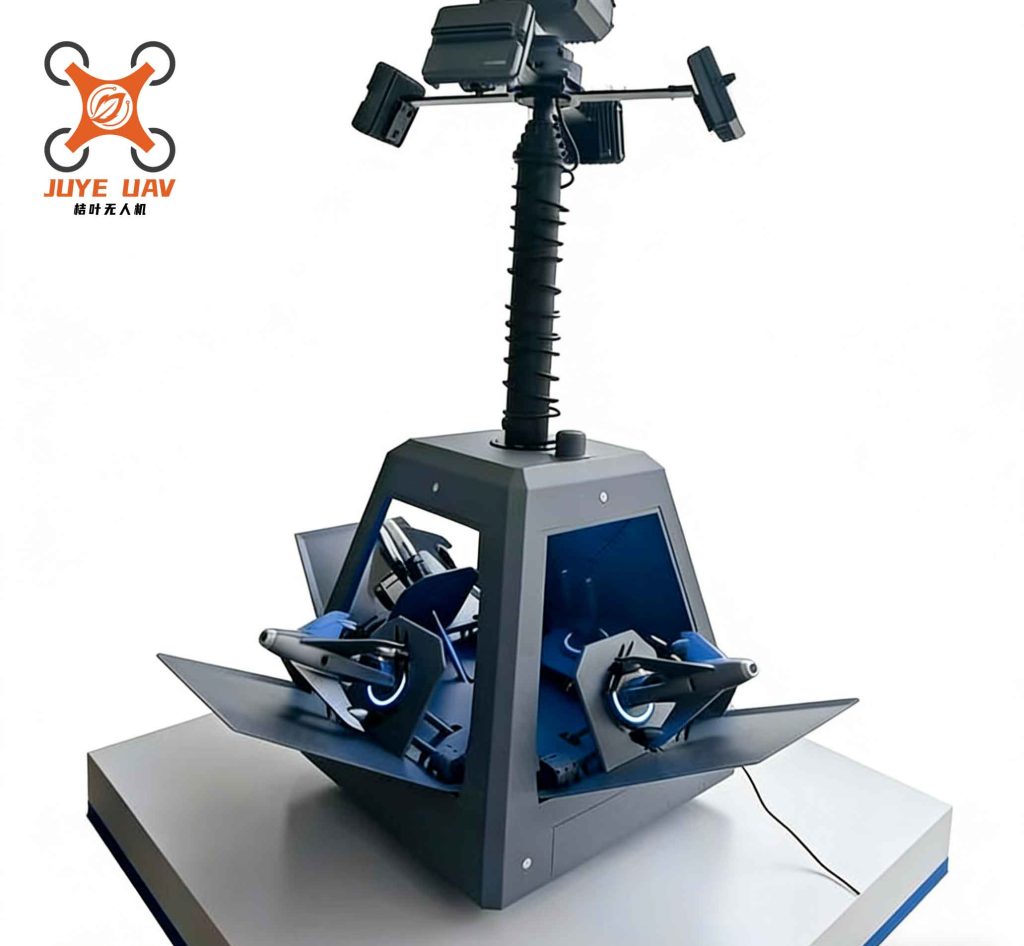
To address these intertwined challenges in the anti-drone domain, this work introduces a comprehensive tracking solution. We present a robust Spatio-Temporal Global Tracker with enhanced processing modules (STGT++), specifically engineered for high-performance anti-drone tracking. The framework integrates a novel global search model, a temporal reasoning module, an interference suppression mechanism, and a runtime optimization strategy to achieve a superior balance of accuracy, robustness, and speed.
1. The Proposed STGT++ Framework
The STGT++ framework is built upon a one-stage, anchor-free global tracker, augmented with specialized modules for temporal fusion, interference suppression, and computational acceleration. Its overall architecture is designed to holistically tackle the anti-drone tracking problem.
1.1 Core Global Tracking Model (STGT)
Diverging from complex two-stage detectors, we adopt a streamlined one-stage, anchor-free architecture for global search. This design eliminates the need for region proposal networks and anchor box hyperparameter tuning, leading to a more efficient and simpler model. The model employs a multi-level feature pyramid structure to handle the severe scale variation of anti-drone targets. Deeper layers with rich semantic information track larger targets, while shallower layers with high-resolution spatial details are crucial for tracking small, weak drones. The core process can be formalized as extracting multi-level template features $z_i$ from the first frame and search features $x^t_i$ from the current frame $t$, where $i \in \{0,1,2,3\}$ denotes the feature level.
1.2 Spatio-Temporal Feature Fusion (STFF) Module
To enhance the discriminability of the drone target against complex backgrounds, we propose a fusion module that leverages temporal context. Rather than relying solely on the spatial appearance from the current frame, this module integrates information from previous frames via a convolutional LSTM (ConvLSTM) memory network. For each feature level $i$, the module takes the current frame feature $x^t_i$, the target template $z^*_i$, and the hidden state $h^{t-1}_i$ and cell state $c^{t-1}_i$ from the previous timestep.
The ConvLSTM governs the flow of temporal information through its gating mechanism:
$$f^t_i, i^t_i, o^t_i, \tilde{c}^t_i = \mathcal{A}(\mathcal{S}(\mathcal{C}^{3\times3}_i([h^{t-1}_i, x^t_i])))$$
$$c^t_i = f^t_i \odot c^{t-1}_i + i^t_i \odot \tilde{c}^t_i$$
$$h^t_i = o^t_i \odot \tanh(c^t_i)$$
Here, $f^t_i$, $i^t_i$, $o^t_i$ are the forget, input, and output gates, $\mathcal{C}$ denotes convolution, $\mathcal{S}$ is splitting, $\mathcal{A}$ is activation, and $\odot$ is element-wise multiplication. The updated spatio-temporal feature $h^t_i$ is then fused with the target template via a depth-wise correlation operation and concatenated with its own context to produce the final discriminative feature map $\tilde{x}^t_i$:
$$\tilde{x}^t_i = \mathcal{C}^{1\times1}_i([\mathcal{C}^{7\times7}_i(z^*_i) \otimes h^t_i, h^t_i])$$
This design allows the tracker to “remember” past target appearances and background context, making it more robust against temporary occlusion or thermal crossover during anti-drone missions.
1.3 Target Enhancement and Interference Suppression (TEIS) Module
Global search inherently introduces more background interference, a major pitfall in anti-drone scenarios. To mitigate this, we propose a post-processing module that operates on the initial score map $s^t_i$ output by the tracker. The TEIS module maintains a dynamic memory of the target feature $\tilde{x}^{t-1}_i(T)$ and a set of $k-1$ top distracter features $\tilde{x}^{t-1}_i(I)$ from the previous frame.
For the current frame features $x^t_i$, it computes cosine similarity maps for both the target and the distractors:
$$cs^t_i(T)(p,q) = \frac{\tilde{x}^{t-1}_i(T) \cdot x^t_i(p,q)}{||\tilde{x}^{t-1}_i(T)|| \cdot ||x^t_i(p,q)||}$$
$$cs^t_i(I)(r,p,q) = \frac{\tilde{x}^{t-1}_i(I)(r) \cdot x^t_i(p,q)}{||\tilde{x}^{t-1}_i(I)(r)|| \cdot ||x^t_i(p,q)||}$$
where $(p,q)$ are spatial coordinates and $r$ is the distractor index. A suppression weight map $w^t_i$ is generated by subtracting the maximum distractor similarity from the target similarity and normalizing:
$$\tilde{w}^t_i(p,q) = cs^t_i(T)(p,q) – \underset{r=1\sim (k-1)}{\text{Max}}(cs^t_i(I)(r,p,q))$$
$$w^t_i = \frac{\tilde{w}^t_i – \text{Min}(\tilde{w}^t_i)}{\text{Max}(\tilde{w}^t_i) – \text{Min}(\tilde{w}^t_i)}$$
This weight map, which highlights the target and suppresses competing regions, is then multiplied element-wise with the original score map to produce a refined score $\tilde{s}^t_i = s^t_i \odot w^t_i$. The final bounding box prediction is selected from the location with the highest refined score $\tilde{s}^t_{max}$ across all levels. The target and distractor features are updated adaptively for the next frame, with an adaptive threshold $0.5\tilde{s}^1_{max}$ preventing update when the target is likely lost, a common event in challenging anti-drone sequences.
1.4 Dynamic Hierarchical Acceleration (DHA)
The multi-level design, while essential for scale invariance, creates computational redundancy during inference, as only one level typically contains the true target. To achieve real-time performance crucial for anti-drone systems, we introduce a dynamic acceleration strategy. Based on the maximum score $\tilde{s}^{t-1}_{max}$ and its corresponding level from the previous frame, DHA selectively prunes redundant levels for processing the current frame. The policy is summarized in the table below:
| Prev. Score $\tilde{s}^{t-1}_{max}$ | Prev. Level | Active Levels (Current Frame) | Approx. FLOPs Saved |
|---|---|---|---|
| $[0, 0.3)$ | Any | 0,1,2,3 (All) | 0% |
| $[0.3, 0.7]$ | 0 | 0,1 | ~60% |
| 1 | 0,1,2 | ~50% | |
| 2 | 1,2,3 | ~60% | |
| 3 | 2,3 | ~65% | |
| $(0.7, 1.0]$ | 0 | 0 | ~80% |
| 1 | 1 | ~80% | |
| 2 | 2 | ~80% | |
| 3 | 3 | ~85% |
This method significantly boosts inference speed, enabling real-time anti-drone tracking without substantial accuracy loss.
2. Experimental Validation for Anti-Drone Tracking
We evaluate the proposed STGT++ framework on the challenging Anti-UAV benchmark datasets, which consist of infrared videos containing small drones in complex environments like cities, mountains, and cloudy skies. Performance is measured using standard one-pass evaluation (OPE) metrics: Precision (P) for location accuracy and Success (AUC) for bounding box overlap.
2.1 Comparison with State-of-the-Art Trackers
STGT++ is compared against a wide range of 14 top-performing trackers, including local trackers (e.g., OSTrack, AQATrack) and trackers with re-detection capability (e.g., GlobalTrack, SiamDT). The results clearly demonstrate the superiority of our method for the anti-drone task.
| Tracker | Type | 2nd Anti-UAV Test Precision (%) / AUC (%) |
3rd Anti-UAV Val Precision (%) / AUC (%) |
|---|---|---|---|
| ATOM | Local | 72.5 / 54.1 | 58.5 / 43.1 |
| OSTrack | Local | 83.4 / 62.7 | 68.7 / 51.9 |
| GlobalTrack | Global | 89.3 / 65.5 | 74.7 / 53.0 |
| SiamDT | Global | 89.4 / 68.5 | 75.0 / 53.3 |
| STGT++ (Ours) | Global | 92.4 / 69.4 | 78.7 / 56.5 |
STGT++ consistently outperforms all other trackers, achieving the highest precision and success rates. Notably, it shows a significant margin over the baseline GlobalTrack, especially on the more difficult 3rd Anti-UAV dataset, proving its enhanced robustness in complex anti-drone scenarios. The advantage over excellent local trackers like OSTrack underscores the critical importance of a built-in global search mechanism when the drone temporarily disappears.
2.2 Ablation Studies
We conduct detailed ablation experiments to validate the contribution of each component within our anti-drone tracking framework. The baseline is a one-stage global tracker with simple spatial fusion (STGT-FF).
| Model Configuration | STFF | TEIS | DHA | 3rd Anti-UAV Val Precision (%) |
Speed (FPS) |
|---|---|---|---|---|---|
| STGT-FF (Baseline) | – | – | – | 76.6 | 30.9 |
| + ConvLSTM | ✓ | – | – | 77.2 | 21.1 |
| + Background Concatenation | ✓ | – | – | 77.4 | 20.8 |
| + TEIS Module | ✓ | ✓ | – | 78.8 | 18.7 |
| STGT++ (Full) | ✓ | ✓ | ✓ | 78.7 | 26.9 |
The results show that each component contributes positively to the final anti-drone tracking performance. The STFF module improves accuracy by incorporating temporal context. The TEIS module provides a further significant boost by suppressing background interference. Finally, the DHA module recovers the inference speed, enabling the full STGT++ system to run in real-time at 26.9 FPS while preserving the high accuracy, a vital balance for practical anti-drone deployment.
2.3 Analysis of Anti-Interference Capability
The effectiveness of the TEIS module is paramount for anti-drone operations in cluttered settings. We analyze the impact of the number of stored distractors $k$ and the method for combining distractor similarity maps. The optimal performance is achieved using the *Max* operation over $k-1=19$ distractors, as it best preserves the strongest response from any single interfering object.
| Distractor Fusion Method | $k$ (Target+Distractors) | Precision (%) | AUC (%) |
|---|---|---|---|
| Mean | 1+9 | 77.6 | 56.1 |
| 1+14 | 78.0 | 56.2 | |
| 1+19 | 78.2 | 56.3 | |
| Max | 1+9 | 78.2 | 56.4 |
| 1+14 | 78.5 | 56.5 | |
| 1+19 | 78.8 | 56.6 |
2.4 Performance Across Target Sizes
A key requirement for an anti-drone system is consistent performance across the wide range of drone sizes. The following table demonstrates that STGT++ maintains strong tracking capability, particularly for the most challenging small targets (size < 20 pixels), where our multi-level design and interference suppression prove most beneficial.
| Target Size Range (pixels) | STGT++ Precision (%) | STGT++ AUC (%) | GlobalTrack Precision (%) |
|---|---|---|---|
| $[0, 10)$ | 65.1 | 41.7 | 58.1 |
| $[10, 20)$ | 57.2 | 40.4 | 49.1 |
| $[20, 40)$ | 96.8 | 74.1 | 94.4 |
| $[40, +\infty)$ | 95.3 | 77.7 | 94.3 |
3. Conclusion
In this work, we have presented STGT++, a robust and efficient framework for infrared anti-drone target tracking in complex environments. The system integrates several key innovations to address the core challenges of the domain. A one-stage anchor-free global tracker provides a strong foundation for handling target disappearance. The Spatio-Temporal Feature Fusion module leverages temporal context to improve target discrimination during occlusions or thermal crossover. The novel Target Enhancement and Interference Suppression module effectively mitigates background clutter and similar object distractions, a critical capability for reliable anti-drone operations. Finally, the Dynamic Hierarchical Acceleration mechanism enables real-time inference without compromising accuracy.
Comprehensive experiments on standard anti-drone benchmarks demonstrate that STGT++ sets a new state-of-the-art, outperforming a wide array of advanced trackers in both precision and robustness. It achieves an excellent balance between high performance and practical running speed, making it a highly suitable solution for real-world anti-drone defense systems where reliability and timeliness are paramount. The principles and modules developed here contribute significantly to advancing the field of robust visual tracking for critical security applications.