
The evolution of unmanned aerial vehicles (UAVs), particularly multi-rotor systems, has revolutionized tasks in reconnaissance, search and rescue, and infrastructure inspection over the past two decades. Their vertical take-off and landing capability and exceptional agility in confined spaces have made them indispensable. However, a persistent and fundamental limitation for these versatile platforms remains their short endurance, severely constraining mission scope and operational range. To overcome this critical bottleneck, the research community has increasingly focused on hybrid terrestrial/aerial vehicles. These innovative platforms aim to merge the long-endurance, energy-efficient locomotion of ground vehicles with the superior obstacle-crossing and spatial accessibility of aerial drones, representing a significant frontier in China UAV drone technology development.
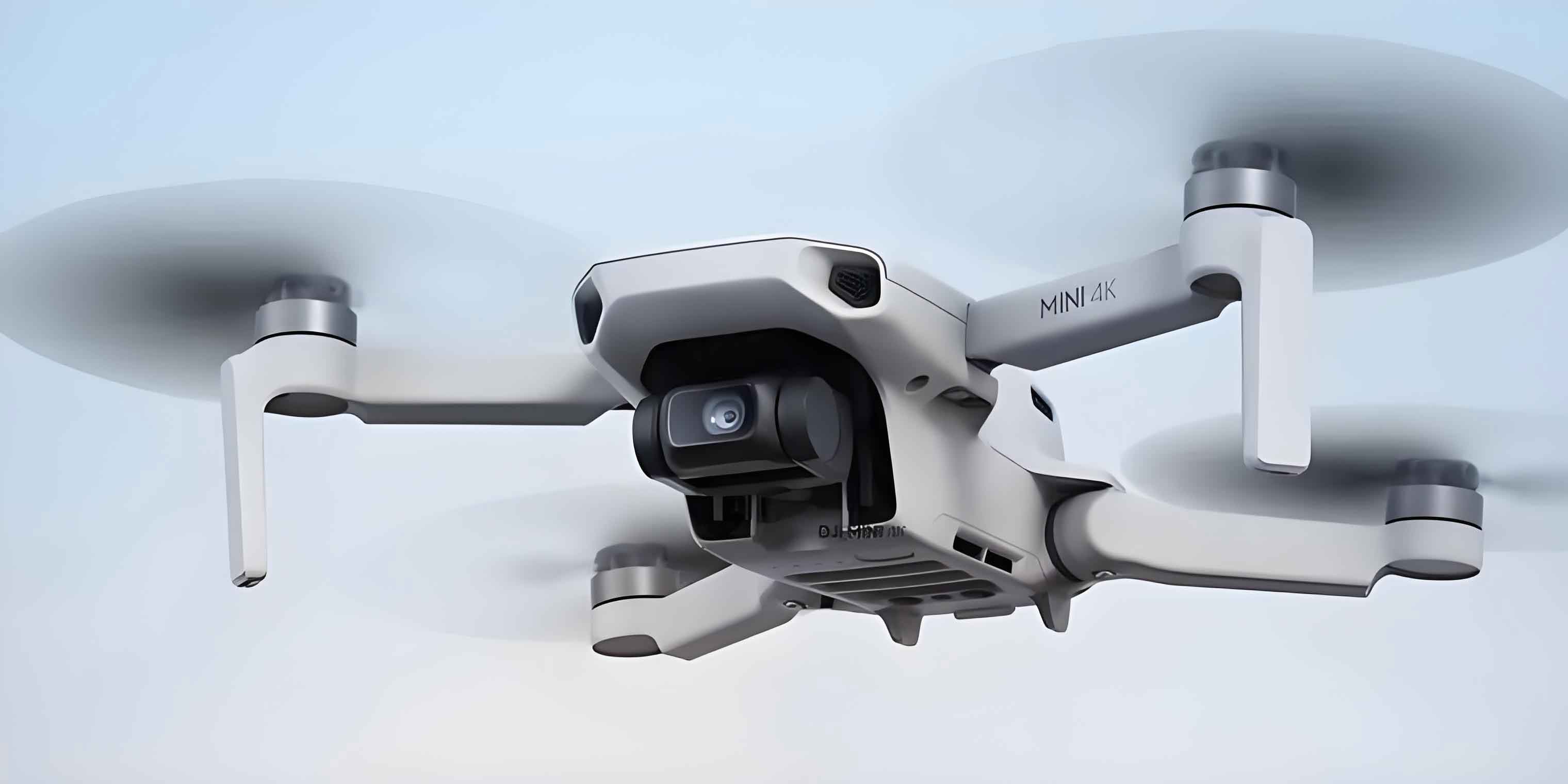
One prominent design is the passively-wheeled quadrotor. Subsequent research on this configuration has tackled associated challenges in motion control and planning. To push energy efficiency further, novel tilt-rotor configurations have emerged. A significant advancement is the coaxial dual-tilt-rotor design, where the two rotors can independently tilt in two degrees of freedom. This design offers superior energy savings, especially in terrestrial mode where the rotors can be tilted horizontally to use the ground support to counteract gravity, and provides enhanced control flexibility. Despite these promising mechanical innovations, a mature and systematic control methodology, particularly for the critical attitude stabilization problem, is still lacking. The core challenge lies in the system’s hybrid nature: it operates in distinct aerial and terrestrial modes with fundamentally different dynamics and, crucially, different numbers of effective control degrees of freedom. This leads to a variable-dimension, singular system model. Furthermore, the mode transitions during autonomous navigation are often stochastic, dictated by randomly distributed environmental obstacles and terrain features. Designing a controller that is robust to external disturbances, manages the inherent stochastic mode jumps, and simultaneously prevents undesirable control input “bumps” or “jumps” at switching instants remains an unresolved theoretical and practical problem. This paper addresses this gap by proposing a comprehensive robust bumpless control framework for such hybrid China UAV drone systems.
System Modeling as a Stochastic Singular System
The hybrid vehicle under consideration consists of a coaxial dual-rotor assembly capable of two-degree-of-freedom tilting, enclosed within a protective cage that also functions as a passive wheel for ground rolling. To formulate the dynamics, we define three coordinate frames: the inertial frame $\mathcal{I}$, the body frame $\mathcal{B}$ attached to the vehicle’s main structure, and the wheel frame $\mathcal{W}$ associated with the outer cage. The vehicle’s orientation is described by Euler angles $(\phi, \theta, \psi)$, and the rotor tilt angles are $(\alpha_x, \alpha_y)$. The key to the system’s hybrid nature is the radical difference in dynamics between aerial and terrestrial operation.
In Aerial Mode, the vehicle operates like a rotorcraft. However, unlike standard multi-rotors, the roll and pitch control moments are not generated by differential rotor thrust but by strategically tilting the rotors to create a moment arm. The yaw moment is generated from the reaction torque difference between the two counter-rotating rotors. The nonlinear attitude dynamics can be derived as:
$$
\begin{aligned}
\dot{\boldsymbol{\eta}} &= \mathbf{\Gamma}(\boldsymbol{\eta})\boldsymbol{\omega}, \\
\mathbf{J}\dot{\boldsymbol{\omega}} &= -\boldsymbol{\omega} \times \mathbf{J}\boldsymbol{\omega} – \mathbf{K}_d \boldsymbol{\omega} + \mathbf{M}_c,
\end{aligned}
$$
where $\boldsymbol{\eta} = [\phi, \theta, \psi]^T$ is the Euler angle vector, $\boldsymbol{\omega} = [p, q, r]^T$ is the body angular rate vector, $\mathbf{J}$ is the inertia matrix, $\mathbf{K}_d$ is a damping coefficient matrix, and $\mathbf{M}_c = [M_x, M_y, M_z]^T$ is the control moment vector. The control moment is a function of the total thrust $T$ and the tilt angles:
$$
\mathbf{M}_c =
\begin{bmatrix}
T l_T \sin(\alpha_y) \\
-T l_T \sin(\alpha_x) \\
\kappa_h (\Omega_1^2 – \Omega_2^2)
\end{bmatrix}, \quad T = \kappa_v (\Omega_1^2 + \Omega_2^2).
$$
Here, $\Omega_{1,2}$ are rotor speeds, $l_T$ is the moment arm, and $\kappa_v, \kappa_h$ are aerodynamic coefficients.
In Terrestrial Mode, the vehicle is constrained to roll on the ground. Assuming a flat surface, the roll angle and its rate must be constrained to zero to prevent tipping: $\phi=0, \dot{\phi}=0$. This introduces an algebraic constraint linking the body angular rates: $p + \dot{\psi}\tan\theta = 0$. Furthermore, ground contact introduces friction and damping moments. The resulting dynamics for the remaining degrees of freedom (pitch and yaw) are:
$$
\begin{aligned}
\dot{\theta} &= q, \\
\dot{\psi} &= r / \cos\theta, \\
J_y \dot{q} &= -(J_z – J_x) p r – k_{d,y} q + M_y + \tau_{gy}, \\
J_z \dot{r} &= -(J_x – J_y) p q – k_{d,z} r + M_z + \tau_{gz},
\end{aligned}
$$
where $\tau_{gy}, \tau_{gz}$ are ground interaction moments. The key observation is that the terrestrial model has a lower differential order due to the algebraic constraint on roll motion, leading to a singular system description compared to the full-order aerial model.
By linearizing the nonlinear dynamics around a hover/steady-state condition for each mode, we obtain a unified linear model as a switched singular system:
$$
\mathbf{E}_{\sigma(t)} \dot{\mathbf{x}}(t) = \mathbf{A}_{\sigma(t)} \mathbf{x}(t) + \mathbf{B}_{\sigma(t)} \mathbf{u}(t) + \mathbf{F}_{\sigma(t)} \mathbf{d}(t),
$$
$$
\mathbf{y}(t) = \mathbf{C}_{\sigma(t)} \mathbf{x}(t),
$$
where $\mathbf{x}(t) \in \mathbb{R}^{n_x}$ is the state vector (e.g., attitude and angular rates), $\mathbf{u}(t)$ is the control input (control moments), and $\mathbf{d}(t)$ is the energy-bounded disturbance input (e.g., wind gusts). The switching signal $\sigma(t): [0, \infty) \to \mathcal{M} = \{1 (\text{ground}), 2 (\text{aerial})\}$ dictates the active mode. The matrix $\mathbf{E}_\sigma$ is singular (not full rank), and its rank $r_\sigma = \text{rank}(\mathbf{E}_\sigma)$ is mode-dependent ($r_1 < r_2$), capturing the change in effective degrees of freedom. This is a hallmark of the China UAV drone design with variable actuation authority.
To accurately model the stochastic mode transitions encountered in real-world navigation, we employ a semi-Markov jump process with a dwell-time lower bound. Unlike a standard Markov jump process where switching can occur at any infinitesimal time, this model incorporates a minimum period $\tau_D$ during which the mode remains constant, which is more realistic. The transition law is:
$$
\Pr\{\sigma(t_{s}+\delta) = j | \sigma(t_s) = i\} =
\begin{cases}
1, & \text{if } j=i, \delta \in [0, \tau_D), \\
\bar{\pi}_{ij} \delta + o(\delta), & \text{if } j \neq i, \delta \in [\tau_D, \infty), \\
1 + \bar{\pi}_{ii} \delta + o(\delta), & \text{if } j=i, \delta \in [\tau_D, \infty),
\end{cases}
$$
where $\bar{\pi}_{ij} \ge 0$ is the transition rate and $\sum_{j=1}^{M} \bar{\pi}_{ij} = 0$ with $\bar{\pi}_{ii} = -\sum_{j \neq i} \bar{\pi}_{ij}$. The transition rate matrix is $\bar{\mathbf{\Pi}} = [\bar{\pi}_{ij}]$.
Control Objectives and Problem Formulation
Our goal is to design a mode-dependent state-feedback control law:
$$
\mathbf{u}(t) = \mathbf{K}_{\sigma(t)} \mathbf{x}_1(t),
$$
where $\mathbf{x}_1(t)$ represents the “dynamic” part of the state after applying a mode-dependent singular value decomposition to the descriptor system. The feedback gain $\mathbf{K}_i$ is to be synthesized.
The design must satisfy three critical objectives for the China UAV drone:
- Stochastic Stability: The closed-loop system must be mean-square stable under the stochastic mode switching with dwell-time.
- Robust $H_\infty$ Performance: The system must attenuate the effect of energy-bounded disturbances $\mathbf{d}(t)$ on the performance output $\mathbf{y}(t)$ with a guaranteed $L_2$-gain $\gamma$.
- Bumpless Transfer (Control Smoothness): To prevent actuator wear and ensure smooth transient performance during mode switches, the control input should not exhibit large jumps. This is formalized by constraining the deviation of each mode’s gain from a common “reference” gain $\mathbf{K}^*$:
$$
\|\mathbf{K}_i – \mathbf{K}^*\| < \xi, \quad \forall i \in \mathcal{M},
$$where $\xi > 0$ is a tunable bumplessness parameter. A smaller $\xi$ enforces smoother control transitions.
The core challenge lies in simultaneously achieving these goals for a system with variable state dimension (due to singularity) and stochastic switching, a problem not fully addressed in prior literature.
Stability and H∞ Performance Analysis
The first step is to establish analysis conditions under which a given set of mode-dependent controllers $\{\mathbf{K}_i\}$ stabilizes the system and achieves a desired $H_\infty$ disturbance attenuation level $\gamma$. We tackle this by transforming the singular system into an equivalent non-scriptor form via a mode-dependent decomposition. For each mode $i$, there exist non-singular matrices $\mathbf{L}_i, \mathbf{R}_i$ such that:
$$
\mathbf{L}_i \mathbf{E}_i \mathbf{R}_i =
\begin{bmatrix}
\mathbf{I}_{r_i} & \mathbf{0} \\
\mathbf{0} & \mathbf{0}
\end{bmatrix}, \quad
\mathbf{L}_i \mathbf{A}_i \mathbf{R}_i =
\begin{bmatrix}
\mathbf{A}_{i,11} & \mathbf{A}_{i,12} \\
\mathbf{A}_{i,21} & \mathbf{A}_{i,22}
\end{bmatrix}.
$$
Defining the transformed state $\bar{\mathbf{x}} = \mathbf{R}_i^{-1} \mathbf{x} = [\mathbf{x}_1^T, \mathbf{x}_2^T]^T$, where $\mathbf{x}_1 \in \mathbb{R}^{r_i}$, the system dynamics decompose into differential and algebraic parts. The algebraic equation $\mathbf{0} = \mathbf{A}_{i,21}\mathbf{x}_1 + \mathbf{A}_{i,22}\mathbf{x}_2$ allows for the elimination of $\mathbf{x}_2$, leading to a standard state-space model for the dynamic state $\mathbf{x}_1$ in mode $i$:
$$
\dot{\mathbf{x}}_1(t) = \bar{\mathbf{A}}_i \mathbf{x}_1(t) + \bar{\mathbf{B}}_i \mathbf{u}(t) + \bar{\mathbf{F}}_i \mathbf{d}(t),
$$
where $\bar{\mathbf{A}}_i = \mathbf{A}_{i,11} – \mathbf{A}_{i,12}\mathbf{A}_{i,22}^{-1}\mathbf{A}_{i,21}$. When a mode switch occurs from $i$ to $j$, the dynamic state $\mathbf{x}_1$ experiences an impulsive jump due to the dimensional change and the algebraic consistency condition:
$$
\mathbf{x}_1(t_s^+) = \mathbf{\Upsilon}_{i,j} \mathbf{x}_1(t_s^-),
$$
where the jump matrix $\mathbf{\Upsilon}_{i,j}$ is derived from the system matrices and the decomposition transforms.
This reformulation converts the original stochastic singular switched system into a Markov jump linear system with state jumps. For this system, we can construct a mode-dependent quadratic Lyapunov function $V(\mathbf{x}_1, i) = \mathbf{x}_1^T \mathbf{P}_i \mathbf{x}_1$, $\mathbf{P}_i > 0$. By applying the infinitesimal generator and considering the dwell-time property and state jumps, we derive the following analysis theorem.
Theorem 1 (Performance Analysis). Given controllers $\mathbf{K}_i$ and a prescribed scalar $\gamma > 0$, the closed-loop stochastic singular system is stochastically stable with an $H_\infty$ performance level $\gamma$ if there exist symmetric positive definite matrices $\mathbf{P}_i > 0$ satisfying the following linear matrix inequalities (LMIs) for all $i \in \mathcal{M}$:
$$
\begin{bmatrix}
\Xi_i & \mathbf{P}_i \bar{\mathbf{F}}_i & \bar{\mathbf{C}}_i^T \\
* & -\gamma^2 \mathbf{I} & \mathbf{0} \\
* & * & -\mathbf{I}
\end{bmatrix} < 0,
$$
where
$$
\Xi_i = \text{sym}\left(\bar{\mathbf{A}}_{cl,i}^T \mathbf{P}_i\right) + \sum_{j \in \mathcal{M}} \bar{\pi}_{ij} e^{2\bar{\mathbf{A}}_{cl,i} \tau_D} \mathbf{\Upsilon}_{i,j}^T \mathbf{P}_j \mathbf{\Upsilon}_{i,j},
$$
and $\bar{\mathbf{A}}_{cl,i} = \bar{\mathbf{A}}_i + \bar{\mathbf{B}}_i \mathbf{K}_i$, and $\bar{\mathbf{C}}_i$ is the transformed output matrix.
This theorem provides a numerically verifiable condition to check the robustness of a given controller set for the China UAV drone. The term $e^{2\bar{\mathbf{A}}_{cl,i} \tau_D}$ explicitly accounts for the dwell-time $\tau_D$, reducing conservatism compared to methods ignoring this known lower bound.
Robust Bumpless Controller Synthesis
Building on the analysis conditions, we now address the synthesis problem: finding the controller gains $\mathbf{K}_i$ and the common reference gain $\mathbf{K}^*$ that satisfy the $H_\infty$ performance and bumpless transfer constraints. The main result is formulated as a convex optimization problem subject to LMI constraints.
Theorem 2 (Controller Synthesis). For a given bumpless parameter $\xi > 0$, dwell-time $\tau_D > 0$, and desired $H_\infty$ performance level $\gamma > 0$, if there exist matrices $\mathbf{X}_i = \mathbf{X}_i^T > 0$, $\mathbf{Y}_i$, $\mathbf{K}^*$, and scalars $\lambda_i > 0$ satisfying the following set of LMIs for all $i \in \mathcal{M}$, then the controllers $\mathbf{K}_i = \mathbf{Y}_i \mathbf{X}_i^{-1}$ solve the robust bumpless control problem:
1. $H_\infty$ Performance and Stability LMIs:
$$
\begin{bmatrix}
\text{sym}(\bar{\mathbf{A}}_i \mathbf{X}_i + \bar{\mathbf{B}}_i \mathbf{Y}_i) + \lambda_i \mathbf{X}_i & \bar{\mathbf{F}}_i & \mathbf{X}_i \bar{\mathbf{C}}_i^T & \mathbf{\Phi}_i \\
* & -\gamma^2 \mathbf{I} & \mathbf{0} & \mathbf{0} \\
* & * & -\mathbf{I} & \mathbf{0} \\
* & * & * & -\mathbf{\Psi}_i
\end{bmatrix} < 0,
$$
where $\mathbf{\Phi}_i = [\sqrt{\bar{\pi}_{i1}}\mathbf{\Upsilon}_{i,1}^T \mathbf{X}_1 \ \ldots \ \sqrt{\bar{\pi}_{iM}}\mathbf{\Upsilon}_{i,M}^T \mathbf{X}_M]$, and $\mathbf{\Psi}_i = \text{diag}(\mathbf{X}_1, \ldots, \mathbf{X}_M)$.
2. Dwell-Time Stability LMI: (Ensuring stability during the mandatory dwell period)
$$
\begin{bmatrix}
-2 \ln(\lambda_i) \mathbf{X}_i & \mathbf{I} + (\bar{\mathbf{A}}_i \mathbf{X}_i + \bar{\mathbf{B}}_i \mathbf{Y}_i)^T \\
* & -2 \ln(\lambda_i) \mathbf{X}_i
\end{bmatrix} < 0, \quad \text{with } 0 < \lambda_i < 1.
$$
3. Bumpless Transfer LMI: (Enforcing control smoothness)
$$
\begin{bmatrix}
-\xi^2 \mathbf{I} & (\mathbf{K}_i \mathbf{R}_i^{(1)} – \mathbf{K}^*)^T \\
* & -\mathbf{I}
\end{bmatrix} < 0,
$$
where $\mathbf{R}_i^{(1)}$ is the submatrix of $\mathbf{R}_i$ corresponding to the $\mathbf{x}_1$ partition. This LMI is equivalent to $\| \mathbf{K}_i \mathbf{R}_i^{(1)} – \mathbf{K}^* \| < \xi$.
The synthesis problem can be efficiently solved using standard semidefinite programming solvers. The process yields not only the robust stabilizing controllers $\mathbf{K}_i$ but also the common reference gain $\mathbf{K}^*$, which acts as a “center” around which all modal controllers are gathered, ensuring smooth transitions. This integrated approach is a key contribution for advanced China UAV drone control systems where both robustness and actuator longevity are paramount.
Simulation Results and Comparative Analysis
To validate the proposed framework, we consider a simulation model of the coaxial tilt-rotor China UAV drone with parameters listed in Table 1.
| Parameter | Value | Parameter | Value |
|---|---|---|---|
| Mass ($m$) | 1.40 kg | Inertia $J_x$ | 0.0145 kg·m² |
| Inertia $J_y$ | 0.0092 kg·m² | Inertia $J_z$ | 0.0129 kg·m² |
| Thrust coeff. ($\kappa_v$) | 3.0e-6 N·s² | Torque coeff. ($\kappa_h$) | 2.5e-7 N·m·s² |
| Moment arm ($l_T$) | 0.02 m | Damping $k_{d,x}, k_{d,y}, k_{d,z}$ | 0.015 |
| Friction coeff. ($\mu$) | 0.11 | Wheel damping ($\mu_W$) | 0.02 |
| Dwell-time ($\tau_D$) | 0.5 s | $H_\infty$ bound ($\gamma$) | 1.5 |
| Bumpless param ($\xi$) | 10 | Transition Rate $\bar{\pi}_{12}, \bar{\pi}_{21}$ | 0.63, 0.75 |
We design two sets of controllers: Controller A using Theorem 2 (with full knowledge of transition rates), and Controller B using a more conservative, rate-independent version of the theorem (for scenarios where transition statistics are unknown). A persistent disturbance $\mathbf{d}(t)=0.2e^{-0.1t}$ is applied. The system starts in aerial mode with an initial attitude error.
The closed-loop attitude responses are shown in Figure 2 (conceptual description). Both controllers successfully stabilize the China UAV drone under stochastic switching and disturbance. Controller A, leveraging known transition rates, exhibits faster convergence and smaller oscillations. The characteristic behavior of the roll angle $\phi$ is notable: it is forced to zero during terrestrial phases (due to the non-holonomic constraint) and is free to evolve during aerial phases, demonstrating the handled singularity.
The corresponding control moments $\mathbf{u}(t)=[M_x, M_y, M_z]^T$ are depicted in Figure 3. The effectiveness of the bumpless transfer constraint is clearly visible. The control inputs from Controller A show significantly smoother transitions at mode switch instants (marked by vertical dashed lines) compared to a hypothetical controller designed without the bumpless constraint (not shown), which would exhibit sharp, abrupt jumps. Controller B, being more conservative, results in generally lower control authority and slightly less smooth transitions. The final actuator commands (rotor speeds $\Omega_{1,2}$ and tilt angles $\alpha_{x,y}$), derived from the control moments, are shown in Figure 4. These signals remain physically plausible and smooth, critical for the longevity of motors and servos in a practical China UAV drone application.
| Metric | Controller A (Proposed w/ Bumpless) | Controller B (Conservative) | Controller without Bumpless Constraint |
|---|---|---|---|
| Settling Time | Shortest | Longer | Similar to A |
| Overshoot | Smallest | Larger | Larger than A |
| Control Input Smoothness | Excellent (Low $||\Delta u||$ at switches) | Good | Poor (High $||\Delta u||$ at switches) |
| Disturbance Rejection | Best (Achieves specified $\gamma$) | Satisfies $\gamma$ | May violate $\gamma$ |
| Computational Complexity (Design) | Moderate (Solves LMI set) | Moderate | Lower (Solves fewer LMIs) |
Conclusion and Future Work
This paper has presented a comprehensive framework for the robust and smooth attitude control of hybrid terrestrial/aerial coaxial tilt-rotor UAVs. The key contribution lies in the novel modeling of such a China UAV drone as a stochastic singular Markov jump system with a dwell-time, which accurately captures the change in control degrees of freedom and the practical timing of mode transitions. Within this framework, we developed:
- Analytical $H_\infty$ performance conditions that explicitly account for state jumps and dwell-time, reducing conservatism.
- A convex synthesis method that jointly designs mode-dependent controllers guaranteeing robust stability, disturbance attenuation, and bumpless transfer via a shared reference gain, a first for stochastic singular systems.
Numerical simulations confirmed the superiority of the proposed method, demonstrating effective disturbance rejection and significantly smoother control input during stochastic aerial/ground transitions compared to conservative or non-bumpless designs. This work provides a solid theoretical and practical foundation for controlling the next generation of long-endurance, multi-modal China UAV drones.
Future research directions include extending this framework to handle full trajectory tracking and path planning for the hybrid vehicle, integrating state and mode estimation under sensor limitations, and investigating event-triggered control schemes to further optimize communication and computation resources onboard the autonomous China UAV drone.