
As a researcher in the field of aviation law and technology, I have observed the rapid evolution of civilian drones from military applications to widespread use in transportation, photography, and entertainment. This shift has spurred growth in related industries, making drones a significant consumer trend with profound societal and economic impacts. However, this expansion brings inherent risks that necessitate robust legal frameworks. In this article, I explore the risks associated with civilian drones and propose legal regulations for flight safety, emphasizing the critical role of drone training in mitigating hazards. My analysis draws from practical insights and aims to balance public and private interests through rational, systematic approaches.
The term “drone” refers to an unmanned aircraft, as defined in recent regulations like the “Interim Regulations on Flight Management of Unmanned Aircraft,” which classifies drones as remotely piloted or autonomous aircraft without onboard pilots. In civilian contexts, drones are used for high-altitude operations, filming, and logistics, but their operation often leads to issues such as collisions, privacy invasions, and airspace violations. Current legislation lacks granularity, leaving gaps in addressing unique challenges like data security or accidental injuries. By systematically categorizing risks, we can develop effective safety regulations that protect property, personal safety, and national interests. This process requires a deep understanding of real-world scenarios and a commitment to harmonizing societal and individual needs.
Overview of Risks in the Civilian Drone Domain
Risks in civilian drone operations stem from technological, operational, and regulatory deficiencies. From my perspective, these risks can be quantified using a basic risk assessment formula: $$ R = P \times C $$ where \( R \) represents risk, \( P \) is the probability of an incident, and \( C \) is the consequence severity. For drones, \( P \) might include factors like pilot error or system failure, while \( C \) could range from property damage to loss of life. The lack of standardized drone training amplifies \( P \), as untrained operators are more prone to errors. Additionally, regulatory fragmentation increases \( C \) by allowing unsafe practices to persist. I believe that a comprehensive risk overview must consider both immediate hazards, such as mid-air collisions, and latent threats, like cybersecurity breaches. This holistic view is essential for crafting regulations that preemptively address vulnerabilities rather than merely reacting to incidents.
To illustrate, drones operating without proper authorization can disrupt low-altitude air traffic, akin to inserting uncontrolled variables into a complex system. The equation $$ \text{Airspace Safety} = \frac{\text{Compliance Rate}}{\text{Incident Frequency}} $$ highlights how safety deteriorates when compliance drops. In practice, many operators skip flight plan approvals due to cumbersome processes, leading to unauthorized flights that heighten risks. From my experience, this underscores the need for streamlined regulations that encourage adherence while penalizing negligence. By analyzing risk through mathematical lenses, we can prioritize interventions, such as mandatory drone training programs, to reduce \( P \) and mitigate \( C \).
Classification of Risks in the Civilian Drone Domain
I categorize drone risks into three primary domains: social security, personal safety, and economic security. Each category involves distinct challenges that require tailored legal responses. Below is a table summarizing these risks with examples and potential impacts:
| Risk Category | Examples | Potential Impact | Relation to Drone Training |
|---|---|---|---|
| Social Security Risks | Unauthorized flights near airports, data interception by foreign entities, disruption of public order | Aviation accidents, national security breaches, chaos in low-altitude zones | Inadequate training leads to non-compliance with no-fly zones; enhanced training can instill security protocols. |
| Personal Safety Risks | Drone crashes causing injuries, privacy violations via surveillance, psychological harm from noise | Physical injuries, loss of privacy, emotional distress | Poor operator skills from lack of training increase crash risks; structured training improves handling and ethical awareness. |
| Economic Security Risks | Property damage from falling drones, loss of commercial drone assets, insurance liabilities | Financial losses, business interruptions, increased insurance costs | Training reduces accident rates, lowering repair and liability costs; certified operators may qualify for insurance discounts. |
From my observations, social security risks are the most pervasive due to weak regulatory oversight. For instance, drone intrusions into airports can be modeled as a probability event: $$ P_{\text{intrusion}} = \frac{N_{\text{unauthorized flights}}}{T_{\text{total flights}}} $$ where \( N_{\text{unauthorized flights}} \) often rises when operators lack drone training on airspace rules. Personal safety risks, meanwhile, correlate directly with operator competence. I have seen cases where untrained users panic in emergencies, causing drones to fall as projectiles. The kinetic energy of a falling drone can be approximated by $$ KE = \frac{1}{2} m v^2 $$ where \( m \) is mass and \( v \) is velocity; even small drones pose significant hazards at high speeds, emphasizing the need for training in emergency procedures. Economic risks compound these issues, as damage claims strain legal systems. A formula for economic loss might be $$ L = D \times R_{\text{replacement}} $$ with \( D \) as damage extent and \( R_{\text{replacement}} \) as replacement cost; proper drone training can reduce \( D \) by preventing incidents.
Moreover, these risks interlink—for example, a social security breach like airspace invasion can lead to personal injury and economic loss. Therefore, I advocate for integrated risk management that prioritizes drone training as a cross-cutting solution. By enhancing skills and awareness, we can lower probabilities across all categories, creating a safer ecosystem.
Principles for Formulating Flight Safety Legal Regulations
In developing flight safety laws, I adhere to core principles that ensure fairness, efficacy, and adaptability. First, the balance of interests principle requires weighing public safety against individual freedoms, and economic growth against social welfare. This can be expressed as an optimization problem: $$ \text{Maximize } U = w_1 S_{\text{public}} + w_2 F_{\text{individual}} – w_3 C_{\text{regulation}} $$ where \( U \) is utility, \( S_{\text{public}} \) is public safety, \( F_{\text{individual}} \) is individual freedom, \( C_{\text{regulation}} \) is regulatory cost, and \( w \) are weights reflecting societal values. Second, the co-development of regulation and industry principle avoids stifling innovation; I support a dynamic approach where laws evolve with technological advances. Third, the combination of guidance and coercion principle uses incentives for compliance and penalties for violations, akin to a regulatory function: $$ R(x) = \begin{cases} G(x) & \text{if compliant} \\ P(x) & \text{if non-compliant} \end{cases} $$ where \( G(x) \) offers guidance like drone training subsidies, and \( P(x) \) imposes fines.
From my experience, inclusivity is vital—laws should incorporate feedback from manufacturers, regulators, and citizens. For instance, drone training curricula can be co-designed with industry to ensure relevance. I also emphasize proportionality, where rules match risk levels; micro-drones for recreation may need lighter oversight than heavy transport drones, as shown in this table:
| Drone Type | Weight Range | Suggested Regulation Level | Training Requirement |
|---|---|---|---|
| Micro (e.g., toys) | < 250g | Low: Exemptions for casual use | Basic safety guidelines, optional training |
| Light (e.g., photography) | 250g – 7kg | Medium: Registration and no-fly zones | Mandatory drone training for certification |
| Heavy (e.g., cargo) | > 7kg | High: Full oversight and insurance | Advanced drone training with recurrent courses |
These principles guide my proposals for concrete regulations, ensuring they are pragmatic and forward-looking. By embedding drone training into the regulatory fabric, we can foster a culture of responsibility that aligns with these principles.
Proposed Flight Safety Legal Regulations
To address the identified risks, I propose a multi-faceted regulatory framework centered on competency, oversight, and technology. A key component is establishing a robust system for operator qualifications and control.
Building an Operator Qualification Training and Control System
I recommend modeling drone training after driver’s licensing systems, with tailored programs for different uses. For example, recreational pilots might undergo basic courses, while commercial operators need advanced certifications. The effectiveness of training can be measured by a competency index: $$ CI = \frac{T_{\text{hours}} \times P_{\text{pass rate}}}{A_{\text{accident rate}}} $$ where higher \( CI \) values indicate better training outcomes. To emphasize drone training, I suggest mandatory modules on ethics, emergency response, and air law, with refresher courses every two years. This aligns with risk reduction, as shown by data linking training to lower incident rates.
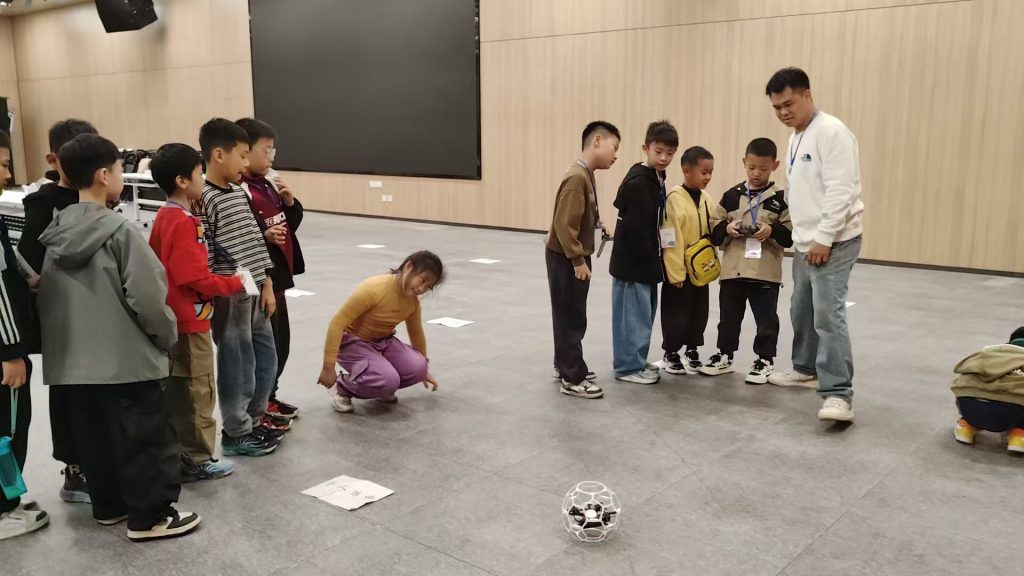
From my research, exemptions for agricultural or micro-drones, as seen in some regulations, require caution; even low-risk operations benefit from drone training to prevent cumulative hazards. I propose a tiered system: Level 1 for hobbyists (short course), Level 2 for professionals (extended training with exams), and Level 3 for industrial users (specialized training). This ensures that drone training is accessible yet rigorous. Additionally, cross-category operations should be restricted, with penalties similar to driving violations. A table below outlines sample training requirements:
| Training Level | Target Users | Duration | Key Topics | Assessment Method |
|---|---|---|---|---|
| Level 1: Basic | Recreational flyers | 8 hours | Safety protocols, no-fly zones, basic maneuvers | Online quiz and practical demo |
| Level 2: Advanced | Commercial photographers, surveyors | 40 hours | Air law, weather analysis, advanced flight skills | Written exam and flight test |
| Level 3: Specialist | Cargo transporters, industrial inspectors | 80+ hours | Risk management, technical maintenance, emergency procedures | Simulation scenarios and field audits |
By institutionalizing drone training, we create a skilled operator base that minimizes risks proactively. I have seen similar approaches in aviation history, where pilot licensing drastically reduced accidents—a lesson applicable to drones.
Improving Flight Plan Approval Systems
Current approval processes are often tedious, discouraging compliance. I advocate for digital platforms that simplify submissions, using algorithms to automate checks. The approval time \( T_{\text{approval}} \) can be optimized via $$ T_{\text{approval}} = \frac{A_{\text{applications}}}{P_{\text{processing power}}} \times E_{\text{efficiency factor}} $$ where enhancing \( E_{\text{efficiency factor}} \) through online portals cuts delays. Training plays a role here; during drone training, operators should learn to file plans correctly, reducing errors. I propose a unified app for submissions, with real-time feedback and integration with air traffic control. For routine commercial flights, batch approvals could be granted, conditional on operator certification from drone training programs.
Moreover, airworthiness and operational certifications must be standardized. I support a national database for drone specifications, with safety scores computed as $$ S_{\text{drone}} = \sum_{i=1}^{n} w_i F_i $$ where \( F_i \) are factors like build quality and failsafe mechanisms, weighted by importance. Drone training should include modules on pre-flight checks to ensure airworthiness. From my analysis, this dual focus on human and machine readiness significantly boosts safety.
Rational Delineation of No-Fly Zones
No-fly zones are critical for protecting sensitive areas, but awareness is low. I suggest dynamic zoning with geofencing technology, where drones automatically avoid restricted airspace. The risk of intrusion \( RI \) can be modeled as $$ RI = \frac{Z_{\text{violations}}}{Z_{\text{total zones}}} \times (1 – A_{\text{awareness}}) $$ with \( A_{\text{awareness}} \) improvable through drone training. During courses, operators should study zone maps and legal consequences. I recommend expanding zones beyond airports to include schools and hospitals, with tiered restrictions: Level A (absolute ban, e.g., military bases), Level B (conditional access, e.g., with permits), and Level C (advisory, e.g., high-risk weather areas).
Enforcement should leverage “cloud control” and satellite signals to warn or disable violating drones. In drone training, simulators can recreate zone scenarios to build compliance habits. I also advocate for public education campaigns to supplement regulations, ensuring that even casual users understand boundaries.
Promoting the Construction and Application of UOM
The Unmanned Aircraft System Traffic Management (UATM) or similar platforms, like the proposed UOM (Unmanned Aerial Vehicle Operations Management), are essential for holistic oversight. I envision a system where real-time data feeds into a central dashboard, enabling proactive interventions. The platform’s effectiveness \( E_{\text{UOM}} \) can be expressed as $$ E_{\text{UOM}} = \frac{M_{\text{monitored flights}}}{T_{\text{total flights}}} \times R_{\text{response accuracy}} $$ where integration with drone training records enhances \( R_{\text{response accuracy}} \). For instance, trained operators might receive automated alerts during risky maneuvers.
I propose a “governance + societal governance” framework, where UOM facilitates collaboration between authorities and communities. Drone training programs should include UOM usage, teaching operators to report incidents and access airspace data. This fosters a shared responsibility model, akin to the diagram below (conceptually represented):
| UOM Component | Function | Training Integration |
|---|---|---|
| Real-Time Monitoring | Tracks drone positions and speeds | Operators learn to interpret feeds during training |
| Incident Response | Alerts authorities to violations | Training includes reporting protocols |
| Data Analytics | Predicts congestion and risks | Used in advanced training for route planning |
From my perspective, UOM’s success hinges on widespread drone training adoption, as skilled operators are more likely to engage with the platform responsibly. By merging regulation with technology, we can create a seamless low-altitude traffic ecosystem that accommodates both drones and manned aircraft.
Conclusion
In conclusion, the risks in civilian drone operations—spanning social, personal, and economic spheres—demand a nuanced legal response. Through my analysis, I emphasize that drone training is a cornerstone of effective regulation, reducing probabilities of incidents and mitigating consequences. By implementing tiered training systems, streamlining approvals, rationalizing no-fly zones, and deploying management platforms like UOM, we can balance innovation with safety. Laws must evolve continuously to address emerging challenges, but a focus on education and competency will remain vital. As drones become ubiquitous, proactive risk management through comprehensive drone training and adaptive laws will ensure they contribute positively to society, safeguarding our skies for future generations.
Reflecting on this, I believe that collaborative efforts among stakeholders, informed by data-driven insights, can transform drone operations into a model of safe technological integration. Let us prioritize drone training not as a burden, but as an investment in a secure and prosperous aerial landscape.