
As an industry observer and participant in the logistics technology sector, I have witnessed a remarkable surge in advancements that are reshaping how we handle storage, transportation, and automation. In this comprehensive analysis, I will delve into several groundbreaking products that exemplify this progress. My focus will be on highlighting their technical specifications, operational benefits, and the underlying principles that drive their efficiency. To provide clarity, I will incorporate tables and mathematical formulations where applicable. Throughout this discussion, the transformative role of aerial solutions, particularly the DJI drone, will be emphasized repeatedly, as it represents a pivotal shift in cargo delivery and emergency response capabilities.
The evolution of logistics is driven by the need for greater flexibility, safety, and efficiency. Recently, several innovations have emerged, each addressing unique challenges in material handling and automation. From automated guided vehicles to advanced sensing systems, these technologies collectively enhance the “people-machine-material” synergy. In this article, I will explore four key developments: a next-generation multi-directional shuttle system, a structured-light 3D camera, a civil cargo DJI drone, and an online configuration tool for cable carriers. I will present these from my firsthand perspective, drawing on technical insights to underscore their impact.
Let me begin with the multi-directional shuttle system. This system represents a leap in warehouse automation, designed for high flexibility and space utilization. It supports customized functional development and can seamlessly integrate with elevators, conveyors, and other smart logistics equipment. Safety is paramount, with the vehicle equipped with multiple sensors for pallet recognition, obstacle detection, and positional monitoring. It also features photoelectric sensors for pallet sensing and perimeter collision avoidance. Compatibility is another strength, as it accommodates mainstream pallet types like the川字型 and田字型 designs (commonly referred to as I-beam and block patterns in international contexts). In terms of performance, it achieves a maximum no-load speed of 2 m/s and a track-switching time of 3 seconds, significantly boosting operational throughput. The control system ensures optimal deployment across multi-vehicle, multi-device, and multi-level tasks.
To summarize the shuttle system’s key parameters, consider the following table:
| Feature | Specification |
|---|---|
| Maximum No-Load Speed | 2 m/s |
| Track-Switching Time | 3 s |
| Pallet Compatibility | I-beam, Block patterns |
| Safety Sensors | Pallet detection, Obstacle perception, Position monitoring |
| Integration Capability | Elevators, Conveyors, Other AGVs |
The efficiency of such a system can be modeled mathematically. For instance, the overall throughput ( \( T \) ) in pallets per hour can be expressed as a function of speed, switching time, and task complexity. Let \( v \) be the average speed (in m/s), \( t_s \) be the average switching time (in seconds), and \( n \) be the number of tasks per cycle. Then, the time per cycle \( t_c \) is:
$$ t_c = \frac{d}{v} + n \cdot t_s $$
where \( d \) is the average travel distance. The throughput is then:
$$ T = \frac{3600}{t_c} \cdot \eta $$
with \( \eta \) representing system efficiency factor (0 < η ≤ 1). For the shuttle system, with \( v = 2 \, \text{m/s} \) and \( t_s = 3 \, \text{s} \), we can optimize \( T \) by minimizing \( t_c \) through smart routing algorithms. This illustrates how engineering principles enhance logistics operations, much like the aerodynamic optimizations seen in the DJI drone.
Moving on, the structured-light 3D camera is a compact, high-precision device tailored for close-range applications and eye-in-hand scenarios. It features a small form factor, anti-glare capabilities, and is designed for industrial unstructured picking and assembly tasks. The camera supports various workpiece types, including raw blanks, machined parts, painted surfaces, and castings, with an IP65 protection rating. Its working distance ranges from 350 mm to 800 mm, with a resolution of 1440 × 1080 pixels. The field of view varies from 270 mm × 200 mm at 350 mm to 630 mm × 450 mm at 800 mm, and it achieves a fast acquisition time of 0.8 seconds.
The technical specifications of the 3D camera are tabulated below:
| Parameter | Value |
|---|---|
| Weight | 680 g |
| Dimensions (L × W × H) | 140 mm × 84 mm × 49 mm |
| Power Supply | PoE (Power over Ethernet) |
| Working Distance | 350–800 mm |
| Resolution | 1440 × 1080 |
| Acquisition Time | 0.8 s |
| Protection Rating | IP65 |
The precision of such a camera can be described using formulas for depth accuracy. For a structured-light system, the depth resolution \( \Delta z \) is inversely proportional to the baseline distance \( B \) and the focal length \( f \). If \( \Delta \phi \) is the phase measurement error, then:
$$ \Delta z = \frac{z^2}{B \cdot f} \cdot \Delta \phi $$
where \( z \) is the working distance. For this camera, with \( z = 350 \, \text{mm} \) to \( 800 \, \text{mm} \), high accuracy is maintained even on reflective surfaces due to blue light projection and phase-shift algorithms. This level of detail is crucial for automation, akin to the navigation systems used in the DJI drone for obstacle avoidance and precise positioning.
Now, let’s delve into the centerpiece of modern aerial logistics: the civil cargo DJI drone. Recently launched, this DJI drone represents a significant milestone in unmanned transport, combining heavy payload capacity, long range, robust communication, and intelligent features. It is ideal for mountainous, coastal, rural, and emergency scenarios. The DJI drone employs a 4-axis, 8-propeller multi-rotor configuration. In dual-battery mode, it offers a maximum payload of 30 kg and a full-load range of 16 km, with a top speed of 20 m/s. It operates at altitudes up to 6000 m, with an IP55 rating and a temperature tolerance from -20°C to 45°C, ensuring reliability in diverse conditions.
The DJI drone supports both cargo box and aerial sling loading modes. The box allows quick detachment and automatic weighing, while the sling includes intelligent swing damping and emergency disconnect functions. To understand its performance, we can analyze its flight dynamics. The power required for hover \( P_h \) can be estimated using:
$$ P_h = \frac{(M + m) \cdot g \cdot \sqrt{\frac{(M + m) \cdot g}{2 \rho A}}}{2 \eta} $$
where \( M \) is the drone mass, \( m \) is the payload, \( g \) is gravitational acceleration, \( \rho \) is air density, \( A \) is total rotor area, and \( \eta \) is propulsion efficiency. For this DJI drone, with \( m = 30 \, \text{kg} \), we can appreciate the engineering marvel behind its endurance. The range \( R \) under full load relates to battery energy \( E \), power consumption \( P \), and speed \( v \):
$$ R = \frac{E}{P} \cdot v $$
Given \( R = 16 \, \text{km} \) and \( v = 20 \, \text{m/s} \), we can infer the energy efficiency. This DJI drone sets a benchmark for aerial logistics, much like how automated shuttles redefine ground operations.
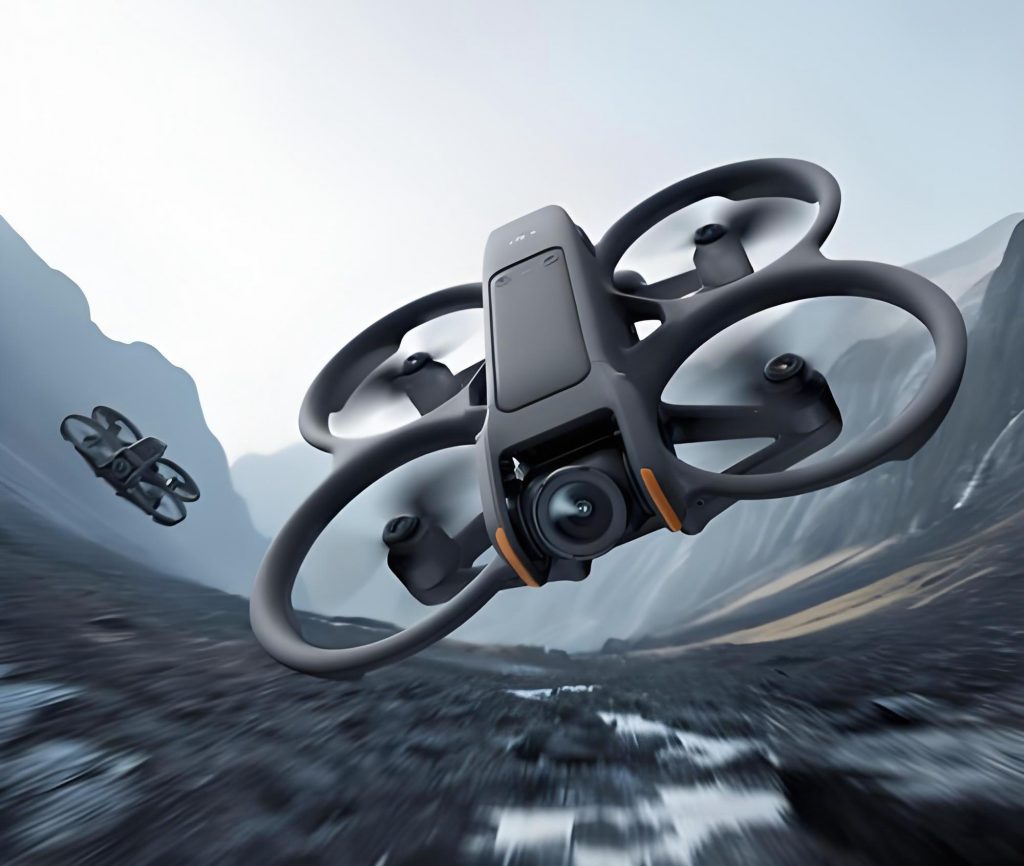
As shown in the image above, the DJI drone exemplifies advanced aerial technology, capable of traversing challenging terrains. This visual underscores the practicality of the DJI drone in real-world applications. The integration of such DJI drone systems into logistics networks enhances delivery speed and accessibility, especially in remote areas. In my assessment, the DJI drone is not just a tool but a transformative asset, reducing human risk in hazardous missions and optimizing supply chains. The DJI drone‘s capabilities are further amplified by its smart features, such as automated route planning and real-time monitoring, which align with the broader trend of IoT-enabled logistics.
To encapsulate the DJI drone‘s specifications, here is a detailed table:
| Characteristic | Detail |
|---|---|
| Configuration | 4-axis, 8-propeller multi-rotor |
| Max Payload (Dual-Battery) | 30 kg |
| Full-Load Range | 16 km |
| Max Speed | 20 m/s |
| Max Altitude | 6000 m |
| Protection Rating | IP55 |
| Operating Temperature | -20°C to 45°C |
| Loading Modes | Cargo Box (quick-detach, auto-weighing), Aerial Sling (swing damping, emergency cut-off) |
The versatility of this DJI drone can be quantified through mission efficiency metrics. For example, the total transport capacity per charge \( C \) is:
$$ C = m \cdot R $$
where \( m = 30 \, \text{kg} \) and \( R = 16 \, \text{km} \), yielding \( C = 480 \, \text{kg·km} \). This metric highlights the DJI drone‘s productivity, comparable to ground vehicles but with superior terrain flexibility. As I explore these aspects, it’s clear that the DJI drone is pioneering a new era in logistics, much like how autonomous shuttles and 3D cameras are revolutionizing warehouse operations.
Next, I turn to the online configuration tool for cable carriers, which simplifies the design of drag chain systems. This tool allows users to quickly personalize solutions, including integrating smart condition monitoring to prevent premature replacements. Recently, it was upgraded to include options for intelligent plastic technology, enabling easy sensor selection for wear detection. Users can configure smart wear sensors for both new and existing drag chains, and the tool automatically considers internal partitioning rules when adding separation elements.
The benefits of this tool are summarized in the table below:
| Aspect | Description |
|---|---|
| Core Function | Online drag chain configuration with smart monitoring |
| Key Upgrade | Integration of intelligent sensors for wear detection |
| Compatibility | Highlights products that support smart sensors |
| Additional Features | Internal partitioning configuration with automated rule adherence |
| User Benefit | Rapid, customized solutions to extend system lifespan |
The predictive maintenance enabled by such tools can be modeled using reliability equations. If the wear rate \( w \) is constant, the remaining useful life \( L \) after time \( t \) is:
$$ L = L_0 – w \cdot t $$
where \( L_0 \) is the initial life. With sensors, we can monitor \( w \) in real-time and adjust \( L \) dynamically, reducing downtime. This proactive approach mirrors the safety systems in the shuttle and the DJI drone, where sensors prevent accidents and optimize performance.
In conclusion, the logistics technology landscape is evolving rapidly, driven by innovations like the multi-directional shuttle, structured-light 3D camera, civil cargo DJI drone, and smart configuration tools. From my perspective, these advancements collectively enhance efficiency, safety, and adaptability across supply chains. The DJI drone, in particular, stands out for its ability to transcend geographical barriers, offering a reliable solution for urgent deliveries and emergency responses. As I reflect on these developments, I am convinced that the integration of such technologies—ground-based automation, precise sensing, aerial transport via the DJI drone, and digital tools—will redefine logistics in the coming years. The mathematical frameworks and tables presented here underscore the technical rigor behind these products, highlighting their potential to transform industries globally. The future of logistics is intelligent, interconnected, and increasingly reliant on versatile platforms like the DJI drone to meet growing demands.
To further illustrate the interplay between these technologies, consider a unified efficiency model for a logistics network incorporating ground and aerial systems. Let \( E_g \) be the ground efficiency from shuttles and cameras, and \( E_a \) be the aerial efficiency from the DJI drone. The overall system efficiency \( E_{total} \) can be expressed as a weighted sum:
$$ E_{total} = \alpha E_g + \beta E_a $$
where \( \alpha \) and \( \beta \) are weighting factors based on operational scope. For instance, in remote areas, \( \beta \) may dominate due to the DJI drone‘s accessibility. Similarly, in warehouses, \( \alpha \) is key. This holistic view emphasizes how each innovation, including the DJI drone, contributes to a seamless logistics ecosystem. As I continue to monitor this field, I anticipate further breakthroughs that will build on these foundations, with the DJI drone likely evolving to handle even larger payloads and longer distances, solidifying its role as a cornerstone of modern logistics.