
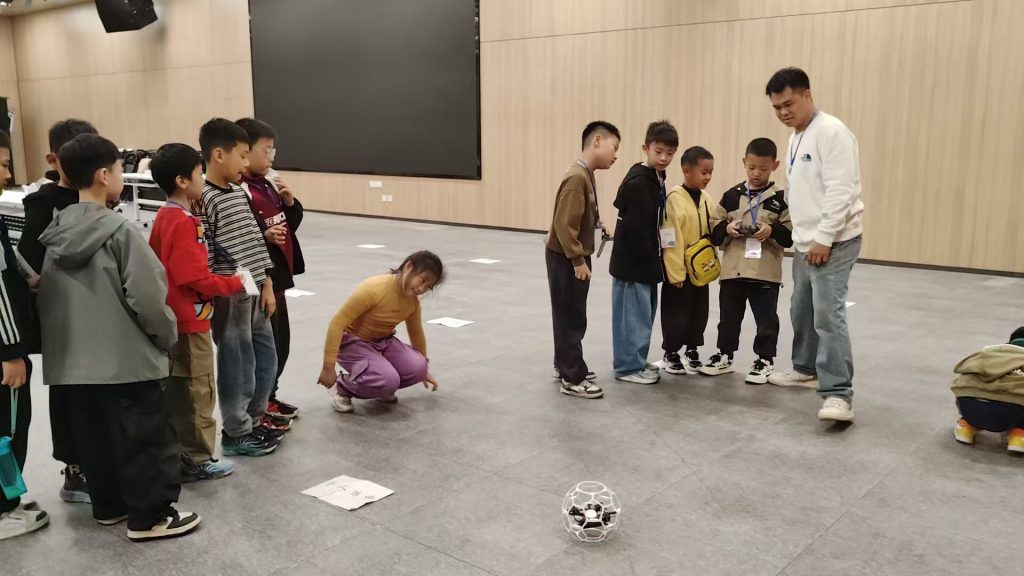
The rapid proliferation of Unmanned Aerial Vehicles (UAVs), or drones, across military, commercial, and civilian sectors has created an unprecedented demand for skilled operators, technicians, and designers. Traditional drone training methodologies, heavily reliant on physical aircraft, face significant challenges: high equipment costs, susceptibility to damage, limited fleet sizes in educational institutions, stringent airspace regulations, and the inherent risks of field operations in unstable environments. These constraints severely limit hands-on experience, a critical component for effective knowledge transfer and skill development. To address these fundamental issues, this article proposes a paradigm shift in drone training through the comprehensive integration of Virtual Simulation technology. This framework offers a novel, risk-mitigated, and highly effective pedagogical approach that transcends the limitations of physical hardware and real-world flight zones.
Virtual Simulation, the synergy of Virtual Reality (VR) and computer modeling, has evolved into a foundational tool for understanding and interacting with complex systems. It constructs immersive, three-dimensional digital environments where users can engage with realistic models through intuitive interfaces. This technology is characterized by its immersion, interaction, imagination, and fidelity. In the context of drone training, it enables learners to design, test, and pilot virtual aircraft within a completely safe and controllable digital space, fundamentally altering the educational landscape.
The Imperative for Virtual Simulation in Drone Pedagogy
Conventional simulation approaches, ranging from expensive, fixed-function flight simulators to abstract MATLAB coding environments, often fall short. High-fidelity simulators are cost-prohibitive and inflexible, while purely code-based simulations lack the visceral, realistic feedback necessary for effective drone training. The proposed framework leverages advanced, accessible simulation platforms (like X-Plane) to bridge this gap. These platforms use blade element theory to calculate aerodynamic forces in real-time, providing remarkably accurate predictions of aircraft performance and handling based on the user-defined physical model. This allows for a truly interactive and authentic drone training experience.
The advantages of integrating virtual simulation into drone training curricula are multifaceted and transformative:
| Aspect | Traditional Training Challenge | Virtual Simulation Solution |
|---|---|---|
| Cost & Accessibility | High cost of drones and components; limited inventory; consumable parts. | Zero consumable cost; infinite replication of models; accessible with standard computing hardware. |
| Safety & Risk | High risk of crashes (“flyaways,” “rollovers”); potential for injury or property damage. | Eliminates physical risk; allows safe experimentation with failure modes and edge-case scenarios. |
| Operational Constraints | Dependent on weather, daylight, and approved airspace; logistically complex. | Training available 24/7, independent of real-world conditions; no airspace permissions required. |
| Learning Personalization | One-size-fits-all group training; limited individual stick time. | Self-paced, individualized learning paths; unlimited repetition of maneuvers and procedures. |
| Depth of Understanding | Focus often limited to piloting skills; design and theory are separate, abstract concepts. | Unifies design, aerodynamics, control theory, and piloting into a cohesive, experiential learning cycle. |
A Systematic Framework for Virtual Drone Training
The core of this innovative drone training methodology is a closed-loop process that takes the learner from conceptual design to virtual flight validation. This holistic approach demystifies the drone as a system and fosters deep, intuitive understanding. The framework’s architecture consists of several integrated modules, as summarized below:
| System Module | Primary Function | Key Tools/Outputs |
|---|---|---|
| Platform Design & Sizing | Define mission requirements and calculate core platform parameters. | Target payload, endurance, thrust-to-weight ratio, power budget. |
| 3D CAD Modeling | Create a precise geometric digital twin of the drone’s physical structure. | Assembly files (e.g., .SLDASM, .STL) of airframe, arms, motor mounts, etc. |
| Aerodynamic Modeling | Define the physical and flight characteristics for the simulation engine. | PlaneMaker (.ACF) file specifying mass, dimensions, airfoils, engine/propeller data. |
| 3D Scene/Environment Modeling | Construct realistic or mission-specific operational environments. | Geotypical/geospecific landscapes, urban models, obstacles, weather systems. |
| Flight Simulation & Validation | Execute real-time, physics-based flight tests in virtual environments. | Flight dynamics visualization, performance data logging, control response analysis. |
| Hardware-in-the-Loop (HIL) | Interface physical controllers (RC transmitter, autopilot) with the simulation. | Realistic control feel, protocol testing (MAVLink), and system integration validation. |
1. Drone Platform Design: Laying the Foundation
Effective drone training begins with understanding first principles. Trainees start by defining a mission profile—e.g., 30-minute endurance with a 500g payload. This drives the initial sizing calculations. The total thrust ($T_{total}$) required at hover must counteract the total weight ($W$) with a desired thrust-to-weight ratio ($T/W$), typically 1.5-2.0 for multirotors:
$$T_{total} = (T/W) \times W = (T/W) \times (m_{frame} + m_{battery} + m_{payload})g$$
For a quadcopter (X-configuration), this thrust is分摊 equally among four motors (assuming symmetric design), giving thrust per motor: $T_{motor} = T_{total} / 4$. The power required per motor at hover ($P_{motor}$) can be estimated using propeller efficiency ($\eta$) and is crucial for battery and electronic speed controller (ESC) selection:
$$P_{motor} \approx \frac{T_{motor}^{3/2}}{\sqrt{2 \rho A} \cdot \eta}$$
where $\rho$ is air density and $A$ is propeller disk area. These calculations form the basis for selecting motors, propellers, ESCs, and battery packs, teaching trainees the critical trade-offs between weight, power, and flight time.
2. 3D Geometric Modeling: Creating the Digital Twin
Following theoretical design, trainees use CAD software (e.g., SolidWorks, Fusion 360) to create a detailed 3D model. This step translates numerical parameters into a tangible virtual object. The model is typically built as an assembly of components: central frame (with integrated or separate flight controller plate), arms, motor mounts, landing gear, and payload mounts. This process reinforces mechanical design principles, assembly logic, and spatial reasoning. The final exported 3D model serves as a visual reference and can later be used for creating more detailed aesthetic models for the simulator.
3. Aerodynamic & Flight Dynamics Modeling: Teaching the Physics of Flight
This is the most critical step for meaningful simulation. Using a tool like X-Plane’s PlaneMaker, trainees input the physical properties that define the drone’s behavior. This is where abstract equations become experiential. The model is built by defining:
- Masses and Inertias: Weight, center of gravity, and moments of inertia.
- Lifting Bodies: For multirotors, the “wings” are defined as the propeller disks. Key parameters include diameter, pitch, airfoil characteristics, and location.
- Engine & Electric Motor Specifications: Maximum power, RPM limits, torque characteristics, and propeller gear ratio.
- Control Surface Definitions: For multirotors, this maps control mixer logic—linking pilot commands (roll, pitch, yaw, throttle) to differential motor speeds.
The simulation engine then uses these parameters to solve the equations of motion in real-time. For a multirotor, the net thrust $F_B$ and moment $M_B$ in the body frame $B$ are generated by the combined effect of all $n$ rotors:
$$
F_B = \begin{bmatrix} 0 \\ 0 \\ \sum_{i=1}^{n} T_i \end{bmatrix}, \quad
M_B = \begin{bmatrix}
\sum_{i=1}^{n} T_i \cdot d_{y_i} \\
\sum_{i=1}^{n} -T_i \cdot d_{x_i} \\
\sum_{i=1}^{n} Q_i \cdot \Gamma_i
\end{bmatrix}
$$
where $T_i$ is the thrust of the i-th rotor, $Q_i$ is its reactive torque, $(d_{x_i}, d_{y_i})$ is its position relative to the center of mass, and $\Gamma_i = +/-1$ defines its rotation direction. The simulator calculates $T_i$ and $Q_i$ based on the defined propeller geometry and motor RPM. The rigid-body dynamics are governed by Newton-Euler equations:
$$
m \dot{v} = F_B – m g, \quad
I \dot{\omega} + \omega \times I \omega = M_B
$$
where $m$ is mass, $I$ the inertia tensor, $v$ velocity, $\omega$ angular rate, and $g$ gravity. Trainees learn by modifying parameters in PlaneMaker and immediately observing the effects on stability, agility, and power consumption during virtual flight, directly linking cause and effect in drone training.
4. Immersive Simulation & Interactive Flight Training
With the aerodynamic model complete, the virtual drone training enters its operational phase. The model is loaded into the simulation environment (e.g., X-Plane). Trainees can use standard RC transmitters connected via USB or implement Hardware-in-the-Loop (HIL) setups with actual flight controllers (e.g., Pixhawk) communicating via MAVLink. This provides an authentic control feel.
The simulation offers unparalleled training versatility:
- Perspective Switching: Trainees can toggle between First-Person View (FPV), chase cam, cockpit view, and external observer views to understand spatial orientation from different vantage points.
- Environmental Dynamics: Instructors or trainees can dynamically alter weather conditions: wind speed/direction ($V_w$), turbulence, visibility, precipitation, and time of day. This allows for practicing operations in challenging conditions safely. Wind effects are modeled by modifying the relative air velocity ($V_a$) experienced by the drone: $V_a = V – V_w$, which directly impacts the aerodynamic forces.
- Mission-Specific Scenarios: Using custom 3D scenery, trainees can practice precision maneuvers, aerial photography waypoint missions, inspection routes around virtual infrastructure, or agricultural spraying patterns.
- Failure Injection & Recovery: A powerful drone training tool is simulating failures—motor loss, GPS dropout, sensor degradation. Trainees must diagnose and execute emergency procedures, building critical problem-solving skills.
- Data Visualization & Analysis: The simulator outputs a wealth of telemetry data—position $(x,y,z)$, attitude $(\phi, \theta, \psi)$, velocities, control inputs, battery status. Trainees can analyze this data post-flight to evaluate performance, identify oscillations, and tune virtual (or real) PID controllers. A basic PID controller for attitude stabilization calculates the motor correction signal $u$:
$$u(t) = K_p e(t) + K_i \int_{0}^{t} e(\tau) d\tau + K_d \frac{de(t)}{dt}$$
where $e(t)$ is the error between desired and actual attitude. Observing the effects of changing $K_p$, $K_i$, $K_d$ in simulation is a safe and effective way to learn control theory.
Pedagogical Impact and Future Trajectories
The implementation of this virtual simulation framework creates a student-centered, active learning ecosystem. It shifts the role of the instructor from a source of information to a facilitator of exploration. The “learning by doing” philosophy is fully embraced, but within a consequence-free environment. Mistakes, such as incorrect center of gravity calculation leading to unstable flight or overly aggressive control tuning causing oscillations, become valuable learning moments rather than costly accidents.
This methodology significantly enhances several cognitive and psychomotor skills essential for drone training:
- Systems Thinking: Trainees understand the drone as an integrated system of aerodynamics, mechanics, electronics, and software.
- Design Iteration & Critical Analysis: The rapid design-simulate-analyze-redesign cycle fosters critical thinking and engineering intuition.
- Procedural Mastery: Standard operating procedures, pre-flight checks, and emergency protocols can be rehearsed to muscle memory.
- Spatial Awareness & Situational Awareness: Navigating complex virtual environments under various perspectives hones crucial piloting skills.
Looking forward, the convergence of this framework with emerging technologies promises even more transformative drone training experiences. The integration of Virtual Reality (VR) and Augmented Reality (AR) headsets will deepen immersion, making the virtual world perceptually indistinguishable from reality. Artificial Intelligence (AI) can be incorporated to generate adaptive training scenarios, provide intelligent coaching feedback, and control sophisticated virtual swarms for multi-agent drone training. Furthermore, the concept of the “Digital Twin” will be extended, where a high-fidelity virtual model of a specific physical drone is continuously updated with real-world data, allowing for predictive maintenance training and performance optimization simulations.
In conclusion, virtual simulation is not merely a supplementary tool but a foundational technology for modern, scalable, and effective drone training. It democratizes access to high-quality experiential learning, mitigates all physical and financial risks, and enables a depth of understanding that is difficult to achieve through traditional methods alone. By embracing this comprehensive framework, educational institutions and training organizations can cultivate a new generation of drone professionals who are not only skilled operators but also insightful designers and innovators, fully prepared to navigate the complex aerospace landscape of the future.