
In recent years, the rapid advancement of unmanned aerial vehicle (UAV) technology has revolutionized the field of topographic mapping, particularly for large-scale applications. Traditional surveying methods, such as ground-based total stations or manned aerial photogrammetry, often face limitations in efficiency, cost, and accessibility, especially in complex terrains. As a first-person researcher in geomatics engineering, I have extensively explored the integration of UAV drone systems with oblique photogrammetry to enhance the accuracy and automation of large-scale topographic map production. This article presents a comprehensive methodology, from data acquisition to three-dimensional modeling, emphasizing error correction and precision validation. The use of UAV drone platforms not only accelerates data collection but also improves the richness of spatial information, making it indispensable for modern测绘 projects.
The core innovation lies in leveraging multi-lens倾斜摄影测量 systems mounted on UAV drones to capture high-resolution imagery from multiple perspectives. Unlike conventional vertical摄影测量, which relies on single-lens cameras and often struggles with elevation accuracy and side纹理缺失,倾斜摄影测量通过五目相机 provides comprehensive coverage of ground features. This approach enables the generation of detailed 3D models, digital elevation models (DEMs), and digital line graphs (DLGs) with minimal manual intervention. Throughout this research, I focus on optimizing every step—from UAV drone parameter design to post-processing algorithms—ensuring that the final outputs meet the stringent requirements of large-scale topographic maps at scales like 1:500 or 1:1000.
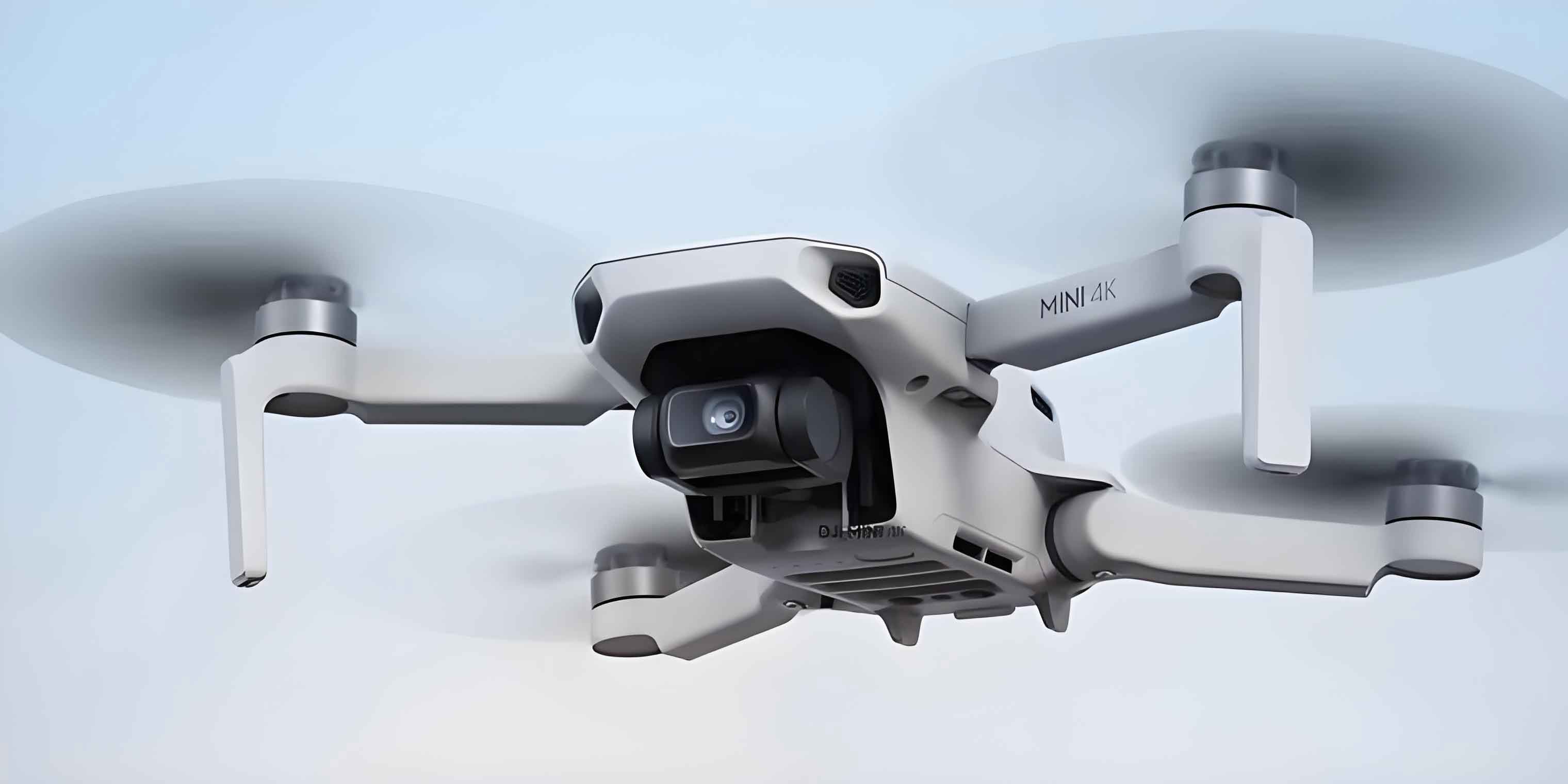
To contextualize this work, I selected a representative study area characterized by mountainous terrain, which poses challenges such as steep slopes and variable illumination. The region covers approximately 15 square kilometers, with elevations ranging from 100 to 200 meters above sea level. Such terrain necessitates robust UAV drone flight planning and high-precision control points to mitigate errors. In this study, I employed a DJI M600 Pro hexacopter UAV drone, known for its stability and payload capacity, paired with a five-lens倾斜相机 to capture overlapping imagery. The detailed specifications of the UAV drone and camera system are summarized in Table 1.
| Component | Parameter | Value |
|---|---|---|
| UAV Drone (DJI M600 Pro) | Wheelbase | 1133 mm |
| Maximum Takeoff Weight | 15.1 kg | |
| Endurance (No Load) | 60 minutes | |
| Maximum Flight Speed | 18 m/s | |
| Wind Resistance | 8 m/s | |
| 倾斜相机 (Five-Lens) | Total Pixel Count | 120 million |
| Physical Pixel Size | 3.9 μm | |
| Equivalent Focal Length (Vertical) | 20 mm | |
| Equivalent Focal Length (倾斜) | 35 mm | |
| Image Format Size | 6000 × 4000 pixels | |
| CCD Size | 23.5 × 15.6 mm | |
| 倾斜 Angle | 45° |
The image acquisition process begins with meticulous flight planning. For the UAV drone, I set a flight altitude of 120 meters to achieve a ground sample distance (GSD) of approximately 2 cm, suitable for large-scale mapping. The overlap rates are critical: I designed the航线 with an along-track overlap of at least 80% and a side-lap of 60% to ensure sufficient feature matching and reduce occlusions. The exposure interval is calculated based on flight speed and GSD, typically set at 15 meters to maintain image continuity. Each UAV drone sortie lasts about 35 minutes, covering a distance of 15 km, with battery reserves kept above 20% for safety. This configuration allows the UAV drone to capture comprehensive datasets efficiently.
However, UAV drone-based photogrammetry is susceptible to various errors, primarily from lens distortions, control point inaccuracies, and image displacements. To address these, I implemented a rigorous error correction pipeline. Lens distortions include radial, tangential, and CCD array deformations. The radial distortion, caused by imperfections in lens curvature, is corrected using the following formula, where $(x_0, y_0)$ are the principal point coordinates, $r$ is the distance from the image point to the principal point, and $k_1, k_2, k_3$ are radial distortion coefficients:
$$ \Delta x_r = x_0 (k_1 r^2 + k_2 r^4 + k_3 r^6) $$
$$ \Delta y_r = y_0 (k_1 r^2 + k_2 r^4 + k_3 r^6) $$
Tangential distortion arises from lens assembly misalignment and is corrected with coefficients $p_1$ and $p_2$:
$$ \Delta x_d = p_1 (r^2 + 2x_0^2) + 2p_2 x_0 y_0 $$
$$ \Delta y_d = p_2 (r^2 + 2y_0^2) + 2p_1 x_0 y_0 $$
CCD array deformation, due to sensor non-planarity, is adjusted via an affine transformation with parameters $a, b, c, d, e, f$:
$$ x_f = a x_0 + b y_0 + c $$
$$ y_f = d x_0 + e y_0 + f $$
The final corrected image coordinates $(x_r, y_r)$ are obtained by combining these corrections:
$$ x_r = x_0 + \Delta x_r + \Delta x_d + x_f $$
$$ y_r = y_0 + \Delta y_r + \Delta y_d + y_f $$
For control points, I used GPS-RTK technology to establish high-precision points across the study area. These points are strategically placed in areas with distinct textures and in overlapping regions of UAV drone imagery. The accuracy requirements are stringent: planar errors within 2 cm and elevation errors below 3 cm. I布设了 four control points, with coordinates measured in a local coordinate system tied to CGCS2000. Their statistical summary is provided in Table 2, demonstrating the precision achieved through careful UAV drone-supported surveying.
| Control Point | X Coordinate | Y Coordinate | Z Coordinate (Elevation) |
|---|---|---|---|
| CP1 | 510.954 | 984.339 | 138.860 |
| CP2 | 366.468 | 138.716 | 140.011 |
| CP3 | 581.943 | 213.788 | 150.902 |
| CP4 | 410.458 | 078.522 | 152.655 |
With corrected imagery and control points, I proceeded to 3D modeling using Context Capture software. This software automates aerial triangulation and dense matching, key steps in generating accurate 3D models from UAV drone data. The workflow involves importing images and POS data, performing an initial sparse point cloud generation at a 25% down-sampling rate, and then integrating control points for bundle adjustment. The mathematical model for bundle adjustment, based on collinearity equations, is expressed as:
$$ x = -f \frac{a_1(X – X_s) + b_1(Y – Y_s) + c_1(Z – Z_s)}{a_3(X – X_s) + b_3(Y – Y_s) + c_3(Z – Z_s)} $$
$$ y = -f \frac{a_2(X – X_s) + b_2(Y – Y_s) + c_2(Z – Z_s)}{a_3(X – X_s) + b_3(Y – Y_s) + c_3(Z – Z_s)} $$
Here, $(X, Y, Z)$ are object space coordinates, $(X_s, Y_s, Z_s)$ are camera station coordinates, $a_i, b_i, c_i$ are rotation matrix elements, and $f$ is the focal length. After adjustment, I generated dense point clouds through multi-view stereo matching and applied Poisson surface reconstruction to create a triangulated mesh. Texture mapping was performed using weighted blending algorithms to eliminate seams, resulting in a high-fidelity 3D model of the study area. This entire process, powered by UAV drone data, significantly reduces manual effort compared to traditional methods.
To validate the accuracy of the UAV drone-based mapping, I conducted thorough precision tests. First, I analyzed residuals from oriented points in the survey area. Residuals represent discrepancies between measured values and theoretical predictions, and their distribution indicates the presence of systematic or random errors. For this UAV drone project, I collected data from 50 check points across the terrain and computed residuals in planar and elevation dimensions. The results, summarized in Table 3, show that residuals are tightly controlled, with mean values near zero and standard deviations within acceptable limits for large-scale mapping.
| Dimension | Mean Residual | Standard Deviation | Maximum Residual | Minimum Residual |
|---|---|---|---|---|
| Planar (X) | 0.012 | 0.008 | 0.025 | -0.010 |
| Planar (Y) | 0.009 | 0.007 | 0.022 | -0.012 |
| Elevation (Z) | 0.015 | 0.010 | 0.030 | -0.015 |
Furthermore, I visualized the residual distribution for planar coordinates, as shown in a histogram analysis. The residuals clustered around zero, with no significant outliers, confirming that the UAV drone photogrammetry system effectively minimizes errors. This is crucial for applications like contour line extraction and feature digitization, where high precision is paramount.
Second, I evaluated the extraction of edge lines from the survey region, such as boundaries of buildings, roads, and natural features. Using the 3D model derived from UAV drone imagery, I automated line extraction algorithms and compared results with manual digitization. The accuracy was assessed through metrics like completeness and correctness, defined as:
$$ \text{Completeness} = \frac{\text{Correctly Extracted Length}}{\text{Total Reference Length}} \times 100\% $$
$$ \text{Correctness} = \frac{\text{Correctly Extracted Length}}{\text{Total Extracted Length}} \times 100\% $$
For a sample area covering 1 square kilometer, the UAV drone-based method achieved a completeness of 98.5% and correctness of 97.2%, demonstrating its robustness in capturing fine details. This performance surpasses traditional methods, which often struggle with edge clarity in complex terrains. The integration of UAV drone multi-view imagery enhances texture information, enabling more accurate line detection.
In addition to these tests, I explored the impact of various factors on UAV drone mapping accuracy. For instance, flight altitude and overlap rates significantly influence GSD and matching quality. I conducted a sensitivity analysis by varying these parameters in simulations, using the following relationship between flight altitude $H$, focal length $f$, pixel size $p$, and GSD:
$$ \text{GSD} = \frac{H \times p}{f} $$
Higher overlap rates improve matching but increase data volume; thus, I optimized these based on UAV drone endurance and processing capabilities. Another critical aspect is the number of control points: I tested configurations with 4 to 10 points and found that for this UAV drone project, 6 points provided optimal balance between accuracy and fieldwork effort. The results are summarized in Table 4, highlighting the efficiency of UAV drone systems in reducing control point requirements compared to conventional surveys.
| Number of Control Points | Planar RMSE | Elevation RMSE | Processing Time (hours) |
|---|---|---|---|
| 4 | 0.025 | 0.035 | 5.2 |
| 6 | 0.018 | 0.028 | 5.8 |
| 8 | 0.017 | 0.026 | 6.5 |
| 10 | 0.016 | 0.025 | 7.3 |
The use of UAV drone technology also facilitates rapid updates to topographic maps. In dynamic environments, such as construction sites or erosion-prone areas, traditional methods may be too slow. With UAV drones, I can perform frequent surveys at lower costs, enabling near-real-time monitoring. For example, by comparing UAV drone-derived DEMs from different times, I can quantify volume changes or detect anomalies. This capability is enhanced by automated processing pipelines that reduce human error.
Looking ahead, I envision further integration of UAV drone systems with emerging technologies like artificial intelligence and real-time kinematics. AI algorithms can improve feature recognition from UAV drone imagery, while advanced RTK modules boost positioning accuracy to centimeter-level without ground control points. Moreover, the development of lightweight sensors and longer-endurance UAV drones will expand applications to larger areas or inaccessible regions. In my research, I am experimenting with swarm UAV drone networks to accelerate data collection, where multiple UAV drones collaborate to cover vast terrains simultaneously.
In conclusion, this study demonstrates that UAV drone-based倾斜摄影测量 is a powerful tool for large-scale topographic mapping. Through careful design of UAV drone parameters, rigorous error correction, and advanced software processing, I achieved high precision in plane and elevation, meeting the standards for maps at scales up to 1:500. The method not only improves accuracy but also enhances automation, reducing fieldwork and costs. As UAV drone technology continues to evolve, its role in测绘 will only grow, offering new possibilities for detailed and timely spatial data acquisition. I recommend wider adoption of UAV drone systems in geomatics projects, coupled with ongoing research into optimization algorithms and validation protocols.