
In recent years, the rapid expansion of the low-altitude economy has propelled the civil drone market to unprecedented growth, with projections indicating that China’s low-altitude economy could surpass 3 trillion yuan by 2030, and the drone industry alone may exceed 1 trillion yuan. As an integral part of this ecosystem, civil drones are increasingly utilized for various applications, from recreational activities to commercial operations. However, this surge in adoption has been accompanied by a rise in civil drone infringement incidents, where drones cause personal injury or property damage to third parties. These events underscore significant challenges in existing legal frameworks and risk management mechanisms, particularly concerning third-party liability insurance for civil drones. Current regulations, such as the “Interim Regulations on the Flight Management of Unmanned Aircraft” implemented in 2024, mandate third-party liability insurance for certain categories of civil drones but exclude micro and light civil drones, leaving a critical gap in coverage. This omission is problematic, as even micro and light civil drones pose substantial risks due to their potential energy and kinetic energy during flight or descent, which can lead to severe harm. In this article, I explore the necessity of expanding mandatory third-party liability insurance to include micro and light civil drones, analyze the underwriting models—specifically the “follow-the-machine” model and the “follow-the-person” model—and argue for the superiority of the “follow-the-machine” approach based on risk control principles and analogies to motor vehicle liability insurance. By incorporating formulas, tables, and empirical evidence, I aim to provide a comprehensive analysis that supports the development of a robust insurance system for civil drones, ensuring public safety and fostering sustainable growth in the drone industry.
The current legislative landscape for civil drone third-party liability insurance in China is characterized by incremental developments but remains inadequate. Initially, the “Interim Measures for the Management of Civil Unmanned Aircraft Operational Flight Activities” introduced in 2018 required operators of commercial civil drones to purchase third-party liability insurance, marking a step forward in recognizing the risks associated with civil drone activities. However, this regulation was limited in scope, applying only to commercial operations and lacking detailed provisions on insurance terms, coverage limits, or exemptions. The more recent “Interim Regulations on the Flight Management of Unmanned Aircraft,” effective from 2024, expanded this requirement to include small, medium, and large non-commercial civil drones and imposed penalties for non-compliance, thereby enhancing the regulatory framework. Despite these improvements, micro and light civil drones are excluded from mandatory insurance coverage, which is a significant oversight given their prevalence in the market. Micro civil drones, defined as those with an empty weight of less than 0.25 kilograms and a maximum level flight speed not exceeding 40 km/h, and light civil drones, with an empty weight not exceeding 4 kilograms and a maximum takeoff weight not exceeding 7 kilograms, are subject to lighter regulatory burdens, such as exemptions from pilot licensing and, in some cases, registration requirements. This leniency, combined with the high volume of micro and light civil drones in operation—accounting for a substantial portion of total drone usage—creates a environment where risks are underestimated. For instance, statistical data from civil aviation authorities indicate that micro and light civil drones (excluding agricultural types) represent a majority of operational drones, increasing the likelihood of incidents. The absence of mandatory insurance for these categories means that victims of civil drone accidents may face difficulties in obtaining compensation, especially if operators lack the financial means to cover damages. This legislative gap not only jeopardizes public safety but also hinders the development of a comprehensive risk management strategy for civil drones, underscoring the urgent need for reform.
Expanding the mandatory third-party liability insurance to include micro and light civil drones is essential due to the inherent risks these devices pose, despite their smaller size and weight. The classification of civil drones in regulations often relies on weight as a proxy for risk, but this approach fails to account for the actual energy dynamics during flight. For example, the potential energy of a falling civil drone can be calculated using the formula for gravitational potential energy: $$PE = m \cdot g \cdot h$$, where \(m\) is the mass, \(g\) is the acceleration due to gravity (approximately 9.8 m/s²), and \(h\) is the height. Consider a micro civil drone with a mass of 0.25 kg falling from a height of 50 meters; its potential energy would be $$PE = 0.25 \, \text{kg} \times 9.8 \, \text{m/s}^2 \times 50 \, \text{m} = 122.5 \, \text{Joules}$$. Similarly, a light civil drone with a mass of 4 kg falling from the same height would have a potential energy of $$PE = 4 \, \text{kg} \times 9.8 \, \text{m/s}^2 \times 50 \, \text{m} = 1960 \, \text{Joules}$$. To put this in perspective, experiments have shown that a 30-gram egg dropped from 18 stories can crack a human skull, indicating that even micro civil drones can cause serious injury upon impact. Moreover, the kinetic energy during flight collisions is equally concerning, given by $$KE = \frac{1}{2} m v^2$$, where \(v\) is the velocity. For a light civil drone weighing 4 kg and flying at 27.8 m/s (100 km/h), the kinetic energy would be $$KE = \frac{1}{2} \times 4 \, \text{kg} \times (27.8 \, \text{m/s})^2 = 1545.68 \, \text{Joules}$$. Such energy levels can result in significant harm, as evidenced by real-world incidents where civil drones have caused injuries, such as facial lacerations or even skull fractures. The following table summarizes the energy calculations for micro and light civil drones under typical conditions:
| Civil Drone Category | Mass (kg) | Height (m) | Potential Energy (J) | Velocity (m/s) | Kinetic Energy (J) |
|---|---|---|---|---|---|
| Micro Civil Drone | 0.25 | 50 | 122.5 | 11 | 15.125 |
| Light Civil Drone | 4 | 50 | 1960 | 27.8 | 1545.68 |
Beyond physical energy, civil drones also face risks from system failures, operator errors, and environmental factors. For instance, technical malfunctions or signal interference can lead to uncontrolled descents, while inexperienced operators may misuse civil drones in populated areas. The “Civil Unmanned Aircraft System Airworthiness Certification Project Risk Assessment Guide” classifies micro civil drones as medium risk and light civil drones as medium to high risk based on energy levels and collision probability, further justifying the need for insurance coverage. Additionally, the practice of modifying civil drones—such as altering propellers or increasing weight—amplifies these risks, making it imperative to include all categories in mandatory insurance schemes. From a societal perspective, third-party liability insurance for civil drones ensures that victims receive timely compensation for medical expenses or property damage, reducing the financial burden on operators and promoting trust in the industry. By adopting a “stepped premium” system, where insurance costs are adjusted based on risk assessments of civil drones—considering factors like technical parameters, operational scenarios, and operator behavior—insurers can incentivize safer practices while distributing costs fairly. This approach aligns with the principle that insurance premiums should correlate with the risk level of the insured object, as outlined in insurance laws. In summary, expanding mandatory insurance to micro and light civil drones is not only a practical necessity but also a proactive measure to mitigate the growing risks associated with these devices.
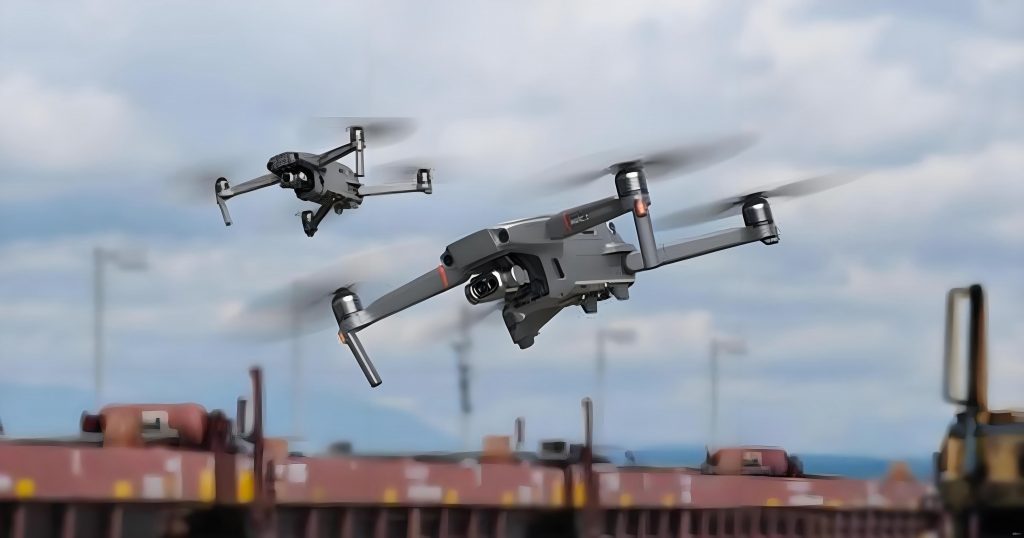
The underwriting models for civil drone third-party liability insurance—namely, the “follow-the-machine” model and the “follow-the-person” model—present distinct approaches to risk allocation, with the former offering greater advantages in terms of coverage, liability determination, and risk management. In the “follow-the-machine” model, the insurance policy is tied to the civil drone itself, meaning that regardless of who operates the drone, any third-party liabilities arising from its use are covered. This model emphasizes social protection by ensuring continuous coverage and simplifying claims processes for victims. In contrast, the “follow-the-person” model links insurance to a specific operator, providing coverage only when that individual is controlling the civil drone, which focuses more on commercial benefits for the insured operator. However, the “follow-the-person” model has significant limitations, as it often requires operators to hold specific qualifications, excluding the vast number of unlicensed users of micro and light civil drones under current regulations. This restriction drastically reduces insurance penetration and contradicts the goal of comprehensive risk management for civil drones. Moreover, in scenarios where civil drones are shared, leased, or transferred among multiple operators, the “follow-the-person” model complicates liability attribution, leading to delays in compensation and increased legal disputes. For example, if a civil drone is operated by someone other than the insured individual, determining coverage can become convoluted, undermining the efficiency of the insurance mechanism.
To illustrate the differences between these models, consider the following table comparing key aspects:
| Aspect | “Follow-the-Machine” Model for Civil Drones | “Follow-the-Person” Model for Civil Drones |
|---|---|---|
| Insurance Coverage | Broad and continuous, covering any operator of the civil drone | Limited to the insured operator, excluding other users |
| Liability Determination | Straightforward, as it focuses on the civil drone as the risk source | Complex, especially when operators change or multiple parties are involved |
| Risk Management | Centralized, encouraging owners to maintain and monitor civil drones | Decentralized, reliant on individual operator behavior |
| Social Attribute | High, prioritizing public safety and victim compensation | Lower, emphasizing individual financial protection |
| Applicability to Micro/Light Civil Drones | Ideal, due to high turnover and shared usage | Problematic, as many operators lack formal qualifications |
The “follow-the-machine” model is particularly justified when examining the risk control capabilities of civil drone owners. In cases where the owner is also the operator, they possess comprehensive control over the civil drone, including maintenance, flight planning, and operational decisions, which directly influence risk levels. Even when ownership and operation are separated, the owner typically retains ultimate responsibility for the civil drone’s condition and usage authorizations, making them the most suitable party to bear insurance obligations. This aligns with the principles of risk society, where those with control over hazardous activities should be accountable for associated liabilities. Drawing an analogy to motor vehicle liability insurance, which employs a “follow-the-vehicle” model, further supports this approach. In many jurisdictions, motor vehicle insurance is tied to the vehicle itself, ensuring that regardless of the driver, third-party claims are addressed promptly. This system has proven effective in managing risks and compensating victims, as vehicle owners are incentivized to maintain safety standards and select responsible drivers. Similarly, for civil drones, the “follow-the-machine” model can create a unified risk management framework, where owners are motivated to implement safety measures, such as regular inspections and software updates, to reduce premiums. The formula for risk reduction can be expressed as $$R = f(T, S, B)$$, where \(R\) is the risk level, \(T\) represents technical parameters (e.g., weight, speed), \(S\) denotes scenario factors (e.g., population density), and \(B\) indicates behavioral elements (e.g., operator training). By binding insurance to the civil drone, insurers can collect data on these variables to calculate dynamic premiums, promoting a culture of safety within the industry.
In practice, implementing the “follow-the-machine” model for civil drone third-party liability insurance requires legislative and policy support to establish it as the dominant approach, while gradually optimizing the “follow-the-person” model for niche applications. Laws and regulations should explicitly mandate that all civil drones, including micro and light categories, be covered under a “follow-the-machine” insurance scheme, with provisions for standardized policy terms, coverage limits, and exemption clauses. This could involve amending existing regulations, such as the “Interim Regulations on the Flight Management of Unmanned Aircraft,” to remove exemptions for micro and light civil drones and specify the “follow-the-machine” model as the default. Additionally, integrating insurance requirements with civil drone registration systems can enhance compliance; for instance, linking insurance policies to unique drone identifiers would streamline tracking and enforcement. To address the variability in risk, a “stepped premium” system can be adopted, where premiums for civil drones are adjusted based on multi-dimensional risk assessments. This can be modeled using a formula like $$P = k \cdot (E \cdot C \cdot O)$$, where \(P\) is the premium, \(k\) is a constant, \(E\) is the energy risk factor (derived from potential and kinetic energy calculations), \(C\) is the collision probability factor (depending on operational environment), and \(O\) is the operator behavior factor (e.g., history of violations). For example, a civil drone operated in densely populated areas with a high energy risk would incur higher premiums, encouraging owners to adopt safer practices. Meanwhile, the “follow-the-person” model could be retained for specialized scenarios, such as certified professional operators, but with enhanced oversight to ensure it does not undermine overall coverage. By fostering collaboration between insurers, regulators, and the civil drone industry, this dual approach can create a balanced ecosystem that prioritizes public safety while supporting innovation. Ultimately, a well-designed insurance framework for civil drones will not only protect third parties but also contribute to the sustainable growth of the low-altitude economy, as stakeholders gain confidence in the risk management mechanisms.
In conclusion, the expansion of mandatory third-party liability insurance to include micro and light civil drones is a critical step toward addressing the evolving risks in the drone industry. Through a detailed analysis of energy dynamics, legislative gaps, and underwriting models, I have demonstrated that these civil drones, despite their smaller size, pose significant threats to public safety due to their potential and kinetic energy during operations. The “follow-the-machine” model emerges as the superior underwriting approach for civil drones, as it ensures broad coverage, simplifies liability determination, and aligns with risk control principles exemplified by motor vehicle insurance systems. By implementing a “stepped premium” mechanism and strengthening regulatory frameworks, policymakers can create an insurance system that incentivizes responsible ownership and operation of civil drones, thereby reducing accident rates and enhancing victim compensation. As the civil drone market continues to grow, adapting insurance policies to cover all categories will be essential for fostering a safe and prosperous low-altitude economy. I recommend that future reforms focus on integrating micro and light civil drones into mandatory insurance schemes, promoting the “follow-the-machine” model, and continuously evaluating risks through advanced assessment tools. This proactive stance will not only mitigate the challenges posed by civil drones but also unlock their full potential in various sectors, from logistics to entertainment, ensuring that technological advancement does not come at the expense of public welfare.