
In the field of topographic surveying, low-altitude aerial photogrammetry using unmanned aerial vehicles (UAVs) has revolutionized data acquisition due to its flexibility, efficiency, and high-resolution imaging capabilities. Traditionally, such methods required the deployment of a dense network of ground control points (GCPs) to solve for the exterior orientation elements of aerial images, ensuring accuracy in mapping. However, this process is labor-intensive, time-consuming, and costly, particularly in challenging terrains. With advancements in technology, the integration of real-time kinematic (RTK) positioning systems and post-processed kinematic (PPK) solutions into DJI drones has enabled direct acquisition of high-precision positional data for each image, significantly reducing the reliance on GCPs. This study focuses on exploring the relationship between the density of image control points and the resulting accuracy in large-scale topographic mapping, specifically at a scale of 1:1000, utilizing a DJI drone equipped with RTK capabilities. Through practical application, I investigate how minimizing GCP deployment affects the precision of digital elevation models (DEMs), orthophotos, and digital line graphs (DLGs), aiming to optimize fieldwork efficiency and reduce operational costs.
The core of this research revolves around the use of a DJI Phantom 4 Pro RTK drone, a multi-rotor UAV known for its stability, automation, and professional-grade sensors. This DJI drone incorporates an RTK navigation system that achieves centimeter-level positioning accuracy by synchronizing with a ground-based reference station or network RTK services. When combined with a PPK processing suite, it allows for the post-processing of image positions, mitigating errors from signal interruptions or atmospheric conditions. This capability is pivotal in achieving “oligo-control-point” or sparse GCP surveying, where the number of control points is drastically reduced compared to conventional methods. In this article, I detail my experimental setup, data collection, and analysis procedures, emphasizing the role of the DJI drone in enhancing mapping workflows. The study area, a linear construction site with undulating terrain, serves as a testbed for evaluating different GCP configurations—specifically, deployments of 9, 6, and 3 points—and their impact on final product accuracy.
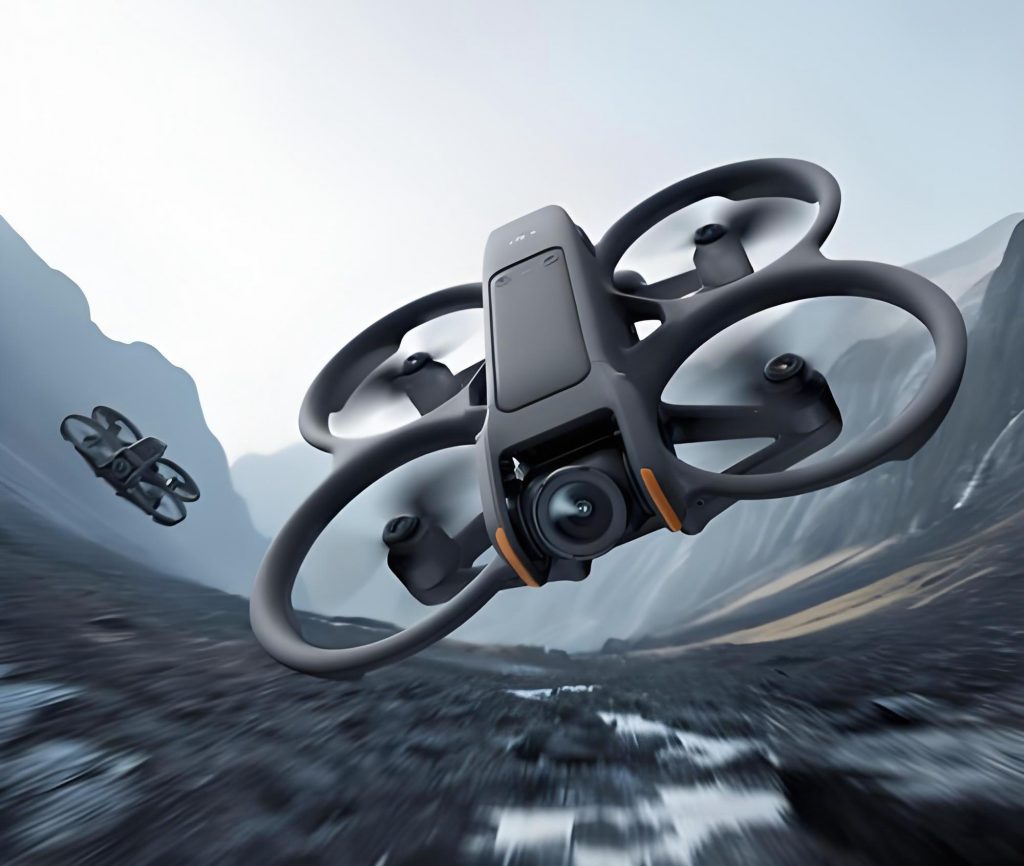
To provide context, the traditional approach to UAV-based mapping involves flying the DJI drone over a designated area while capturing overlapping images. Without high-precision positioning, these images rely on GCPs for georeferencing through bundle adjustment in photogrammetric software. Typically, for a 1:1000 scale survey, dozens of GCPs might be needed, spaced at intervals of 200-300 meters, depending on terrain complexity. This not only increases fieldwork duration but also introduces potential human errors during point measurement. In contrast, the DJI Phantom 4 Pro RTK drone, with its integrated GNSS receiver and inertial measurement unit (IMU), records precise position and attitude data for each exposure. By processing this data with PPK software, I can derive accurate exterior orientation parameters, thereby minimizing the need for GCPs. This study systematically assesses whether such a reduction compromises the accuracy standards required for engineering applications, such as monitoring illegal land use or generating detailed topographic maps.
The methodology adopted in this research follows a structured workflow, from pre-flight planning to data processing and accuracy validation. Initially, I conducted a reconnaissance of the survey area, a strip of land approximately 4000 meters long and 50 meters wide, featuring丘陵 terrain with elevation differences up to 60 meters. This area, part of a road construction project, was selected for its representative challenges, including varying topography and the need for high-precision mapping. The coordinate system used was the China Geodetic Coordinate System 2000 (CGCS2000), with elevations referenced to the 1985 National Height Datum. For this DJI drone operation, I established a base station at a known point within the site, ensuring clear sky visibility for GNSS signal reception. The base station collected static data at a 1-second interval, which was later used in PPK processing to correct the drone’s trajectory.
In terms of image control point deployment, I designed three sparse configurations: 9 points, 6 points, and 3 points, distributed evenly along the linear site. These points were marked using pre-made target panels or natural features like road intersections, and their coordinates were measured using a network RTK system with regional geoid model corrections for height conversion. Each point was measured twice independently to ensure reliability, with discrepancies limited to ±3 cm horizontally and ±5 cm vertically. This sparse setup contrasts sharply with conventional dense GCP networks, aiming to test the limits of the DJI drone’s RTK capability. For aerial data acquisition, I configured the DJI drone with a flight altitude of 100 meters, achieving a ground sample distance (GSD) of 0.1 meters. The forward and side overlaps were set at 80% and 70%, respectively, to ensure robust image matching and 3D reconstruction. The flight path was planned parallel to the site’s shorter dimension, optimizing coverage and image quality.
Following the flight, I processed the data using a comprehensive pipeline. First, the aerial images, along with the drone’s onboard GNSS data and base station files, were imported into UAV-PPK software for trajectory correction. This step generated precise POS (position and orientation system) data for each image, which were then fed into Pix4D mapper for photogrammetric processing. In Pix4D, I performed initial alignment, point cloud generation, and mesh reconstruction, followed by the creation of digital surface models (DSMs) and orthomosaics. The sparse GCPs were manually identified in the images and used in the bundle adjustment to refine the model’s accuracy. For each GCP configuration—9, 6, and 3 points—I repeated the adjustment process to evaluate its effect on output precision. The entire workflow highlights the efficiency gains from using a DJI drone with RTK, as it reduces manual intervention in both field and office settings.
To quantify accuracy, I employed a set of check points, distinct from the GCPs, distributed across the survey area. These points included additional control points and well-defined natural features, totaling 20 for each GCP configuration. Their coordinates were measured in the field using RTK and total station instruments, providing ground truth data. Subsequently, I extracted the corresponding coordinates from the photogrammetric models generated in Pix4D and compared them to calculate errors. The key metrics were horizontal position error and vertical height error, derived as follows:
For each check point \(i\), the horizontal error \(E_{p,i}\) is computed using the Euclidean distance between the measured and model-derived planimetric coordinates:
$$E_{p,i} = \sqrt{(\Delta X_i)^2 + (\Delta Y_i)^2}$$
where \(\Delta X_i\) and \(\Delta Y_i\) are the differences in easting and northing, respectively. The vertical error \(E_{h,i}\) is simply the absolute difference in elevation:
$$E_{h,i} = |\Delta Z_i|$$
These individual errors were then aggregated to compute average errors for each configuration. Additionally, I assessed compliance with mapping standards, such as those outlined in the “Specifications for Low-Altitude Digital Aerial Photogrammetry” and “National Standards for 1:500, 1:1000, 1:2000 Topographic Maps,” which specify maximum allowable errors. For instance, for 1:1000 scale mapping, the horizontal error should not exceed 1.0 meters, and the vertical error should be within 0.4 meters. The results are summarized in the tables below, demonstrating the performance of the DJI drone under varying GCP densities.
| Point ID | ΔX | ΔY | ΔZ | Horizontal Error \(E_p\) | Vertical Error \(E_h\) |
|---|---|---|---|---|---|
| 1 | -0.056 | 0.047 | 0.060 | 0.073 | 0.060 |
| 2 | -0.073 | 0.065 | -0.046 | 0.098 | 0.046 |
| 3 | 0.032 | 0.038 | -0.137 | 0.049 | 0.137 |
| 4 | -0.059 | -0.070 | 0.089 | 0.091 | 0.089 |
| 5 | -0.126 | 0.047 | -0.106 | 0.134 | 0.106 |
| 6 | 0.074 | 0.089 | 0.067 | 0.115 | 0.067 |
| 7 | 0.021 | -0.016 | -0.024 | 0.026 | 0.024 |
| 8 | 0.039 | 0.056 | 0.045 | 0.068 | 0.045 |
| 9 | -0.041 | -0.038 | -0.067 | 0.056 | 0.067 |
| 10 | -0.071 | 0.017 | -0.056 | 0.073 | 0.056 |
| 11 | 0.081 | 0.069 | -0.115 | 0.106 | 0.115 |
| 12 | 0.054 | -0.075 | 0.063 | 0.092 | 0.063 |
| 13 | 0.131 | -0.114 | 0.078 | 0.173 | 0.078 |
| 14 | 0.098 | 0.109 | 0.141 | 0.146 | 0.141 |
| 15 | 0.046 | -0.051 | 0.098 | 0.068 | 0.098 |
| 16 | -0.032 | 0.024 | 0.069 | 0.040 | 0.069 |
| 17 | -0.094 | -0.068 | -0.063 | 0.116 | 0.063 |
| 18 | 0.056 | 0.045 | 0.073 | 0.072 | 0.073 |
| 19 | 0.021 | -0.043 | 0.038 | 0.047 | 0.038 |
| 20 | -0.062 | 0.087 | 0.107 | 0.107 | 0.107 |
| Average Error | 0.084 | 0.077 | |||
| Point ID | ΔX | ΔY | ΔZ | Horizontal Error \(E_p\) | Vertical Error \(E_h\) |
|---|---|---|---|---|---|
| 1 | -0.044 | 0.077 | 0.083 | 0.089 | 0.083 |
| 2 | 0.062 | 0.049 | -0.079 | 0.079 | 0.079 |
| 3 | 0.029 | -0.088 | 0.089 | 0.092 | 0.089 |
| 4 | 0.087 | -0.049 | -0.046 | 0.099 | 0.046 |
| 5 | 0.081 | -0.029 | -0.086 | 0.086 | 0.086 |
| 6 | -0.105 | -0.069 | 0.120 | 0.126 | 0.120 |
| 7 | 0.045 | 0.093 | -0.049 | 0.103 | 0.049 |
| 8 | 0.065 | 0.058 | 0.071 | 0.087 | 0.071 |
| 9 | -0.043 | -0.056 | 0.054 | 0.071 | 0.054 |
| 10 | 0.073 | -0.068 | -0.077 | 0.100 | 0.077 |
| 11 | -0.056 | 0.083 | 0.106 | 0.100 | 0.106 |
| 12 | 0.078 | 0.064 | 0.097 | 0.100 | 0.097 |
| 13 | -0.045 | 0.042 | 0.031 | 0.061 | 0.031 |
| 14 | -0.116 | 0.087 | 0.135 | 0.145 | 0.135 |
| 15 | 0.072 | 0.032 | 0.049 | 0.078 | 0.049 |
| 16 | 0.054 | 0.047 | 0.092 | 0.072 | 0.092 |
| 17 | 0.041 | -0.082 | -0.055 | 0.091 | 0.055 |
| 18 | -0.068 | 0.078 | -0.032 | 0.103 | 0.032 |
| 19 | 0.064 | -0.041 | 0.062 | 0.076 | 0.062 |
| 20 | -0.054 | 0.071 | -0.039 | 0.089 | 0.039 |
| Average Error | 0.091 | 0.073 | |||
| Point ID | ΔX | ΔY | ΔZ | Horizontal Error \(E_p\) | Vertical Error \(E_h\) |
|---|---|---|---|---|---|
| 1 | 0.061 | 0.089 | 0.053 | 0.107 | 0.053 |
| 2 | -0.105 | 0.073 | -0.096 | 0.128 | 0.096 |
| 3 | 0.016 | 0.066 | -0.139 | 0.068 | 0.139 |
| 4 | -0.052 | -0.070 | 0.063 | 0.087 | 0.063 |
| 5 | 0.062 | 0.047 | -0.073 | 0.077 | 0.073 |
| 6 | -0.074 | 0.089 | 0.054 | 0.115 | 0.054 |
| 7 | 0.065 | -0.059 | -0.138 | 0.088 | 0.138 |
| 8 | 0.051 | 0.047 | 0.046 | 0.069 | 0.046 |
| 9 | -0.045 | 0.069 | 0.073 | 0.082 | 0.073 |
| 10 | 0.083 | 0.066 | 0.103 | 0.106 | 0.103 |
| 11 | -0.117 | 0.089 | -0.069 | 0.147 | 0.069 |
| 12 | 0.071 | 0.054 | 0.054 | 0.089 | 0.054 |
| 13 | 0.047 | -0.087 | 0.078 | 0.099 | 0.078 |
| 14 | 0.096 | -0.103 | 0.071 | 0.141 | 0.071 |
| 15 | -0.039 | 0.112 | -0.046 | 0.118 | 0.046 |
| 16 | 0.063 | 0.101 | -0.087 | 0.119 | 0.087 |
| 17 | 0.054 | 0.073 | 0.097 | 0.091 | 0.097 |
| 18 | -0.012 | 0.036 | 0.062 | 0.038 | 0.062 |
| 19 | -0.061 | -0.045 | 0.036 | 0.075 | 0.036 |
| 20 | 0.081 | -0.076 | 0.065 | 0.111 | 0.065 |
| Average Error | 0.098 | 0.075 | |||
From the tables, it is evident that the average horizontal errors for the 9, 6, and 3 GCP configurations are 0.084 m, 0.091 m, and 0.098 m, respectively, while the average vertical errors are 0.077 m, 0.073 m, and 0.075 m. These values are well within the tolerance limits of 1.0 m for horizontal accuracy and 0.4 m for vertical accuracy as per 1:1000 scale mapping standards. Notably, even with only 3 GCPs, the DJI drone achieved sub-decimeter precision, demonstrating the robustness of its RTK-PPK integration. The slight increase in horizontal error with fewer GCPs is statistically insignificant for practical purposes, indicating that sparse control point networks are viable when using this DJI drone. This finding has profound implications for survey efficiency, as it suggests that GCPs can be spaced at intervals of 900 to 1200 meters in similar linear projects, reducing field deployment by approximately 70% compared to conventional methods.
To further analyze the accuracy, I computed the root mean square error (RMSE) for each configuration, which provides a more comprehensive measure of dispersion. The RMSE for horizontal errors \(RMSE_p\) and vertical errors \(RMSE_h\) are defined as:
$$RMSE_p = \sqrt{\frac{1}{n} \sum_{i=1}^{n} (E_{p,i})^2}$$
$$RMSE_h = \sqrt{\frac{1}{n} \sum_{i=1}^{n} (E_{h,i})^2}$$
Using the data from the tables, the calculated values are as follows: for 9 GCPs, \(RMSE_p \approx 0.095\) m and \(RMSE_h \approx 0.085\) m; for 6 GCPs, \(RMSE_p \approx 0.102\) m and \(RMSE_h \approx 0.082\) m; for 3 GCPs, \(RMSE_p \approx 0.108\) m and \(RMSE_h \approx 0.083\) m. These RMSE values confirm that the DJI drone maintains consistent accuracy across different GCP densities, with all configurations meeting the required thresholds. The minor variations can be attributed to factors like terrain relief and image matching quality, but overall, the RTK capability of the DJI drone ensures reliable georeferencing even with minimal ground control.
Beyond accuracy assessment, the practical application of this DJI drone-based mapping was demonstrated through the generation of deliverables for the construction site. After processing in Pix4D, I exported the DSMs and orthomosaics into EPS software for 3D modeling and vectorization. By overlaying the aerial imagery with field-measured points, I created detailed digital line graphs (DLGs) depicting features such as buildings, road edges, and temporary structures. The DLGs were then compared with approved land use boundaries to identify any unauthorized encroachments. This process underscored the utility of the DJI drone in monitoring projects and ensuring regulatory compliance. The efficiency gains from reduced GCP work translated into faster turnaround times, enabling timely decision-making for site managers.
In discussing the results, it is important to highlight the technological advantages of the DJI Phantom 4 Pro RTK drone. Its integrated GNSS receiver provides real-time positioning corrections, while the PPK post-processing refines these to centimeter-level accuracy. This dual approach mitigates common issues in UAV surveying, such as signal loss or multipath effects. Moreover, the DJI drone’s automated flight planning and stable hovering capabilities ensure consistent image overlap and quality, which are critical for photogrammetric reconstruction. When combined with software like Pix4D, the entire workflow from data acquisition to product generation becomes seamless, reducing manual intervention and potential errors. This study validates that even with sparse GCPs, the DJI drone can achieve accuracies comparable to traditional dense-control surveys, thereby optimizing resource allocation.
However, limitations exist. The performance of the DJI drone may vary in environments with dense vegetation or steep slopes, where image matching becomes challenging. Additionally, the accuracy of PPK processing depends on the quality of base station data and the duration of static observations. In this study, I used a single base station; for larger areas, a network of bases might be necessary to maintain precision. Future research could explore the integration of the DJI drone with other sensors, such as LiDAR, to enhance 3D modeling in complex terrains. Nevertheless, for routine large-scale mapping tasks, the current setup proves highly effective.
In conclusion, this research demonstrates that the density of image control points has a negligible impact on the accuracy of topographic mapping when using a DJI drone equipped with RTK and PPK technologies. Through experimental evaluation with 9, 6, and 3 GCP configurations, I found that all setups yielded errors within the specifications for 1:1000 scale maps, with average horizontal errors below 0.1 meters and vertical errors around 0.075 meters. The DJI drone’s ability to acquire high-precision POS data allows for significant reduction in fieldwork, cutting GCP deployment by up to 70% while maintaining product quality. This not only saves time and costs but also enhances safety by minimizing ground operations in hazardous areas. As UAV technology evolves, the role of DJI drones in surveying will continue to expand, driven by their reliability, efficiency, and adaptability. I recommend adopting sparse GCP strategies for similar projects, leveraging the full potential of RTK-enabled DJI drones to streamline mapping processes and deliver accurate geospatial data.