
With the rapid advancement of application technologies for unmanned aerial vehicles (UAVs), the demand for plant protection primarily targeting field crops like rice and wheat can no longer fully satisfy the needs of modern agriculture. My research observations indicate that agricultural drone operations are now being explored and applied across a broader spectrum of agricultural production. China stands as the world’s leading fruit producer, boasting the largest cultivation area and output. Fruit tree cultivation, often situated in complex terrains like mountains and hills, presents significant challenges for traditional plant protection methods, which are often inefficient and environmentally taxing. In this context, agricultural drones demonstrate considerable advantages, including strong terrain adaptability, high operational efficiency, reduced soil pollution, and water conservation, marking a promising future for orchard management.
Compared to low-lying field crops, fruit trees are characterized by their large size, dense canopy, and complex growth environments. Directly applying field crop spraying experience is often ineffective. Furthermore, the dense foliage can obstruct an operator’s line of sight, demanding higher safety features from the agricultural drone equipment. The diversity in tree species, canopy structures, and available agricultural drone models leads to significant variations in operational modes and parameters. Currently, a lack of standardized protocols means operators often rely on empirical judgment. Therefore, conducting research on equipment development, operational mode exploration, and parameter optimization tailored to the specific demands of fruit tree applications is of substantial practical significance. This article, from my perspective, synthesizes the current research status in these areas.
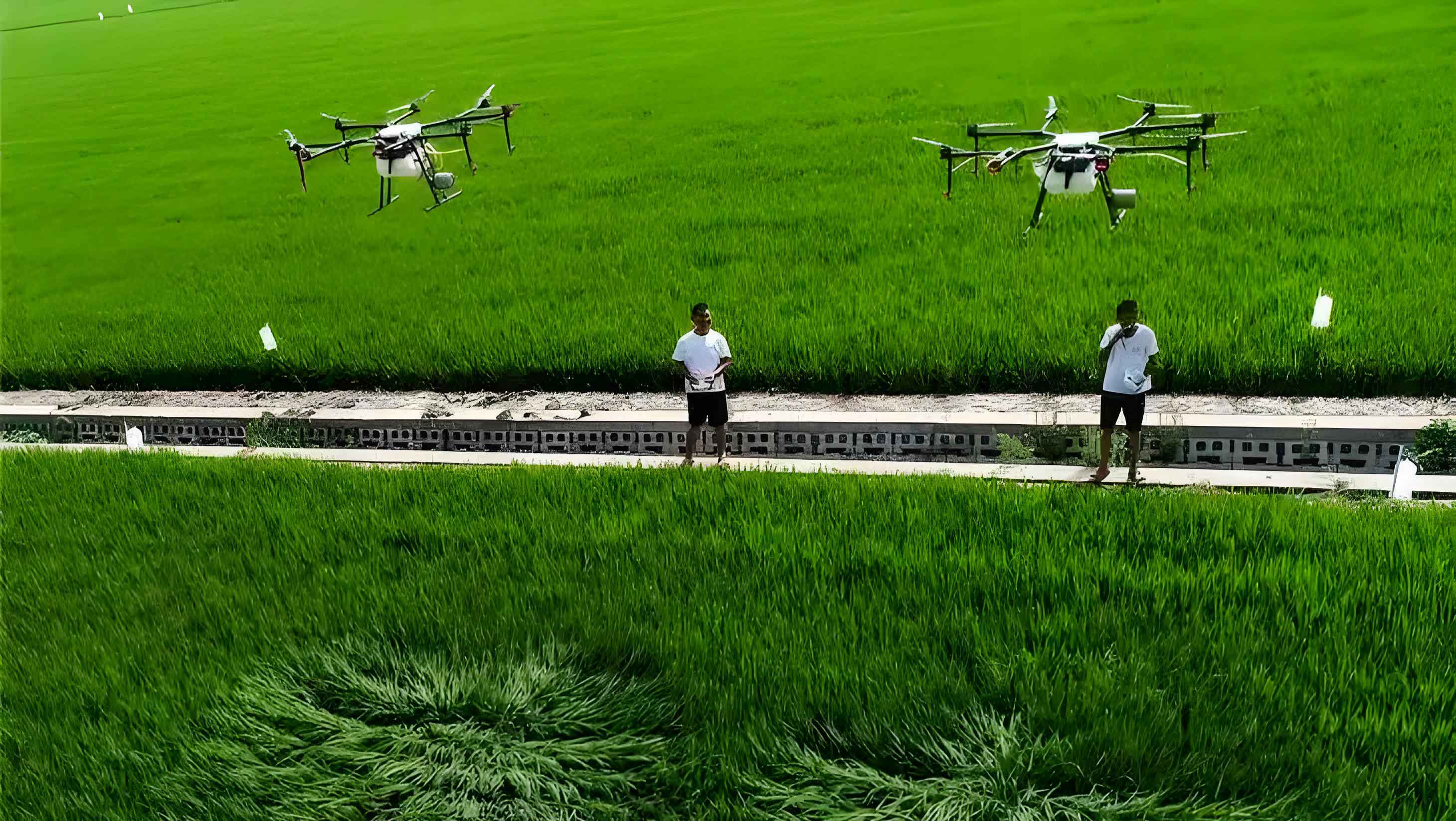
1. Current Status of Equipment Development and Operational Modes
1.1 Development of Specialized Equipment
The development of agricultural drone technology has progressed from maturity in field applications to an exploratory phase for orchard use. Leading manufacturers globally and domestically are now focusing on upgrading equipment specifically for fruit trees. Key technological integrations include high-precision positioning, autonomous obstacle avoidance, terrain-following flight, 3D mapping, automated route planning, and visual perception systems. I have analyzed the core technologies of several prominent brands developing orchard-specialized agricultural drones, which can be summarized as follows:
| Brand/Model | Core Technologies for Orchard Application | Reported Advantages |
|---|---|---|
| Yamaha (e.g., Fazer R, YMR-01) | Advanced遥感, deep learning algorithms for land analysis, high-precision positioning for autonomous flight, multi-craft control systems. | Accurate droplet control, rapid large-scale field monitoring, quantitative data for farm management. |
| XAG P Series (e.g., P100 2023) | Centrifugal nozzle, downwash airflow, 3D route planning (spiral, free-form), 4D imaging radar, AI-powered field mapping (XGeomatics). | Automated boundary/obstacle recognition, centimeter-level terrain-following, variable-rate application, reported savings in pesticide (30%) and water (90%). |
| DJI T Series (e.g., T50) | 3D point cloud slicing & fusion, AI recognition for >20 tree types, tree-core recognition for discrete trees, centrifugal nozzle for penetration. | High tree recognition accuracy (~97%), customized spraying modes for thick canopies, full-process management (spraying, pollination, transport). |
| JIMU E-A2021 | AI-optimized path planning, L4 autonomous flight, CCMS常温弥雾系统, visual navigation, slope-following up to 90°. | Suited for complex hills/mountains, automatic operation without pre-mapping, operates in signal-weak environments. |
The trend is clear: orchard management is undergoing a transformation centered on agricultural drone technology, with these machines becoming integral to “unified prevention and control” strategies in many regional specialty fruit industries.
1.2 Exploration of Operational Modes
Early single-mode operations are insufficient for diverse orchard needs. Research now focuses on exploring modes that enhance efficiency, safety, and intelligence. Based on orchard characteristics—topography, area, tree distribution, and canopy structure—different combinations of operation methods, spraying methods, and route planning algorithms are being investigated.
1.2.1 Operation Methods
From my analysis, operation methods can be categorized by their level of automation:
| Method | Principle | Suitable Orchard Type | Advantages | Disadvantages |
|---|---|---|---|---|
| Manual Operation | Pilot directly controls the agricultural drone via remote control. | Small, irregular plots with scattered trees and many obstacles. | Flexible, no mapping required, simple. | Lower spray control precision, higher chemical consumption. |
| AB-Point Operation | Define start (A) and end (B) points; the agricultural drone flies and sprays automatically along the straight line. | Large, regular-shaped plots with simple terrain and uniform tree distribution. | High efficiency, precise control, reduced labor risk. | Limited to simple, linear flight paths. |
| Fully Autonomous Operation | The plot is pre-mapped (2D/3D). The system generates and executes an optimized route automatically. | Large, topographically complex plots with irregular tree canopies. | Highest automation & precision, enables variable-rate application, efficient. | High mapping/modeling cost, technically complex setup. |
The industry is moving decisively towards fully automated, data-driven management cycles for agricultural drone operations in orchards.
1.2.2 Spraying Methods and Nozzle Characteristics
Spraying methods have evolved with辅助飞行 technologies. Common methods include Fixed-point Spraying (precise for sparse trees), Continuous Spraying (along preset routes for dense plantings), and Circling Spraying (3D orbits around identified tree cores for thick canopies). The choice of nozzle fundamentally affects spray quality. The two main types are:
- Pressure Nozzle: Uses a pump to force liquid through a orifice (e.g., flat-fan). It offers strong penetration and low drift but can suffer from uneven atomization and clogging.
- Centrifugal Nozzle: Uses a motor-driven spinning disc to shear liquid by centrifugal force. It provides uniform atomization but has higher drift potential and shorter component life.
Research on the spray characteristics of these nozzles under various conditions is crucial. Studies in wind tunnels and fields examine parameters like Droplet Size Spectrum (e.g., $DV_{0.1}$, $DV_{0.5}$, $DV_{0.9}$ representing the droplet diameters for which 10%, 50%, and 90% of the total spray volume is comprised of droplets smaller than this value), drift distance, and deposition. Key findings I have synthesized include:
$$ \text{Drift Potential} \propto f(V_{wind}, D_{droplet}, H_{release}) $$
For pressure nozzles, the $DV_{0.5}$ (Volume Median Diameter) often increases with horizontal wind speed. For both types, deposition quantity generally decreases as wind speed increases. For centrifugal nozzles, factors like flow rate ($Q$), rotation speed ($\omega$), and release height ($H$) influence spray swath ($S_w$) and droplet size ($D$):
$$ S_w = g(Q, \omega, H) $$
$$ D = h(\omega, \text{distance from nozzle}) $$
Typically, increasing $\omega$ decreases $D$, while increasing wind speed slightly reduces $D$ and significantly reduces deposition within the target area.
1.2.3 Route Planning Algorithms
This is a critical research hotspot in robotics and precision agriculture, aiming to minimize idle flight paths for the agricultural drone, thereby reducing energy consumption and time. The problem involves both intra-region coverage path planning (CPP) and inter-region scheduling. My review identifies several algorithmic approaches:
| Algorithm Type | Application Focus | Reported Outcome / Principle |
|---|---|---|
| Genetic Algorithm (GA) / Traveling Salesman Problem (TSP) | Optimizing operation sequence for multiple discrete plots. | Reduces transit distance between plots. Combines GA with TSP models for optimal order. |
| Particle Swarm Optimization (PSO) | Route planning within plots containing obstacles. | Optimizes turning points and sequence, reducing flight time and energy use. |
| Improved Ant Colony Optimization (ACO) | 3D path planning for complex polygons with internal obstacles. | Outperforms greedy algorithms in complex 3D environments typical of orchards. |
| Differential Evolution with Quantum Annealing (DEQA) | Energy and chemical consumption optimization. | Reported to reduce redundant coverage by 1.76% and total energy+chemical cost by 13% compared to standard DE. |
| Novel Adaptive Strategies GWO (NAS-GWO) | Multi-UAV cooperative trajectory planning. | Reported average cost reduction of 10-38% compared to PSO, WOA, DE, etc. |
| Artificial Potential Field with Simulated Annealing | Real-time local obstacle avoidance during operation. | Improves local droplet coverage rate by enabling smooth obstacle avoidance. |
For single regions, the core optimization metrics often involve minimizing total path length ($L_{total}$), redundant coverage area ($A_{redundant}$), and missed coverage area ($A_{missed}$):
$$ \text{Objective: Minimize } Z = \alpha \cdot L_{total} + \beta \cdot A_{redundant} + \gamma \cdot A_{missed} $$
where $\alpha, \beta, \gamma$ are weighting coefficients. For cluster operations of agricultural drones, the efficiency can be modeled as:
$$ \text{Efficiency Gain} = \frac{T_{single}}{T_{cluster}} \approx n \cdot \eta \quad (n: \text{number of drones}, \eta < 1) $$
where $\eta$ accounts for coordination overhead, with simulations showing cluster efficiency can be nearly double that of a single agricultural drone.
2. Research on Operational Parameters and Their Effects
To achieve effective pest/disease control, research focuses on analyzing the deposition characteristics of spray droplets on fruit tree canopies—including atomization quality, deposition density, distribution uniformity, and penetration. The goal is to identify optimal parameter sets for different tree types through practical experiments. Key parameters include: downwash airflow field ($\vec{V}_{downwash}$), nozzle spacing ($d_n$), flight height ($H$), flight speed ($U$), and application rate ($Q$). The addition of spray adjuvants ($Adj$) is also a significant factor.
2.1 Influence of the Downwash Airflow Field
The downwash generated by an agricultural drone‘s rotors is crucial for droplet transport and canopy penetration. Computational Fluid Dynamics (CFD) simulations and measurements show that the wind field velocity distribution ($|V(x,y,z)|$) and streamlines around a multi-rotor agricultural drone evolve from initial startup to a stable flying phase. When hovering, droplet deposition concentration on the ground is highest directly underneath and radiates outwards symmetrically. As forward speed increases, the deposition zone shifts rearwards. The movement of droplets (discrete phase) can be modeled alongside the airflow (continuous phase). Smaller droplets are more susceptible to drift, while the downwash helps direct larger droplets downward but its influence diminishes towards the periphery of the agricultural drone.
2.2 Optimization of Key Flight and Spray Parameters
Researchers employ methods like single-factor experiments or orthogonal experimental design (e.g., $L_9(3^4)$) to study the impact of parameters. The deposition effect ($DE$) can be conceptualized as a function:
$$ DE = F(H, U, Q, d_n, \vec{V}_{downwash}, C_{canopy}, \text{Weather}) $$
where $C_{canopy}$ represents canopy structure characteristics. Findings from various studies on different fruit trees are summarized below:
| Fruit Tree | Key Parameters Studied | Main Findings & Optimized Parameters |
|---|---|---|
| Apple | Nozzle spacing ($d_n$), Flight height ($H$) | Optimal $d_n$ identified for even deposition. Agricultural drone spraying efficacy against apple blotch was comparable to high-pressure sprayers, with no phytotoxicity. |
| Citrus | $H$, $U$, $Q$ (Orthogonal test) | Parameters significantly affect deposition in unique canopy structure. Optimal combination sought to enhance application prospects. |
| Litchi / Dragon Fruit | $H$, $U$ | Parameters significantly affect deposition distribution and penetration within the canopy. Suitable parameter ranges were recommended. |
| Palm | $Q$, $H$, $U$ (Orthogonal test) | Parameters affect deposition volume, penetration, and ground loss. Optimal sets were proposed for tall tree pest control. |
| General (Fertilizer Spreading) | $H$, $U$ | For granular fertilizer, $H$ and $U$ greatly affect deposition amount and effective swath ($W_{eff}$). $W_{eff}$ generally increases with $H$, but deposit uniformity ($CU$) may vary. Best parameters differ by agricultural drone model. |
A generalized parameter optimization table based on synthesis of multiple studies can be proposed:
| Target Metric | Primary Influencing Parameters | General Trend & Optimization Goal |
|---|---|---|
| Canopy Penetration | $H$ (↓), $\vec{V}_{downwash}$ (↑), Droplet Size (↑) | Lower flight height and stronger downwash improve penetration. However, $H$ must be balanced against collision risk and coverage area. |
| Deposition Uniformity (Low CV) | $U$ (Optimized), $H$ (Optimized), $d_n$ (Optimized) | Moderate speeds (e.g., 3-4 m/s) often yield better uniformity than very low or high speeds. Proper $d_n$ ensures overlap between swaths. |
| Minimizing Drift | Droplet Size (↑), $H$ (↓), Wind Speed (↓) | Larger droplets, lower release height, and operating in calm conditions are crucial. Nozzle type selection is key. |
| Operation Efficiency | $U$ (↑), $H$ (↑), Route Planning | Higher speed and height increase area coverage rate but may compromise deposition quality. Optimal route planning maximizes area per battery cycle. |
Mathematically, for a given agricultural drone, the relationship between application rate ($Q$, L/ha), flight speed ($U$, m/s), effective swath ($W_{eff}$, m), and flow rate ($q$, L/min) is:
$$ Q = \frac{600 \cdot q}{U \cdot W_{eff}} $$
This formula is fundamental for parameter calibration. Optimizing parameters involves finding the set $\{H^*, U^*, q^*, …\}$ that maximizes a composite performance index ($PI$):
$$ PI = w_1 \cdot \text{Normalized}(Deposition) + w_2 \cdot \text{Normalized}(Uniformity) + w_3 \cdot \text{Normalized}(Efficiency) – w_4 \cdot \text{Normalized}(Drift) $$
where $w_i$ are weights assigned to different objectives.
2.3 Role of Spray Adjuvants
The use of adjuvants ($Adj$) is a key strategy to mitigate inherent challenges in agricultural drone spraying, such as high drift, low deposition, and rapid evaporation. Research indicates that adjuvants can modify the physicochemical properties of the spray solution, thereby affecting droplet spectrum width and drift potential. A common finding is that adjuvants which increase droplet size ($D_{v0.5}$) are effective in reducing wind-tunnel-measured drift:
$$ \text{Drift Reduction} \approx k \cdot \Delta D_{v0.5} \quad (k > 0) $$
In field trials under complex meteorological conditions, the effect of adjuvants on deposition patterns may be less pronounced than in controlled settings. However, multiple studies confirm that adding suitable adjuvants can significantly improve the biological efficacy of pesticides against target pests and diseases (e.g., wheat aphids, rust, tea pests), likely by enhancing retention, spreading, and rainfastness on the leaf surface.
3. Future Research Directions and Trends
Based on the current trajectory, I foresee several key research and development directions for agricultural drones in fruit tree cultivation:
1. Integration with Advanced Remote Sensing and AI: Future agricultural drones will mature as integrated sensing-and-actuation platforms. They will routinely collect high-resolution multispectral, hyperspectral, and thermal data to monitor vegetation indices (e.g., NDVI), precisely assess pest/disease pressure, predict yield, and evaluate soil moisture. AI algorithms will analyze this data to generate prescription maps for variable-rate application of water, fertilizers, and pesticides, forming the core of truly smart and precise orchard management systems.
2. Innovation in Spraying Systems: To address penetration and drift challenges, R&D will focus on novel spraying systems. This includes electrostatic charging systems to improve leaf adhesion, air-assisted nozzles that better couple droplet release with the downwash, and pulse-width-modulation (PWM) controlled solenoid valves for ultra-precise flow control. The development of nozzles that produce controllable, monodisperse droplet spectra remains a holy grail for optimizing delivery based on canopy and chemical properties.
3. Enhanced Autonomy for Complex Environments: For mountainous and hilly orchards, the next generation of agricultural drones will see deeper fusion of real-time 3D SLAM (Simultaneous Localization and Mapping), robust radar/vision-based obstacle avoidance, 5G communication for low-latency control, and advanced RTK/PPK positioning. This will make operations simpler, safer, and fully autonomous even in highly complex terrains, with day-and-night operation capability.
4. Systematic Study of Adjuvant Compatibility: Research will move beyond generic drift reduction adjuvants to systematically evaluate adjuvant types (deposition aids, penetrants, humectants) tailored for specific pesticide-agricultural drone-crop combinations. Understanding the interaction between adjuvant chemistry, droplet formation physics in centrifugal/pressure nozzles, and target leaf surface properties will be crucial for maximizing efficacy and minimizing environmental impact.
5. Holistic Fleet Management and Swarm Robotics: Research will expand from single-agricultural drone path planning to optimized fleet logistics for large-scale orchard operations. This includes dynamic task allocation, in-field deconfliction and coordination of multiple agricultural drones, and seamless integration with ground-based logistics (refilling, battery swapping). The vision is a coordinated swarm of agricultural drones efficiently managing vast orchard landscapes.
In conclusion, the application of agricultural drones in fruit tree production is rapidly evolving from a novel spraying tool to a central component of a data-driven, automated, and intelligent orchard ecosystem. Continued research into adaptive operation modes, optimized parameters based on rigorous scientific study, and technological innovation across hardware and software stacks will unlock the full potential of agricultural drones, making orchard management more sustainable, efficient, and productive.