
In the pursuit of accelerating the development of a transportation powerhouse and implementing the National Comprehensive Three-Dimensional Transportation Network Plan, the maritime authorities have prioritized the establishment of an integrated “Land, Sea, Air, and Space” water transportation safety assurance system. As a critical component of the “air” segment within this framework, maritime unmanned aerial vehicles (UAVs) are poised to significantly enhance capabilities in vessel dynamic supervision, maritime search and rescue, and oil spill monitoring. The construction of a stereoscopic supervision system for maritime UAVs is essential to ensure their effective deployment and the holistic integration of the “Land, Sea, Air, and Space” infrastructure. In this article, I will delve into the existing challenges in maritime supervision, the advantages of UAVs, and propose a comprehensive stereoscopic system, emphasizing the importance of drone training throughout.
Current maritime supervision relies on a combination of systems, each with inherent limitations. To illustrate these issues, I have compiled a table summarizing the primary equipment and their problems:
| Supervision Means | Primary Function | Key Problems |
|---|---|---|
| Automatic Identification System (AIS) | Identification and monitoring of vessels within 50 nautical miles via VHF. | Passive detection susceptible to evasion; limited coastal coverage; satellite AIS has poor timeliness. |
| Vessel Traffic Service (VTS) | Monitoring vessels in harbors and ports using radar, AIS, and VHF. | Insufficient coverage area; limited microscopic detection capability. |
| Closed-Circuit Television (CCTV) | Visual monitoring of key coastal areas via video cameras. | Small coverage range; limited dynamic information acquisition. |
| Long-Range Identification and Tracking (LRIT) | Remote tracking of international vessels via Inmarsat-C satellite. | Limited vessel coverage; poor timeliness. |
| Patrol Vessels | On-site supervision and enforcement in remote waters. | High construction and operational costs; slow response speed; high human resource demand. |
| Manned Aircraft | Rapid deployment for surveillance, emergency support, and pollution monitoring. | Extremely high costs; stringent takeoff/landing requirements. |
| Safety Communication Systems (VHF, mobile, satellite) | Providing communication for supervision and search and rescue. | Low system integration; limited bandwidth. |
The limitations above often lead to blind spots in supervision, inadequate pollution monitoring, and constrained emergency response. In contrast, maritime UAVs, equipped with payloads such as electro-optical devices, airborne AIS, VHF, hyperspectral imagers, search radars, and oil sampling tools, offer transformative advantages. These advantages can be quantified through various metrics. For instance, the response speed advantage can be expressed as a ratio of UAV velocity to patrol vessel velocity. Let $v_{uav}$ be the average speed of a UAV, and $v_{vessel}$ be the average speed of a patrol vessel. The speed superiority factor $S$ is given by:
$$S = \frac{v_{uav}}{v_{vessel}}$$
Typically, $v_{uav}$ ranges from 50 to 150 knots, while $v_{vessel}$ is about 10 to 30 knots, yielding $S \approx 3$ to $10$. This means UAVs can cover distances 3 to 10 times faster, drastically improving response times. Furthermore, the coverage area $A$ for a UAV at altitude $h$ with a sensor field-of-view angle $\theta$ can be approximated by:
$$A \approx \pi (h \cdot \tan(\theta/2))^2$$
For a typical maritime UAV at $h = 1000$ meters and $\theta = 60^\circ$, $A \approx 3.14 \times (1000 \times \tan(30^\circ))^2 \approx 3.14 \times (577)^2 \approx 1.05 \times 10^6$ square meters, which is substantially larger than the line-of-sight coverage of a vessel. To systematically compare the advantages, consider the following table:
| Advantage | Description | Quantitative Benefit |
|---|---|---|
| Rapid Response | Small size, lightweight, high speed, low takeoff/landing requirements. | Speed ratio $S = 3-10$ times faster than patrol vessels. |
| Wide Coverage | Aerial vantage point expands monitoring scope exponentially. | Coverage area $A$ up to several square kilometers per sortie. |
| Low Operational Cost | Lower procurement, fuel, and maintenance expenses compared to manned assets. | Cost per hour $C_{uav} \ll C_{manned}$; e.g., $C_{uav} \approx \$100$, $C_{manned} \approx \$1000$. |
| Enhanced Safety | No risk to human operators during missions in hazardous conditions. | Risk probability $P_{accident} \rightarrow 0$ for personnel. |
A critical aspect of leveraging these advantages is effective drone training. Comprehensive drone training programs ensure that operators can safely and efficiently manage UAV missions, including payload operation, data interpretation, and emergency procedures. The cost savings from UAVs are partly attributed to reduced training expenses compared to manned aircraft pilots. For example, the total training cost $T_{total}$ for a UAV operator can be modeled as:
$$T_{total} = N_{hours} \times R_{hourly} + C_{materials}$$
where $N_{hours}$ is the training hours, $R_{hourly}$ is the hourly rate, and $C_{materials}$ is the cost of simulation tools. Typically, drone training requires fewer hours and lower rates than manned aircraft training, leading to significant savings. Moreover, ongoing drone training is vital for maintaining proficiency and adapting to new technologies, which underscores its importance in the stereoscopic system. I believe that investing in drone training will yield high returns in operational efficiency and safety.
Building on these advantages, I propose a stereoscopic supervision system for maritime UAVs. The overall architecture must integrate with existing “Land, Sea, Air, and Space” assets. It involves a unified platform that coordinates UAVs with manned aircraft, patrol vessels, and command centers, ensuring seamless data exchange and operational synergy. The architecture also requires robust safety assessment and management frameworks, supported by regulations and continuous drone training for personnel. The system’s efficacy hinges on well-trained operators who can navigate complex missions, making drone training a cornerstone of this initiative.
The business functions of the stereoscopic system encompass seven key areas, each enhanced by UAV capabilities. These functions are summarized below:
| Business Function | UAV Role | Key Activities |
|---|---|---|
| Cruising Law Enforcement | Optimize patrol patterns via coordination with vessels and other UAVs. | Integrated patrol planning, content management, task execution. |
| Administrative Inspection | Remote inspection to complement on-site officers. | Task management, content verification, remote oversight. |
| Search and Rescue Emergency | Assist in locating and monitoring distress situations. | Search task management, target localization, live streaming, supply dropping. |
| Oil/Chemical Spill Response | Monitor and assess pollution incidents. | Spill detection, quantification, sampling, and tracking. |
| Communication Relay | Extend shore-based communication ranges via airborne links. | Vessel detection in remote seas, VHF voice relay, dynamic monitoring. |
| Maritime Security Assurance | Support major maritime events and joint operations. | Situational awareness, traffic control, logistical support. |
| Nautical Charting | Aid in hydrographic surveys and mapping. | Ice range inspection, aquaculture mapping, coastal 3D modeling. |
Each function relies on specialized payloads and real-time data processing. For instance, in search and rescue, the probability of detection $P_d$ by a UAV can be enhanced by optimizing flight paths and sensor configurations. If $A_s$ is the search area and $v_{uav}$ is the speed, the time to cover the area $T_{cover}$ is:
$$T_{cover} = \frac{A_s}{v_{uav} \cdot w}$$
where $w$ is the sensor sweep width. Reducing $T_{cover}$ increases the chances of timely rescue, which is why drone training in search patterns is crucial. Operators must undergo rigorous drone training to master these algorithms and improve mission outcomes.
The physical architecture of the stereoscopic system consists of several interconnected components. First, an Integrated Supervision and Command System serves as the operational hub, aggregating data from AIS, VTS, CCTV, LRIT, patrol vessels, and UAVs. It enables visualized, controllable, and efficient dynamic supervision. Second, a Communication Network encompasses dedicated UAV control links, satellite networks, VHF, mobile public networks, the internet, and maritime private networks, facilitating data transmission between airborne and shore-based assets. Third, various UAV types are deployed based on range and payload capacity: long-range large UAVs for offshore areas, medium UAVs for coastal zones, small UAVs for near-shore operations, light UAVs for ports, and shipborne UAVs for vessel-based missions. Each category requires tailored drone training for operation and maintenance.
Fourth, a Maritime UAV Auxiliary Management System oversees workflow implementation, procedural documentation, data storage, and personnel management. This system is integral to standardizing operations and ensuring continuous improvement. Within it, drone training modules are essential for certifying operators, updating skills, and promoting safety culture. The training curriculum might include simulator-based exercises, regulatory compliance, and hands-on flight practice. The effectiveness of drone training can be measured by metrics such as mission success rate $M_{success}$, defined as:
$$M_{success} = \frac{N_{successful}}{N_{total}} \times 100\%$$
where $N_{successful}$ is the number of missions completed without incidents, and $N_{total}$ is the total missions. Enhanced drone training typically boosts $M_{success}$ by reducing human error. To visually emphasize the importance of training, consider the following image depicting unmanned training scenarios:
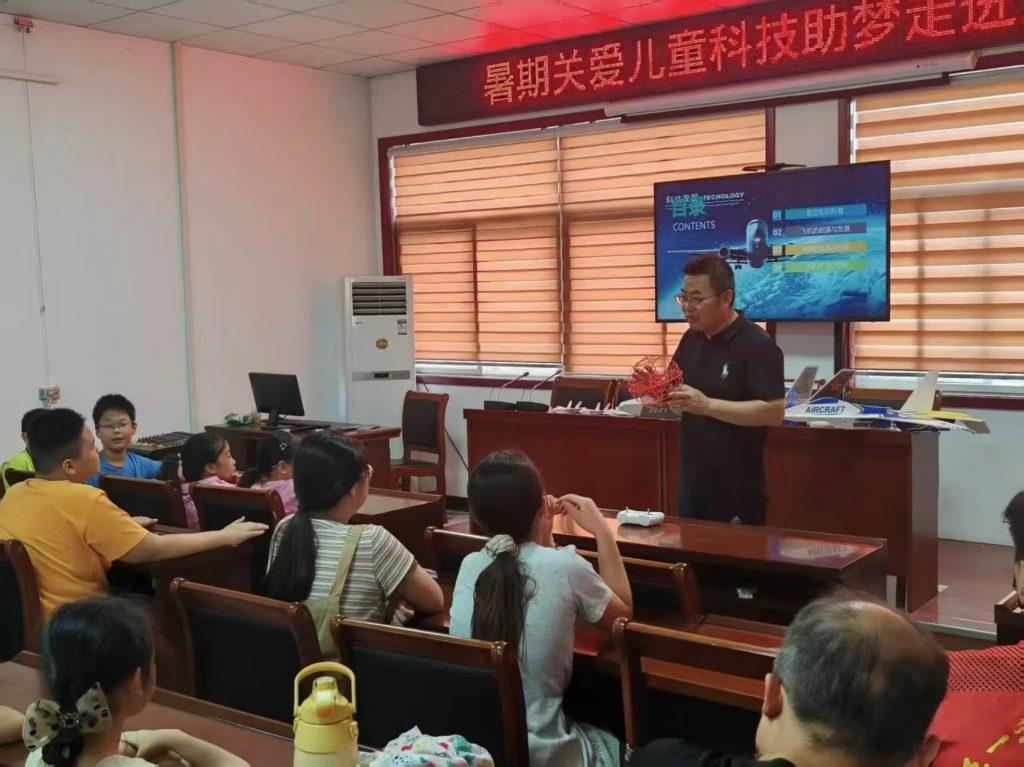
This image underscores the practical aspects of drone training, which are vital for operational readiness. As the system evolves, regular drone training will ensure that operators adapt to new technologies, such as AI-based autonomy or advanced sensors, thereby maintaining system resilience.
In conclusion, the accelerated implementation of the “Land, Sea, Air, and Space” framework is driving rapid adoption of maritime UAVs. The stereoscopic supervision system I have outlined—centered on a command hub and integrated command system—promises to revolutionize maritime patrol models, boost dynamic vessel control, and enhance emergency response capabilities. Key to this transformation is the emphasis on drone training, which underpins safety, efficiency, and innovation. Future developments may include greater autonomy, swarm operations, and deeper AI integration, all of which will demand advanced drone training programs. By investing in these areas, maritime authorities can fully harness the potential of UAVs, ensuring a robust and adaptive supervision ecosystem for years to come.
To further elaborate on the cost-benefit analysis, let’s consider a simplified model for total cost of ownership $TCO$ over a period of $t$ years. For a UAV fleet, $TCO_{uav}$ includes procurement, maintenance, and training costs, while for manned assets, $TCO_{manned}$ includes higher upfront and operational expenses. The cost difference $\Delta TCO$ can be expressed as:
$$\Delta TCO = TCO_{manned} – TCO_{uav} = (P_m + M_m \cdot t + T_m) – (P_u + M_u \cdot t + T_u)$$
where $P$ is procurement, $M$ is annual maintenance, and $T$ is training costs. Given that $T_u$ (drone training) is generally lower than $T_m$ (manned aircraft training), and $M_u < M_m$, $\Delta TCO$ is positive, indicating savings with UAVs. This highlights how drone training contributes to overall cost-effectiveness. Additionally, the scalability of UAV operations allows for incremental expansion, supported by modular drone training that can quickly certify new operators.
In summary, the stereoscopic system not only addresses current gaps but also paves the way for future advancements. Continuous refinement of drone training protocols, coupled with technological upgrades, will ensure that maritime UAVs remain a cornerstone of modern supervision strategies. As I reflect on this research, I am confident that a well-implemented system, grounded in comprehensive drone training, will deliver sustained benefits in maritime safety and efficiency.