
As a researcher in the field of technology and law, I have observed the rapid expansion of civil drone applications and the accompanying privacy concerns. Civil drones, initially developed for military purposes, have evolved into versatile tools used in various sectors such as aerial photography, agriculture, logistics, and disaster response. Their advantages, including low cost, high efficiency, and minimal noise, make them indispensable in modern society. However, the very features that enable their widespread use—such as remote operation, high-altitude hovering, and advanced imaging capabilities—also pose significant risks to individual privacy. In this article, I explore the legal challenges associated with privacy infringement by civil drones, analyze current legislative frameworks, and propose comprehensive solutions to balance technological advancement with privacy protection. Throughout this discussion, I emphasize the importance of regulating civil drone operations to prevent misuse while fostering innovation.
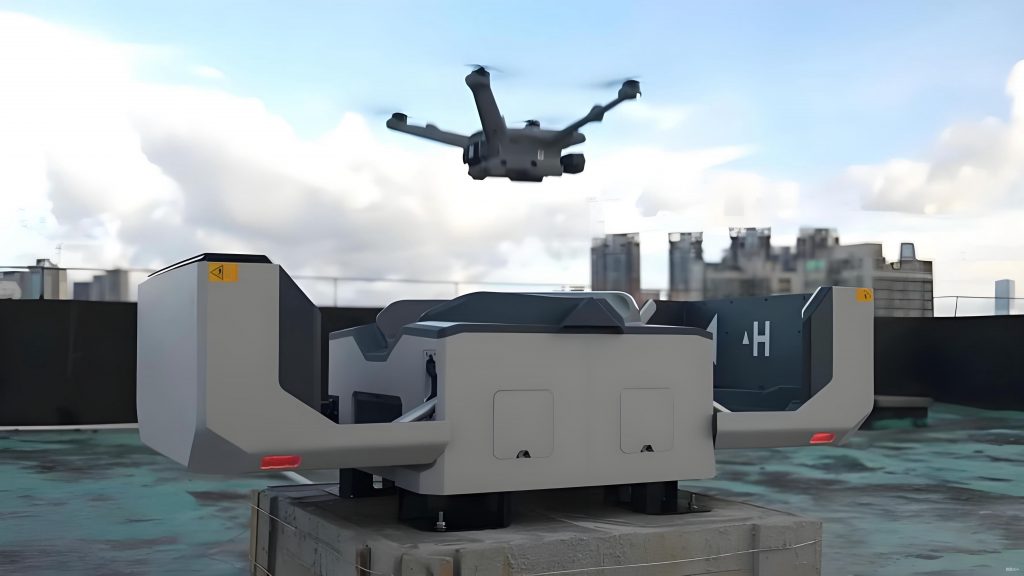
The proliferation of civil drones has introduced new dimensions to privacy risks. Unlike traditional surveillance methods, civil drones can operate covertly from great distances, capturing detailed images and data without physical intrusion. This stealthiness is exacerbated by the dual anonymity of the侵权 actors: the civil drone itself and its remote operator. For instance, a civil drone equipped with high-resolution cameras can linger over private properties, collecting sensitive information that may be transmitted wirelessly and stored indefinitely. This data is vulnerable to secondary leaks if operators share it for profit or curiosity. To quantify the risk, consider a privacy infringement probability model for civil drones. Let $P_i$ represent the probability of infringement for a given civil drone operation, which can be expressed as:
$$P_i = f(S, D, O)$$
where $S$ denotes the stealth factor of the civil drone, $D$ the data sensitivity, and $O$ the operator’s intent. Higher values of $S$ and $D$ correlate with increased infringement risks, highlighting the need for targeted regulations.
In terms of legislative frameworks, I have found that existing laws are inadequate to address the unique challenges posed by civil drones. Privacy rights, as defined in general laws like the Civil Code, focus on traditional intrusions into private spaces, but civil drones transcend physical boundaries through technological means. For example, while laws protect “private life tranquility” and “confidential information,” they do not specifically account for aerial surveillance by civil drones. The table below summarizes key legislative gaps in privacy protection related to civil drones:
| Aspect | Current Law Coverage | Gaps for Civil Drones |
|---|---|---|
| Privacy Definition | Broad terms like private space and information | No specific provisions for aerial data collection by civil drones |
| Operator Accountability | General tort liability | Difficulty in identifying anonymous civil drone operators |
| Data Security | Basic data protection rules | Lack of mandates for encrypting civil drone-collected data |
Moreover, regulations in the civil drone sector predominantly emphasize aviation safety rather than privacy. Administrative rules, such as those requiring operator registration, do not comprehensively address privacy breaches. This misalignment creates a legal vacuum where victims of civil drone privacy infringement struggle to seek redress. For instance, in cases involving civil drones, plaintiffs often face hurdles in proving侵权 due to the lack of direct evidence and the remote nature of operations. To model the effectiveness of current laws, we can use a regulatory efficiency index $E_r$:
$$E_r = \frac{L_a}{L_t} \times C_d$$
where $L_a$ is the number of applicable laws, $L_t$ the total relevant laws, and $C_d$ the civil drone-specific adaptation factor. Low values of $E_r$ indicate insufficient legal coverage for civil drone activities.
Looking at international approaches, I have analyzed how other jurisdictions handle civil drone privacy issues. In the United States, measures include restricting civil drone flight altitudes and granting landowners certain airspace rights. The Federal Aviation Administration (FAA) guidelines, coupled with state-level laws, aim to curb privacy invasions by civil drones. For example, some states impose fines for civil drone operations that capture images of private properties without consent. Similarly, the European Union has implemented stringent regulations, such as the Drone General Code Plan, which categorizes civil drones based on risk levels—open, specific, and certified—and enforces principles like legality, confidentiality, and balanced oversight. The EU’s emphasis on data protection aligns with the General Data Protection Regulation (GDPR), requiring civil drone operators to justify data collection purposes and implement security measures. The following table compares key aspects of civil drone privacy regulations in the U.S. and EU:
| Region | Key Regulations | Focus Areas | Effectiveness for Civil Drones |
|---|---|---|---|
| United States | FAA guidelines, state privacy laws | Altitude limits, landowner rights | Moderate; varies by state, leading to inconsistencies |
| European Union | GDPR, Drone Code Plan | Risk-based categorization, data confidentiality | High; uniform standards but complex implementation |
These international examples underscore the need for a holistic approach to civil drone regulation. In my view, adopting similar risk-based frameworks could enhance privacy protection while supporting civil drone innovation. For instance, the probability of a civil drone causing privacy harm can be modeled using a risk function $R_d$:
$$R_d = P_e \times I_d$$
where $P_e$ is the probability of an侵权 event and $I_d$ the impact severity. By categorizing civil drones according to $R_d$, regulators can impose tailored restrictions, such as requiring advanced encryption for high-risk civil drone models.
To address these issues, I propose a three-pronged strategy: preemptive regulation, comprehensive oversight, and effective post-infringement remedies. First, enacting specialized legislation for civil drones is crucial. This law should establish core principles, such as legality, purpose limitation, and caution, to guide civil drone operations. It must define private spaces in the context of civil drone surveillance, set flight parameters (e.g., altitude and zone restrictions), and clarify the responsibilities of all stakeholders—developers, manufacturers, sellers, and operators of civil drones. For example, a civil drone manufacturer could be held liable for privacy breaches if devices lack basic security features. The legislative impact can be assessed using a compliance score $C_s$:
$$C_s = \sum_{i=1}^{n} W_i \times A_i$$
where $W_i$ represents weight factors for different regulatory aspects, and $A_i$ denotes adherence levels by civil drone entities. Higher $C_s$ values indicate better alignment with privacy goals.
Second, implementing a full-cycle监管 system for civil drones is essential to prevent privacy violations. This involves monitoring civil drones from production to deployment. During production, each civil drone should be equipped with a unique identifier and mandatory user registration features to ensure traceability. Sellers must verify buyers’ identities and provide manuals outlining legal risks. In operation, civil drone operators should undergo实名 authentication and adhere to data handling protocols. Additionally, integrating advanced technologies like algorithm-based monitoring and cloud analytics can detect suspicious civil drone activities in real-time. For instance, a监管 framework could use machine learning to flag abnormal data transmissions from civil drones, reducing the risk of privacy leaks. The effectiveness of such a system can be represented by a detection rate $D_r$:
$$D_r = \frac{T_d}{T_t} \times 100\%$$
where $T_d$ is the number of timely detected incidents involving civil drones, and $T_t$ the total incidents. Aiming for high $D_r$ values ensures robust oversight of civil drone operations.
Third, improving post-infringement accountability mechanisms is vital for victims of civil drone privacy breaches. Establishing a centralized civil drone user database would streamline identification processes; when a civil drone is activated, its details and operator information would be logged, accessible to victims upon request. Furthermore, shifting the burden of proof in civil drone侵权 cases to the operator—through an过错 presumption principle—would alleviate the victim’s举证 challenges. For example, if a civil drone is alleged to have captured private data, the operator must demonstrate compliance with privacy laws to avoid liability. The justice accessibility index $J_a$ can measure this improvement:
$$J_a = \frac{C_r}{C_t} \times E_f$$
where $C_r$ is the number of cases resolved favorably for victims, $C_t$ the total cases, and $E_f$ the ease of filing claims related to civil drones. Enhancing $J_a$ promotes fairness in civil drone-related disputes.
In conclusion, as civil drone technology continues to advance, it is imperative to develop a balanced legal framework that safeguards privacy without stifling innovation. My analysis highlights the urgent need for specialized laws, integrated监管, and strengthened accountability for civil drone activities. By learning from global practices and leveraging quantitative models, we can create an environment where civil drones contribute positively to society while respecting individual rights. The future of civil drone regulation depends on collaborative efforts among lawmakers, industry players, and the public to ensure sustainable growth in this dynamic field.