
The rapid ascent of the low-altitude economy, propelled by the widespread adoption of unmanned aerial vehicles (UAVs), represents a transformative shift in modern industry and logistics. As a critical enabler, UAVs are revolutionizing sectors from precision agriculture and last-mile delivery to infrastructure inspection and emergency response. However, this exponential growth introduces significant security challenges, most notably the threat posed by unauthorized or “rogue” drones operating in sensitive airspace. In response, anti-UAV systems, particularly those employing radio frequency (RF) interference techniques, have become a cornerstone of airspace security. While essential, the deployment of these anti-UAV countermeasures is a double-edged sword. Indiscriminate or unregulated use of anti-UAV jammers can itself become a source of harmful interference, threatening the very ecosystem it aims to protect. This article, based on a synthesis of incident analyses and technical evaluations, examines the multifaceted risks posed by anti-UAV radio interference. It further explores the root causes and proposes a holistic framework for collaborative governance to safeguard the healthy development of the low-altitude economy.
The security imperative for anti-UAV systems is undeniable. Incidents of drones encroaching on airport glide paths, hovering over critical infrastructure, or compromising privacy are increasingly common. RF-based anti-UAV systems typically function by disrupting the command and control (C2) link between the pilot and the drone or by spoofing/overwhelming its Global Navigation Satellite System (GNSS) receiver. This can force a drone to land, return to its point of origin, or lose control entirely. The fundamental operation involves transmitting a powerful, disruptive signal on the target frequencies. The effectiveness, and concurrently the potential for collateral damage, of an anti-UAV system can be conceptually related to its Equivalent Isotropically Radiated Power (EIRP) and spectral purity. The power density \( S \) at a distance \( r \) from the jammer is given by:
$$ S = \frac{P_t G_t}{4 \pi r^2} $$
where \( P_t \) is the transmitter power and \( G_t \) is the antenna gain. A legitimate anti-UAV system must generate sufficient \( S \) to overcome the legitimate signal at the drone’s receiver (i.e., achieve a high Jammer-to-Signal Ratio, J/S). However, if not meticulously calibrated and directed, this energy spills over, affecting a wide geographical area and numerous RF-dependent systems beyond the intended target.
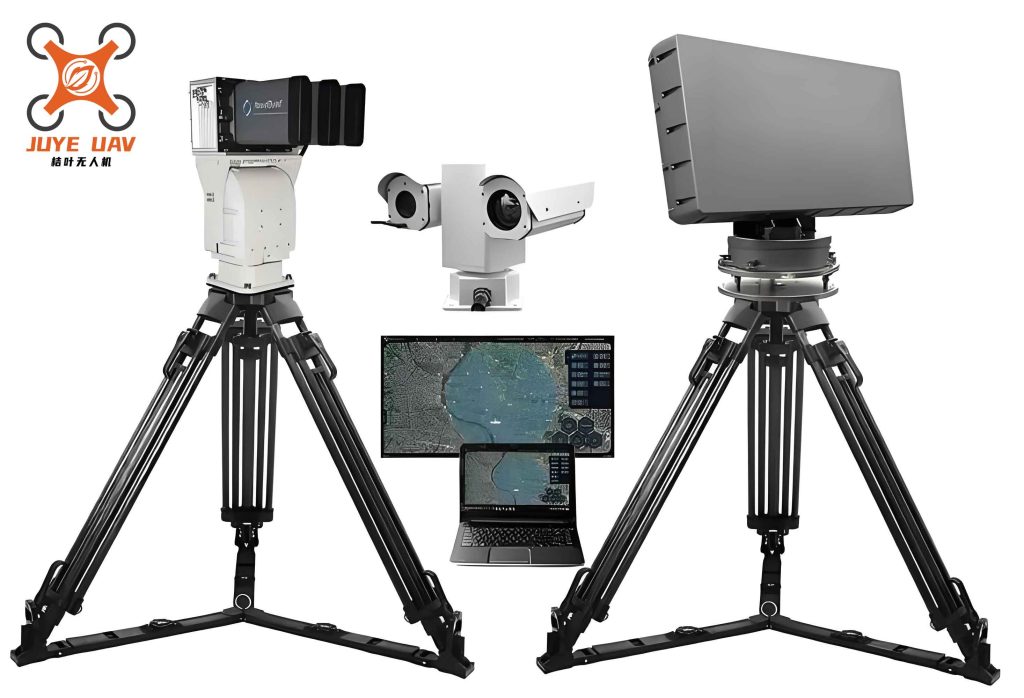
The risks stemming from such collateral interference are severe and multifaceted. Based on documented cases and system analyses, the primary hazards can be categorized as follows:
| Risk Category | Affected Systems | Potential Consequences | Severity |
|---|---|---|---|
| Aviation Safety | Civil Aviation (ADS-B, VHF Comms), General Aviation (GPS), Helicopter Emergency Medical Services (HEMS). | Loss of critical navigation/communication signals, potential for mid-air collisions or controlled flight into terrain (CFIT). | Catastrophic |
| Public Safety & Critical Infrastructure | Public Safety Radio Networks (PPDR), Railway Control Systems (GSM-R), Maritime AIS & GPS, Power Grid SCADA. | Disruption of first responder communications, train signaling failures, ship navigation errors, potential for cascading infrastructure failures. | High |
| Economic Disruption | Commercial UAV Operations (logistics, surveying, agriculture), Cellular Networks (4G/5G), Satellite Timing for Finance. | Failed drone deliveries, spoiled crop spraying, network outages, financial transaction timestamp errors leading to market instability. | High |
| Social & Operational Disorder | Large Event Management (crowd control, broadcast), Scientific Research (atmospheric sensing). | Panic during public events due to failed security drones or disrupted broadcasts, corruption of sensitive environmental data. | Medium to High |
Mathematically, the probability of a disruptive event \( P_{event} \) in a given airspace can be modeled as a function of both rogue drone density \( D_{rogue} \) and the unregulated deployment density \( D_{jammer} \) of anti-UAV systems:
$$ P_{event} \propto \int (D_{rogue}(t) + \alpha \cdot D_{jammer}(t)) \cdot V_{critical} \, dt $$
Here, \( \alpha \) is a risk coefficient (α >> 1 for poorly regulated jammers) representing the amplification of risk due to collateral interference, and \( V_{critical} \) is the volume of critical airspace (e.g., near airports). This model illustrates that uncontrolled anti-UAV deployment can paradoxically increase overall system risk.
The causes of harmful anti-UAV interference are rooted in technical limitations, regulatory gaps, and market forces. From a technical standpoint, many consumer-grade or illicit anti-UAV devices are fundamentally blunt instruments. They lack sophisticated target identification and precise spatial nulling capabilities. A typical cheap jammer broadcasts high-power noise across a broad swath of spectrum, violating fundamental principles of spectral efficiency and coexistence. The interference footprint \( A_{footprint} \) for a non-directional jammer can be approximated as a circle with radius \( r_{int} \), where \( r_{int} \) is the distance at which the jammer’s power density \( S \) exceeds the noise floor or sensitivity \( S_{min} \) of a victim receiver:
$$ r_{int} = \sqrt{\frac{P_t G_t}{4 \pi S_{min}}} $$
For a 10W jammer with a 3 dBi gain antenna affecting a sensitive GPS receiver (\( S_{min} \approx -130 \text{dBm} \)), the interference radius can extend for several kilometers, far beyond the intended target zone. Furthermore, the regulatory and market landscape is often chaotic. In many jurisdictions, the sale and ownership of anti-UAV jammers by private entities are illegal, yet they are readily available through online black markets. Enforcement is challenging due to the transient nature of the interference and the difficulty in locating mobile jammers. The penalty structures are often not commensurate with the potential harm, failing to deter malicious or negligent actors.
Addressing this complex challenge requires a multi-layered, collaborative governance strategy that balances security needs with spectrum protection. I propose an integrated framework built on four pillars: Regulation & Enforcement, Technological Innovation, Industry Collaboration, and Public Awareness.
1. Enhanced Regulation and Dynamic Enforcement: Legislation must explicitly define legal use-cases for anti-UAV systems, limiting them to authorized security forces and critical infrastructure operators under strict protocols. A centralized, dynamic licensing and geofencing system for anti-UAV emitters should be developed. This system would integrate with a national low-altitude traffic management (UTM) platform. Authorized jamming would only be possible within pre-coordinated, time-bound, and geographically precise 4D volumes (latitude, longitude, altitude, time). The system would automatically log all jamming activity and dynamically notify other airspace users of temporary RF exclusion zones. Penalties for illegal manufacture, sale, or use must be significantly increased, incorporating both heavy fines and criminal liability for incidents causing public safety threats.
2. Technological Optimization and “Smart” Anti-UAV Systems: The goal must shift from brute-force jamming to intelligent, discriminate neutralization. Research and development should be incentivized towards:
- Precision Jamming & Spoofing: Systems that utilize phased array antennas to form extremely narrow, steerable beams, focusing energy solely on the identified threat drone. This minimizes \( A_{footprint} \). Advanced spoofing techniques that inject misleading GNSS signals only to the target drone are preferable to blanket noise.
- Cognitive Radio & Sensing: Anti-UAV systems equipped with real-time spectrum sensing (RTSS) can first map the local RF environment, identify the specific C2 and GNSS frequencies in use by the threat, and then apply minimal necessary power on those specific frequencies for the shortest possible duration.
- Non-Kinetic and Non-RF Alternatives: Promoting technologies like high-power microwave (HPM) systems that can disable a drone’s electronics at very short range with minimal broader RF effect, or net-capture systems, for use in dense urban environments.
The technical evolution can be summarized by striving for a high Discrimination Ratio (DR):
$$ DR = \frac{\text{Effect on Target UAV}}{\text{Collateral Effect on Environment}} $$
Modern systems must aim for a DR approaching infinity, which is the ideal of zero collateral damage.
| Technology Generation | Key Characteristic | Interference Footprint | Discrimination Ratio (DR) |
|---|---|---|---|
| 1st Gen (Basic Jammer) | Broadband noise barrage. | Very Large (km-scale) | Very Low (~1) |
| 2nd Gen (Directional Jammer) | Directional antenna, wider beams. | Large (sector-based) | Low |
| 3rd Gen (Cognitive/Precision) | Frequency-agile, targeted spoofing/jamming, some spatial nulling. | Medium to Small | High |
| Future Gen (Fully Integrated) | Phased-array beams, AI-driven threat ID, coordinated UTM deconfliction. | Minimal (Drone-scale) | Very High |
3. Fostering Industry Collaboration and Self-Regulation: A consortium of anti-UAV manufacturers, UAV operators, telecom providers, and aviation stakeholders should establish common standards for system testing, certification, and data interchange formats. This body could create a “white list” of certified, low-collateral-risk anti-UAV technologies. Furthermore, commercial drone service providers (DSPs) should be encouraged to implement robust signal-integrity countermeasures on their fleets, such as:
- Adaptive Frequency Hopping: Spread Spectrum (DSSS) or frequency-hopping spread spectrum (FHSS) on C2 links to complicate jamming. The resilience can be expressed as processing gain \( G_p \):
$$ G_p = 10 \log_{10}\left(\frac{R_c}{R_b}\right) $$
where \( R_c \) is the chip rate and \( R_b \) is the data rate. A higher \( G_p \) directly improves resistance to jamming. - Multi-Sensor Navigation: Fusing GNSS with Inertial Measurement Units (IMUs), computer vision, and terrestrial beacons to maintain positional awareness during GNSS denial. A simplified fusion filter (like a Kalman Filter) updates the state estimate \( \hat{x}_k \) as:
$$ \hat{x}_k = F_k \hat{x}_{k-1} + K_k (z_k – H_k F_k \hat{x}_{k-1}) $$
where measurements \( z_k \) from alternative sensors prevent complete navigational failure.
4. Comprehensive Public and Professional Awareness Campaigns: It is imperative to educate the public on the severe legal and safety consequences of using illegal jammers. Simultaneously, targeted training programs for security personnel authorized to operate anti-UAV systems are essential. These programs must cover not only operational procedures but also the profound responsibilities regarding spectrum stewardship and the potential cascading effects of their actions.
In conclusion, the sustainable growth of the low-altitude economy is inextricably linked to the safe and responsible management of the RF spectrum. The problem of anti-UAV radio interference is a critical test of our ability to govern complex, interconnected technological systems. The unregulated use of anti-UAV countermeasures poses a clear and present danger that can undermine aviation, public safety, and economic activity. The path forward requires abandoning the simplistic narrative of “jamming versus drones” and embracing a sophisticated paradigm of “managed coexistence.” Through a synergistic combination of smart regulations that enforce accountability, the promotion of precision anti-UAV technologies that minimize collateral damage, active industry collaboration to raise standards, and sustained public education, we can construct a resilient framework. This framework will ensure that security measures protect rather than paralyze, allowing the immense economic and social potential of the low-altitude economy to be realized fully and safely. The ultimate objective is not merely to stop rogue drones, but to do so in a way that preserves the integrity of the shared radio frequency environment for all lawful users.