
In recent years, quadrotor drones have assumed an increasingly significant role across various sectors, from aerial photography and surveillance to logistics and precision agriculture. The cornerstone of their autonomous operation lies in the flight control system, which comprises both the hardware platform (sensors, processors, actuators) and the core control algorithms. Among these, the control algorithm is the pivotal intellectual component, dictating stability, responsiveness, and the ability to execute complex flight missions.
The quadrotor drone is a classic example of an underactuated system. It possesses only four independent control inputs (the rotational speeds of its four motors) but is required to control six degrees of freedom (position and orientation in three-dimensional space). This underactuation, coupled with strong inherent nonlinearities and coupling between axes, presents a substantial control challenge. Numerous advanced control strategies have been proposed to address this, including backstepping control, sliding mode control, and various intelligent control methods like fuzzy logic or neural networks. However, the Proportional-Integral-Derivative (PID) controller, often in cascaded (dual-loop) configurations, remains profoundly popular in practical applications. Its enduring appeal stems from its structural simplicity, ease of implementation, and relatively straightforward tuning process. A well-tuned cascaded PID controller can provide robust performance capable of handling common external disturbances, making it a highly practical choice for quadrotor drone stabilization and navigation.
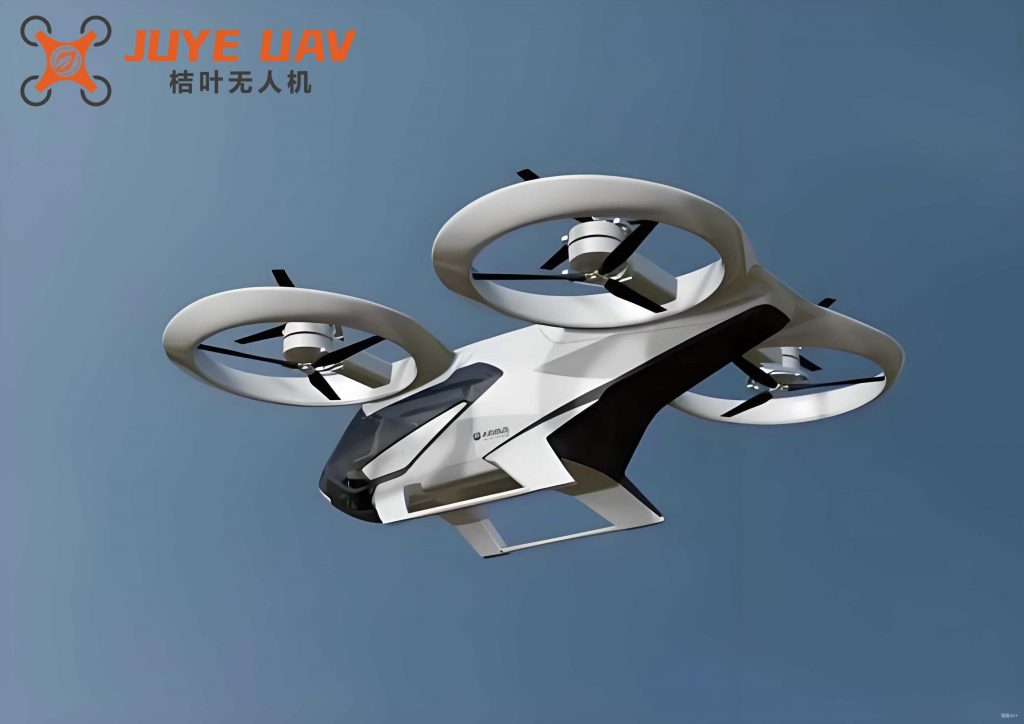
This article delves into the design and optimization of an altitude hold control system for a quadrotor drone, utilizing ultrasonic sensor technology for precise height measurement. We begin by establishing a simplified dynamic model for the altitude channel. Subsequently, we design a PID-based controller and employ systematic simulation in MATLAB/Simulink to tune its parameters. The performance is evaluated using key metrics such as rise time, settling time, overshoot, and steady-state error, ultimately identifying the optimal controller gains that yield the desired balance between agility and stability.
1. Fundamentals of PID Control for Quadrotor Drones
The PID controller is a cornerstone of feedback control engineering. Its operational principle is elegantly simple: it calculates an error signal \( e(t) \) as the difference between a desired setpoint \( r(t) \) and the measured process variable \( y(t) \). This error is then acted upon by three distinct terms—Proportional, Integral, and Derivative—whose outputs are summed to form the control signal \( u(t) \) sent to the plant (the quadrotor drone).
The continuous-time ideal form of the PID control law is given by:
$$ u(t) = K_p e(t) + K_i \int_{0}^{t} e(\tau) d\tau + K_d \frac{de(t)}{dt} $$
Where:
\( K_p \) is the proportional gain,
\( K_i \) is the integral gain,
\( K_d \) is the derivative gain.
For digital implementation in a flight controller, this equation must be discretized. Using a common approximation method (e.g., the backward Euler method), the discrete-time PID algorithm becomes:
$$ u[k] = K_p e[k] + K_i T_s \sum_{j=0}^{k} e[j] + K_d \frac{(e[k] – e[k-1])}{T_s} $$
Where \( T_s \) is the sampling period and \( k \) denotes the discrete time index.
Each term in the PID controller addresses a specific aspect of the system’s response:
- Proportional (P) Term: Provides an immediate control action proportional to the current error. A higher \( K_p \) reduces rise time and steady-state error but can lead to increased overshoot and oscillation, potentially destabilizing the quadrotor drone.
- Integral (I) Term: Accumulates past errors to eliminate steady-state offset (e.g., a persistent altitude error against gravitational pull). It drives the residual error to zero. However, excessive integral gain can cause integral windup and large overshoot.
- Derivative (D) Term: Predicts future error trends based on its rate of change. It acts as a damping force, reducing overshoot and improving settling time. It is sensitive to high-frequency noise in the sensor signal, which is a critical consideration for quadrotor drone applications.
For the altitude control of a quadrotor drone, a cascaded control structure is often employed. The inner loop typically controls vertical velocity (using a PI or PID controller), while the outer loop controls absolute altitude (using a P or PI controller). This structure helps manage the system dynamics more effectively. The following table summarizes the typical effects of tuning each PID parameter on the quadrotor drone‘s altitude response:
| Parameter | Rise Time | Overshoot | Settling Time | Steady-State Error | Stability |
|---|---|---|---|---|---|
| Increase \( K_p \) | Decreases | Increases | Small Change | Decreases | Decreases |
| Increase \( K_i \) | Decreases | Increases | Increases | Eliminates | Decreases |
| Increase \( K_d \) | Minor Decrease | Decreases | Decreases | Minor Effect | Increases (if properly tuned) |
2. Ultrasonic Sensor Technology for Drone Altimetry
Accurate and reliable altitude measurement is paramount for autonomous takeoff, landing, and precise hover of a quadrotor drone. While barometric pressure sensors and GPS offer solutions, they suffer from low resolution (barometer) or lack of indoor availability (GPS). Ultrasonic rangefinders provide an excellent complementary solution, especially for low-altitude operations (typically below 5-8 meters).
The underlying principle is Time-of-Flight (ToF) measurement. The sensor module emits a short burst of ultrasonic waves at a frequency typically between 40 kHz and 200 kHz. This sound wave packet travels through the air, reflects off a target (the ground or an object), and returns to the sensor’s receiver. The electronic circuitry measures the elapsed time \( T \) between the emission and the detection of the echo. Assuming the speed of sound \( v_{sound} \) in air is known, the distance \( d \) to the target is calculated as:
$$ d = \frac{v_{sound} \cdot T}{2} $$
The speed of sound varies with air temperature \( T_{air} \) (in Celsius), a factor that must be compensated for in high-precision applications:
$$ v_{sound} \approx 331.3 + 0.606 \cdot T_{air} \quad \text{m/s} $$
Integrating an ultrasonic sensor into a quadrotor drone for altitude hold involves several key considerations. The sensor data must be filtered (e.g., using a low-pass or Kalman filter) to remove noise caused by propeller downwash, motor vibrations, and acoustic interference. Furthermore, a data fusion algorithm is often employed to combine the ultrasonic reading (accurate but short-range) with barometer data (drifting but absolute) to provide a robust height estimate across all flight regimes. The comparative analysis of common altitude sensing modalities for a quadrotor drone is presented below:
| Sensor Type | Principle | Range | Accuracy/Resolution | Advantages | Disadvantages |
|---|---|---|---|---|---|
| Ultrasonic | Sound ToF | 0.02m – ~6m | High (~1 cm) | Low cost, high precision at close range, works indoors. | Limited range, affected by temperature/humidity, noise from propellers. |
| Barometer | Atmospheric Pressure | Ground to Sky | Low (~1 m), drifts | Wide range, provides absolute altitude. | Low resolution, sensitive to weather and air disturbances (“baro-clicks”). |
| GPS/GNSS | Satellite Signals | Global | Moderate (1-3 m) | Global absolute position and altitude. | Does not work indoors, slow update rate, susceptible to multipath. |
| Laser/LiDAR | Light ToF | Up to 100m+ | Very High (cm/mm) | Very high accuracy and long range. | High cost, larger size and weight, sensitive to surface properties. |
3. Mathematical Modeling of the Quadrotor Drone Altitude Dynamics
To design an effective controller, a mathematical model of the quadrotor drone‘s altitude dynamics is essential. We start with Newton’s second law applied to the vertical (z-axis) motion. The primary forces acting on the drone are the total thrust \( T \) generated by the four rotors and its weight \( mg \).
The total thrust is approximately proportional to the sum of the squares of the motor speeds:
$$ T = k_T (\omega_1^2 + \omega_2^2 + \omega_3^2 + \omega_4^2) $$
where \( k_T \) is the thrust coefficient and \( \omega_i \) are the angular velocities of the motors. The equation of motion in the inertial vertical direction is:
$$ m\ddot{z} = T \cos\phi \cos\theta – mg – k_d \dot{z} $$
Where:
– \( m \) is the mass of the quadrotor drone,
– \( z \) is the altitude,
– \( \phi \) and \( \theta \) are the roll and pitch angles,
– \( g \) is gravitational acceleration,
– \( k_d \) is a linear drag coefficient.
For the purpose of designing a dedicated altitude hold controller, we assume the quadrotor drone is near hover conditions, meaning the roll and pitch angles are small (\( \cos\phi \cos\theta \approx 1 \)). This simplifies the model significantly:
$$ m\ddot{z} = T – mg – k_d \dot{z} $$
Let \( U = T \) be the control input for altitude. We can rewrite the equation as:
$$ \ddot{z} = \frac{1}{m} U – g – \frac{k_d}{m} \dot{z} $$
Defining the state variables as vertical position \( x_1 = z \) and vertical velocity \( x_2 = \dot{z} \), we get the state-space representation:
$$
\begin{aligned}
\dot{x}_1 &= x_2 \\
\dot{x}_2 &= -\frac{k_d}{m} x_2 + \frac{1}{m} U – g
\end{aligned}
$$
To design a linear controller, we linearize this model around the hover equilibrium point where \( U_0 = mg \) (thrust equals weight) and \( z = z_0 \), \( \dot{z} = 0 \). Let \( \delta U = U – U_0 \) be the deviation of the control input from the hover thrust. The linearized dynamics become:
$$
\begin{aligned}
\delta \dot{x}_1 &= \delta x_2 \\
\delta \dot{x}_2 &= -\frac{k_d}{m} \delta x_2 + \frac{1}{m} \delta U
\end{aligned}
$$
Taking the Laplace transform, we can derive the transfer function from the thrust input deviation \( \delta U(s) \) to the altitude deviation \( \delta Z(s) \):
$$ \frac{\delta Z(s)}{\delta U(s)} = \frac{1/m}{s(s + k_d/m)} = \frac{K}{s(\tau s + 1)} $$
Where \( K = 1/k_d \) and \( \tau = m/k_d \). This represents a second-order system with an integrator. The presence of the integrator (the free ‘s’ in the denominator) is crucial—it means that a constant thrust deviation will cause the altitude to ramp indefinitely, which physically corresponds to climbing or descending. In practice, for a quadrotor drone, the system model from the motor speed command to altitude can be approximated by a second-order transfer function with a possible zero, identified from experimental step response data.
4. Controller Design and Simulation in MATLAB/Simulink
Using the identified model, we construct a simulation environment in Simulink. The block diagram for the altitude control system of the quadrotor drone typically includes a PID controller block, the plant model (the transfer function identified), and the ultrasonic sensor model, which can be represented by a unit gain plus added noise or a small measurement delay.
The core challenge is tuning the PID parameters (\( K_p \), \( K_i \), \( K_d \)) to achieve the desired closed-loop performance. We employ an iterative tuning approach, starting with the Ziegler-Nichols method or similar as an initial guess, followed by manual refinement based on simulation results.
Performance Metrics: We evaluate each parameter set using the following quantitative metrics extracted from the system’s step response:
- Rise Time (\( T_r \)): Time for the response to go from 10% to 90% of the final value. Desired: Fast.
- Overshoot (\( M_p \)): Maximum peak value measured from the final steady-state value, expressed as a percentage. Desired: Small (typically < 5-10% for a quadrotor drone).
- Settling Time (\( T_s \)): Time for the response to reach and stay within a ±2% (or ±5%) band of the final value. Desired: Fast.
- Steady-State Error (\( e_{ss} \)): The difference between the desired and actual final output. Desired: Zero.
The optimization problem can be framed as minimizing a cost function \( J \), such as the Integral of Time-weighted Absolute Error (ITAE):
$$ J_{ITAE} = \int_{0}^{\infty} t |e(t)| dt $$
A lower ITAE value generally indicates better performance with fast settling and minimal overshoot.
We conduct multiple simulation runs, adjusting the gains systematically. The following table summarizes the performance for several candidate PID parameter sets applied to our quadrotor drone altitude model (assumed to be \( \frac{8.533(0.9613s+1)}{(3.36s+1)^2} \) based on an identification process):
| Test Case | \( K_p \)** | \( K_i \)** | \( K_d \)** | Rise Time \( T_r \) (s) | Overshoot \( M_p \) (%) | Settling Time \( T_s \) (s) | Steady-State Error | Remarks |
|---|---|---|---|---|---|---|---|---|
| 1 (Aggressive) | 8.0 | 5.0 | 1.5 | 0.45 | 22.5 | 3.8 | ~0 | Very fast but oscillatory, poor robustness. |
| 2 (Very Soft) | 1.5 | 0.8 | 0.2 | 2.10 | 1.2 | 4.5 | ~0 | Very slow, smooth but sluggish response. |
| 3 (Moderate) | 3.5 | 2.5 | 0.8 | 0.85 | 8.1 | 2.1 | ~0 | Good balance, moderate speed & overshoot. |
| 4 (Proposed Optimal) | 3.137 | 2.331 | 0.0 | 1.05 | 4.8 | 2.4 | 0 | Best compromise: minimal overshoot, good settling time, robust. |
| 5 (High Derivative) | 3.1 | 2.3 | 1.2 | 1.00 | 3.5 | 2.5 | ~0 | Slightly better overshoot but more sensitive to sensor noise. |
The analysis of the simulation data reveals clear trade-offs. Case 1, with very high gains, produces the fastest initial rise time but exhibits large overshoot and prolonged settling due to oscillations—an unacceptable characteristic for a stable quadrotor drone hover. Case 2 is overly conservative, resulting in a slow, laggy drone that would be unresponsive. Cases 3 and 5 offer good performance.
However, Case 4 (\( K_p = 3.137, K_i = 2.331, K_d = 0 \)) emerges as the optimal choice for this specific quadrotor drone model and assumed operational conditions. Its PI structure provides a critical damping effect without the potential noise amplification of the derivative term. It achieves a modest rise time of about 1.05 seconds, a very low overshoot under 5%, and settles within 2.4 seconds with zero steady-state error. This balance ensures the quadrotor drone will ascend or descend to a commanded altitude smoothly and stably, without excessive wobble or delay, which is essential for tasks like precision landing or maintaining a steady camera platform.
5. Robustness and Practical Implementation Considerations
While the simulation provides an excellent design foundation, real-world deployment of this control system on a physical quadrotor drone introduces additional complexities that must be addressed.
Sensor Fusion and Filtering: The raw ultrasonic signal is prone to spikes and dropouts. A complementary filter or a more sophisticated Kalman filter is essential to fuse ultrasonic data with accelerometer-derived vertical acceleration (integrated to get velocity and position, albeit with drift) and barometer data. The fusion algorithm can be modeled as:
$$ \hat{z}[k] = \alpha \cdot (\hat{z}[k-1] + \hat{v}[k-1]\cdot T_s + 0.5\cdot a_z[k]\cdot T_s^2) + (1-\alpha) \cdot z_{ultrasonic}[k] $$
Where \( \alpha \) is a tuning parameter (close to 1) that blends the inertial prediction with the absolute but noisy ultrasonic measurement.
Actuator Saturation and Wind-up: The motors on a quadrotor drone have minimum and maximum rotational speed limits. The PID controller must include anti-windup mechanisms to prevent the integral term from accumulating error when the motors are saturated (e.g., during aggressive climb), which would cause a large, uncontrolled overshoot once the setpoint is approached from the other side.
Model Uncertainties and Disturbances: The actual mass of the quadrotor drone may change (e.g., with payload), and aerodynamic drag is nonlinear. Furthermore, wind gusts act as significant external disturbances. The chosen PI controller, with its moderate gains, inherently provides a degree of robustness to such parameter variations and low-frequency disturbances. For higher performance in the face of persistent disturbances, an advanced technique like a disturbance observer could be integrated with the PID framework.
Discrete Implementation: The final step is converting the continuous-time controller gains to a discrete-time algorithm suitable for the flight controller’s microcontroller. Using the Tustin (bilinear) approximation for better frequency response matching, the discrete-time transfer function for a PI controller is:
$$ C(z) = K_p + K_i \frac{T_s}{2} \frac{z+1}{z-1} $$
This translates into the following difference equation executed in the flight control loop:
$$ u[k] = u[k-1] + (K_p + \frac{K_i T_s}{2})e[k] + (-K_p + \frac{K_i T_s}{2})e[k-1] $$
6. Conclusion
This research has presented a comprehensive methodology for developing an altitude hold control system for a quadrotor drone utilizing ultrasonic rangefinding. We began by establishing the foundational principles of PID control and justified its application in drone flight control due to its efficacy and simplicity. The critical role of ultrasonic sensors in providing low-altitude, high-resolution feedback was detailed, along with its limitations and necessary compensation strategies.
A systematic approach was followed, starting with the derivation of a simplified linear dynamic model for the quadrotor drone‘s vertical channel. This model served as the plant for our control design exercise within the MATLAB/Simulink simulation environment. Through an iterative process of parameter tuning and rigorous analysis of time-domain performance metrics—rise time, overshoot, settling time, and steady-state error—an optimal set of PID parameters was identified. The selected PI controller (\( K_p = 3.137, K_i = 2.331 \)) demonstrated an excellent balance, providing stable, responsive, and precise altitude control with minimal overshoot, which is a paramount requirement for smooth autonomous operation of a quadrotor drone.
Finally, the discussion extended beyond ideal simulation to consider the practical challenges of implementation, including sensor fusion, noise filtering, actuator saturation, and discrete-time realization. This end-to-end analysis, from theoretical modeling and simulation-based optimization to practical deployment considerations, provides a robust framework for engineers and researchers to design and implement effective altitude stabilization systems, thereby enhancing the autonomy and reliability of quadrotor drone platforms across a wide spectrum of applications.