
In the modern battlefield, the proliferation of unmanned aerial vehicles (UAVs) has introduced unprecedented challenges to air defense, particularly in safeguarding key areas such as political and economic hubs, military installations, and critical infrastructure. As a researcher focused on countering aerial threats, I believe that the development of robust anti-drone command and control (C2) systems is paramount to national security. This article explores the evolving landscape of anti-drone operations, analyzes the critical capabilities required for effective C2 systems, and proposes strategies for enhancing their智能化发展. Throughout this discussion, I will emphasize the importance of integrating advanced technologies to address the multifaceted threats posed by drone swarms and other UAV-based attacks. The term “anti-drone” will be frequently referenced, as it encapsulates the core of our defensive efforts against these agile and cost-effective adversaries.
The advent of small, commercially available drones has democratized air power, lowering the threshold for aerial engagements. In recent conflicts, from the attacks on Russian bases in Syria to the strikes on Saudi oil facilities, drone swarms have demonstrated their potential to overwhelm traditional防空 systems. These incidents underscore a harsh reality: even the most advanced防空 networks can be rendered ineffective by饱和攻击 from low-cost UAVs. As I reflect on these events, it becomes clear that our current anti-drone arsenals are often fragmented, with disparate systems struggling to operate in concert. This lack of integration hampers our ability to respond swiftly and decisively. Moreover, commanders face immense pressure in anti-drone scenarios, where决策时间 is compressed, and the cognitive load of processing vast amounts of battlefield data can lead to critical delays. Thus, building a cohesive anti-drone C2 system is not just a technical necessity but a strategic imperative to protect our key areas from emerging aerial threats.
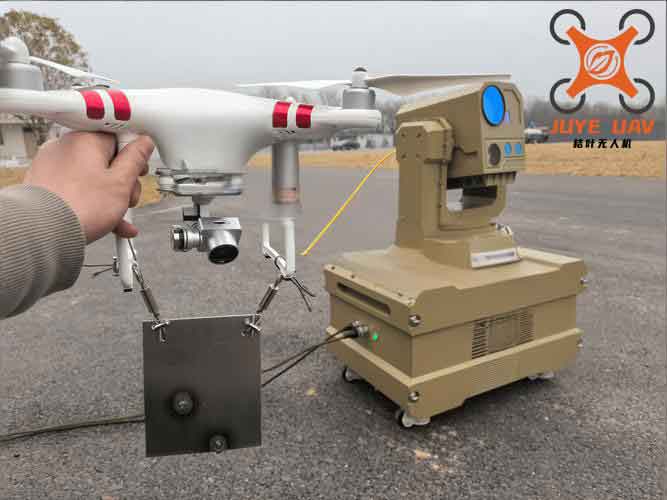
To effectively counter drone threats, an anti-drone command and control system must possess several core capabilities. These capabilities form the backbone of any successful defense strategy, enabling seamless coordination between detection, decision-making, and engagement assets. In my analysis, I have identified five key areas where anti-drone C2 systems must excel: data fusion and processing, battlefield situation analysis and研判,辅助指挥决策, human-machine interface display, and作战效能评估. Each of these elements contributes to a holistic defense posture, ensuring that我们的反无人机 efforts are both proactive and resilient. Below, I will delve into each capability, using tables and formulas to summarize their intricacies and underscore their importance in the broader context of anti-drone operations.
First, data fusion and processing能力 are critical for synthesizing information from diverse sensors deployed across the battlefield. An anti-drone C2 system must integrate inputs from radar, electro-optical/infrared (EO/IR) systems, radio frequency (RF) detectors, and acoustic sensors to create a unified air picture. This involves preprocessing steps such as data correlation, error compensation, and format conversion, followed by feature extraction and fusion at multiple levels—signal, data, information, and knowledge. For instance, consider a scenario where multiple sensors track the same drone swarm. The system should employ algorithms to resolve discrepancies and provide a consistent target state. A simplified formula for data fusion in anti-drone contexts can be expressed as:
$$ \text{Fused Target State} = \sum_{i=1}^{n} w_i \cdot \text{Sensor}_i(\text{data}) $$
where \( w_i \) represents the weight assigned to each sensor based on its reliability and accuracy in anti-drone detection. This fusion process enhances situational awareness, enabling commanders to make informed decisions quickly. To illustrate the complexity, Table 1 outlines the typical sensors used in anti-drone systems and their roles in data fusion.
| Sensor Type | Primary Function | Key Parameters for Anti-Drone Fusion |
|---|---|---|
| Radar | Detection and tracking of UAVs based on radio waves | Range, velocity, altitude, cross-section |
| EO/IR Cameras | Visual identification and thermal imaging | Visual signature, heat signature, shape |
| RF Detectors | Interception of drone communication signals | Frequency, modulation, signal strength |
| Acoustic Sensors | Detection of drone propeller noises | Sound frequency, amplitude, direction |
Second, battlefield situation analysis and研判能力 involve assessing the threat level of incoming drones and predicting their intent. This requires the anti-drone C2 system to leverage machine learning models and threat databases to classify UAV types—such as quadcopters, fixed-wing drones, or swarms—and evaluate their tactical capabilities. Threat assessment can be modeled as a multi-criteria decision-making process. For example, we can define a threat score \( T \) for each drone target:
$$ T = \alpha \cdot \text{TypeScore} + \beta \cdot \text{SpeedScore} + \gamma \cdot \text{AltitudeScore} + \delta \cdot \text{DistanceScore} + \epsilon \cdot \text{IntentScore} $$
Here, \( \alpha, \beta, \gamma, \delta, \epsilon \) are weighting coefficients that reflect the relative importance of each factor in anti-drone operations. The system should automatically compute these scores based on real-time data, prioritizing targets for engagement. Additionally, the C2 system must visualize the battlefield态势 in an intuitive manner, overlaying threat assessments with地理 information to aid commanders. This capability is vital for anti-drone defense, as it transforms raw data into actionable intelligence.
Third,辅助指挥决策能力 focuses on supporting commanders in planning and executing anti-drone missions. The C2 system should incorporate rule-based engines and optimization algorithms to generate interception plans. For instance, given a set of incoming drones and available anti-drone assets (e.g., jammers, lasers, kinetic interceptors), the system can solve a target-weapon pairing problem. This can be formulated as an optimization model:
$$ \text{Minimize } \sum_{i=1}^{m} \sum_{j=1}^{n} c_{ij} x_{ij} $$
$$ \text{Subject to: } \sum_{j=1}^{n} x_{ij} = 1 \quad \forall i \text{ (each target assigned)} $$
$$ \sum_{i=1}^{m} x_{ij} \leq 1 \quad \forall j \text{ (each weapon used at most once)} $$
$$ x_{ij} \in \{0,1\} $$
where \( c_{ij} \) represents the cost or effectiveness of engaging target \( i \) with weapon \( j \), and \( x_{ij} \) is a binary decision variable. This model ensures efficient resource allocation in anti-drone engagements. Moreover, the system should automate the generation of orders and指令, reducing the decision-making burden on human operators. Table 2 summarizes key decision-support functions in an anti-drone C2 system.
| Function | Description | Anti-Drone Application |
|---|---|---|
| Target Prioritization | Ranks drones based on threat level and intent | Identifies high-priority swarm members for immediate engagement |
| Weapon Allocation | Assigns anti-drone assets to specific targets | Optimizes use of jammers vs. hard-kill systems |
| Route Planning | Determines optimal interception paths | Guides interceptor drones or missiles to engage UAVs |
| Collaborative Planning | Facilitates coordination between multiple defense units | Ensures seamless integration of army, air force, and naval anti-drone assets |
Fourth, human-machine interface display能力 is essential for presenting complex anti-drone data in a user-friendly format. The C2 system should feature customizable dashboards that highlight critical information, such as high-threat targets or system status. For example, a快速显示区 can be designed to alert commanders to imminent drone threats, using color-coded icons and concise descriptors. This reduces cognitive load and speeds up response times in fast-paced anti-drone scenarios. Advanced interfaces might incorporate augmented reality (AR) to overlay threat data onto real-world views, further enhancing situational awareness. In my view, investing in intuitive displays is a cornerstone of effective anti-drone operations, as it bridges the gap between technology and human决策.
Fifth,作战效能评估能力 allows for the continuous improvement of anti-drone tactics. After each engagement, the C2 system should analyze outcomes—such as drone neutralization rates or collateral damage—to assess the effectiveness of deployed strategies. This can involve statistical models and simulation tools. For instance, we can define an effectiveness metric \( E \) for an anti-drone mission:
$$ E = \frac{\text{Number of Neutralized Drones}}{\text{Total Drones Engaged}} \times 100\% $$
By tracking \( E \) over time and correlating it with factors like weather conditions or drone types, the system can refine its algorithms and recommend better approaches for future anti-drone defenses. This feedback loop is crucial for adapting to evolving UAV threats.
Having outlined the core capabilities, I now turn to strategies for enhancing the智能化发展 of anti-drone C2 systems. The rapid advancement of artificial intelligence (AI) and networking technologies offers transformative opportunities for我们的反无人机 efforts. In my perspective, four key对策 can drive progress: strengthening system construction planning, optimizing intelligent C2 architectures,加强智能化指控技术应用, and rigorous testing and evaluation. Each of these areas addresses current短板 in anti-drone systems, paving the way for more resilient defenses.
To begin, strengthening system construction planning involves top-down design and standardization. As anti-drone technologies proliferate, there is a risk of incompatible systems emerging across different military branches. I advocate for the establishment of universal protocols and interoperability standards, similar to those being developed by nations like the United States and Russia. This ensures that various anti-drone assets—from radar networks to electronic warfare suites—can communicate seamlessly within a unified C2 framework. By prioritizing规划 in the early stages, we can avoid the pitfalls of siloed systems and foster a cohesive anti-drone ecosystem.
Next, optimizing intelligent C2 architectures is vital for scalability and flexibility. I propose adopting a cloud-edge computing paradigm, where data processing and decision-making are distributed between centralized clouds and edge devices. This architecture supports the dynamic integration of new anti-drone tools, such as AI-powered sensors or autonomous interceptors. A公式 for resource allocation in such a network could be:
$$ \text{Resource Utilization} = \frac{\text{Processing Power at Edge}}{\text{Total Processing Power}} \times \frac{\text{Data Latency}}{\text{Threshold}} $$
This model helps balance load and minimize latency in anti-drone operations. Moreover, the use of open APIs and modular design allows for rapid upgrades, ensuring that our anti-drone systems remain agile in the face of technological change.
Third,加强智能化指控技术应用 entails leveraging AI algorithms to automate and enhance decision-making. Machine learning models, particularly deep learning and reinforcement learning, can be trained on historical anti-drone data to improve threat prediction and response planning. For example, neural networks can analyze drone swarm patterns to forecast attack vectors, enabling preemptive measures. I envision a future where anti-drone C2 systems employ generative AI, like large language models, to simulate complex engagement scenarios and generate optimized战术 plans. This not only reduces human error but also accelerates the OODA (Observe, Orient, Decide, Act) loop in anti-drone defense.
Finally, rigorous testing and evaluation are indispensable for validating anti-drone C2 systems. I recommend establishing dedicated testbeds that replicate real-world scenarios, including drone swarm attacks and electronic countermeasures. Through iterative simulation and live exercises, we can identify vulnerabilities and refine system性能. Table 3 outlines a proposed testing framework for anti-drone C2 systems, emphasizing key metrics and methods.
| Test Phase | Objective | Key Anti-Drone Metrics | Methods |
|---|---|---|---|
| Unit Testing | Validate individual components (e.g., sensor fusion模块) | Data accuracy, processing speed | Simulated drone tracks, software-in-the-loop (SIL) |
| Integration Testing | Ensure interoperability between system modules | Communication latency, protocol compliance | Hardware-in-the-loop (HIL), network emulation |
| Operational Testing | Assess system performance in realistic environments | Engagement success rate, false alarm rate | Field exercises with actual drones, red-team attacks |
| Acceptance Testing | Verify system meets operational requirements | Overall effectiveness, user satisfaction | Scenario-based evaluations, stakeholder reviews |
In conclusion, the development of advanced anti-drone command and control systems is a multifaceted endeavor that requires a blend of technological innovation, strategic planning, and continuous improvement. From my perspective as a researcher in this field, the integration of AI, cloud computing, and standardized protocols will be pivotal in shaping the future of anti-drone defense. By focusing on the core capabilities—data fusion, situation analysis, decision support, human interfaces, and效能评估—we can build resilient systems that protect our key areas from evolving UAV threats. I urge policymakers and technologists to prioritize investments in anti-drone C2 infrastructure, fostering collaboration across domains to ensure our skies remain secure. As drone technology continues to advance, so too must our anti-drone capabilities, driven by a commitment to innovation and excellence in defense.
Throughout this article, I have emphasized the term “anti-drone” to highlight the centrality of counter-UAV operations in modern air defense. The challenges are significant, but with a systematic approach and a focus on智能化, we can turn the tide against adversarial drones. Let us embrace this journey, leveraging every tool at our disposal to safeguard our critical assets and maintain air superiority in an increasingly contested battlespace.