
From my perspective as an observer of industrial standards and public safety, the recent shifts in product certification frameworks represent a pivotal moment in how we manage emerging technologies. I have closely followed developments in sectors like automotive and aviation, where the integration of new innovations often outpaces regulatory adaptation. In this article, I will delve into two significant events: the inclusion of new energy vehicles into China’s Compulsory Certification (CCC) system and the implementation of a real-name registration system for civilian drones. These changes not only reflect a proactive approach to quality control but also highlight the growing importance of safeguarding consumer interests and national security. I aim to explore these topics in depth, using tables and formulas to summarize key points, while emphasizing the recurring theme of civilian drones in the context of aerial regulation.
The move to incorporate new energy vehicles into the CCC certification scheme marks a transformative step in the automotive industry’s evolution. I recall when the National Certification and Accreditation Administration announced the adjustment, adding standards like GB18352.6 (Light-duty vehicle pollutants—limits and measurement methods for China VI phase) and other relevant benchmarks for new energy vehicles. This decision, outlined in Announcement No. 13 of 2017, essentially broadens the scope of mandatory certification to encompass electric and hybrid vehicles, which have surged in popularity due to environmental concerns. From my analysis, this integration serves as a comprehensive quality enhancement plan, aiming to elevate product safety and performance across the board.
To better understand the implications, I have compiled a table comparing the key aspects of the CCC certification before and after this update. This highlights how the inclusion of new energy vehicles aligns with global trends toward sustainability.
| Aspect | Pre-Update (Traditional Vehicles) | Post-Update (Including New Energy Vehicles) |
|---|---|---|
| Certification Basis | Primarily combustion engine standards (e.g., GB18352.5) | Expanded to include GB18352.6 and new energy vehicle standards (e.g., battery safety, emissions) |
| Scope | Limited to conventional fuel vehicles | Encompasses electric, hybrid, and fuel cell vehicles |
| Transition Period | N/A | 1-year grace period for existing certificates; optional early conversion |
| Testing Requirements | Focused on emissions, safety, and performance | Additional tests for battery systems, charging interfaces, and energy efficiency |
| Impact on Consumers | Ensured basic safety and environmental compliance | Enhanced protection against risks specific to new energy technologies |
From my viewpoint, the mathematical underpinnings of these standards are crucial for grasping their rigor. For instance, the emission limits in GB18352.6 can be expressed through formulas that model pollutant concentrations. One common approach involves calculating the total emissions over a driving cycle, which I can represent as:
$$E = \sum_{i=1}^{n} (C_i \times V_i \times t_i)$$
where \(E\) is the total emission mass (e.g., in grams), \(C_i\) is the concentration of a pollutant (e.g., CO₂ in g/km), \(V_i\) is the vehicle speed during interval \(i\), and \(t_i\) is the time duration. For new energy vehicles, similar formulas apply to energy consumption, such as:
$$E_{bat} = \frac{P_{avg} \times d}{\eta}$$
Here, \(E_{bat}\) is the battery energy used (in kWh), \(P_{avg}\) is the average power demand (in kW), \(d\) is the distance traveled (in km), and \(\eta\) is the overall efficiency factor. These equations help standardize testing and ensure that vehicles meet stringent criteria, ultimately boosting consumer confidence.
Transitioning to the realm of aerial technology, I find the regulations surrounding civilian drones equally compelling. The Civil Aviation Administration’s introduction of a real-name registration system for civilian drones, effective from June 1, signifies a proactive measure to address the chaos caused by unregulated flights. As I reflect on this, I have witnessed firsthand how civilian drones have proliferated in recent years, becoming ubiquitous in photography, delivery, and agriculture. However, this rapid adoption has led to incidents like interference with commercial flights, prompting authorities to step in. The requirement for registration of civilian drones weighing 250 grams or more is a direct response to these challenges.
To illustrate the registration process and its components, I have created a table detailing the key steps and requirements. This emphasizes how the system manages the growing fleet of civilian drones.
| Step | Action Required | Details |
|---|---|---|
| 1 | Owner Registration | Owners must input personal details (name, contact) into the “UAV Real-Name Registration System” for each civilian drone. |
| 2 | Manufacturer Input | Manufacturers provide product info (model, weight, type) and buyer details for civilian drones at point of sale. |
| 3 | Label Generation | System issues a registration code and QR code; owners print a ≥2cm×2cm sticker for placement on the civilian drone. |
| 4 | Compliance Deadline | After August 31, unregistered civilian drones are deemed illegal, with penalties for non-compliance. |
| 5 | Ongoing Management | Authorities use the database to track civilian drones, reducing incidents and enhancing safety. |
The importance of this system for civilian drones cannot be overstated. In my analysis, it serves dual purposes: streamlining management and mitigating risks. For example, the risk of a civilian drone collision can be quantified using probability formulas. Consider a scenario where multiple civilian drones operate in shared airspace; the probability of interference \(P_i\) might be modeled as:
$$P_i = 1 – \left(1 – p\right)^n$$
where \(p\) is the probability of a single civilian drone causing an incident per flight hour, and \(n\) is the number of civilian drones in the area. By registering civilian drones, authorities can reduce \(p\) through better oversight and education, thus lowering overall risk. Furthermore, the registration ties each civilian drone to an owner, fostering accountability—a critical aspect given the potential for misuse.
As I delve deeper into the technicalities, the integration of civilian drones into daily life raises questions about performance metrics. For instance, the flight endurance of a civilian drone can be calculated using:
$$T = \frac{C_{bat} \times V_{bat}}{P_{load}}$$
where \(T\) is the flight time (in hours), \(C_{bat}\) is the battery capacity (in Ah), \(V_{bat}\) is the battery voltage (in V), and \(P_{load}\) is the power load (in W). Such formulas are essential for manufacturers when designing civilian drones that comply with weight and safety standards under the registration system. The focus on civilian drones here is intentional, as their widespread use demands rigorous mathematical validation to ensure operational limits are respected.
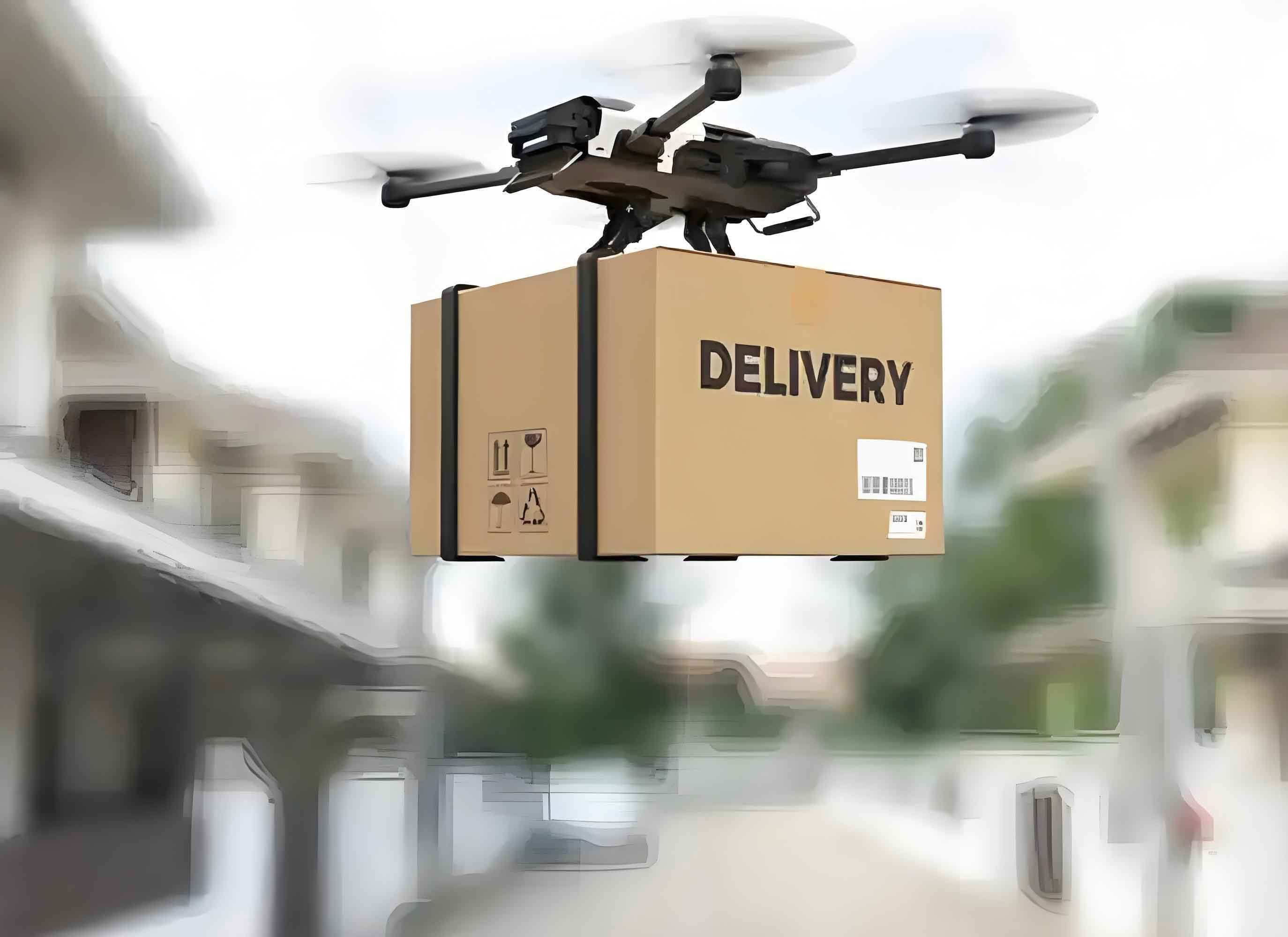
Looking at this image, I am reminded of the practical applications of civilian drones, such as in delivery services, which have spurred regulatory attention. The visual representation underscores how civilian drones are becoming embedded in logistics, yet this convenience must be balanced with safety measures like registration. From my perspective, the real-name system for civilian drones is not just a bureaucratic hurdle; it is a foundational step toward integrating these devices into controlled airspace, similar to how new energy vehicles are being woven into certification frameworks.
Expanding on the broader implications, I see parallels between the two regulatory shifts. Both initiatives aim to preempt risks—whether from vehicle emissions or rogue civilian drones—through standardized certification and registration. In the case of new energy vehicles, the CCC update enhances quality by mandating additional tests, which I can summarize in another table to show the specific new requirements.
| Test Category | Parameters Measured | Standard Reference |
|---|---|---|
| Battery Safety | Thermal runaway, crash resistance, overcharge protection | GB/T 31467.3 (Lithium-ion battery safety) |
| Charging System | Interface compatibility, electrical safety, efficiency | GB/T 18487.1 (Electric vehicle charging) |
| Emissions and Energy Use | CO₂ equivalents, energy consumption per km | GB18352.6 and supplementary metrics |
| Electromagnetic Compatibility | Interference with other devices, susceptibility | GB/T 18655 (Vehicle EMC) |
Similarly, for civilian drones, the registration system facilitates data collection that can inform safety models. For example, the density of civilian drones in urban areas might be estimated using:
$$D_{drone} = \frac{N_{reg}}{A}$$
where \(D_{drone}\) is the drone density (per km²), \(N_{reg}\) is the number of registered civilian drones, and \(A\) is the area. This data helps authorities set flight zones and prevent congestion—a vital consideration as civilian drones become more prevalent. In my view, these mathematical approaches underscore the scientific rigor behind regulations, moving beyond mere policy to evidence-based management.
Reflecting on the transition periods outlined in both events, I appreciate the pragmatic approach taken. For new energy vehicles, the one-year grace period allows manufacturers to adapt without disruption, while for civilian drones, the phased implementation until August 31 gives owners time to comply. This flexibility, however, does not diminish the urgency; from my experience, such timelines encourage voluntary adherence, reducing resistance to change. As I analyze the impact, I believe these measures will significantly elevate product quality and public safety, setting precedents for other technologies.
In conclusion, from my first-person vantage point, the evolution of certification and registration systems for new energy vehicles and civilian drones represents a forward-thinking alignment of innovation with responsibility. The inclusion of rigorous standards and real-name tracking for civilian drones, in particular, highlights a commitment to managing the skies as diligently as we do the roads. By employing tables and formulas, I have aimed to distill complex regulations into accessible insights, emphasizing the recurring theme of civilian drones as a case study in modern governance. As these frameworks mature, I anticipate further refinements that will continue to protect consumers and foster sustainable technological integration.