
As a professional in civil aviation management, I have witnessed the rapid evolution of civil drone technology, driven by advancements in 5G communication and artificial intelligence. Civil drones are now ubiquitous in various sectors, including entertainment, formation performances, power inspections, disaster relief, agricultural protection, forest fire prevention, and geographic mapping. With over 80% of the global market share dominated by Chinese manufacturers, and consumer-grade civil drones exceeding millions of units in shipments, the proliferation of these devices presents both opportunities and significant challenges. In this article, I will explore the threats posed by civil drones to civil aviation safety, analyze current regulatory frameworks, and propose comprehensive measures to enhance control, focusing on legislative efforts, airspace management, emergency response, and technological countermeasures. The discussion is grounded in my firsthand experience and aims to leverage aviation management expertise to address the growing concerns surrounding civil drone operations.
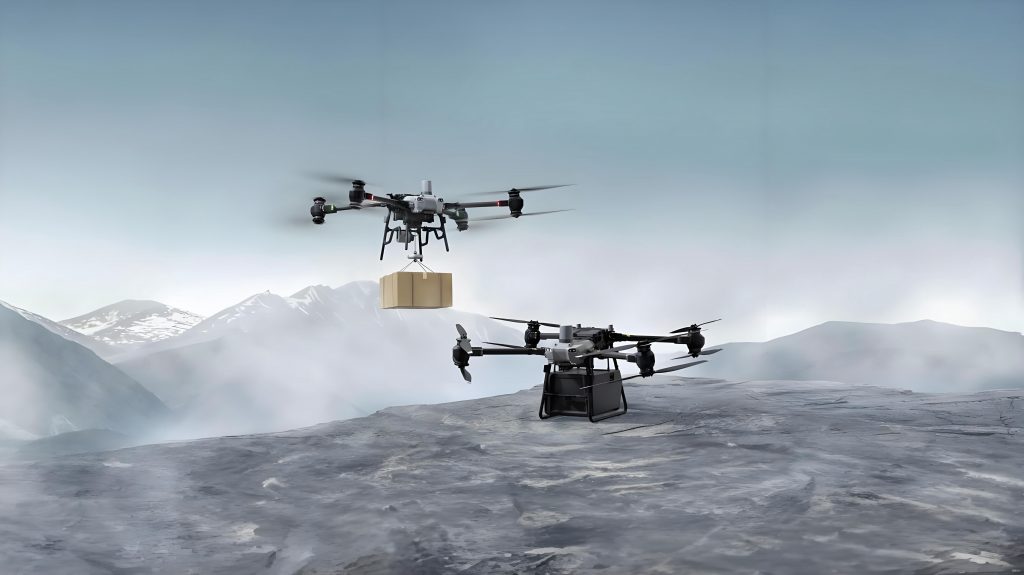
The potential threats of civil drones to civil airport safety are multifaceted and severe. Civil drones, due to their portability and ease of deployment, can easily breach airport perimeters, posing risks of foreign object debris (FOD) invasions. For instance, during airport construction, incidents of fixed-wing civil drones being found within boundaries have been reported, and high-profile cases like the Gatwick Airport shutdown in 2018 highlight the disruptive potential. Moreover, civil drones approaching commercial aircraft during takeoff or landing phases can lead to catastrophic collisions. Experimental data shows that even a small civil drone weighing less than 500 grams, when colliding with an aircraft traveling at high speeds, can generate forces exceeding 200,000 Newtons, akin to a small-caliber artillery shell. This underscores the urgent need for effective civil drone management. Additionally, civil drones equipped with cameras raise privacy concerns, as unauthorized aerial photography of airport operations can lead to sensitive information leaks, further complicating security protocols.
To systematically assess these threats, I have compiled a table summarizing the primary risks associated with civil drones in airport environments. This table highlights the types of threats, their potential impacts, and real-world examples, emphasizing the critical nature of civil drone intrusions.
| Threat Type | Potential Impact | Example Incidents |
|---|---|---|
| Perimeter Intrusion | FOD on runways, infrastructure damage | Gatwick Airport closure (2018), construction site intrusions |
| Aircraft Proximity | Mid-air collisions, flight delays, safety hazards | Near-misses in Chengdu, Suzhou, and Hangzhou airports |
| Privacy Breaches | Leakage of operational details, security compromises | Unauthorized aerial videos on social media platforms |
The force of impact between a civil drone and an aircraft can be modeled using basic physics principles. For instance, the kinetic energy involved in a collision can be expressed as: $$ KE = \frac{1}{2} m v^2 $$ where \( m \) is the mass of the civil drone and \( v \) is the relative velocity. In scenarios where a civil drone collides with an aircraft, the impulse force \( F \) can be approximated by: $$ F = \frac{\Delta p}{\Delta t} $$ where \( \Delta p \) is the change in momentum and \( \Delta t \) is the collision time. This illustrates why even lightweight civil drones pose severe risks, necessitating robust detection and mitigation strategies.
Current regulatory frameworks for civil drone management are evolving but face significant challenges. In many regions, civil drone operations fall into a gray area, with existing aviation laws not fully addressing unmanned aircraft. For example, historical regulations like the Basic Flight Rules of China did not incorporate civil drones, leading to widespread “black flights” where operators bypass registration. The civil aviation authorities have introduced measures such as mandatory registration and pilot certification, but enforcement remains weak due to high costs and lack of执法权限. This results in many civil drone users evading regulations through false information or using DIY assemblies that lack compliance features. The following table outlines key policy gaps and their implications for civil drone control.
| Policy Aspect | Current Status | Challenges |
|---|---|---|
| Registration Systems | Mandatory for some drones, but poorly enforced | Evasion via fake identities, lack of universal adoption |
| Airspace Management | Limited no-fly zones, often insufficient for airport needs | Difficulty covering full protected areas, military coordination issues |
| Technical Standards | Emerging standards for identification and avoidance | Inconsistencies across manufacturers, slow implementation |
From a technical perspective, detecting and countering civil drones in airport environments is fraught with difficulties. The vast protected airspace around airports, often extending 20 kilometers from runways, requires multiple detection systems. However, factors like ground clutter, bird interference, and electromagnetic noise reduce effectiveness. For instance, radar systems may fail to track hovering civil drones due to minimal Doppler effects, while optical and acoustic methods have range limitations. The probability of detecting a civil drone can be modeled using a detection function: $$ P_d = 1 – e^{-\lambda A} $$ where \( P_d \) is the detection probability, \( \lambda \) is the detection rate per unit area, and \( A \) is the coverage area. This formula highlights that as the area increases, the need for redundant systems grows, complicating logistics and costs.
In my view, addressing these issues requires a multi-faceted approach. First, legislation must be prioritized to establish clear norms and penalties for civil drone misuse. I advocate for laws that criminalize “black flights” in protected zones, with stricter sentencing to deter violations. Public awareness campaigns, using digital platforms like social media, can educate on the dangers of civil drone intrusions. Second, experience sharing within the aviation sector is crucial. Civil aviation authorities possess extensive aircraft management expertise that can guide national civil drone policies, such as developing unified platforms for data exchange with law enforcement. This collaboration could enable real-time monitoring of civil drone activities in sensitive areas.
Third,源头管理 is essential to regulate civil drone production. I recommend enforcing unique digital identification codes for each civil drone, as proposed by standardization bodies. This would allow authorities to track civil drones throughout their lifecycle. Additionally, manufacturers should be mandated to integrate avoidance modules, like ADS-B receivers, to prevent collisions with aircraft. The relationship between regulatory compliance and safety can be expressed as: $$ S = k \cdot C $$ where \( S \) represents safety levels and \( C \) is the compliance rate, with \( k \) as a proportionality constant. This emphasizes that higher adherence to standards leads to improved safety outcomes for civil drone operations.
Fourth, a “疏导结合” strategy—combining restrictions with guided usage—can mitigate risks. By designating safe zones for civil drone flights in urban outskirts, authorities can redirect enthusiasts away from airports. For commercial civil drones in agriculture or logistics, technical oversight and certification programs can ensure responsible use. The economic impact of civil drone incidents can be quantified using a cost function: $$ C_{\text{total}} = C_{\text{delay}} + C_{\text{damage}} + C_{\text{response}} $$ where \( C_{\text{delay}} \) accounts for flight disruptions, \( C_{\text{damage}} \) for physical losses, and \( C_{\text{response}} \) for countermeasure expenses. This model underscores the importance of proactive management to reduce overall costs.
Fifth, airports must adopt a底线思维, preparing for worst-case scenarios with robust emergency protocols. This includes deploying detection systems like radar and radio frequency scanners, while ensuring they do not interfere with aviation electronics. Response times can be optimized using queuing theory: $$ T_{\text{response}} = \frac{1}{\mu – \lambda} $$ where \( \mu \) is the service rate of countermeasure teams and \( \lambda \) is the arrival rate of civil drone threats. By refining these processes, airports can achieve quicker containment of civil drone intrusions.
As an airport management professional, I propose specific measures for airport authorities. Strengthening routine patrols and public education in protected zones is fundamental; dedicated teams should monitor high-risk areas and engage with local communities. Collaboration with law enforcement, such as police and military units, can enhance执法 capabilities, while partnerships with commercial users—like surveyors or media—can preempt unauthorized flights. Technologically, investing in multi-layered detection systems is vital, though care must be taken to comply with electromagnetic standards. Finally, engaging with civil drone communities and retailers can foster voluntary compliance, reducing incidents through informed usage.
In conclusion, the rise of civil drones demands a coordinated effort from aviation stakeholders. By leveraging regulatory frameworks, technological innovations, and collaborative strategies, we can mitigate the risks posed by civil drones while harnessing their benefits. The civil aviation sector’s experience in aircraft management positions it as a leader in this endeavor, ensuring that civil drone integration into airspace occurs safely and sustainably. Through continuous improvement and adaptation, we can protect critical infrastructure and uphold public safety in the face of evolving civil drone challenges.