
The security of grain production is a fundamental concern for nations worldwide. In China, rice cultivation holds paramount importance, constituting a significant portion of both the sown area and total grain output. However, the increasing frequency and intensity of extreme precipitation events, driven by global climate change, pose a severe threat to rice productivity through flooding and waterlogging stress. Timely and accurate detection of such abiotic stress and the evaluation of mitigation measures are critical for implementing precise agricultural management and safeguarding yield. Traditional field monitoring methods are often labor-intensive, subjective, and inefficient, falling short of the demands of modern, smart agriculture. This study addresses this gap by developing a rapid, non-destructive, and accurate identification method for rice under flooding stress and after the application of regulatory treatments, leveraging the synergistic power of Unmanned Aerial Vehicle (UAV) remote sensing and deep learning.
The core innovation of our work lies in the integration of high-resolution multispectral imagery captured by a commercial UAV platform with a custom-designed deep convolutional neural network (CNN). We specifically focus on the application within the Chinese agricultural context, where the deployment of China UAV drone technology for crop monitoring is rapidly expanding. Our proposed model, an enhanced version of the VGG architecture termed VGG27, is trained to autonomously learn and differentiate the subtle spectral and spatial features in canopy imagery that correspond to healthy plants, flooded plants, and plants treated with anti-stress regulators. This approach offers a scalable solution for large-scale field scouting and stress assessment.
The experimental basis for this research was established during the 2024 rice growing season. Two prominent japonica rice cultivars in China, Ningxiangjing 9 and Nanjing 5718, were subjected to controlled flooding stress at the critical booting to flowering stage. The stress was applied by maintaining a water depth at half the plant height for durations of 7 and 14 days. Alongside stress treatments, regulatory measures involving the foliar application of anti-stress compounds, both alone and in combination with foliar fertilizer, were implemented post-flooding initiation. A non-flooded, non-treated group served as the control (CK). This design resulted in multiple treatment combinations, detailed in Table 1, each replicated to ensure statistical robustness.
| Cultivar Group | Flooding Duration | Flooding Depth | Regulatory Measure | Code |
|---|---|---|---|---|
| Ningxiangjing 9 & Nanjing 5718 | 0 d | Normal | Control (CK) | T1 |
| 7 d | 1/2 Plant Height | Anti-stress regulator + Foliar fertilizer | T2 | |
| No regulation | T3 | |||
| 14 d | Anti-stress regulator + Foliar fertilizer | T4 | ||
| No regulation | T5 | |||
| Ningxiangjing 9 & Nanjing 5718 | 0 d | Normal | Control (CK) | T6 |
| 7 d | 1/2 Plant Height | Anti-stress regulator only | T7 | |
| No regulation | T8 | |||
| 14 d | Anti-stress regulator only | T9 | ||
| No regulation | T10 |
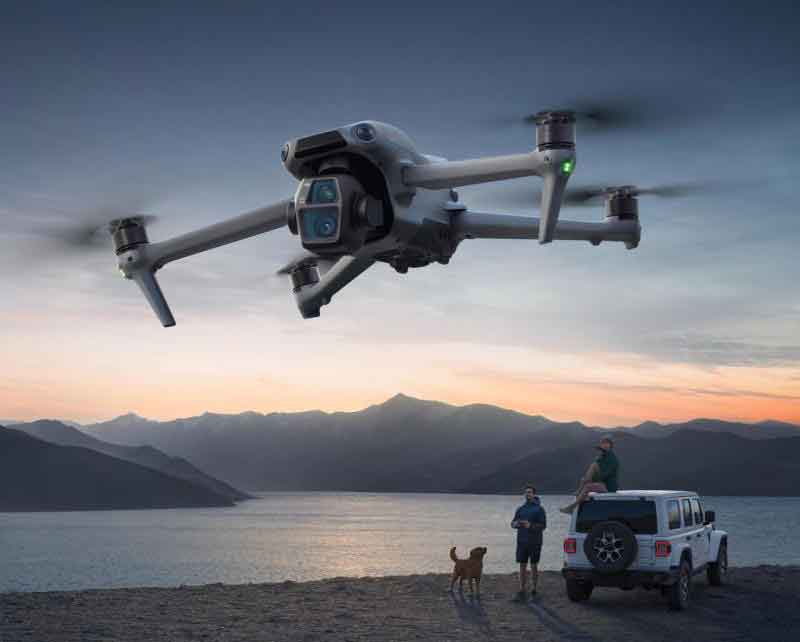
Canopy reflectance data was acquired using a widely adopted China UAV drone, the DJI Phantom 4 Multispectral. This platform is equipped with a six-sensor array: one RGB camera and five monochromatic sensors capturing specific spectral bands essential for vegetation analysis—Blue (450 nm ± 16 nm), Green (560 nm ± 16 nm), Red (650 nm ± 16 nm), Red Edge (730 nm ± 16 nm), and Near-Infrared (NIR, 840 nm ± 26 nm). A built-in sunlight sensor enables accurate radiometric calibration. Flights were conducted at low altitude (2-3 m above canopy) under clear sky conditions around solar noon to ensure consistent illumination, a standard practice for reliable spectral data collection with a UAV drone.
The raw multispectral imagery underwent a rigorous preprocessing pipeline programmed in Python. This included crucial steps like image alignment (registration), radiometric correction using reference panel data, and geometric correction. A significant challenge in agricultural remote sensing is separating the target plant signal from background soil and shadow. We employed an Excess Vegetation Index (ExVI) for this purpose. The ExVI is calculated as:
$$ \text{ExVI} = \text{NIR} – \text{Blue} + \text{Green} – \text{Red} $$
A threshold was applied to this index to create a mask, effectively isolating rice canopy pixels and removing non-vegetated background, thereby purifying the dataset for model training.
The preprocessed, canopy-extracted images were then categorized into three primary classes for model development: Control (CK), Flooding Stress (FS), and Flooding Stress with Regulation Treatment (FSRT). To feed the deep learning model, each large orthomosaic was tiled into smaller patches of 48×48 pixels. To combat overfitting and enhance model generalization, data augmentation techniques including rotation, flipping, and slight brightness adjustments were applied. The final dataset composition is summarized in Table 2.
| Class | Code | Patch Size | Number of Patches |
|---|---|---|---|
| Control | CK | 48×48×5 | 1852 |
| Flooding Stress | FS | 48×48×5 | 1635 |
| Regulation Treatment | FSRT | 48×48×5 | 2652 |
Our model development centered on the VGG (Visual Geometry Group) architecture, renowned for its simplicity and effectiveness in image recognition tasks. The standard VGG16 model uses small 3×3 convolutional filters stacked deeply, followed by max-pooling and fully-connected layers. We hypothesized that for the complex task of distinguishing subtle stress phenotypes, a deeper network might capture more discriminative features. Therefore, we engineered an enhanced model, VGG27, by incrementally adding convolutional layers. The final VGG27 architecture, illustrated in the conceptual diagram, consists of four convolutional blocks comprising a total of 24 convolutional layers, each followed by a Leaky ReLU activation function to alleviate the “dying neuron” problem. This is followed by 4 max-pooling layers, and finally three fully-connected layers where the neuron count was optimized to 1024 (down from 4096 in classic VGG) to reduce parameters and prevent overfitting on our dataset. The final layer is a softmax classifier outputting probabilities for the three classes. The model was implemented using the PyTorch framework and trained on a high-performance GPU.
To evaluate performance, we employed standard metrics: Accuracy, Precision, and Recall. Accuracy measures the overall correctness, while Precision (the ratio of true positives to all predicted positives) and Recall (the ratio of true positives to all actual positives) are critical for imbalanced or mission-critical classifications. Their formulas are:
$$ \text{Accuracy} = \frac{TP + TN}{TP + TN + FP + FN} $$
$$ \text{Precision} = \frac{TP}{TP + FP} $$
$$ \text{Recall} = \frac{TP}{TP + FN} $$
where TP are True Positives, TN are True Negatives, FP are False Positives, and FN are False Negatives.
We first conducted a comparative analysis of different model architectures. As shown in Table 3, the ResNet50 model, despite its residual connections designed for very deep networks, underperformed in this specific task, achieving accuracies below 90% on the test set. In contrast, the VGG-family models consistently surpassed 91% test accuracy. More importantly, a clear trend emerged: deepening the VGG network from VGG19 to VGG23 to our proposed VGG27 yielded incremental improvements in all metrics—Accuracy, Precision, and Recall—on both validation and test sets. The performance gain, however, began to exhibit diminishing returns, suggesting VGG27 represents a effective depth for this dataset. Consequently, VGG27 was selected as our final model, achieving a notable test accuracy of 92.39%.
| Model | Dataset | Accuracy (%) | Precision (%) | Recall (%) |
|---|---|---|---|---|
| ResNet50 | Validation | 87.00 | 86.20 | 87.37 |
| Test | 82.02 | 81.25 | 82.02 | |
| VGG19 | Validation | 94.88 | 94.60 | 95.00 |
| Test | 91.15 | 90.89 | 91.08 | |
| VGG23 | Validation | 95.85 | 95.56 | 96.01 |
| Test | 91.84 | 91.79 | 91.65 | |
| VGG27 (Proposed) | Validation | 95.99 | 96.08 | 95.81 |
| Test | 92.39 | 92.61 | 92.15 |
A more nuanced evaluation involved training specialized binary classifiers to understand the model’s discriminative power between specific class pairs. The results, summarized in Table 4, are highly informative. The classifier distinguishing Control (CK) from Regulated plants (FSRT) performed exceptionally well, with test accuracy exceeding 95%. This indicates that the physiological or biochemical changes induced by the anti-stress regulators manifest as highly distinct spectral/spatial features detectable by the UAV drone multispectral sensor and our model. The classifier for Flooding Stress (FS) vs. Regulation (FSRT) also performed very strongly (~92% accuracy), confirming that the regulation treatment moves the plant’s phenotype away from the stressed state in a measurable way.
The most challenging discrimination was between Control (CK) and Flooding Stress (FS) plants, where the model achieved a test accuracy of approximately 67.65%. This is a critical finding. It suggests that the specific flooding regimen applied (half-plant height for 7-14 days) may represent a moderate stress level that does not induce drastic, easily separable changes in canopy reflectance in the multispectral bands used. Rice, being a semi-aquatic crop, possesses inherent tolerance mechanisms to short-term waterlogging. The spectral signatures of lightly-to-moderately stressed plants may thus overlap significantly with healthy ones, posing a challenge for automated detection. This insight is vital for defining the operational scope of such a monitoring system.
| Classification Task | Dataset | Class | Accuracy (%) | Precision (%) | Recall (%) |
|---|---|---|---|---|---|
| Stress (FS) vs. Regulation (FSRT) | Validation | FS | 95.99 | 96.83 | 94.14 |
| FSRT | 95.34 | 97.49 | |||
| Test | FS | 92.39 | 94.29 | 88.92 | |
| FSRT | 90.93 | 95.37 | |||
| Control (CK) vs. Regulation (FSRT) | Validation | CK | 97.14 | 96.97 | 97.22 |
| FSRT | 97.30 | 97.07 | |||
| Test | CK | 95.90 | 94.95 | 96.66 | |
| FSRT | 96.81 | 95.18 | |||
| Control (CK) vs. Stress (FS) | Validation | CK | 67.93 | 73.23 | 70.39 |
| FS | 61.27 | 64.55 | |||
| Test | CK | 67.65 | 70.96 | 70.97 | |
| FS | 63.49 | 63.50 |
In conclusion, this study successfully demonstrates a novel framework for identifying flooding stress and regulatory effects in rice. By harnessing the agility and high-resolution imaging capability of a consumer-grade China UAV drone and coupling it with a purposefully enhanced deep learning model (VGG27), we have established a method that is both effective and practical for agricultural applications. The model excels at identifying plants that have undergone anti-stress regulatory treatments, achieving high accuracy (>92%). This capability is directly valuable for assessing the efficacy of different mitigation strategies in field trials. While the discrimination between control and mildly stressed plants remains a challenge with the current experimental setup and sensor bands, the model still provides a valuable baseline and a tool for initial scouting. The integration of UAV drone technology with advanced analytics represents a significant step towards automated, precision agriculture for climate resilience.
Future work should focus on several avenues to improve robustness and applicability. Expanding the dataset to include more severe stress gradients, different growth stages, and a wider variety of cultivars and environmental conditions will be essential. Incorporating hyperspectral or thermal data from more advanced UAV drone payloads could provide the additional spectral resolution needed to tease apart subtle stress signatures from healthy ones. Furthermore, exploring modern CNN architectures like Vision Transformers or developing specialized spectral-spatial attention mechanisms within the network may yield further performance gains. Ultimately, the goal is to transition this technology from a research tool to an operational decision-support system for farmers and agricultural extension services across China and other rice-growing regions, enabling proactive and precise management of waterlogging disasters.