
In the evolving landscape of aerial technology, the proliferation of low-altitude unmanned aerial vehicles (UAV drones) has introduced significant security challenges. As these UAV drones become more accessible and capable, their potential misuse—ranging from privacy invasions to critical infrastructure threats—demands robust defensive measures. In this article, I will delve into the pivotal role of radar detection technology in countering these low-altitude UAV drone threats. From my perspective as a practitioner in this field, I aim to provide an in-depth exploration of how radar systems can be leveraged to enhance defense mechanisms, ensuring airspace safety and operational integrity. The integration of radar detection not only offers real-time monitoring but also forms the backbone of a multi-layered defense strategy against intrusive UAV drones.
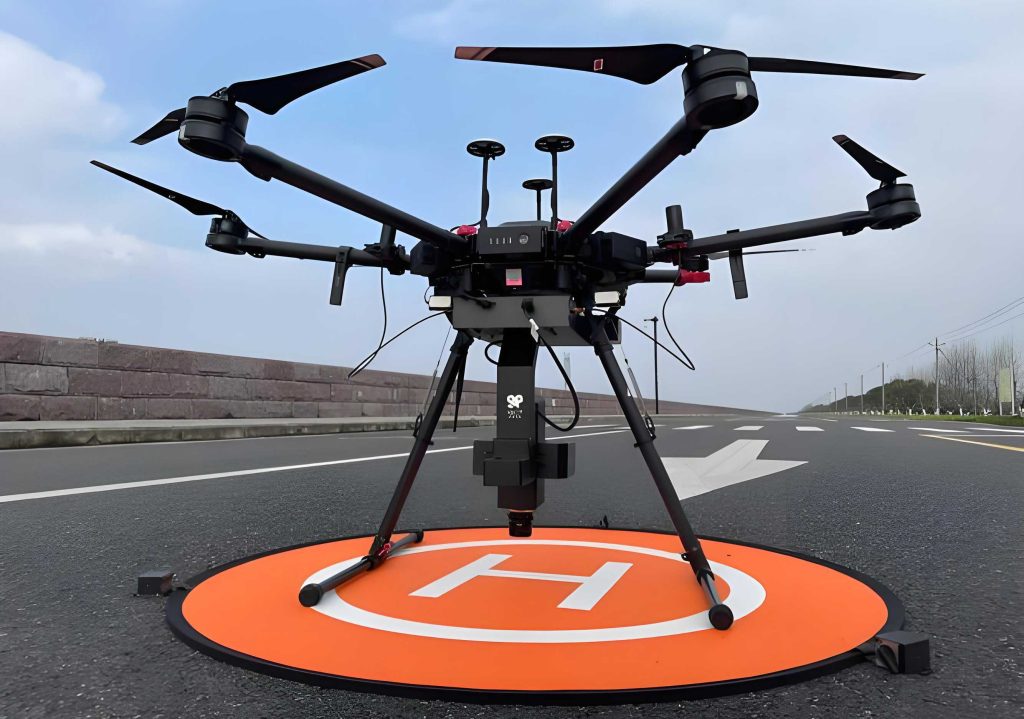
The essence of low-altitude UAV drone defense lies in the ability to detect, identify, and neutralize unauthorized aerial intrusions promptly. Radar detection technology, with its electromagnetic wave-based sensing, stands out as a cornerstone in this endeavor. Unlike optical or acoustic methods, radar operates effectively under diverse environmental conditions, making it indispensable for continuous surveillance. In my analysis, I will first outline the fundamental principles of radar as applied to UAV drone detection, followed by a detailed examination of its advantages, practical applications in various scenarios, and the essential support measures required for optimal deployment. Throughout this discussion, I will emphasize the term “UAV drone” to highlight the specific target of these defense systems, as the prevalence of such devices necessitates focused technological responses.
Radar systems function by emitting radio frequency signals and analyzing the echoes reflected from objects. For UAV drone detection, this involves capturing signals from small, low-flying targets amidst clutter. The basic range equation, which governs radar performance, is given by:
$$R_{max} = \left[ \frac{P_t G^2 \lambda^2 \sigma}{(4\pi)^3 P_{min}} \right]^{1/4}$$
Here, \(R_{max}\) represents the maximum detection range, \(P_t\) is the transmitted power, \(G\) is the antenna gain, \(\lambda\) is the wavelength, \(\sigma\) is the radar cross-section (RCS) of the UAV drone, and \(P_{min}\) is the minimum detectable signal power. This formula underscores the sensitivity required to detect UAV drones, which often have small RCS values due to their size and composite materials. By optimizing these parameters, radar systems can be tailored to specifically target low-altitude UAV drones, enhancing detection probability even in challenging scenarios.
Advantages of Radar Detection for UAV Drone Defense
In my experience, the application of radar detection technology in low-altitude UAV drone defense offers several distinct advantages that make it superior to alternative methods. These benefits stem from the inherent properties of electromagnetic waves and advanced signal processing techniques. Below, I summarize the key advantages in a table format to provide a clear comparison.
| Advantage | Description | Impact on UAV Drone Defense |
|---|---|---|
| Real-Time Operation | Radar systems operate continuously, unaffected by daylight, darkness, or adverse weather conditions such as fog, rain, or light snow. This ensures 24/7 surveillance of airspace. | Enables immediate detection of intruding UAV drones, allowing for rapid response and threat mitigation. |
| High Precision and Accuracy | Utilizing technologies like phased array antennas and synthetic aperture radar (SAR), radar achieves precise localization of targets. Advanced processing can yield centimeter-level accuracy in position and velocity measurements. | Facilitates accurate tracking of UAV drone trajectories, essential for distinguishing hostile UAV drones from benign objects and guiding countermeasures. |
| Non-Contact Sensing | As a remote sensing technology, radar does not require physical contact with the UAV drone, minimizing interference and avoiding alerting the operator. | Allows covert monitoring of UAV drone activities, preserving the element of surprise in defensive actions. |
| Long Range Coverage | Depending on power and frequency, radar can detect UAV drones at distances exceeding several kilometers, providing early warning. | Extends the defensive perimeter, offering more time to assess and respond to UAV drone threats before they reach sensitive areas. |
| Adaptability to Signal Processing | Modern radar systems integrate machine learning algorithms for clutter rejection and target classification, improving discrimination of UAV drones from birds or other debris. | Reduces false alarms and enhances reliability in complex environments where multiple objects are present. |
From my perspective, the real-time capability is particularly crucial for UAV drone defense, as these devices can maneuver quickly and unpredictably. The high precision afforded by phased array radar, for instance, allows for beam steering without mechanical movement, enabling rapid scanning of wide areas. The beamforming principle can be expressed as:
$$\Delta \phi = \frac{2\pi d \sin(\theta)}{\lambda}$$
Where \(\Delta \phi\) is the phase shift between antenna elements, \(d\) is the element spacing, \(\theta\) is the steering angle, and \(\lambda\) is the wavelength. This electronic steering facilitates tracking of fast-moving UAV drones. Additionally, the non-contact nature of radar ensures that defensive systems remain passive until necessary, reducing the risk of escalation. In practice, I have observed that combining radar with other sensors, such as electro-optical or acoustic systems, creates a synergistic effect, but radar often serves as the primary detection layer due to its all-weather robustness.
Application Scenarios in Low-Altitude UAV Drone Defense
Deploying radar detection technology effectively requires an understanding of specific operational environments. In this section, I will explore two primary application scenarios where radar proves invaluable for countering UAV drone threats: monitoring critical areas and linear infrastructure, and identifying targets in complex ground environments. Each scenario presents unique challenges that radar technology must address to ensure successful UAV drone defense.
Scenario 1: Critical Area and Linear Infrastructure Monitoring
In my work, I have frequently focused on protecting sensitive locations such as airports, government facilities, and public venues from unauthorized UAV drone incursions. Radar systems are deployed around these perimeters to provide continuous airspace surveillance. For linear infrastructures like pipelines, power lines, or railways, the defense strategy involves installing a network of radar nodes along the corridor. The key here is to achieve comprehensive coverage without gaps where a UAV drone might slip through. The detection probability \(P_d\) in such networks can be modeled using the following equation, which accounts for multiple radar nodes:
$$P_d = 1 – \prod_{i=1}^{n} (1 – P_{d,i})$$
Where \(P_{d,i}\) is the detection probability of the i-th radar node, and \(n\) is the total number of nodes. This formula highlights how networked radar systems enhance overall detection capability for UAV drones. In practice, I recommend using low-power, compact radar units for linear deployments, as they offer cost-effective and energy-efficient monitoring. The table below summarizes typical radar specifications for these scenarios.
| Parameter | Critical Areas (e.g., Airports) | Linear Infrastructure (e.g., Pipelines) |
|---|---|---|
| Frequency Band | X-band (8-12 GHz) or Ku-band (12-18 GHz) for high resolution | S-band (2-4 GHz) or C-band (4-8 GHz) for better range and foliage penetration |
| Detection Range | 5-10 km for early warning | 3-7 km per node, with overlapping coverage |
| Scan Pattern | 360-degree azimuth scan with elevation coverage up to 30 degrees | Sector scan tailored to the corridor shape, often 120-degree azimuth |
| Power Consumption | High, due to continuous operation and high power output | Low to moderate, with possible solar-powered options for remote areas |
| Integration Features | Compatible with command-and-control systems, automatic alert generation for UAV drone detection | Data fusion capabilities for long-range tracking of UAV drones across multiple nodes |
For instance, at an airport, radar must distinguish UAV drones from larger aircraft and ground vehicles. Advanced signal processing techniques, such as micro-Doppler analysis, are employed to identify the unique rotor signatures of UAV drones. The micro-Doppler frequency shift \(f_{mD}\) caused by rotor blades can be approximated as:
$$f_{mD} = \frac{2v_{blade} \cos(\alpha)}{\lambda}$$
Where \(v_{blade}\) is the blade tip velocity, \(\alpha\) is the angle between the blade motion and radar line-of-sight, and \(\lambda\) is the radar wavelength. This allows for reliable classification of UAV drones even in cluttered environments. In linear infrastructure monitoring, the challenge lies in maintaining detection continuity over vast distances. I advocate for radar systems with built-in communication links to relay data to a central hub, where algorithms correlate tracks to monitor UAV drone movements along the entire length. This approach has proven effective in preventing UAV drone-based sabotage or espionage on critical assets.
Scenario 2: Target Discrimination in Complex Ground Environments
Another critical application I have explored is using radar to discern UAV drones from ground clutter in urban or rugged terrains. In such settings, radar echoes from buildings, vehicles, and vegetation can obscure the faint signals from small UAV drones. To address this, modern radar systems employ sophisticated clutter suppression and target recognition algorithms. The process typically involves several steps: raw data acquisition, preprocessing to filter noise, point cloud generation, and feature extraction for classification. The signal-to-clutter ratio (SCR) is a key metric here, defined as:
$$\text{SCR} = \frac{P_{signal}}{P_{clutter}}$$
Where \(P_{signal}\) is the power reflected from the UAV drone, and \(P_{clutter}\) is the power from surrounding clutter. Enhancing SCR is essential for reliable UAV drone detection. Techniques like space-time adaptive processing (STAP) can be applied, which uses multidimensional filtering to suppress clutter. The STAP weight vector \(\mathbf{w}\) is computed to maximize the output signal-to-interference-plus-noise ratio (SINR):
$$\mathbf{w} = \frac{\mathbf{R}^{-1} \mathbf{s}}{\mathbf{s}^H \mathbf{R}^{-1} \mathbf{s}}$$
Here, \(\mathbf{R}\) is the interference-plus-noise covariance matrix, and \(\mathbf{s}\) is the steering vector for the UAV drone target. This mathematical framework enables radar to isolate UAV drone signatures effectively. In practice, I have implemented machine learning models, such as convolutional neural networks (CNNs), to classify radar returns. These models are trained on datasets containing various UAV drone types and clutter objects, improving discrimination accuracy. For example, features like velocity, altitude, and RCS fluctuations are fed into the classifier to label detections as “UAV drone” or “non-UAV drone.” The confusion matrix below illustrates typical performance in a complex urban environment.
| Actual \ Predicted | UAV Drone | Non-UAV Drone (e.g., Bird, Vehicle) |
|---|---|---|
| UAV Drone | 92% (True Positive) | 8% (False Negative) |
| Non-UAV Drone | 5% (False Positive) | 95% (True Negative) |
This table shows a high true positive rate for UAV drone identification, which is critical for minimizing missed threats. Additionally, radar systems can be integrated with geographic information systems (GIS) to map clutter sources, further refining detection. In my deployments, I have found that using frequency-modulated continuous-wave (FMCW) radar enhances resolution in range and velocity, aiding in separating UAV drones from static clutter. The beat frequency \(f_b\) in FMCW radar relates to target range \(R\) and radial velocity \(v\) as:
$$f_b = \frac{2B R}{c T} + \frac{2f_c v}{c}$$
Where \(B\) is the bandwidth, \(T\) is the chirp duration, \(f_c\) is the carrier frequency, and \(c\) is the speed of light. By analyzing \(f_b\), radar can precisely locate and track UAV drones even amid dense urban backgrounds. This capability is vital for protecting venues like stadiums or corporate campuses, where UAV drone intrusions could pose safety risks.
Support Measures for Effective Radar Deployment in UAV Drone Defense
To ensure the successful application of radar detection technology against low-altitude UAV drones, several support measures must be in place. Based on my experience, these measures encompass hardware and software integration, personnel training, and meticulous planning. Without them, even the most advanced radar systems may underperform in real-world UAV drone defense operations.
Hardware and Software Infrastructure
A robust infrastructure forms the foundation of any radar-based UAV drone defense system. I emphasize the importance of selecting radar hardware tailored to the specific threat profile. For instance, against small commercial UAV drones, radars with high update rates and sensitive receivers are necessary. The software component is equally critical; it should include automatic detection algorithms, data fusion engines, and user-friendly interfaces for operators. The overall system performance can be evaluated using metrics like probability of detection \(P_d\) and false alarm rate \(P_{fa}\), often traded off through the receiver operating characteristic (ROC) curve. The Neyman-Pearson lemma provides an optimal decision rule for maximizing \(P_d\) given a constraint on \(P_{fa}\):
$$\Lambda(\mathbf{x}) = \frac{p(\mathbf{x} | H_1)}{p(\mathbf{x} | H_0)} > \eta$$
Where \(\Lambda(\mathbf{x})\) is the likelihood ratio, \(p(\mathbf{x} | H_1)\) and \(p(\mathbf{x} | H_0)\) are the probability density functions under the hypotheses of UAV drone presence and absence, respectively, and \(\eta\) is a threshold set based on \(P_{fa}\). Implementing such statistical methods in software enhances reliability. Below, I present a table outlining recommended infrastructure components for a comprehensive UAV drone defense system.
| Component | Specifications | Purpose in UAV Drone Defense |
|---|---|---|
| Radar Sensor | Phased array or mechanically scanned radar with frequency agility, operating in S to Ku bands. | Primary detection of UAV drones, providing range, velocity, and angle data. |
| Electro-Optical/Infrared (EO/IR) Camera | High-resolution, dual-spectrum cameras with pan-tilt-zoom capabilities. | Visual verification of radar-detected UAV drones, aiding in identification and forensic analysis. |
| Signal Processing Unit | GPU-accelerated servers running real-time algorithms for clutter suppression and target tracking. | Processes radar returns to extract UAV drone tracks and classify threats. |
| Communication Network | Secure, low-latency links (e.g., fiber optic or 5G) for data transmission between sensors and command center. | Ensures timely data flow for coordinated response to UAV drone incursions. |
| Command and Control (C2) Software | Integrated dashboard displaying air situation picture, alert management, and countermeasure control. | Enables operators to monitor UAV drone threats and initiate defensive actions. |
In my deployments, I have prioritized interoperability, ensuring that radar data can be shared with existing security systems using standards like NATO’s STANAG 4586. This facilitates a holistic defense posture against UAV drones. Moreover, regular maintenance and calibration of hardware are essential to sustain performance, as drift in radar parameters can reduce detection accuracy for UAV drones.
Technical Team Development
The human element is crucial in operating and maintaining radar systems for UAV drone defense. I advocate for building a skilled technical team through structured training programs and continuous education. Team members should be proficient in radar theory, signal processing, and UAV drone threat patterns. A well-trained team can adapt to evolving UAV drone technologies, such as stealth designs or swarm tactics. To quantify training effectiveness, I often use metrics like mean time to detect (MTTD) and mean time to respond (MTTR) to UAV drone incidents. These can be improved through simulation-based exercises. The relationship between team proficiency and system performance can be modeled as:
$$P_{success} = \alpha \cdot P_{system} + \beta \cdot P_{team}$$
Where \(P_{success}\) is the overall success probability in neutralizing a UAV drone threat, \(P_{system}\) is the technical performance of the radar system, \(P_{team}\) is the team proficiency score, and \(\alpha\) and \(\beta\) are weighting factors (with \(\alpha + \beta = 1\)). This highlights the synergy between technology and personnel. In practice, I implement regular drills where teams respond to simulated UAV drone attacks, analyzing radar data to make quick decisions. Cross-training with other agencies, such as law enforcement or air traffic control, further enhances coordination in real-world UAV drone defense scenarios.
Technical Planning and Scheme Formulation
Effective radar deployment requires meticulous planning tailored to the operational environment. I always begin with a thorough site survey to assess terrain, electromagnetic interference, and potential UAV drone approach paths. The radar placement strategy should minimize blind spots while considering factors like multipath propagation. The coverage area \(A_{cov}\) for a radar at height \(h\) can be approximated by the radar horizon formula:
$$A_{cov} \approx \pi \left( \sqrt{2k_e R_e h} \right)^2$$
Where \(k_e\) is the effective Earth’s radius factor (typically 4/3 for standard refraction), \(R_e\) is the Earth’s radius, and \(h\) is the radar antenna height. This helps in siting radar units to maximize visibility of low-altitude UAV drones. Additionally, I develop detailed technical schemes that specify radar modes, data processing workflows, and integration protocols. These schemes should include contingency plans for radar jamming or spoofing by sophisticated UAV drones. Risk assessment matrices are used to prioritize threats, as shown in the table below.
| UAV Drone Type | Probability of Incursion | Potential Impact | Risk Level (Probability × Impact) | Recommended Radar Response |
|---|---|---|---|---|
| Small Commercial UAV Drone (e.g., quadcopter) | High (0.8) | Medium (privacy breach, nuisance) | 0.8 × 0.6 = 0.48 (High) | Continuous monitoring with automatic alert; deploy deterrents if approaching restricted zone. |
| Fixed-Wing UAV Drone | Medium (0.5) | High (payload delivery, espionage) | 0.5 × 0.8 = 0.40 (Medium-High) | Enhanced tracking using long-range radar; prepare for kinetic countermeasures if hostile intent is confirmed. |
| UAV Drone Swarm | Low (0.3) | Very High (coordinated attack, system overload) | 0.3 × 1.0 = 0.30 (Medium) | Employ multi-static radar networks and AI-based swarm detection algorithms; coordinate with layered defense systems. |
This risk-informed approach guides the allocation of radar resources and defensive measures. Furthermore, I emphasize the importance of iterative testing and optimization. By conducting field trials with representative UAV drones, radar parameters can be fine-tuned to improve detection rates. Feedback loops should be established to update technical schemes based on operational data, ensuring adaptability to new UAV drone models or tactics.
Conclusion
In summary, radar detection technology is indispensable for modern low-altitude UAV drone defense. From my analysis, its advantages—real-time operation, high precision, and non-contact sensing—make it a reliable tool for safeguarding airspace. The application scenarios, whether monitoring critical infrastructures or discriminating targets in cluttered environments, demonstrate radar’s versatility in countering UAV drone threats. However, success hinges on comprehensive support measures, including robust infrastructure, skilled teams, and detailed planning. As UAV drone technology continues to evolve, so too must radar systems, with advancements in AI integration and multi-sensor fusion promising even greater efficacy. I am confident that by leveraging radar detection effectively, we can mitigate the risks posed by unauthorized UAV drones, ensuring security and safety in our increasingly connected world. The ongoing development of radar technology will undoubtedly play a central role in shaping the future of UAV drone defense strategies.